Tag Page USA

#USA
Curiosity Corner

Bob Lazar’s Alien Spaceship Story: True or False? In 1989, Bob Lazar told reporter George Knapp that he had worked on alien spaceships at a secret facility called S‑4, located just south of Area 51 near Papoose Dry Lake. He claimed that nine disc-shaped craft were stored in hidden hangars carved into the mountain. According to Lazar, these ships did not use jets or rockets. Instead, they were powered by a small reactor fueled with element 115. When protons were fired at the element, it supposedly produced gravity waves that allowed the craft to hover silently, make right-angle turns, accelerate instantly, and even warp space for interstellar travel. One ship, called the “Sport Model,” allegedly came from the Zeta Reticuli star system, 39 light-years away. Many of Lazar’s claims do not hold up. He said he had physics degrees from MIT and Caltech, but neither university has any record of him. He worked at Los Alamos National Laboratory, but only as a low-level technician with a subcontractor, not as a physicist. Lazar even displayed an S‑4 ID badge, but he later admitted it was a replica he had made himself. He also claimed he had stable element 115 in 1989. Scientists didn’t synthesize it until 2003, and only about 100 atoms of the most unstable isotope were produced, each lasting less than a second. Nothing like the orange metallic triangles Lazar described exists. His concept of a reactor using “gravity amplifiers” has no basis in known physics. Despite this, U.S. Navy pilots have recorded unidentified aerial phenomena performing maneuvers similar to those Lazar described: Sudden bursts of speed, sharp turns, no sonic boom, and no heat signature. The Pentagon confirms the videos are real and remain unexplained. Even though most of Lazar’s claims fail scientific scrutiny, he has told the same story for 35 years without profiting significantly. The question remains: what is Bob Lazar’s real motivation? #UFO #Area51 #Science #Physics #USA #Nevada #Debate

1776 Patriot

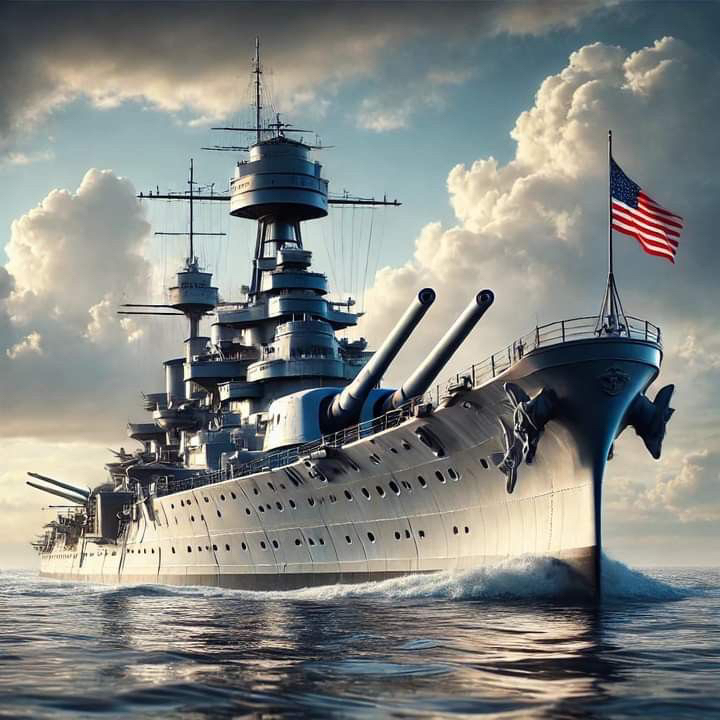
The Art and History of Military Posturing: Lessons for U.S. Strategy Near Venezuela Military posturing is both an art and a product of history. It relies on positioning forces, shaping perceptions, and altering an opponent’s calculations without committing to full conflict. During the Cold War, the United States placed 50 nuclear submarines and more than 200 strategic bombers within reach of the Soviet Union. In 1962, a blockade of 70 ships pushed Moscow to withdraw missiles from Cuba without firing. Studies show visible force posture reduced escalation in 40 percent of major standoffs, demonstrating how presence alone can shift decisions. History also shows that limited, precise strikes can reinforce credibility. In 1989, 20,000 U.S. troops surrounded Panama in hours. Rangers secured airfields while airborne units hit command centers and air defenses. Over 600 sorties supported the operation, isolating Manuel Noriega in less than 72 hours. Analysts note the rapid buildup created overwhelming psychological pressure and forced strategic collapse without prolonged fighting. Today, the art of posturing is focused on the Caribbean and northern South America. Intelligence reporting lists 30 naval vessels, 15 amphibious ships, and 60 aircraft engaged in monitoring and joint missions. Recent actions under Operation Southern Spear include more than 20 precision strikes against unauthorized maritime craft linked to illicit networks, along with the high-profile seizure of the tanker Skipper near Venezuela. These moves aim to disrupt revenue channels and enforce maritime control. Strategic positions near Curacao, Aruba, and eastern Caribbean passages allow rapid response. Studies indicate presence paired with selective action raises compliance by 65 percent and strengthens U.S. leverage in ongoing regional power struggles. #NavalPower #Venezuela #USDefense #America #USA #USHistory #History

Curiosity Corner

The Race to Remove Space Junk Earth’s orbit holds over 34,000 tracked pieces of space debris larger than 4 inches and millions of smaller fragments traveling up to 17,500 miles per hour. Even tiny shards can damage satellites or spacecraft. Over 10,000 satellites are planned for launch in the next decade, increasing collision risks and creating more debris in a cascade known as the Kessler Syndrome, where one collision triggers many more. One collision in 2009 between satellites from the US and Russia generated more than 2,000 trackable fragments, some still threatening active satellites. Low Earth orbit contains over 1,100 tons of debris. More than 500,000 pieces are between 1 and 4 inches, and over 100 million pieces are smaller than 1 inch, all moving fast enough to damage satellites. Innovative solutions are being tested. Japan’s space agency used an electrodynamic tether to slow debris, causing it to reenter the atmosphere safely. Private companies are developing robotic arms, nets and harpoons to capture derelict satellites. Ground-based lasers can nudge small debris into decaying orbits. Removing 5 to 10 large objects annually could stabilize low Earth orbit. In 2022, the European Space Agency tracked more than 36,500 objects and warned collisions could increase exponentially without intervention. Satellite operators performed over 40,000 collision avoidance maneuvers globally in the last five years. Prevention is critical. Satellites must be deorbited within 25 years, and new designs focus on reusability and easier deorbiting. International cooperation is growing, with agencies sharing tracking data and developing guidelines to minimize debris. With over 3,000 satellites at risk of collision each year, solving space junk is a global operational and strategic challenge essential for maintaining access to orbit for science, security, and commerce. #Space #Science #SpaceJunk #USA #SpaceTech #SatelliteTech

Tag: USA - Page 3 | LocalAll