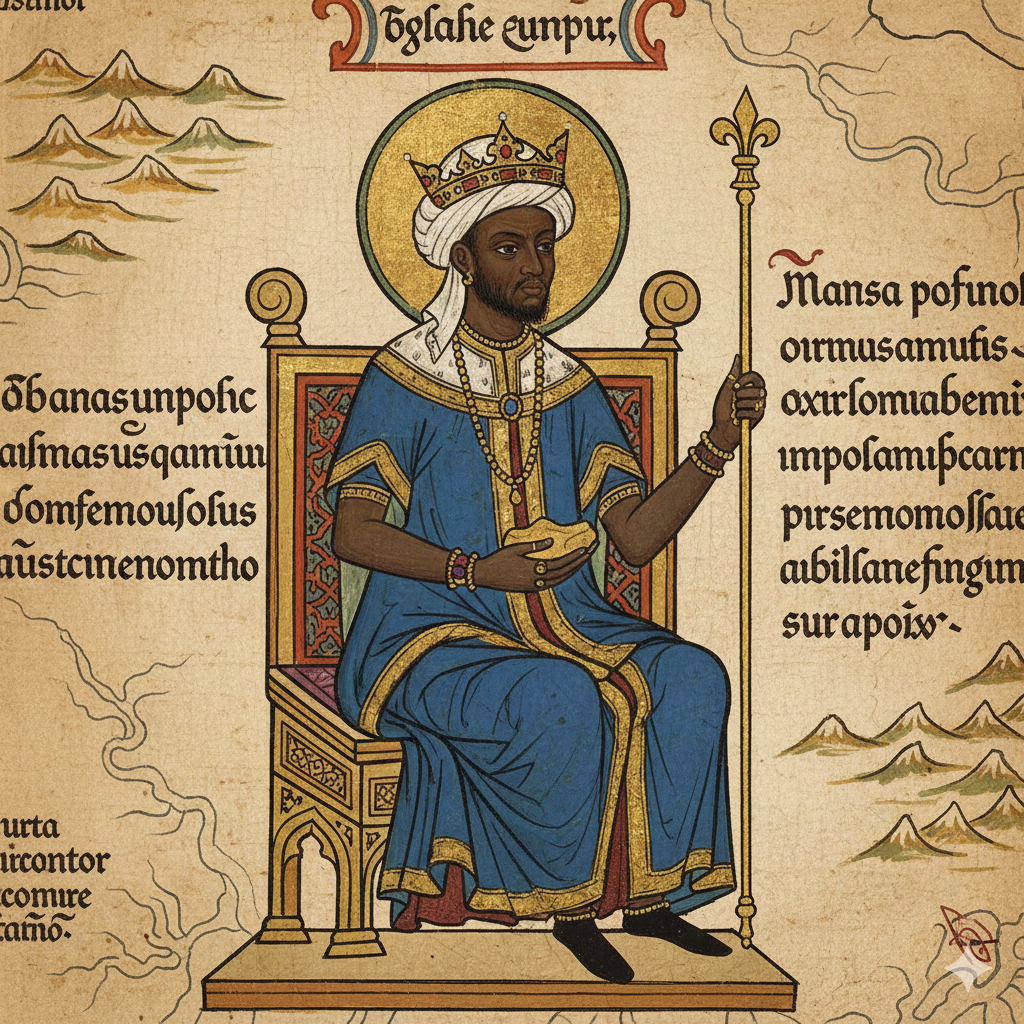
Mansa Musa (Musa I) ruled the Mali Empire in the early 1300s, often dated around 1312 to 1337. Mali was not a loose collection of villages. It was a major West African empire with organized government and real economic power on key trans-Saharan trade routes. By controlling and taxing high-value trade, especially gold and salt, Mali funded stability, influence, and expansion.
The wider world took notice during Musa’s pilgrimage to Mecca in 1324. Chroniclers described a huge caravan and lavish spending in Cairo. Many summaries report that the gold he distributed and spent pushed down gold’s value in Egypt, with effects remembered for years. Even if every detail is not perfectly measurable, the point is clear. He had enough wealth and visibility to cause an economic ripple just by moving through.
But Musa is not just a walking piggy bank. He was a ruler who understood reputation as power. After the pilgrimage, Mali became more visible in the Mediterranean imagination and later European maps portrayed Mali as a powerful realm tied to immense gold wealth. That visibility worked like diplomacy by legend. It told traders, scholars, and rival powers that Mali mattered.
And then comes what people skip. Institutions. Musa’s era is strongly associated with Timbuktu’s rise as a center of scholarship, trade, and religion. Mosques and learning culture point to law, knowledge, and global connections. That is what a functioning empire looks like.
One caution. Ignore exact “modern net worth” numbers. Converting medieval wealth into precise dollars is mostly clickbait math. The real lesson is bigger. African power in the medieval world was organized, wealthy, diplomatic, and intellectually alive.
#BlackHistory #AfricanHistory #MaliEmpire #MansaMusa #Timbuktu #WorldHistory #HistoryMatters #DiasporaHistory