Tag Page americanhistory

#americanhistory
LataraSpeaksTruth

1960… The Day New Orleans Showed Its True Face

On November 29, 1960, the sidewalk outside William Frantz Elementary turned into a scene the country still can’t shake. White segregationist mothers lined the street, screaming as a little Black girl tried to walk into school. Through all that chaos, Daisy Gabrielle held her daughter Yolanda’s hand and kept moving. That walk was courage in real time… the kind that doesn’t wait for applause, just does what’s right. The footage from that day became part of America’s permanent record. Not the cleaned-up version… the real one, showing grown adults trying to block a child’s education because of her skin. And here’s the part people love to pretend they don’t hear… 1960 wasn’t ancient history. It wasn’t “way back then.” Many of the adults in that crowd lived long enough to watch the world pretend this never happened. Progress didn’t fall from the sky… somebody had to push it. #HistoryMatters #AmericanHistory #OnThisDay #NewOrleansHistory #EducationHistory #LataraSpeaksTruth

1960… The Day New Orleans Showed Its True Face
LataraSpeaksTruth

Macon Bolling Allen Admitted to the Massachusetts Bar in 1845

On November 26, 1845, Macon Bolling Allen stepped into a world that liked to pretend it had no room for him and still made space anyway. He became the first Black lawyer admitted to the Massachusetts bar, carrying a calm kind of courage that hits different when you realize the country was still tangled in slavery and hostility. Earlier in 1844 he had already passed the Maine bar exam, proving his skill long before many thought he would even be allowed to take the test. Massachusetts recognized that ability next, and from there he kept pushing forward, eventually serving as one of the first Black judges in the United States. His journey reads like a reminder that discipline and study can be rebellion when the world expects you to shrink. Allen found a way into rooms that were not built for him and left the doors open behind him. Every Black lawyer, judge, advocate, and student walking their own path today moves with echoes of his persistence. #MaconBollingAllen #OnThisDay #HistoryMatters #AmericanHistory #LataraSpeaksTruth

Macon Bolling Allen Admitted to the Massachusetts Bar in 1845
LataraSpeaksTruth

1897… Andrew J. Beard Receives a Patent for the “Jenny Coupler”

On November 23, 1897, Andrew Jackson Beard, a Black inventor from Alabama, received a U.S. patent for one of the most important railroad safety devices of the late 1800s: the automatic car coupler known as the “Jenny Coupler.” Before Beard’s invention, railroad workers had to stand between moving train cars to manually link them together. It was a dangerous job that resulted in countless crushed limbs and deaths. Beard knew those risks firsthand—he had worked around railroads and had seen the toll the old system took on brakemen. His design changed everything. The Jenny Coupler used a pair of locking jaws that snapped together automatically the moment two cars touched. It replaced a life-threatening task with a simple, safer, almost automatic motion. Beard’s patent became part of a nationwide shift toward better railroad safety. His work influenced federal requirements for automatic couplers and helped protect the workers who kept the rail industry running. Even though his name isn’t widely recognized today, Beard’s contribution had a lasting impact. His 1897 patent remains a clear example of how Black inventors helped shape American industrial technology—often without the credit they deserved. #OnThisDay #BlackHistory #AmericanHistory #Inventors #RailroadHistory #SafetyInnovation #UnsungHeroes #CommunityFeed

1897… Andrew J. Beard Receives a Patent for the “Jenny Coupler”
LataraSpeaksTruth

Remembering the Gettysburg Address

On November 19, 1863, President Abraham Lincoln stood on the battlefield at Gettysburg and delivered a message that reshaped how the nation understood the Civil War. The ceremony was meant to honor the thousands of soldiers who died there, but Lincoln used the moment to remind the country what the fight was really about. In just a few sentences, he connected the war to the country’s earliest promise that all people are created equal, and he challenged Americans to keep working toward a future where that promise actually means something. The speech was short, but the impact has lasted generations. Lincoln said the world would not remember what was said that day, but the opposite became true. The Gettysburg Address became a reminder that freedom, sacrifice, and democracy require constant work. Even now, the words push us to think about what kind of nation we want to be and whether we’re living up to the ideals we claim to stand on. #HistoryMatters #GettysburgAddress #OnThisDay #AmericanHistory #LataraSpeaksTruth

Remembering the Gettysburg Address
LataraSpeaksTruth

George W. Ashburn

George W. Ashburn was a white Radical Republican who openly supported political rights for newly freed Black citizens during Reconstruction. That alone made him a target in Columbus, Georgia, where resistance to racial equality was strong and vocal. On March 31, 1868, Ashburn was assassinated inside a boarding house. Witnesses reported that a masked group forced their way in and shot him, a killing widely attributed to early Ku Klux Klan activity. His murder came just weeks after he backed Georgia’s new constitution, which expanded civil rights for Black residents. Because Georgia was still under military rule, his death did not stay a local matter. Federal authorities moved quickly, and on November 23, 1868, the case became national news when a military tribunal charged dozens of white men, some from prominent families, with participating in the assassination. The investigation exposed the organized backlash against Black political progress. It also showed how far opponents of Reconstruction were willing to go to silence anyone advocating for racial equality. But despite the national attention, the case fell apart. Political pressure, intimidation of witnesses, and Georgia’s push to end military oversight led to the charges being dropped. No one was ever convicted. Ashburn’s murder became a symbol of the violent resistance that shaped the end of Reconstruction, a reminder of the dangers faced not only by Black citizens, but by anyone who stood beside them during one of the most volatile periods in American history. #HistoryMatters #AmericanHistory #ReconstructionEra #GeorgiaHistory #CivilWarLegacy #PostWarSouth #HistoricalRecord #USHistoryStory #OnThisDayHistory

George W. Ashburn
LataraSpeaksTruth

1863, Nashville… The Day New Soldiers Changed the War

On November 19, 1863, the 13th United States Colored Infantry officially formed in Nashville, Tennessee. Hundreds of Black men stepped forward to wear Union blue at a time when the nation still refused to recognize their full rights. They volunteered anyway. They took up weapons in a country that denied them protections, hoping their service would help crack the walls holding their people down. The 13th USCI was one piece of the larger United States Colored Troops, a force created after the Emancipation Proclamation opened the door for Black military enlistment. The officers were white, but the spirit, grit, and discipline came from the men themselves. Some had escaped plantations. Others were freeborn. All of them were determined to see slavery fall. Their service came with barriers. Lower pay in the early months. Harsher treatment. Hostility from Union soldiers and Confederate soldiers alike. Still, the 13th USCI held the line. They fought in Tennessee, Georgia, and Alabama, pushing Union control deeper into the South. Their formation marked a turning point. The Civil War shifted from just saving the Union to redefining what freedom would mean in America. Black soldiers made that shift visible. The men of the 13th USCI stood as proof that Black Americans were willing, ready, and brave enough to fight for their freedom and their families’ future. Their legacy still speaks: freedom in this country has always moved forward because of the people who were denied it, yet fought for it anyway. #history #americanhistory #blackmilitaryhistory #civilwarstories #LataraSpeaksTruth

1863, Nashville… The Day New Soldiers Changed the War
LataraSpeaksTruth

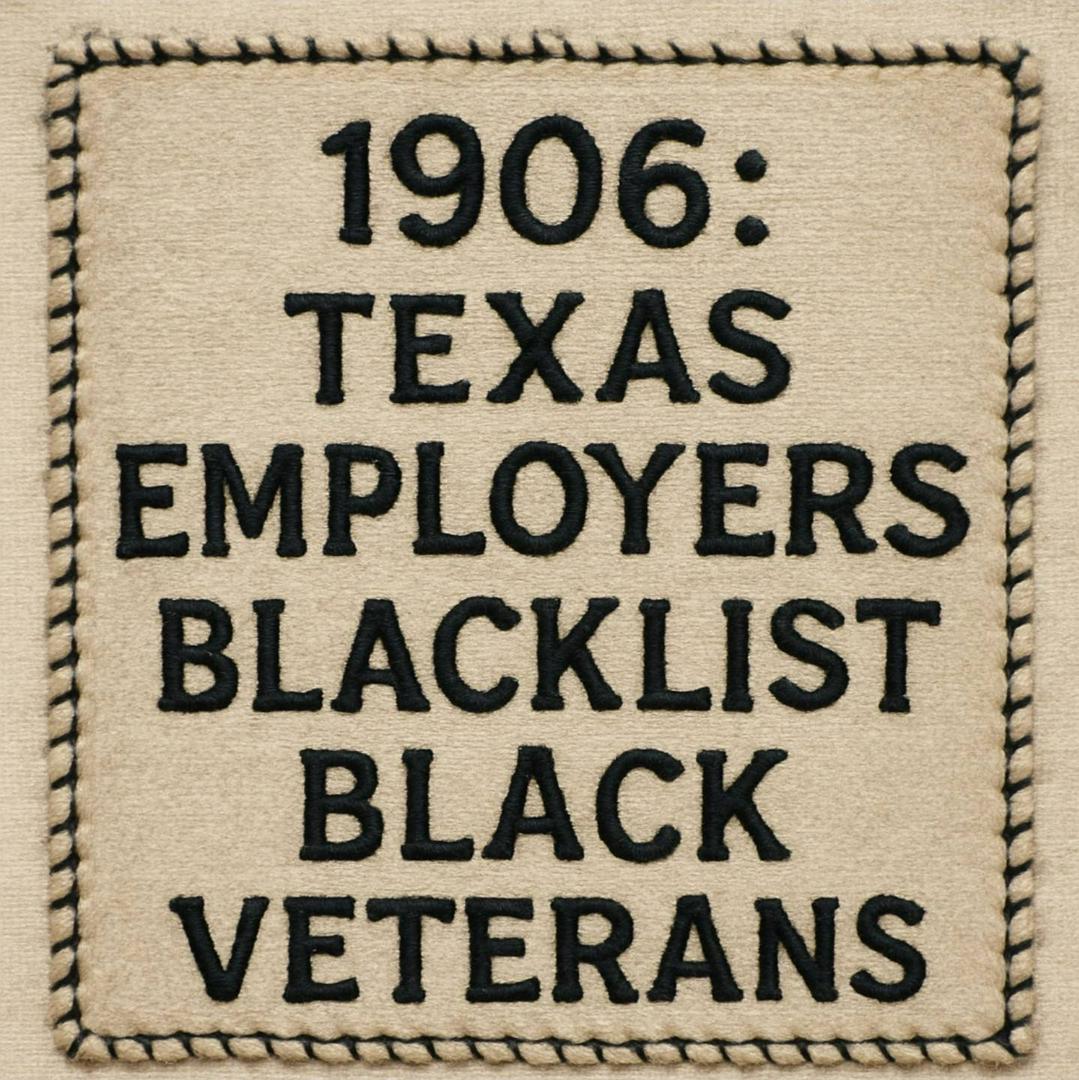
Texas Employers Blacklist Black Veterans (1906)

Some stories in American history were never given the full attention they deserved, and the Brownsville Affair is one of them. In 1906, more than 160 Black soldiers from the 25th Infantry were blamed for a shooting they had nothing to do with. Local officials rushed to judgment with no proof, and the nation went along with the accusation. President Theodore Roosevelt discharged the entire group in one order, stripping their service, their honor, and their futures. What many people never hear about is what happened long after the headlines died down. The government eventually admitted the soldiers had been telling the truth from day one. The bullets didn’t match their rifles. The timelines didn’t fit. Witness claims fell apart. But by the time the record was corrected, decades had passed, and many of the men were already gone. Their families lived with the weight of an accusation built on bias, not evidence. Military benefits were never restored in time to help them. Careers were lost. Entire generations grew up under a shadow they did not deserve. The correction came too late to give the soldiers the justice they needed while they were still here. Instead, their names were quietly cleared long after the damage had been done. It’s a reminder that institutions can make decisions in minutes that take lifetimes to repair. These men deserve to be remembered with truth, dignity, and the honor they earned through service. #BrownsvilleAffair #BlackHistory #MilitaryHistory #HistoryUncovered #AmericanHistory #TruthMatters

Texas Employers Blacklist Black Veterans (1906)
LataraSpeaksTruth

December 13, 1967 marks one of those quiet moments in American history that reshaped higher education without ever getting a plaque. During the late 1960s protest wave, Black student organizations were formally recognized at several predominantly white universities, often in December after months of sustained campus pressure. These recognitions did not come from goodwill or sudden awareness. They followed walkouts, sit ins, building occupations, canceled classes, and students risking suspension or arrest to force institutions to acknowledge their presence and demands. What universities later labeled as “administrative recognition” was the result of organized resistance and strategic disruption. Black students understood that being admitted to a campus did not equal inclusion within it. Recognition of Black student organizations created formal pathways for advocacy, funding, and accountability, while also fueling demands for Black Studies programs, Black faculty hiring, culturally relevant curricula, and support systems that reflected students’ lived realities. Until this moment, most campuses taught history and social sciences through narrow frameworks that excluded or distorted Black experiences. The impact of these movements extended far beyond 1967, laying the groundwork for Black Studies departments nationwide and exposing a recurring truth in American institutions. Change is often framed as progress granted from above, when it is more often forced from below. December 13, 1967 reminds us that history also moves through students who refused silence and made institutions confront realities they preferred to ignore. #BlackHistory #BlackStudentMovement #BlackStudies #CampusProtests #StudentActivism #AmericanHistory #EducationHistory #HiddenHistory

LataraSpeaksTruth

In the early 1970s, the United States launched the “war on drugs,” framing it as a public safety and health response to rising drug use. Over time, historical records and later admissions from Nixon administration officials revealed the policy was also deeply political. It was not only about drugs, but about power, control, and targeting groups seen as threats. Former Nixon advisor John Ehrlichman later stated that the administration linked anti-war activists with marijuana and Black communities with heroin. By heavily criminalizing both substances, the government could disrupt those groups through arrests, surveillance, and incarceration. This admission, now widely cited in academic discussions, reframed the war on drugs as a deliberate political strategy rather than an unintended failure. The consequences were long-lasting. Drug laws grew harsher, sentencing disparities widened, and enforcement focused heavily on urban neighborhoods. Research consistently shows drug use rates are similar across racial groups, yet arrest and incarceration rates are not. This imbalance reshaped communities, families, and economic opportunities for generations. Recognizing this history does not deny the real harm caused by addiction or the need for public health solutions. It highlights that policy choices mattered. Decisions about enforcement and punishment were shaped by political priorities as much as public well-being. Understanding the origins of the war on drugs helps explain its uneven impact and why calls for reform continue today. #History #WarOnDrugs #CriminalJustice #AmericanHistory #MassIncarceration #Policy

Tag: americanhistory - Page 6 | LocalHood