Tag Page blackhistory

#blackhistory
LataraSpeaksTruth

Septima Poinsette Clark (1898–1987) was a quiet force who shaped the soul of the Civil Rights Movement through something radical: teaching. Born in Charleston, South Carolina, she believed literacy and education were tools for liberation. Her greatest legacy came through the creation of Citizenship Schools, grassroots classrooms that taught African Americans to read, write, and understand their rights so they could register to vote and become leaders. Fired from her teaching job in 1956 for being a member of the NAACP, Clark didn’t back down. Instead, she expanded her work with the Highlander Folk School and the Southern Christian Leadership Conference, training thousands of teachers and activists throughout the South. Many of her students went on to become civil rights leaders in their own right. Dr. Martin Luther King Jr. called her work “the key to the movement.” Yet because she was a Black woman in a male-dominated movement, Clark’s contributions were often overlooked. Still, she remained committed to justice through knowledge, saying, “I believe unconditionally in the ability of people to respond when they are told the truth.” In 1979, she received the Living Legacy Award from President Jimmy Carter. But her true legacy lives on in the power of informed people standing up for their rights, not just in courtrooms or marches, but in classrooms, living rooms, and voting booths. Gone but not forgotten. Her life reminds us: freedom begins with learning. #GoneButNotForgotten #SeptimaClark #BlackHistory #CivilRights #EducationAsResistance #CitizenshipSchools #LegacyOfLiteracy

LataraSpeaksTruth

Paul Robeson was a reminder of what happens when extraordinary talent refuses to stay obedient. Robeson was never just one thing. He graduated from Rutgers University as valedictorian and became an All American athlete at a time when excellence from Black Americans was tolerated only when it stayed quiet and contained. He later emerged as a world renowned singer whose powerful bass voice filled concert halls across Europe, where audiences recognized his brilliance even as the United States struggled to acknowledge it. He was also a celebrated actor who expanded what presence, authority, and dignity could look like on stage and screen. That level of achievement could have secured comfort, wealth, and a carefully protected legacy. Many would have taken that deal. Robeson did not. He chose truth over approval. He spoke openly about racial violence in the United States and connected it to colonial oppression abroad. He challenged fascism overseas while calling out hypocrisy at home. He rejected the idea that freedom could exist if it was selectively applied. To Robeson, democracy without equality was performance, not principle. That honesty carried consequences. The U.S. government revoked his passport. Concert venues closed their doors. Media outlets erased his name. His work was sidelined, his reputation deliberately distorted, and his voice muted, not because he lacked talent, but because his influence made power uncomfortable. Robeson understood something that still unsettles people today. Culture is political whether it admits it or not. Art without conscience is decoration. Dignity does not require permission. His life forced America to confront its contradictions. He paid a heavy price for refusing to bend, but history has a long memory. Voices rooted in truth do not disappear. They endure. They return. They echo. #PaulRobeson #BlackHistory #HiddenHistory #AmericanHistory #TruthTellers #CulturalHistory #Legacy #HistoryMatters #VoicesThatEcho

LataraSpeaksTruth

January 4 marks the birth of Floyd Patterson, born January 4, 1935, a champion whose legacy is often quieter than it deserves to be. Patterson rose from a troubled childhood to become the youngest heavyweight champion in boxing history at just 21 years old, a record that stood for decades. He wasn’t loud, cruel, or theatrical. He fought with precision, speed, and discipline, representing an older tradition of boxing rooted in craft rather than spectacle. In a sport that rewarded intimidation, Patterson carried himself with humility, which made him both admired and misunderstood. His career is often framed around his losses to Sonny Liston, but that framing misses the larger truth. Patterson became the first heavyweight champion in history to lose the title and later reclaim it, a feat that required resilience most champions never have to test. Outside the ring, he was thoughtful and deeply affected by criticism, yet he continued to fight, train, and show up anyway. Floyd Patterson proved that strength does not always announce itself and that greatness does not require cruelty to be real. January 4 is not empty history. It belongs to a man who showed that dignity could survive even in the most unforgiving arena. #January4 #OnThisDay #FloydPatterson #BoxingHistory #HeavyweightChampion #SportsHistory #AmericanHistory #BlackHistory #Legacy #Resilience

David Taylor

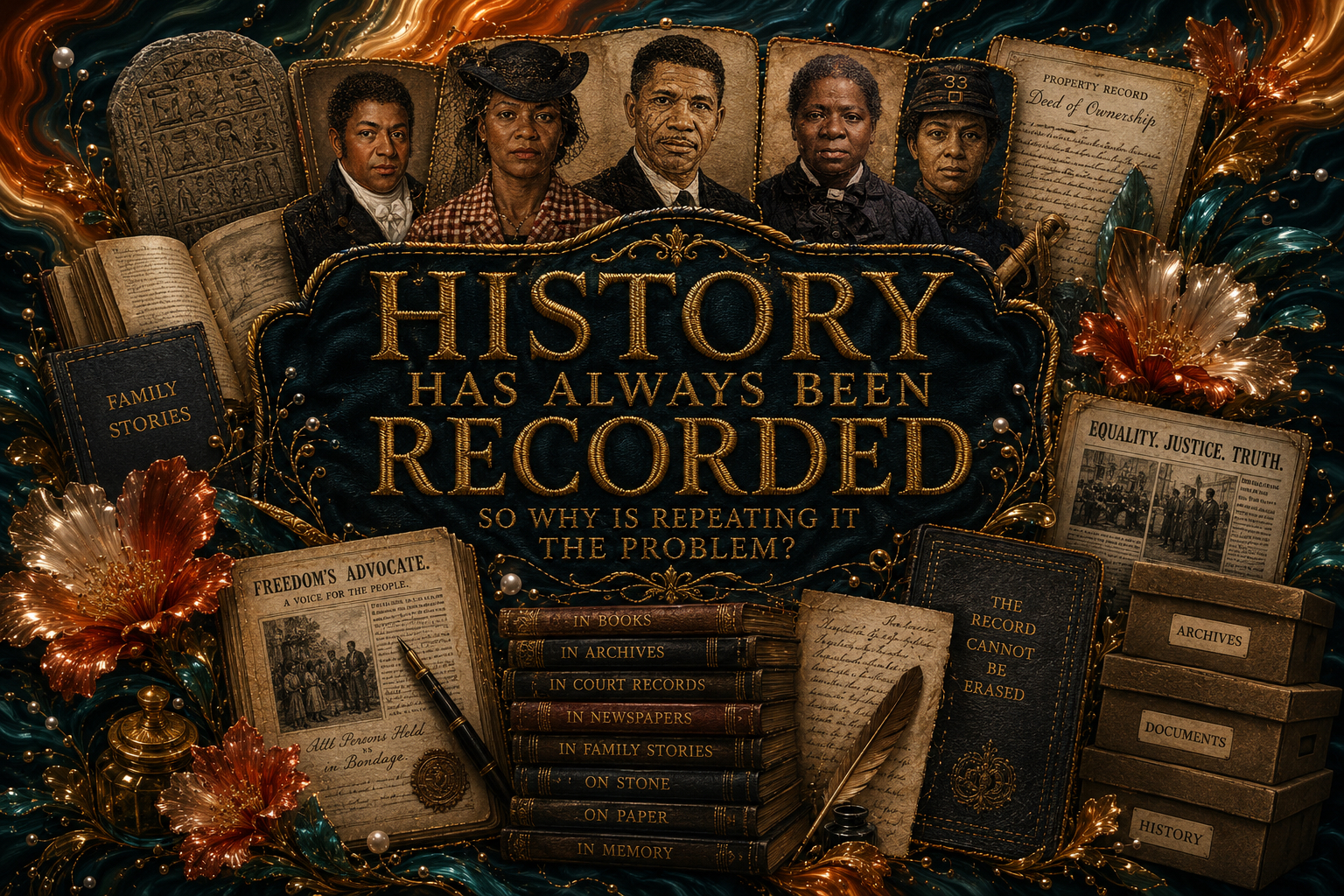
##PATTERNS… THE DESTRUCTION OF BLACK PROSPERITY: AN AMERICAN CYCLE A PATTERN, NOT AN ACCIDENT Across U.S. history, whenever Black communities built land, businesses, banks, towns, or trade networks, those gains were repeatedly erased. From post-Reconstruction to the 20th century, Black prosperity was routinely dismantled through violence, policy shifts, displacement, and financial exclusion. This pattern is documented, measurable, and repeatable. BUILD — THEN ERASE Black farmers once owned millions of acres; today, less than a fraction remains. Black business districts flourished in dozens of cities; many were burned, flooded, rezoned, or seized. Wealth creation occurred—then was interrupted by force or design. This is not coincidence. It is a cycle. WEALTH WITHOUT PROTECTION FAILS Prosperity without sovereignty proved fragile. Assets built without control over land, capital access, legal protection, and narrative power were exposed to removal. History shows that accumulation alone was never enough; durability required systems owned and defended by the community itself. THE QUIET COST The psychological toll followed the economic loss—displacement, instability, and generational interruption. When progress is repeatedly destroyed, trust erodes, timelines reset, and communities are forced to rebuild from zero again and again. THE SHIFT THAT ENDS THE CYCLE The record shows a different path forward: collective ownership, protected land, cooperative economics, intergenerational planning, and cultural clarity. Where communities controlled infrastructure, capital flow, and education, prosperity endured longer and traveled further. THE TRUTH ON RECORD Black wealth did not fail. It was targeted. Understanding this history is not about grievance—it is about strategy. Liberation begins with remembering the pattern, then building beyond it. #BlackHistory #UntaughtHistory #EconomicJustice #CollectiveEconomics #LandAndLegacy BlackWealth CulturalSovereignty FreedomAnd

LataraSpeaksTruth

January 1, 1863 marked a turning point that was as complicated as it was historic. On that morning, the Emancipation Proclamation took effect under President Abraham Lincoln. It declared freedom for enslaved people in states still in rebellion against the Union. It did not apply everywhere. It did not free everyone. It did not end slavery outright. But it cracked the foundation of a system that had defined the nation for over two centuries. The night before, Black communities gathered for Watch Night services. Churches filled with people praying, singing, and waiting through midnight. This was not passive hope. It was survival sharpened by experience. Families knew freedom on paper did not guarantee safety in practice. Still, they watched the clock because symbolism matters. Timing matters. Midnight mattered. At dawn, freedom existed in law. By dusk, reality complicated it. Enforcement depended on Union military presence, and in many places Confederate control remained firm. Many enslaved people remained in bondage. Others faced retaliation, displacement, or danger as they moved toward Union lines. The proclamation was limited by design, framed as a wartime measure rather than a universal declaration. Even so, it transformed the Civil War. The fight was no longer only about preserving the Union. It became explicitly tied to ending slavery. It opened the door for Black men to serve in the Union Army and reframed enslaved people from property to persons in federal policy. It also signaled to the world that the United States had tied its war effort to a moral reckoning, however incomplete. January 1, 1863 was not the end of slavery. That came later, unevenly and violently, with resistance that still echoes today. But it was a hinge moment. A night of prayer turned into a morning of possibility. Freedom arrived at dawn on paper, by dusk in fragments, and only became real through human courage. #OnThisDay #January1 #EmancipationProclamation #WatchNight #BlackHistory

LataraSpeaksTruth

In late December 1865, as the Civil War formally faded into history, the realities of freedom were still being figured out in real time. During this period, including December 27, federal offices were actively organizing the early work of the Freedmen’s Bureau, an agency created to manage the transition from slavery to freedom for millions of newly emancipated Black Americans. Although the Bureau had been established earlier in the year, late December marked a critical phase of implementation. Agents were assigning teachers to newly formed schools, overseeing labor contracts between freed people and landowners, and distributing emergency food, clothing, and medical aid. These were not symbolic gestures. They were survival decisions that shaped daily life during Reconstruction. This work exposed the contradictions of the era. The Bureau was expected to protect freed people while also stabilizing Southern labor systems. Education expanded rapidly but faced violent resistance and chronic underfunding. Labor contracts offered oversight but often preserved unequal power dynamics. Each administrative choice carried long-term consequences. Reconstruction did not arrive as a finished promise. It emerged through paperwork, negotiations, and fragile systems built under pressure. Late December 1865 captures that reality clearly…freedom had been declared, but the structure to sustain it was still being assembled. #Reconstruction #FreedmensBureau #1865 #BlackHistory #AmericanHistory #PostCivilWar #EducationHistory #LaborHistory

LataraSpeaksTruth

December 25 during the Jim Crow era was not a season of shared celebration for everyone. In segregated cities across the South and beyond, public Christmas traditions such as downtown displays, department store Santas, toy drives, and holiday parades were largely reserved for white communities. Black children were excluded or redirected to inferior, separate events. What appeared festive on the surface reinforced a deeper message about who was allowed public joy. Black communities did not accept this quietly. Instead, they built their own celebrations with intention and care. Churches became the center of Christmas life. Pastors, church mothers, youth leaders, fraternal orders, and civic groups organized toy drives, food distributions, and holiday meals to ensure families were fed, children were remembered, and no one was overlooked. These efforts were not symbolic. They were structured, organized, and rooted in faith and responsibility. Christmas programs filled sanctuaries with music, pageants, and warmth, creating spaces where dignity replaced exclusion. Black newspapers documented these moments, highlighting pride, organization, and self-reliance rather than grievance. December 25 in the Jim Crow era reveals an overlooked truth. Exclusion did not eliminate celebration. It transformed it. When public spaces closed their doors, Black communities opened their own. Through faith, organization, and collective care, they protected tradition, affirmed belonging, and sustained joy in a society designed to deny it. #December25 #JimCrowEra #BlackHistory #HolidayHistory #ChurchCommunity #CommunityCare #FaithAndTradition #AmericanHistory

LataraSpeaksTruth

December 25 in the 1930s and 1940s quietly became one of the most important days for Black radio. While churches, concert halls, and public venues remained restricted or segregated, Christmas Day radio broadcasts allowed Black gospel music to move freely across the country. On this day, spirituals, choirs, sermons, and holiday messages reached households far beyond local communities, turning the airwaves into a sanctuary when physical space was denied. Radio mattered because it crossed boundaries people could not. Families who might never step inside a Black church still heard the music. Listeners encountered voices shaped by faith, survival, and tradition without seeing faces first. Gospel did not arrive as protest, but its presence challenged exclusion simply by existing in national soundspace. Christmas amplified that reach, giving Black spiritual expression a moment of visibility during a holiday associated with reflection and hope. These broadcasts also helped standardize and spread gospel as a national musical form. Regional styles traveled coast to coast, influencing future performers, choirs, and composers. What began as sacred music rooted in specific communities expanded through radio into a shared cultural language. Christmas programming made room for that expansion when few other platforms would. By the 1940s, Black gospel on Christmas radio was more than seasonal programming. It was infrastructure. It preserved tradition, strengthened cultural memory, and reminded listeners that faith, like sound, could not be segregated forever. December 25 became proof that even when doors were closed, voices still traveled. #BlackHistory #GospelMusic #RadioHistory #ChristmasDay #CulturalHistory #AmericanMusic #FaithAndCulture #HiddenHistory #BlackExcellence #MediaHistory

LataraSpeaksTruth

December 1924 sits right in the thick of a cultural takeover that did not ask for permission. Harlem was alive. Not just busy, but alive with ideas, music, arguments, and ambition. The Harlem Renaissance was not a single moment you could circle on a calendar. It was a season of collision where Black writers, artists, musicians, and thinkers decided they would define themselves instead of being defined. December, often treated as a quiet closing month, was anything but quiet in Harlem. It was a continuation of momentum. During this period, figures like Langston Hughes, Zora Neale Hurston, and Duke Ellington were shaping a new cultural language. Literature challenged stereotypes. Music moved beyond entertainment into statement. Art reflected pride, frustration, joy, and complexity without apology. These creators were not trying to be respectable by outside standards. They were trying to be honest. December 1924 represents endurance. The Renaissance was not a party that burned out quickly. It was work. Magazines were being published. Essays were being debated. Poetry was being read aloud in crowded rooms thick with cigarette smoke and opinion. Political thought was sharpening alongside creative expression. Black identity was being examined, questioned, and affirmed in real time. This matters because the influence did not stay in Harlem. It traveled. It shaped how Black life was written about, performed, and understood across the country and eventually the world. December reminds us that movements do not pause for holidays. They continue quietly, loudly, and persistently. The Harlem Renaissance was not a moment. It was a turning of the page that never fully closed. #HarlemRenaissance #BlackHistory #CulturalHistory #AmericanHistory #DecemberHistory