Tag Page blackhistory

#blackhistory
LataraSpeaksTruth

York… The Man History Tried to Forget

York was the only Black member of the Lewis and Clark Expedition, yet he returned home to the same bondage he left with. His strength, hunting skills, diplomacy, and endurance helped carry the Corps of Discovery through some of its hardest moments. While others received pay and praise, York received nothing. His story deserves to be remembered for what it is… the truth. York’s contributions were woven into every part of the expedition. He hunted for food, carried heavy loads, provided protection, and helped build relationships with Indigenous communities who showed him respect. Journals from the journey make it clear he worked just as hard as any man on the team. In many moments, he worked harder. Even so, he returned home with no credit and no reward. York’s role highlights how the story of America is often told without the voices of the people whose labor made survival possible. #York #LewisAndClark #HiddenHistory #AmericanHistory #BlackHistory #LataraSpeaksTruth

York… The Man History Tried to Forget
LataraSpeaksTruth

Obba Babatundé Born on This Day in 1951

From Broadway stages to classic films, he built a career defined by range and longevity. On December 1, 1951, Obba Babatundé was born in Queens, New York. His path from a kid with talent to a nationally respected actor shows what happens when discipline and versatility work hand in hand. He began in local performances and quickly stood out as someone who could master any role placed in front of him. Audiences on Broadway watched him rise in the original production of Dreamgirls where he played C. C. White. The role earned him a Tony Award nomination and made it clear that he belonged in the ranks of top stage performers. His work reached well beyond the theater. Babatundé became a recognizable force in film and television, taking on roles that required both emotional depth and sharp comedic timing. One of his most memorable pop culture appearances came in the movie How High where he played Dean Cain, the stressed and uptight administrator shocked by the chaos unfolding around him. It was a small role but the impact was immediate. His delivery, presence, and comedic control added another layer to the film and showed how effortlessly he could shift from drama to humor. Babatundé built a career rooted in dedication, heritage, and range. His birthday marks the rise of a performer who continues to influence stages, screens, and generations of actors who follow after him. #ObbaBabatunde #OnThisDay #BlackHistory #EntertainmentHistory #Dreamgirls #HowHigh #FilmAndStage #ActingLegend #NewsBreakCommunity

Obba Babatundé Born on This Day in 1951
LataraSpeaksTruth

On December 4, 1950, Ensign Jesse LeRoy Brown, the first Black man to complete U.S. Navy flight training and serve as a naval aviator, was shot down while flying close air support during the Korean War near the Chosin Reservoir. He crash landed in the snow, badly injured and trapped in the wreckage, while his wingman, Thomas J. Hudner Jr., made a desperate rescue attempt, even crash landing nearby to try to reach him. Brown did not survive, and his remains were never recovered, but his legacy did not end on that frozen mountainside. He became a permanent symbol of excellence earned through barriers, and a reminder that service, skill, and courage have always been bigger than the limits people tried to place on them. #ThisDayInHistory #KoreanWar #USNavy #NavalAviation #MilitaryHistory #JesseLBrown #BlackHistory #ChosinReservoir

LataraSpeaksTruth

January 17, 1759 marks the birth of Paul Cuffee, a man who quietly rewrote the rules long before the word civil rights ever existed. Born to a formerly enslaved African father and a Native American mother, Cuffee grew up in a world that insisted he stay small. He did the opposite. He taught himself navigation and business, became a skilled shipbuilder, and rose to prominence as a successful merchant captain at a time when most people who looked like him were legally boxed out of power, property, and possibility. Cuffee did not just accumulate wealth. He treated it as a responsibility. In Massachusetts, he helped establish one of the earliest integrated schools in the region, believing education should not be gated by race or class. This was not symbolic. It was practical. He wanted future generations prepared to govern themselves, earn independently, and move through the world with dignity rather than permission. His vision stretched beyond American borders. Deeply influenced by ideas of self determination, Cuffee supported Black-led efforts to resettle free Black people in West Africa, helping finance an early return to Sierra Leone. Unlike later colonization schemes imposed by others, Cuffee imagined this as a voluntary path toward autonomy, economic stability, and global connection for people denied full belonging in the United States. What makes Paul Cuffee remarkable is not just what he believed, but how early he believed it. Long before emancipation. Long before integration was law. Long before freedom was even promised. He lived proof that leadership, intellect, and global vision were already present, even when history tried to pretend otherwise. #PaulCuffee #BlackHistory #EarlyAmerica #MaritimeHistory #Entrepreneurship #EducationMatters #SelfDetermination #ForgottenFigures #HistoryMatters

LataraSpeaksTruth

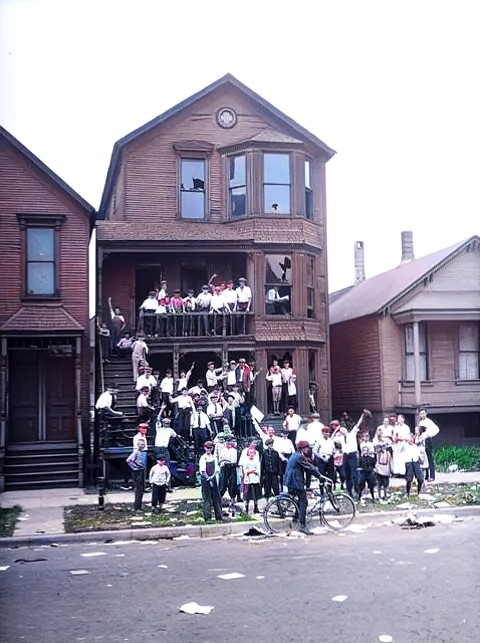
Born December 8, 1868, Henry Hugh Proctor entered the world just as Reconstruction was slipping away. The promises were fading, the tension was thick, and yet he grew into a leader who insisted that hope could be rebuilt if people were willing to do the work. Proctor did not simply become a minister. He became a community strategist, the kind of pastor who believed that faith without structure and support was just noise. When he stepped into leadership at Atlanta’s First Congregational Church, he treated the space like fertile ground. He preached, yes, but he also organized libraries, a gym, job assistance programs, cultural clubs, safe housing for young Black women, and music programs that strengthened spirits in a city determined to limit Black opportunity. He built a full-life resource center long before that phrase existed, proving that the church could be both sanctuary and engine. Proctor helped co-found the National Convention of Congregational Workers Among Colored People, creating a network for Black ministers who were pushing for progress in their own communities. After the violence of the 1906 Atlanta massacre, he worked on interracial committees that aimed to cool the hostility poisoning the South. He did this quietly, intentionally , and with the kind of steady courage that often goes unnoticed by history books. He was not chasing spotlight. He was shaping lives. His influence stretched far beyond his pulpit, carried in the people who found safety, dignity, and opportunity through the institutions he helped build. December 8, 1868 marks the birth of Henry Hugh Proctor, pioneering minister and committed community reformer. #HenryHughProctor #BlackHistory #OnThisDay #CommunityBuilder #AtlantaHistory #ReconstructionEra #FaithAndJustice #UnsungHeroes #AmericanHistory
LataraSpeaksTruth

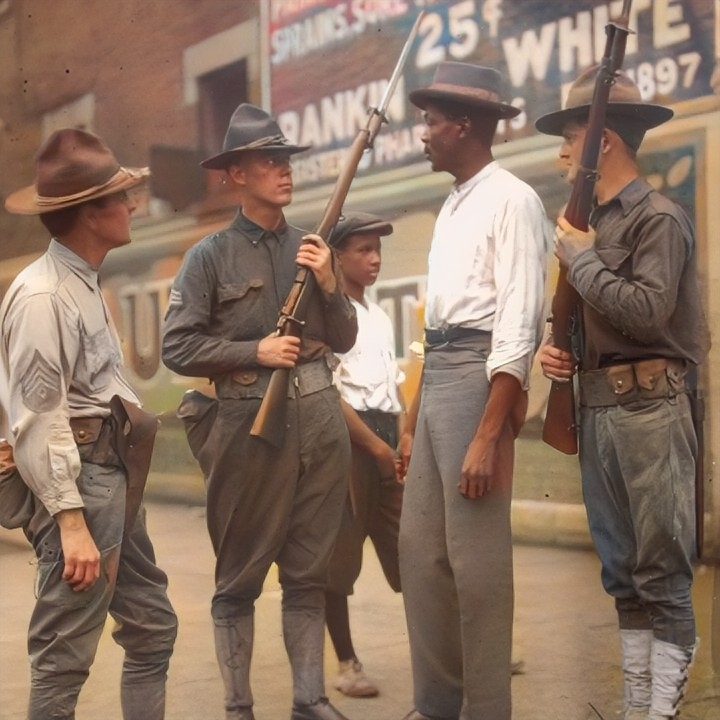
On December 11, 1917, before sunrise, the U.S. Army carried out one of the harshest mass executions in its history. Thirteen Black soldiers of the 3rd Battalion, 24th Infantry Regiment were hanged at Fort Sam Houston after the first court martial linked to the Houston Riot of August 1917. The men had been stationed at Camp Logan in segregated Houston, where Black soldiers faced constant harassment from police and white residents. Tension boiled over after a Black soldier was assaulted and arrested, and confusion inside the camp led many to believe that an armed white mob was on the way. Fear clashed with hostility, violence broke out, and several people were killed. When the trials began, more than one hundred Black soldiers faced charges in what became the largest court martial in U.S. Army history. Legal counsel was limited, testimony often conflicted, and the system allowed almost no room for appeal. Before dawn on December 11, thirteen men were executed in secret. Their families were not notified, and they had no chance to seek clemency. Their names were James Wheatley, Charles Baltimore, William Brackenridge, Thomas C. Hawkins, Carlos J. Rivers, Jesse Moore, Albert D. Wright, Nels P. Christensen, William C. Nesbit, James Divine, Clyde Sneed, Frank Johnson, and Pat MacWhorter. Two more court martials followed, bringing the total number of executed soldiers to nineteen. For decades the full story was reduced or distorted, but historians and communities kept pressing for truth. In 2023, the Army finally vacated all the convictions and acknowledged that the trials had been unjust and shaped by racial discrimination. Remembering this date means facing the reality of what happened and honoring the men whose service was met with unequal justice at home. #BlackHistory #OnThisDay #HoustonRiot #24thInfantry #MilitaryHistory #AmericanHistory #NewsBreakCommunity
LataraSpeaksTruth

January 1, 1931 marks a quiet but serious turning point in American history. Charles Hamilton Houston becomes vice-dean of Howard University School of Law and almost immediately reshapes it into something more than a classroom. He builds a legal training ground with a single purpose: strategy. Houston understood that segregation would not fall simply because it was unjust. It would fall only if it could be proven unconstitutional. So he trained lawyers to work with discipline and precision, to identify weaknesses in the law, document inequality in detail, and build cases strong enough to force the courts to act. This was not protest law. It was methodical law. Students were sent into the South to gather evidence, photograph conditions, interview communities, and expose how “separate but equal” failed in practice. Houston demanded excellence because he knew the stakes. Courts move slowly and only when the record leaves them no alternative. That strategy later became the legal foundation for cases like Brown v. Board of Education. Lawyers such as Thurgood Marshall did not emerge by chance. They were shaped by years of deliberate training and long-term planning. January 1, 1931 reminds us that some of the most important changes in history do not arrive with noise. They begin quietly, in classrooms, with patience, discipline, and a clear understanding of how power actually works. #January1 #OnThisDay #AmericanHistory #LegalHistory #HowardUniversity #CivilRightsHistory #BlackHistory #LongGame #QuietPower

LataraSpeaksTruth

Septima Poinsette Clark (1898–1987) was a quiet force who shaped the soul of the Civil Rights Movement through something radical: teaching. Born in Charleston, South Carolina, she believed literacy and education were tools for liberation. Her greatest legacy came through the creation of Citizenship Schools, grassroots classrooms that taught African Americans to read, write, and understand their rights so they could register to vote and become leaders. Fired from her teaching job in 1956 for being a member of the NAACP, Clark didn’t back down. Instead, she expanded her work with the Highlander Folk School and the Southern Christian Leadership Conference, training thousands of teachers and activists throughout the South. Many of her students went on to become civil rights leaders in their own right. Dr. Martin Luther King Jr. called her work “the key to the movement.” Yet because she was a Black woman in a male-dominated movement, Clark’s contributions were often overlooked. Still, she remained committed to justice through knowledge, saying, “I believe unconditionally in the ability of people to respond when they are told the truth.” In 1979, she received the Living Legacy Award from President Jimmy Carter. But her true legacy lives on in the power of informed people standing up for their rights, not just in courtrooms or marches, but in classrooms, living rooms, and voting booths. Gone but not forgotten. Her life reminds us: freedom begins with learning. #GoneButNotForgotten #SeptimaClark #BlackHistory #CivilRights #EducationAsResistance #CitizenshipSchools #LegacyOfLiteracy

LataraSpeaksTruth

The Eutaw Riot – October 25, 1870

In Eutaw, Alabama, a public gathering of Black citizens met in the courthouse square during the Reconstruction era to discuss upcoming elections and community progress. Tensions in the area had been rising, and the event turned tragic when conflict broke out between white and Black residents. Historical accounts report that several people lost their lives and many were injured. In the days that followed, voter turnout among Black citizens fell sharply due to widespread fear and intimidation. This shift helped change the political outcome in Greene County, marking a major setback for Reconstruction efforts in Alabama. The Eutaw Riot became one of the most notable examples of how resistance to racial equality influenced Southern politics after the Civil War. It stands as a reminder of how fragile progress can be when unity gives way to fear. #BlackHistory #EutawRiot #ReconstructionEra #AmericanHistory #LataraSpeaksTruth

The Eutaw Riot – October 25, 1870
Tag: blackhistory - Page 5 | LocalAll