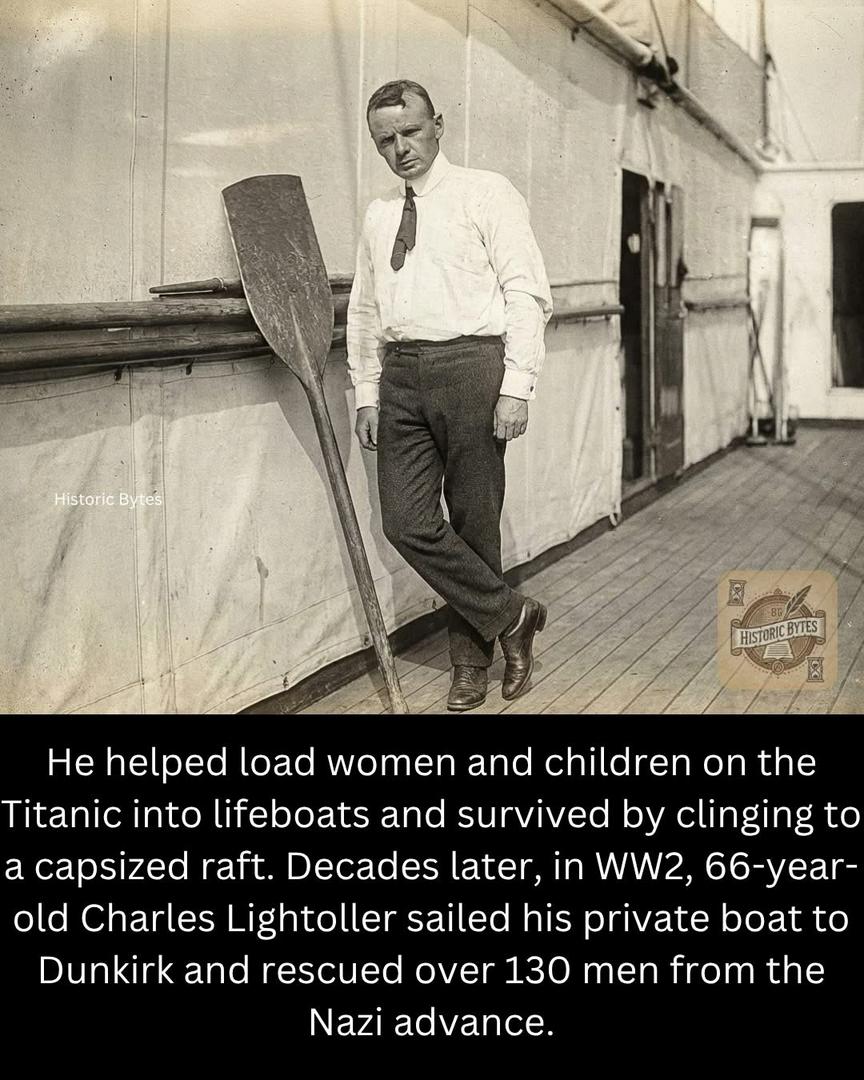
Charles Lightoller had already survived more than most men encounter in a lifetime before he ever boarded the Titanic.
He had been shipwrecked on a deserted island in the Indian Ocean at fourteen, survived a cyclone, a fire at sea, and a near-fatal bout of malaria on the West African coast. By the time he joined White Star Line, disasters were simply part of his biography.
On the night of April 14, 1912, Lightoller was Second Officer aboard the Titanic, the most senior crewmember on duty when the ship struck the iceberg.
He took charge of loading lifeboats on the port side and interpreted Captain Smith's order as women and children only, not merely first.
He turned away male passengers from boats that left with empty seats. He stayed until there were no more boats to lower.
As the ship's bow went under and the stern began to rise, the suction pulled him deep into the ocean.
He was then blasted back to the surface by an exploding boiler and found Collapsible Lifeboat B floating upside down nearby. He climbed on top.
Through a freezing North Atlantic night he organized around 30 survivors to stand in two rows and shift their weight in unison to keep the swamped, overturned boat from going under.
Three men died of hypothermia. The rest survived until the Carpathia arrived at dawn. Lightoller was the last person taken aboard.
He was called to both the American Senate and British Board of Trade inquiries, where his testimony became pivotal.
He returned to sea, commanded torpedo boats in World War One, earned the Distinguished Service Cross twice, and rammed a German U-boat, sinking it.
White Star Line, wanting to forget everything associated with the Titanic, passed him over for command and he eventually resigned.
#interesting #hero #fblifestyle