Tag Page hiddenhistory

#hiddenhistory
LataraSpeaksTruth

In January 1811, along the Mississippi River just upriver from New Orleans, enslaved men did what the system insisted could not happen. They organized. They marched. They fought back. The German Coast Uprising began on the night of January 8, 1811, in the Territory of Orleans, in the plantation corridor that later became today’s St. John the Baptist, St. Charles, and Jefferson parishes. The region was nicknamed the “German Coast” for early German settlers, but by 1811 it was dominated by sugar plantations built on enslaved labor. The revolt ignited at the plantation of Colonel Manuel Andry near present day LaPlace. Enslaved men attacked Andry, seized weapons and supplies, and moved down River Road toward New Orleans under the leadership of Charles Deslondes, an enslaved man often described as having Haitian ties and acting in the shadow of the Haitian Revolution. Estimates vary, but many accounts place the initial group at roughly 60 to 125 men, growing as they moved plantation to plantation. Some later reconstructions suggest participation could have reached into the hundreds. Most carried farm tools, axes, and pikes, with fewer firearms. Over about two days and roughly twenty miles, the rebels burned plantation buildings, sugarhouses, and crops, striking the engine that kept the system running. Their destination was New Orleans, and their march signaled a direct challenge to slavery. Militia, planters, and U.S. troops mobilized quickly. The uprising was crushed on January 10, and captures followed. Many were killed in battle or executed after tribunals. A commonly cited total is about 95 enslaved people killed during the conflict and aftermath. Severed heads were displayed along the levee and River Road as a warning. It did not topple the system. But it exposed how fragile it was, and how determined freedom had already become. #GermanCoastUprising #1811Uprising #LouisianaHistory #AmericanHistory #HiddenHistory #EnslavedResistance

LataraSpeaksTruth

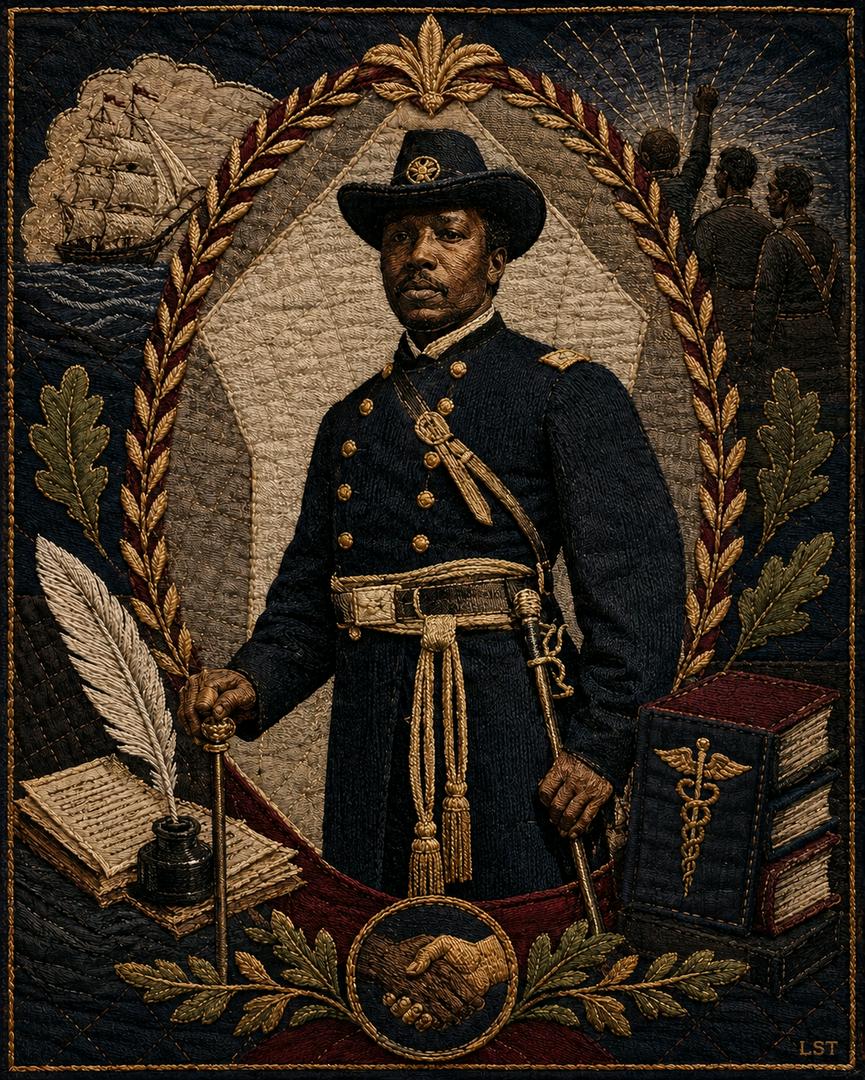
On May 6, 1812, Martin R. Delany was born in Charles Town, Virginia, now West Virginia. He would become one of the boldest Black thinkers of the 19th century: an abolitionist, physician, editor, writer, military officer, and political voice who refused to shrink himself to fit the limits America placed on him. Delany was not simply asking for permission to exist. He spoke the language of power, nationhood, self-determination, and global unity long before those ideas became common. He helped shape early Black nationalist thought and is often linked to the roots of Pan-African thinking because he looked beyond America and imagined a larger future for people of African descent. He edited newspapers, practiced medicine, wrote about the condition and future of Black people in the United States, and challenged the idea that freedom meant waiting quietly for acceptance. Delany believed Black people had the right to build, lead, organize, and determine their own destiny. During the Civil War, he made history in uniform as the first Black field officer in the United States Army, serving as a major. His life moved from resistance on the page to leadership in action. What makes Delany’s story so powerful is that he thought bigger than the world around him allowed. He understood that survival was not enough. Representation was not enough. A seat at someone else’s table was not enough. Martin R. Delany imagined freedom with structure, pride, ownership, and direction. He was not whispering for inclusion. He was calling for a future built with dignity and power. #BlackHistory #MartinRDelany #HiddenHistory #AmericanHistory #HistoryMatters

LataraSpeaksTruth

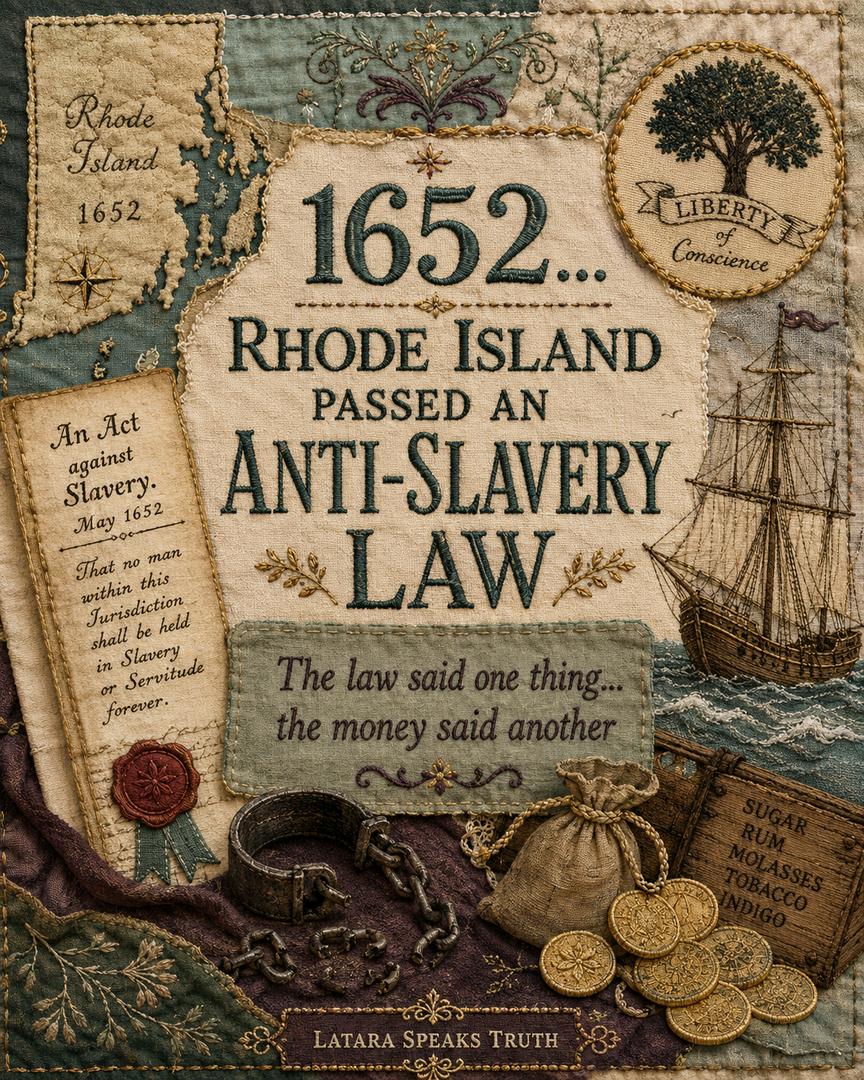
1652… Rhode Island Passed an Early Anti-Slavery Law, But Money Told a Different Story On May 18, 1652, Rhode Island passed what is often considered the first anti-slavery statute in the English American colonies. On paper, it sounded like a major step. The law said that Black and white servants could not be forced to serve for life. It limited servitude to ten years, or until age 24 for those brought in as children. After that, they were supposed to be free, similar to English indentured servants. But here is where history gets uncomfortable. The law existed, but enforcement did not follow with the same energy. That matters. Because when a law says one thing, but money says another, people usually find out which one had the real power. Rhode Island would later become deeply tied to slavery and the Atlantic slave trade, especially through ports like Newport. Ships, merchants, rum, labor, and profit became part of the colony’s economy. So while the 1652 law is remembered as an early anti-slavery statute, the reality after it shows how easily morality could be pushed aside when wealth was involved. That is the contradiction. Rhode Island could claim an early law against lifetime bondage while still becoming one of the colonies most connected to the business of human captivity. This is why history cannot be read from laws alone. A law can sound righteous. A law can look progressive. A law can be quoted later as proof that someone “tried.” But if nobody enforces it, and if the economy keeps rewarding the opposite behavior, then the law becomes more like decoration than protection. The painful truth is this: America’s early history is full of moments where the language of freedom was present, but the practice of freedom was selective. And Rhode Island’s 1652 law is one of those moments. The paper said one thing. The profit said another. #AmericanHistory #BlackHistory #RhodeIslandHistory #HiddenHistory #HistoryMatters

LataraSpeaksTruth

Benjamin Boardley…not Bradley…was born enslaved in Anne Arundel County Maryland around 1830, and his story is one of those “how did we not learn this in school” moments. The “Bradley” spelling spread because of an old print mistake, and it stuck so hard that people still repeat it today…so yeah, saying his real name matters. As a teenager, Boardley showed serious mechanical genius. Accounts describe him building a working steam engine using scrap materials, including parts like a gun barrel, metal pieces, and whatever he could get his hands on. While still enslaved, he was connected to work around the U.S. Naval Academy in Annapolis, where his skill didn’t just impress people…it forced them to admit what they were looking at. Talent. Precision. Engineering mind. Here’s the part that hits the hardest. He couldn’t legally patent what he built because he was enslaved…yet he could still create something valuable enough to sell. He earned money from his work, received support from others who believed in what he could do, and used that combined funding to purchase his freedom. His manumission was recorded on September 30, 1859…a receipt of freedom bought with invention. Not luck…not charity…work. Igbo Landing shows refusal in the water. Benjamin Boardley shows refusal in iron and fire. Different kind of resistance…same message. You don’t get to decide what we are capable of. #BenjaminBoardley #BlackInventors #HiddenHistory #AmericanHistory #MarylandHistory #NavalAcademy #BlackExcellence #UntoldStories #HistoryMatters #STEMHistory

Brandon_Lee

The tragedy at Ebenezer Creek remains one of the most devastating and overlookeo moments of the Civil War. As Union troops advanced toward Savannah during Sherman's March to the Sea. hundreds of freedom seekers followed behind them believing the army represented safety and a chance at a future bevond bondage. They walked for davs beside the soldiers carrying children, bundles, and the weight of generations. When they reached the cold waters of Ebenezer Creek, Union General Jefferson C Davis ordered his men to cross first on a pontoon bridge. Once the troops were safely over, the bridge was pulled up without warning, leaving the refugees stranded as Confederate forces closed in. Panic spread as families realized thev were trapped with nowhere to run. People leapt into the water clinging to anything that might float, pieces of wood, clothing, each otherMany drowned trying to reach the other side. Others were captured. A moment that should have been a step toward freedom turned into a niaht of terror and loss. The massacre at Ebenezer Creek exposed a harsh truth of that era... even in a war fought over slavery, the safety of Black refugees was treated as negotiable. Their trust was betrayed, their lives dismissed, and their suffering pushed to the margins of history. And before anyone shows up with the tirec "move on, this is old news, get over the past" routine, let me help vou out... how about you move on? I'm from Georgia and in all my years in this state I never once heard about this. I'm learning it right alongside everyone else. This is exactly why these stories matter. History doesn't disappear just because it makes people uncomfortable. We deserve to know what happened on the soil we stand on #LataraSpeaks Truth #BlackHistory #AmericanHistory #HiddenHistory #Under2000Characters

LataraSpeaksTruth

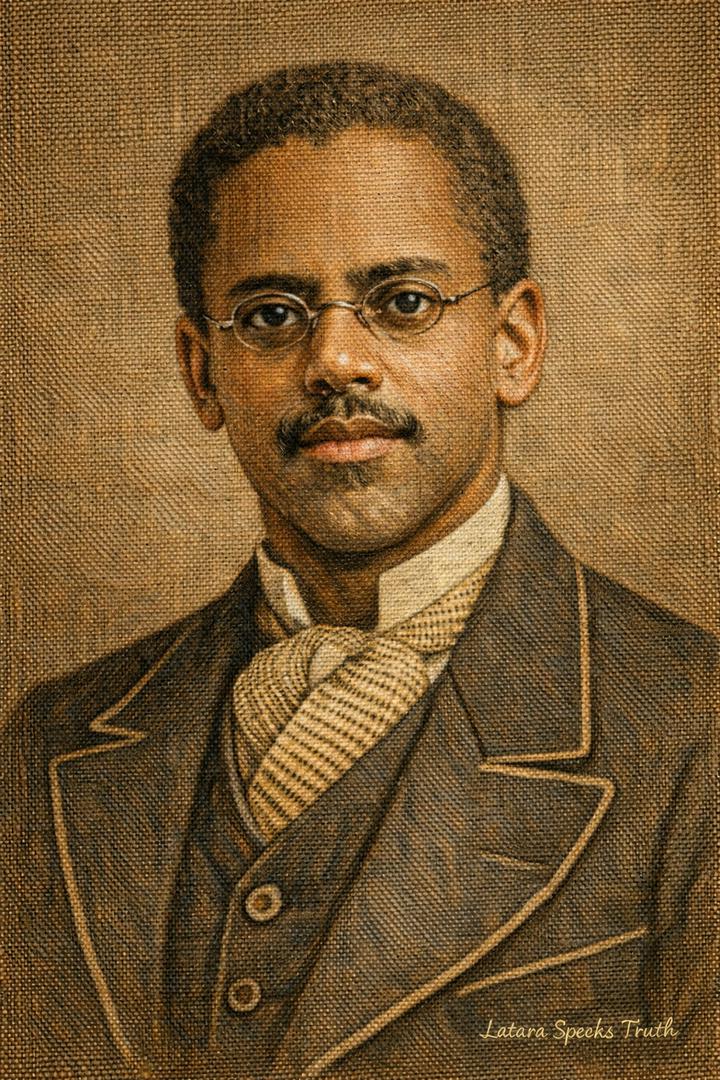
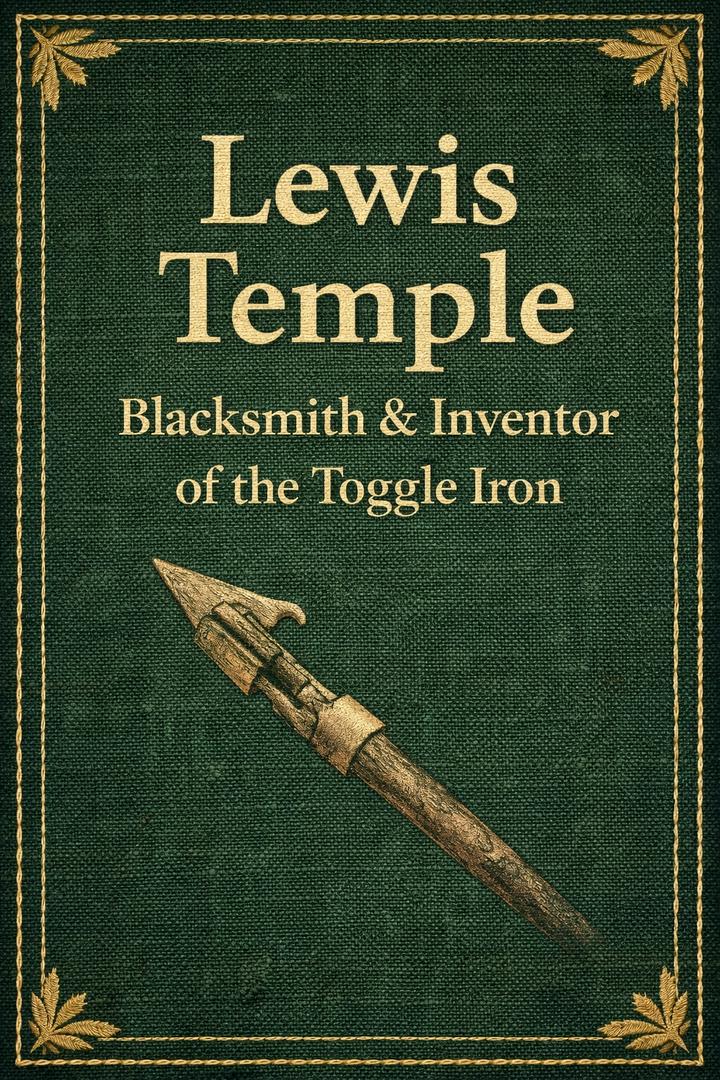
Lewis Temple’s story is not just about invention. It is about how skill, observation, and lived experience can shape an industry, even when the person behind the breakthrough does not receive the full credit he deserves. Born around 1800 in Richmond, Virginia, Lewis Temple later built his life in New Bedford, Massachusetts, where he worked as a blacksmith. By the 1830s, he had established himself along the waterfront, making iron tools and fittings used in the whaling trade. In a city tied closely to the sea, Temple understood the demands of the work and the problems whalers faced. He became best known for improving the whaling harpoon with a design called the toggle iron. Unlike earlier harpoons, Temple’s version was far more effective at staying lodged after striking a whale. That improvement made voyages more successful and more profitable at a time when whaling was a major part of the American economy. But Lewis Temple was more than a man who made a better tool. He was a Black craftsman and inventor whose work reflected precision, intelligence, and practical engineering. He studied the problem, understood the labor, and created a solution with lasting impact. Innovation like that does not happen by accident. It comes from deep knowledge and skill. Temple never patented his invention, so others copied the design and benefited from it financially. Even so, his name remains tied to one of the most important technological improvements in the history of whaling. Lewis Temple deserves to be remembered not as a footnote, but as part of a larger truth. Black history is not only a story of endurance. It is also a story of innovation, engineering, and vision. Black minds helped improve this country and move it forward. That is not a side note in history. That is history. #LewisTemple #BlackHistory #AmericanHistory #HiddenHistory #BlackInventors #Innovation #NewBedford #UntoldStories #HistoricalTruth

LataraSpeaksTruth

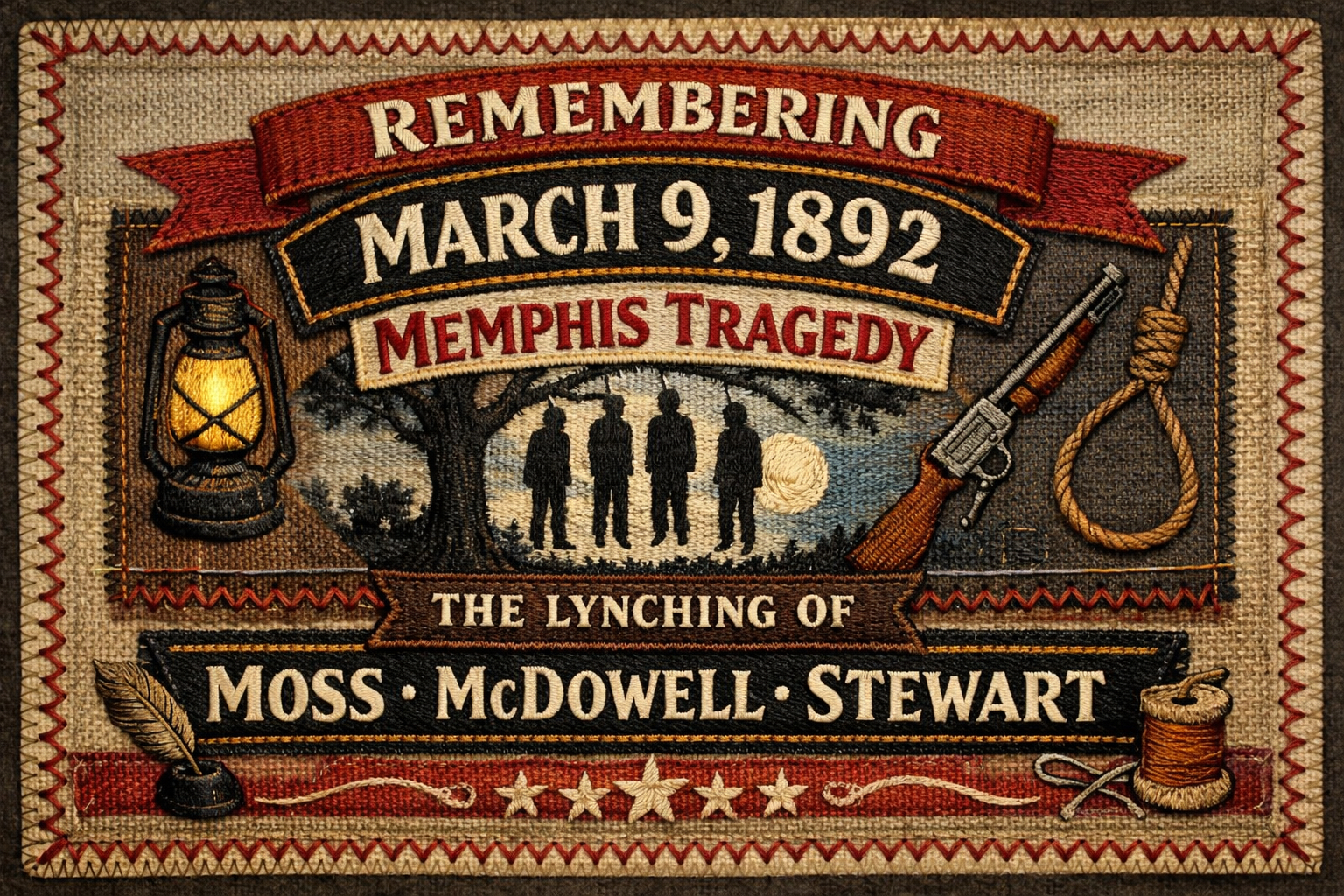
On March 9, 1892, Thomas Moss, Calvin McDowell, and Will Stewart were taken from a Memphis jail by a white mob and lynched. They were not criminals brought to justice. They were Black businessmen connected to the People’s Grocery, a successful Black owned store that had become a source of pride in the community and a threat to white resentment. Their murders were not random. They happened in a climate where Black progress itself could be treated as a target. Thomas Moss was more than a grocer. He was a respected postman, a family man, and a friend of Ida B. Wells. Moss, McDowell, and Stewart had built something meaningful in a world that often punished Black success for daring to exist. After a racial conflict near the store and rising white hostility, the three men were jailed. Then the law gave way to mob violence. In the dark of night, they were dragged out and killed without trial, without mercy, and without consequence for the people who did it. This was one of the moments that lit a deeper fire in Ida B. Wells. She had already begun speaking out, but the murder of these men made the truth even harder to ignore. She understood what many refused to say plainly. Lynching was not about justice. It was about power, terror, and control. It was a weapon used to crush dignity, silence progress, and remind Black people that even success could make them a target. The killing of Moss, McDowell, and Stewart remains one of the clearest examples of how racial violence was used to destroy not only lives, but community strength, economic independence, and hope. Their story still matters because it forces this country to face what was done when Black people tried to build for themselves. #OnThisDay #BlackHistory #IdaBWells #ThomasMoss #CalvinMcDowell #WillStewart #MemphisHistory #PeoplesGrocery #AmericanHistory #HiddenHistory

LataraSpeaksTruth

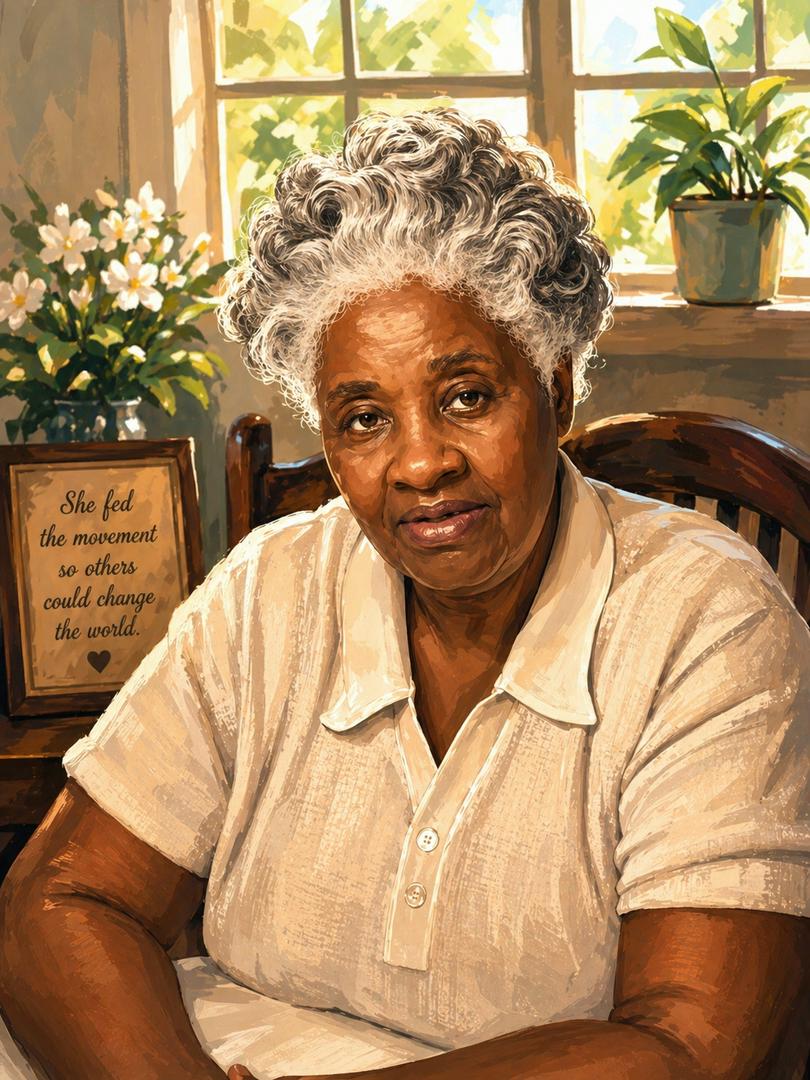
Georgia Gilmore did not lead the Montgomery Bus Boycott from a pulpit, courtroom, or political office. She helped keep it alive from a kitchen. Born in Montgomery County, Alabama, in 1920, Gilmore worked as a cook, midwife, and domestic worker. By the time the boycott began in 1955, she already knew the pain of segregation on city buses. She later testified about being forced to get off a bus and re-enter through the back, only for the driver to pull away before she could get back on. After Rosa Parks was arrested on December 1, 1955, Montgomery’s Black community organized a boycott of the bus system. The boycott lasted more than a year, and people still had to get to work, school, church, and daily responsibilities. That meant carpools, gas money, repairs, and steady organizing. Gilmore answered with food. She created a secret fundraising group called the Club from Nowhere. The name protected the women who cooked, sold, and donated because some could lose their jobs if their names were known. They sold meals, cakes, pies, fried chicken, and sandwiches through churches, homes, beauty shops, and community spaces. The money helped support the Montgomery Improvement Association and the boycott’s transportation efforts. Gilmore later lost her job, but Dr. Martin Luther King Jr. encouraged her to keep cooking from home. Her kitchen became a gathering place where leaders, workers, and community members were fed. Georgia Gilmore’s legacy reminds us that movements are not only built by speeches. They are built by people who cook, drive, donate, organize, and carry the work quietly. She helped feed the movement one plate at a time. #GeorgiaGilmore #MontgomeryBusBoycott #BlackHistory #HiddenHistory #NewsBreak
LataraSpeaksTruth

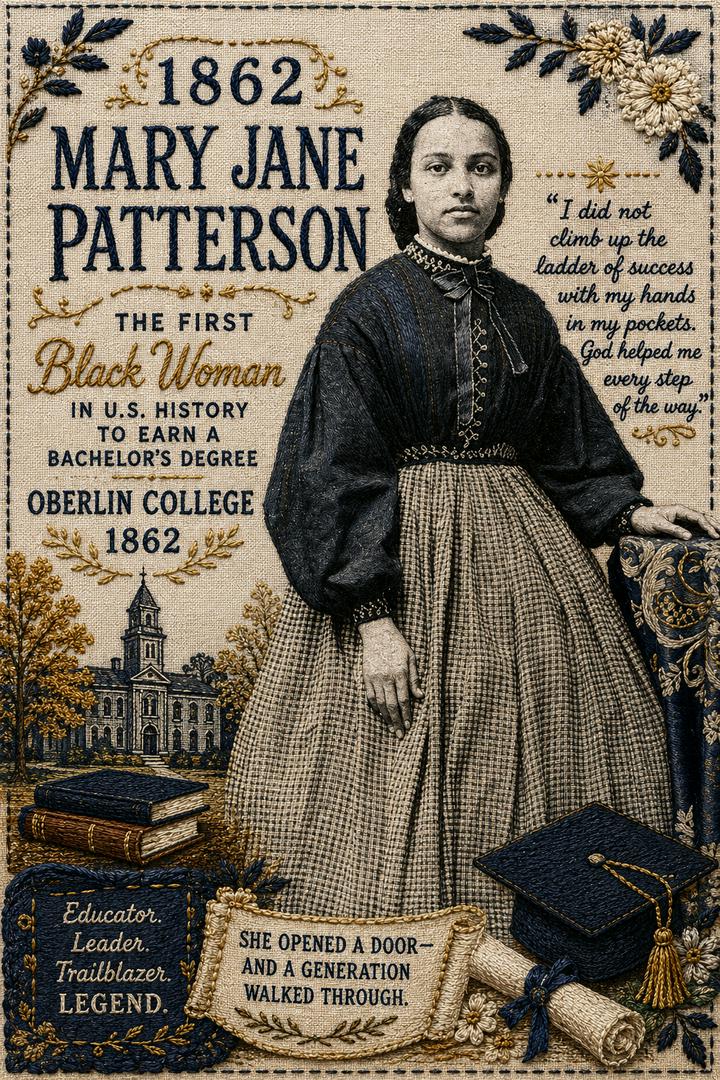
In 1862, Mary Jane Patterson made history when she graduated from Oberlin College, becoming the first Black woman in the United States widely recognized as earning a Bachelor of Arts degree. That achievement was powerful on its own, but the timing makes it even heavier. She graduated during the Civil War, while slavery was still legal in much of the country and most Black Americans were still fighting for freedom, safety, citizenship, and basic human recognition. Patterson did not take the easier path expected of women at the time. At Oberlin, she completed the rigorous classical course, often referred to as the “gentlemen’s course,” which included subjects such as Latin, Greek, and higher mathematics. She graduated with high honors. But Mary Jane Patterson was not just a “first.” She became an educator and leader who helped shape future generations. She taught at the Institute for Colored Youth in Philadelphia and later worked in Washington, D.C., at the Preparatory High School for Colored Youth, which became known as Dunbar High School. She eventually served as principal, helping raise the academic standards of one of the most important Black educational institutions of its era. Her story matters because she stepped into higher education when the country was still debating whether Black people should even be free. She pursued excellence in a world designed to deny her access. Mary Jane Patterson did not just earn a degree. She opened a door. And every Black woman who walked across a college stage after her carried part of that legacy forward. #MaryJanePatterson #BlackHistory #BlackWomenInHistory #OberlinCollege #EducationHistory #HiddenHistory

LataraSpeaksTruth

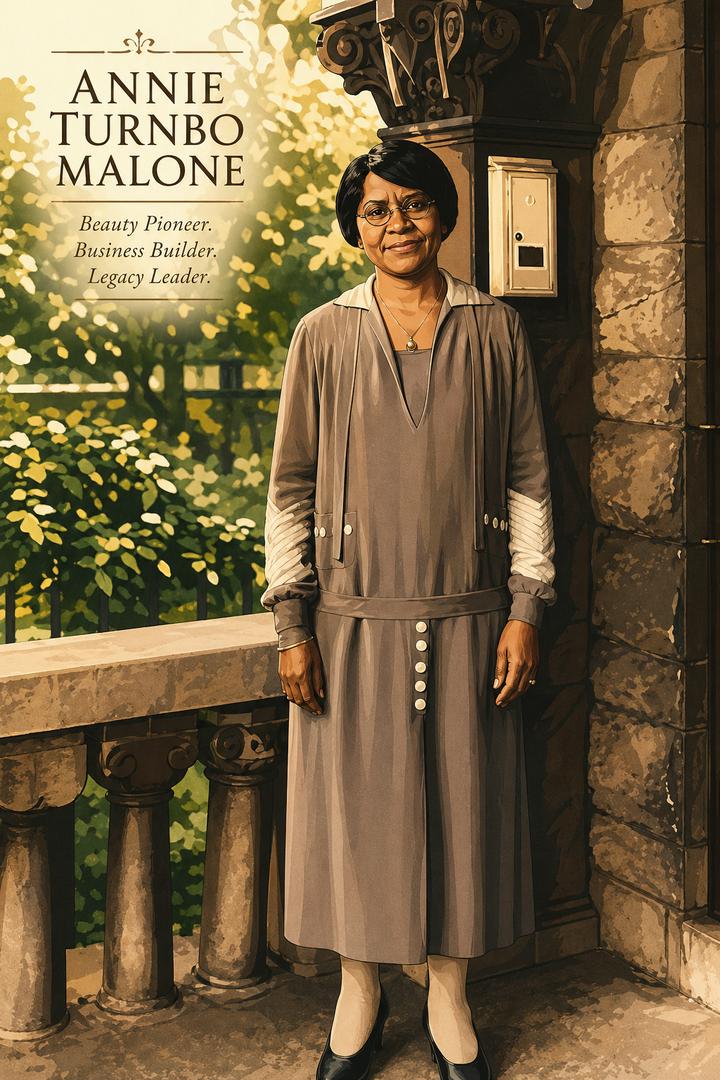
Before Madam C.J. Walker became the name most people remember, Annie Turnbo Malone was already building a beauty empire. Born Annie Minerva Turnbo in Illinois, Malone became one of the most important beauty entrepreneurs of the early 1900s. She developed hair and scalp care products for women whose beauty needs were often ignored by mainstream companies. Her business became known through the Poro system, a hair care method that grew into a major company, training network, and beauty school. In 1918, she established Poro College in St. Louis. It was more than a school. It included business offices, manufacturing space, classrooms, a retail store, and community areas. That part matters. Malone was not only selling products. She was teaching women how to earn, sell, build confidence, and create their own economic path at a time when opportunity was limited by race, gender, and segregation. Madam C.J. Walker’s story is powerful too, but it did not appear out of nowhere. Walker was once connected to Malone’s business before building her own company. That does not take anything away from Walker. It simply puts Annie Malone back into the picture where she belongs. Malone also used her wealth to support children, education, and community uplift. She is remembered as one of the first Black women millionaires in America, though her name is still less recognized than it should be. Her life also came with setbacks, including legal battles, business disputes, and financial strain. But her influence did not disappear. The beauty industry many people know today was shaped by women like Annie Malone, women who understood that hair was not just style. It was dignity. It was business. It was culture. It was survival. So when we talk about early beauty empires, the story is bigger than one name. Annie Malone was not a footnote. She was a founder. #AnnieMalone #BeautyHistory #HiddenHistory #WomenInBusiness