Tag Page militaryhistory

#militaryhistory
LataraSpeaksTruth

Charity Adams Earley did not quietly step into history. She walked into it wearing a uniform. Born in 1918 in North Carolina and raised in South Carolina, Charity Adams Earley came of age in a country where race and gender were often used to limit what a person could become. She refused to accept those limits. In 1942, she joined the Women’s Army Auxiliary Corps, later known as the Women’s Army Corps, and became part of the first class of Black women officers. During World War II, she rose through the ranks and was selected to lead the 6888th Central Postal Directory Battalion, known as the Six Triple Eight. This was the only all Black women’s Army unit sent overseas during the war. Their mission was urgent and enormous. Millions of letters and packages had piled up in Europe, leaving American troops waiting for word from home. Under Adams Earley’s leadership, the battalion worked in harsh conditions in England and later France. They sorted and redirected mail around the clock with speed, discipline, and precision. The unit cleared the backlog in far less time than expected, helping restore morale for troops fighting far from home. By the end of the war, Charity Adams Earley had become the highest ranking Black woman officer in the U.S. Army during World War II. Her story is not about opinion or internet debate. It is about documented service, proven leadership, and a woman who handled a wartime crisis with excellence. Charity Adams Earley did her job, led her unit, and left a record that still stands. #OurHistory #CharityAdamsEarley #6888th #MilitaryHistory #WWIIHistory #LataraSpeaksTruth

LataraSpeaksTruth

On December 11, 1917, before sunrise, the U.S. Army carried out one of the harshest mass executions in its history. Thirteen Black soldiers of the 3rd Battalion, 24th Infantry Regiment were hanged at Fort Sam Houston after the first court martial linked to the Houston Riot of August 1917. The men had been stationed at Camp Logan in segregated Houston, where Black soldiers faced constant harassment from police and white residents. Tension boiled over after a Black soldier was assaulted and arrested, and confusion inside the camp led many to believe that an armed white mob was on the way. Fear clashed with hostility, violence broke out, and several people were killed. When the trials began, more than one hundred Black soldiers faced charges in what became the largest court martial in U.S. Army history. Legal counsel was limited, testimony often conflicted, and the system allowed almost no room for appeal. Before dawn on December 11, thirteen men were executed in secret. Their families were not notified, and they had no chance to seek clemency. Their names were James Wheatley, Charles Baltimore, William Brackenridge, Thomas C. Hawkins, Carlos J. Rivers, Jesse Moore, Albert D. Wright, Nels P. Christensen, William C. Nesbit, James Divine, Clyde Sneed, Frank Johnson, and Pat MacWhorter. Two more court martials followed, bringing the total number of executed soldiers to nineteen. For decades the full story was reduced or distorted, but historians and communities kept pressing for truth. In 2023, the Army finally vacated all the convictions and acknowledged that the trials had been unjust and shaped by racial discrimination. Remembering this date means facing the reality of what happened and honoring the men whose service was met with unequal justice at home. #BlackHistory #OnThisDay #HoustonRiot #24thInfantry #MilitaryHistory #AmericanHistory #NewsBreakCommunity

LataraSpeaksTruth

January 8, 1815. The Battle of New Orleans. The War of 1812 was technically over. The Treaty of Ghent had been signed, but word had not crossed the Atlantic yet. Slow communication changed everything. British forces attacked New Orleans anyway and were met by an American force led by Andrew Jackson. His army was not a traditional one. It included U.S. regulars, state militias, Native allies, free Black soldiers, local Creoles, and even pirates under Jean Lafitte. The result was one of the most lopsided victories in U.S. military history. Over 2,000 British casualties compared to roughly 70 American losses. The battle did not change the treaty, but it reshaped American identity. It boosted national confidence, made Jackson a national hero, and proved that the United States could stand up to the world’s most powerful empire. Free Black soldiers played a critical role in defending the city. Their bravery was undeniable. Their recognition afterward was not. This victory was not simple, clean, or fair. It was complex, coalition-driven, and built by people history often sidelines. #January8 #BattleOfNewOrleans #WarOf1812 #AmericanHistory #USHistory #MilitaryHistory #BlackHistory #HiddenHistory

LataraSpeaksTruth

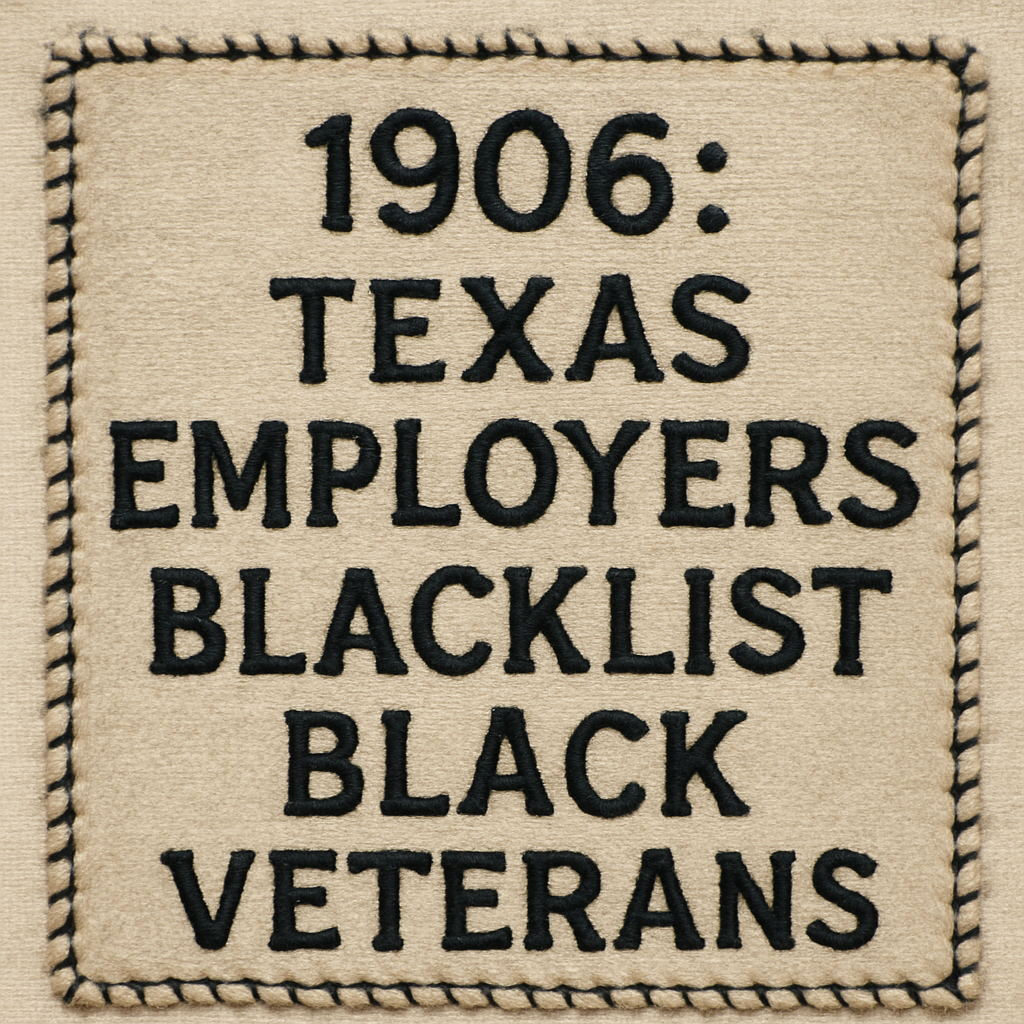
Texas Employers Blacklist Black Veterans (1906)

Some stories in American history were never given the full attention they deserved, and the Brownsville Affair is one of them. In 1906, more than 160 Black soldiers from the 25th Infantry were blamed for a shooting they had nothing to do with. Local officials rushed to judgment with no proof, and the nation went along with the accusation. President Theodore Roosevelt discharged the entire group in one order, stripping their service, their honor, and their futures. What many people never hear about is what happened long after the headlines died down. The government eventually admitted the soldiers had been telling the truth from day one. The bullets didn’t match their rifles. The timelines didn’t fit. Witness claims fell apart. But by the time the record was corrected, decades had passed, and many of the men were already gone. Their families lived with the weight of an accusation built on bias, not evidence. Military benefits were never restored in time to help them. Careers were lost. Entire generations grew up under a shadow they did not deserve. The correction came too late to give the soldiers the justice they needed while they were still here. Instead, their names were quietly cleared long after the damage had been done. It’s a reminder that institutions can make decisions in minutes that take lifetimes to repair. These men deserve to be remembered with truth, dignity, and the honor they earned through service. #BrownsvilleAffair #BlackHistory #MilitaryHistory #HistoryUncovered #AmericanHistory #TruthMatters

Texas Employers Blacklist Black Veterans (1906)
You've reached the end!
Tag: militaryhistory - Page 2 | LocalAll