Tag Page nasa

#nasa
justme

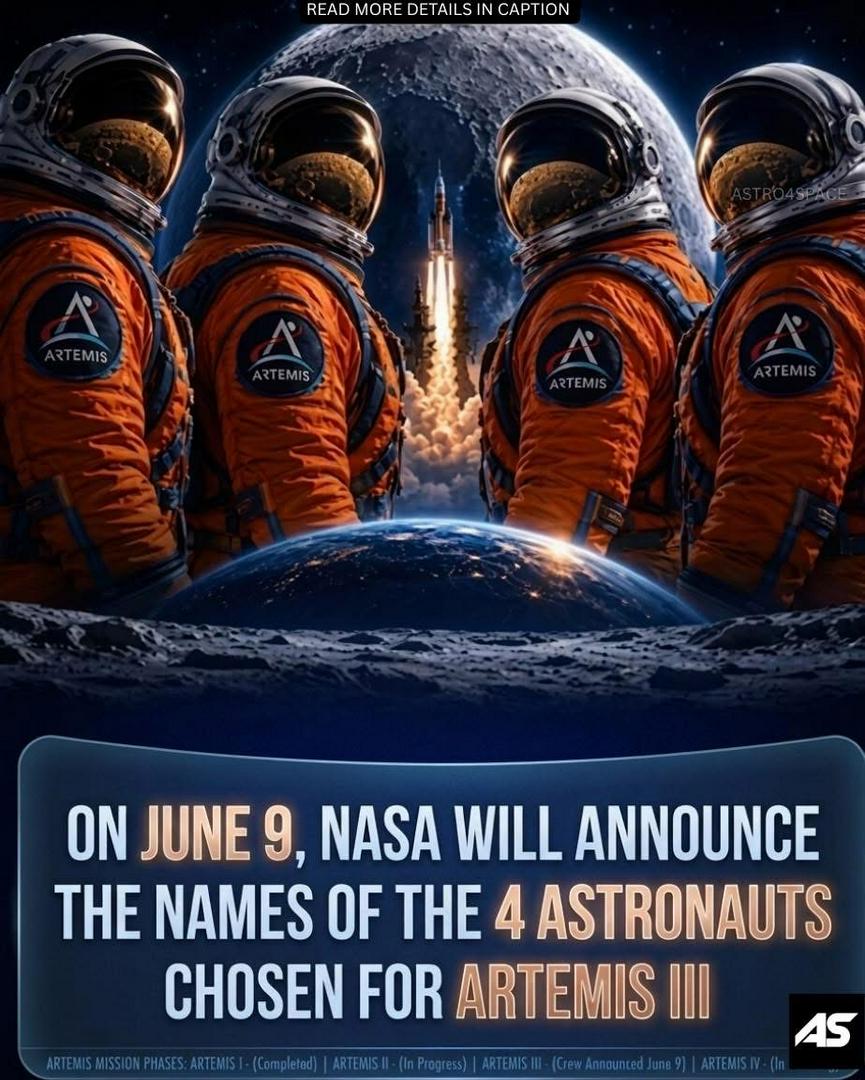
🚨 NASA is set to officially reveal the Artemis III crew on June 9 at 11:00 a.m. EDT during a live announcement from Johnson Space Center in Houston. This marks a major milestone for the future of human space exploration. The astronauts introduced during the event will be assigned to Artemis III — a mission once planned to land humans on the Moon for the first time since Apollo 17 in 1972. But NASA has now significantly reshaped the mission. Instead of being the first Artemis lunar landing, Artemis III is now expected to focus on vital orbital testing between the Orion spacecraft and commercial lunar landers being developed by SpaceX and Blue Origin. According to NASA, the mission will demonstrate key rendezvous and docking operations in Earth orbit — systems considered essential before astronauts attempt future landings near the Moon’s south pole. The mission is currently aiming for launch in 2027. As a result of the updated plan, Artemis IV is now expected to become the mission that finally places humans back on the lunar surface. At the same time, NASA is aggressively expanding its long-term Moon Base ambitions: • robotic cargo deliveries beginning in 2026 • privately developed lunar rovers • scouting drones exploring the lunar south pole • infrastructure designed for a sustained human presence on the Moon NASA says all of this is laying the foundation not just for returning to the Moon — but eventually for sending humans to Mars. More than half a century after Apollo, humanity’s next giant leap is no longer a distant dream. It’s already underway. 🌕🚀 #NASA #Artemis #ArtemisIII #MoonMission #MoonLanding #SpaceExploration #Astronomy #SpaceX #BlueOrigin #Mars #MoonBase #Orion #RocketLaunch #SpaceNews #FutureOfSpace

justme

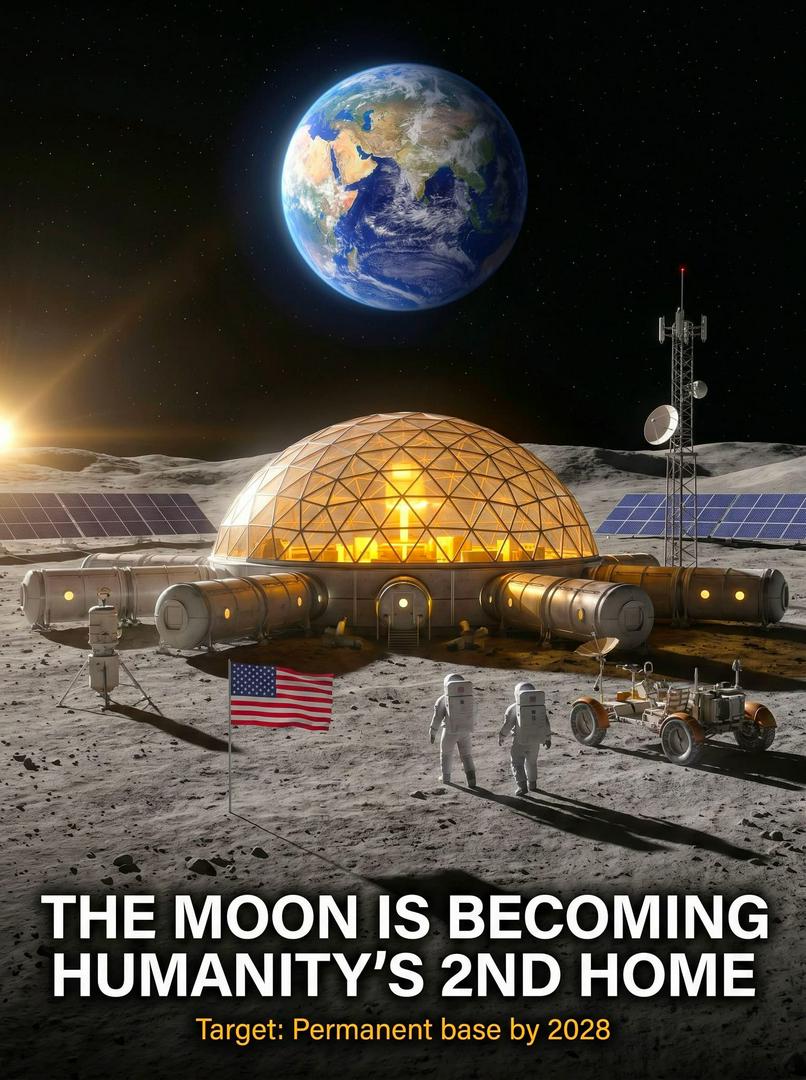
BREAKING: We're not just going back to the Moon. We're staying. 🌕 NASA's new roadmap just shifted everything. The goal is no longer "flags and footprints." The goal is a permanent American outpost on the lunar south pole – and construction could start before 2028. Here's what the proposed Artemis Base Camp includes: 🏠 3D-printed habitats using lunar soil to block radiation ⚡ Solar farms at the "peaks of eternal light" for 24/7 power 💧 Ice mining robots to turn Moon water into drinking water + rocket fuel 🚀 Launch pads to use the Moon as a gas station for Mars missions Why the south pole? Because there’s water ice in the craters. Water = oxygen to breathe, hydrogen for fuel. It’s the key to living off-Earth. The last time humans left Earth orbit was 1972. The next time we go, we’re not coming back right away. This is the generation that becomes a multi-planet species. Question: If NASA offered you a 2-year contract to work on the Moon – all expenses paid + $500K salary – would you take it? YES or NO? 👇 Save this. In 10 years, you’ll tell people you saw the plan on day one. Follow Space Reality Files for space news without the hype. #Artemis #MoonBase #LunarColony #SpaceExploration #NASA #FutureTech #SpaceJobs #USA #MoonToMars

justme

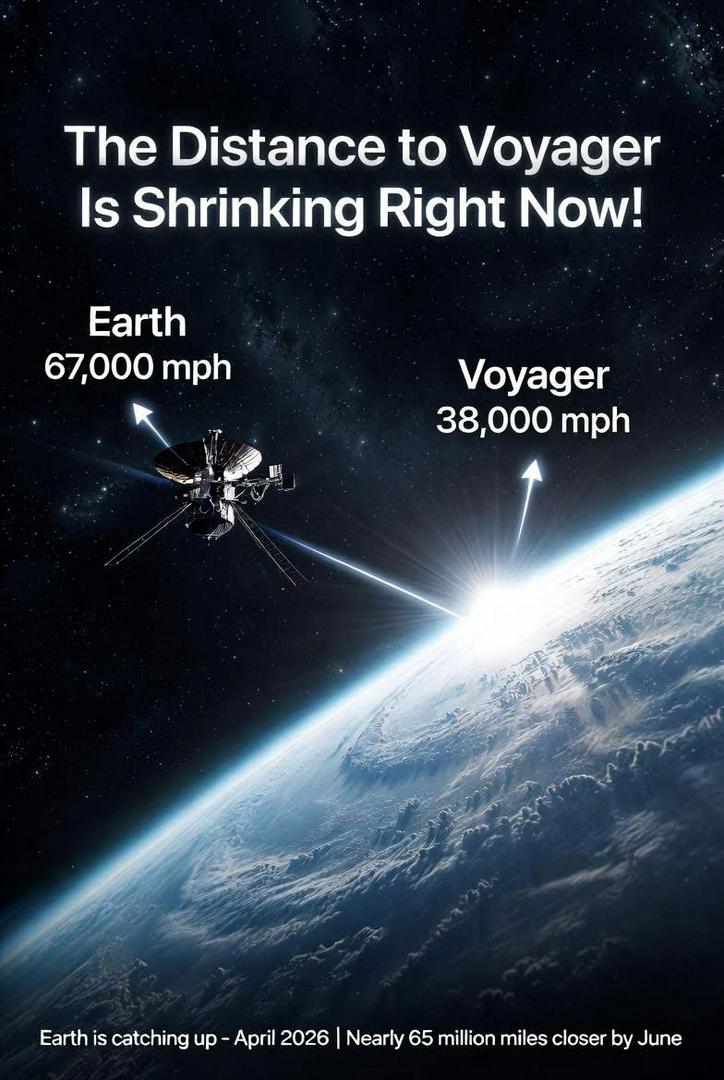
🌍 Mind-Blowing Fact: The Distance Between Voyager and Earth Is Currently Shrinking! 🚀 For nearly 50 years, Voyager 1 and Voyager 2 have been speeding away from the Sun at up to 38,000 mph, now deep in interstellar space. Yet right now (and every year from late February to early June), the distance to Earth is actually decreasing — by millions of miles! Why? Earth orbits the Sun at a blistering 67,000 mph — much faster than the Voyagers. As our planet swings around to the same side of the Sun as the probes, we’re catching up to them. For example, Voyager 2 is shrinking its distance by about 0.69 AU (nearly 65 million miles) between February and June 2026. By early June, it will be closer than it was in February! Once Earth passes and heads the other way, the distance will start growing again — forever. Our tiny blue planet is still playing cosmic catch-up with its distant robotic ambassadors. What do you find more amazing — that the Voyagers are still communicating after 50 years, or that Earth can “catch up” to them every year? Drop your thoughts below 👇 and tag a space lover who needs to see this! #Voyager #Voyager1 #Voyager2 #InterstellarSpace #NASA #Astronomy #SpaceFacts #Science

justme

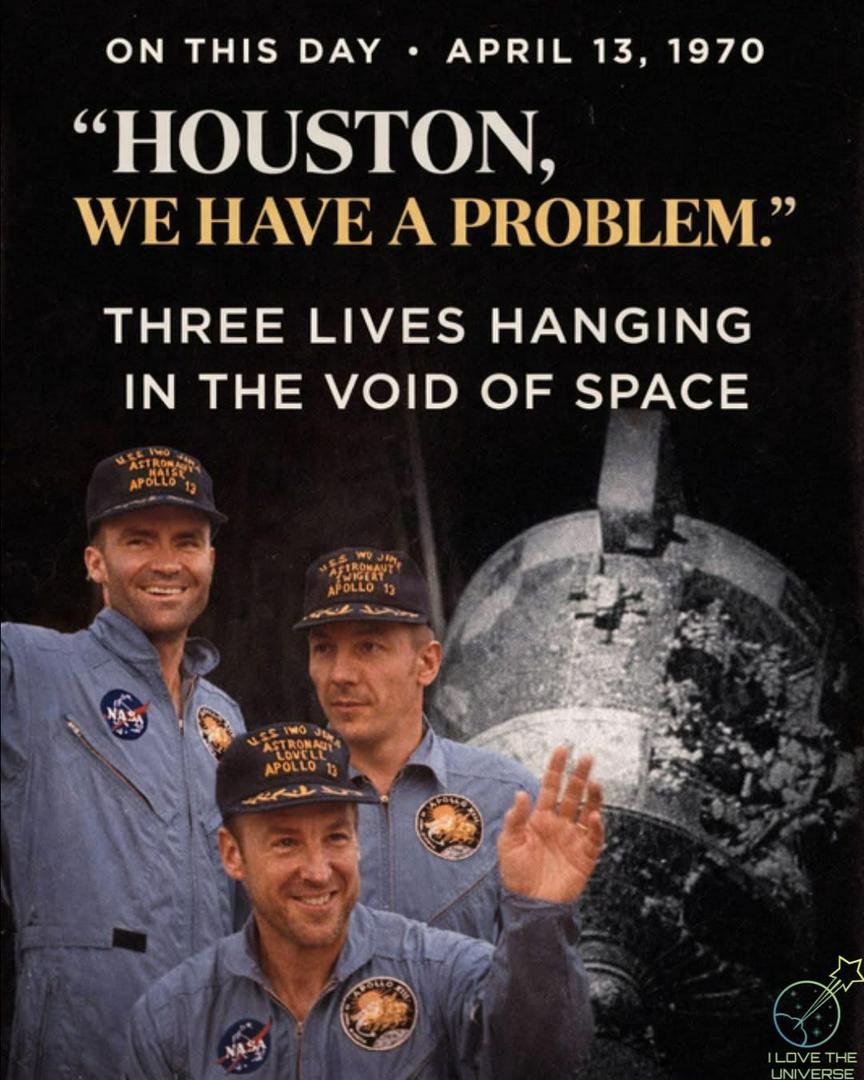
🚀 Apollo 13 — when everything went wrong… and humanity refused to lose On this day, April 13, 1970 — nearly 320,000 kilometers from Earth — an ordinary sentence turned into one of the most chilling moments in space history: “Houston, we’ve had a problem.” A sudden explosion ripped through the service module of Apollo 13, crippling the spacecraft. Oxygen was leaking into space. Power was failing. The Moon landing was instantly abandoned. Three astronauts — Jim Lovell, Jack Swigert, and Fred Haise — were no longer explorers. They were fighting to survive. What followed was not just a mission… It was one of the greatest rescue efforts in human history. Back on Earth, hundreds of engineers at NASA worked around the clock. No sleep. No margin for error. Every calculation mattered. Every decision could mean life or death. They turned the lunar module into a lifeboat. They improvised solutions never tested before. They built survival plans out of pure ingenuity and desperation. At one point, rising carbon dioxide levels threatened to suffocate the crew — until engineers famously created a workaround using nothing but materials available onboard. This was humanity at its absolute best. Against impossible odds, Apollo 13 didn’t land on the Moon. But it did something even greater. It brought its crew home. Alive. The story became legendary — and was later immortalized in the film Apollo 13, starring Tom Hanks — but no movie can fully capture the tension, the fear, and the brilliance of those real moments. Because this wasn’t fiction. This was real. And it proved something we still believe today: Even in the darkest moment… humanity finds a way. #Apollo13 #NASA #Space #Astronomy #History #OnThisDay #Explore #NeverGiveUp

justme

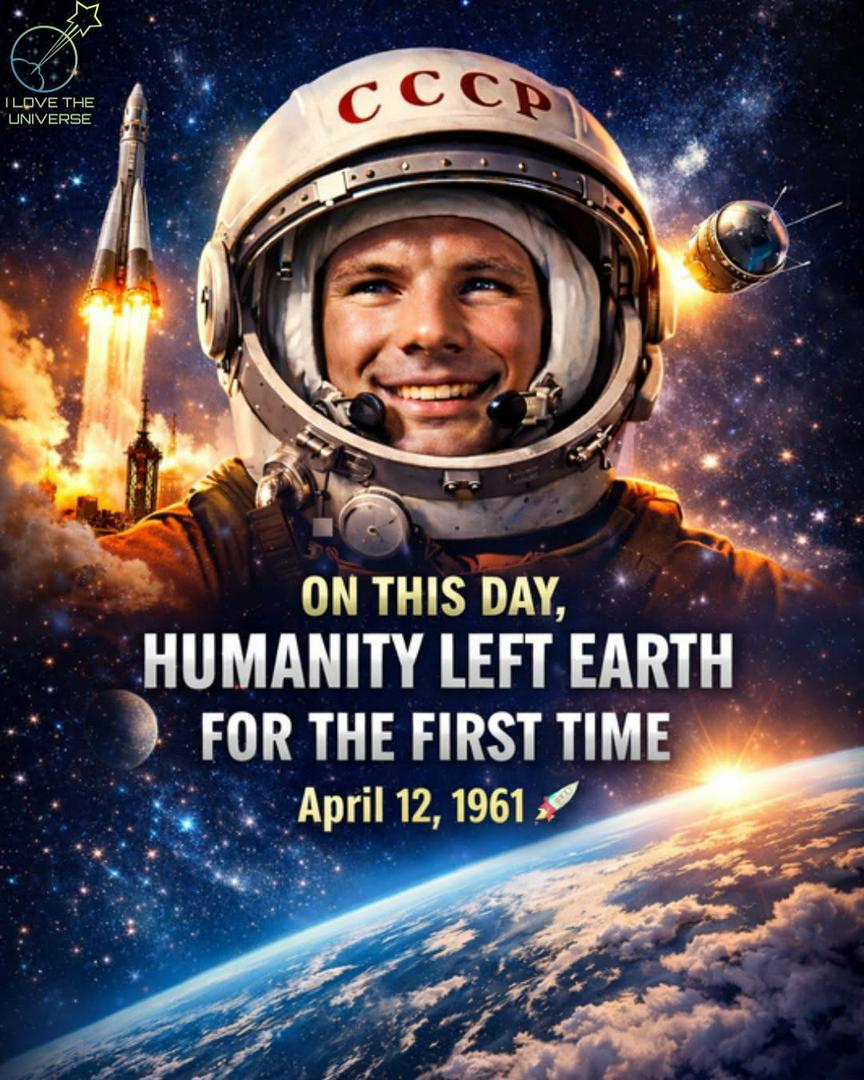
He didn’t just go to space… He changed humanity forever. 🚀 On April 12, 1961, Yuri Gagarin became the first human to leave Earth. In just 108 minutes, aboard Vostok 1, he orbited our planet once… But what he really did was something far bigger. He proved that we are not bound to this world. For the first time in history, a human looked back at Earth not as a place… but as a fragile blue world floating in the infinite dark. 🌍 No borders. No countries. Just one home. That single flight ignited a fire that still burns today — from the Moon landings… to Mars dreams… to the missions happening right now. And maybe the most powerful part? 👉 Every astronaut since… every rocket… every mission… exists because of that one moment. Because someone dared to go first. We didn’t just reach space that day… we discovered who we are capable of becoming. We are explorers. We are dreamers. And space is only the beginning. — If this moment gives you chills… you’re not alone. Share it. Let more people feel it. 🌌 #Space #YuriGagarin #April12 #Humanity #Astronomy #Cosmos #SpaceExploration #NASA #History #Universe #Earth #Inspiration

justme

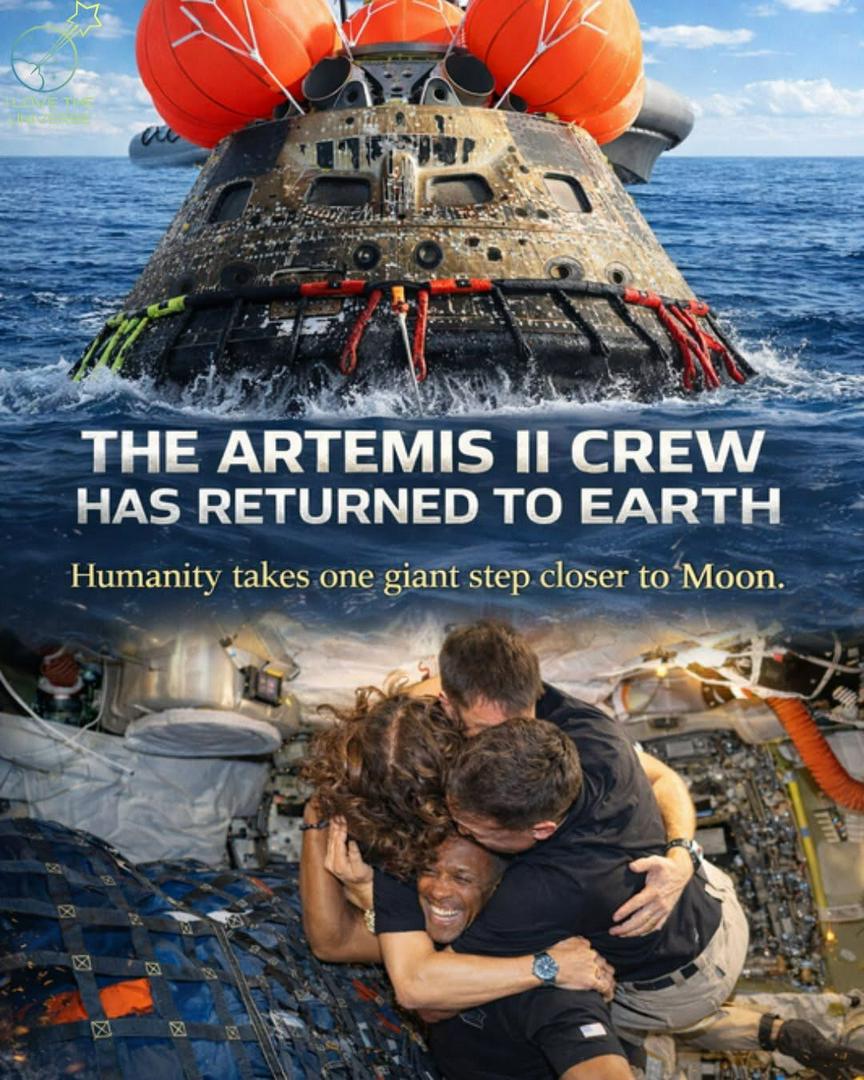
WE DID IT. THEY’RE HOME. 🌍🚀 After traveling hundreds of thousands of kilometers through the silent void, after pushing the limits of human courage and engineering, the crew of Artemis II has safely returned to Earth. The most dangerous moment… came last. Reentry — when the spacecraft becomes a fireball, when temperatures rise to thousands of degrees, when everything depends on precision, physics, and trust. And they made it through. Today, we didn’t just witness a successful mission. We witnessed humanity proving—once again—that we are capable of going farther, risking more, and coming back stronger. This mission wasn’t only about reaching the Moon and returning. It was about testing the path for all who will follow. It was about showing that deep space is no longer a distant dream—it’s our next destination. To the Artemis II crew: Welcome home. You carried all of us with you. You inspired millions. And you reminded the world what we can achieve when we dare to explore. And this is only the beginning. Next stop: Artemis III — humanity returns to the surface of the Moon. 🌕 A new era has begun… and we are living in it. #ArtemisII #NASA #Space #Moon #Astronomy #SpaceExploration #WelcomeHome #Artemis #Humanity #NextStep

ArmyVet News & Knowledge

🚀🇺🇸 NASA’s Artemis program isn’t just a return to the Moon — it’s a full engineering roadmap for building a multi‑planet future. The plan starts with proving the hardware: SLS, the heavy‑lift rocket; Orion, the deep‑space crew capsule; and the upgraded ground systems that support them. Artemis I validated the full stack in deep space. Artemis II puts humans into the loop — testing life support, navigation, radiation exposure, and manual controls on a 10‑day lunar flyby. From there, Artemis III targets the Moon’s south pole, where water ice could support fuel production and long‑term habitation. This mission requires Orion, SLS, and SpaceX’s Human Landing System working together — the first sustained surface operations since Apollo. Artemis IV and beyond shift from “missions” to infrastructure: building the Lunar Gateway, expanding surface mobility, and testing resource extraction. These steps aren’t symbolic — they’re the engineering foundation for Mars. NASA states that Artemis is the required proving ground for deep‑space survival, propulsion, and life‑support systems needed for the first crewed Mars missions. 🌕➡️🔴 The long‑term goal: a sustainable lunar base, a staging point in lunar orbit, and eventually humans living and working on Mars. Not science fiction — a strategic, step‑by‑step architecture for a multi‑planet species. #NASA #Artemis #EngineeringTheFuture #MoonToMars #SpaceExploration #STEM #USA #NextGiantLeap 🚀

justme

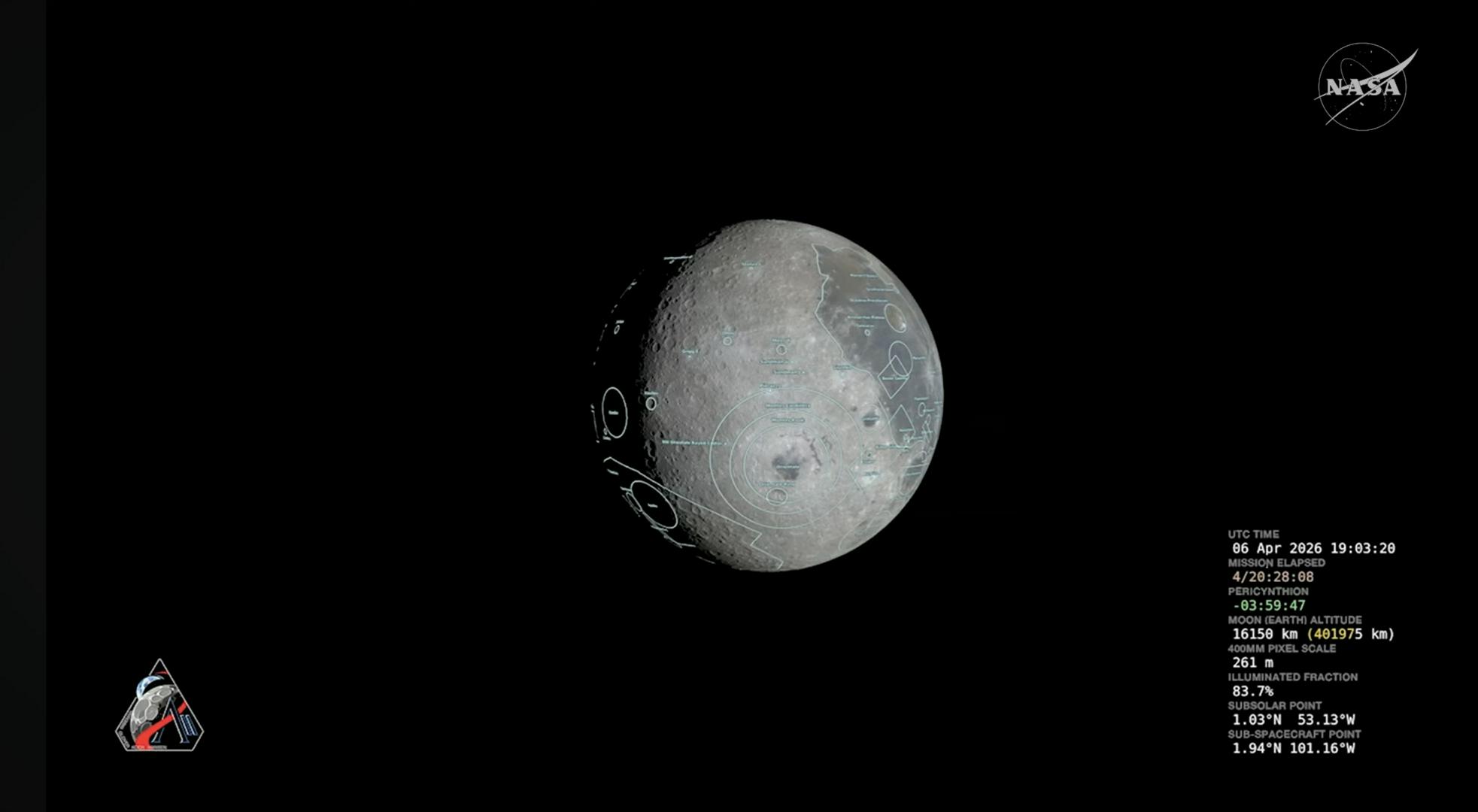
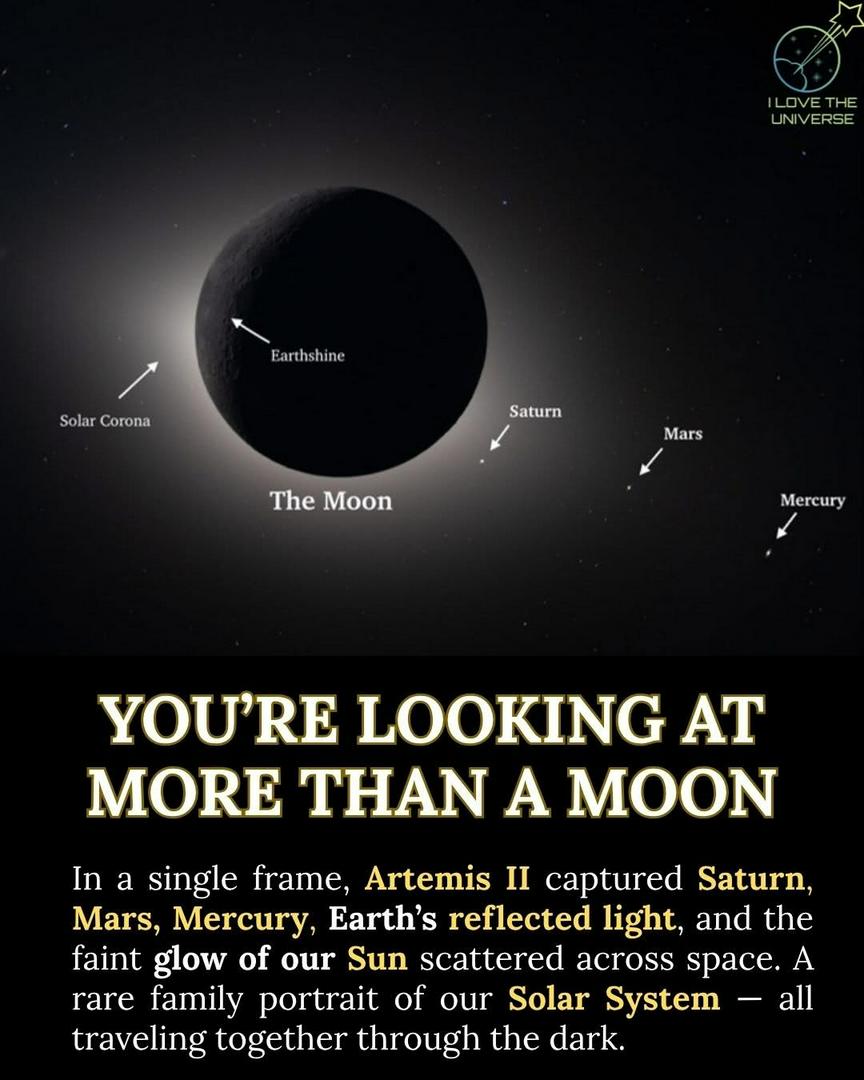
This image captures more than just the Moon… 🤯 Captured by the Artemis II crew, this view reveals not just the Moon, but a quiet alignment of worlds — Saturn, Mars, and Mercury, all shining across the same sky. Even Earth is here, its light softly illuminating the dark side of the Moon. What looks like empty space is anything but — sunlight scattered through interplanetary dust creates a faint glow, reminding us that we are all part of one vast, connected system. Venus sits just beyond the edge of this frame, while Neptune is here too — hidden in the darkness, too faint to be seen. A rare and humbling family portrait of our Solar System — seen not from afar, but from within. 🚀 Credits: NASA/ Artemis II #ArtemisII #NASA #Space #Astronomy #SolarSystem #Moon #Earth #Explore #Cosmos

Tag: nasa | LocalAll