Tag Page science

#science
justme

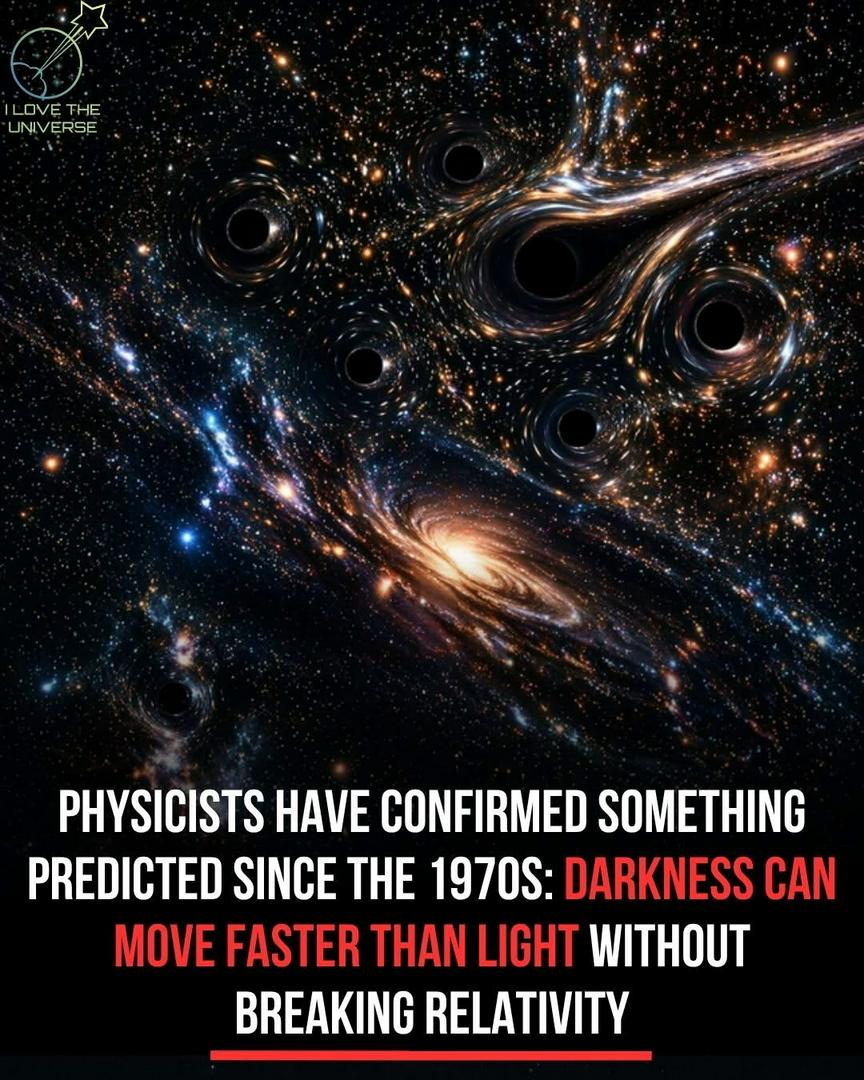
🚨 Something impossible just happened… or did it? Scientists have just observed motion that appears to be faster than light — and somehow… it doesn’t break physics. 🤯✨ But here’s the twist: What they saw wasn’t a particle, not even energy… It was pure nothingness. Inside exotic materials like boron nitride, waves of light and sound interact in such a precise way that they cancel each other out — creating tiny moving “points of darkness.” ⚫ And these dark points? They can move faster than light. No rules broken. No paradoxes. Just reality being far stranger than we imagined. Because these points carry no mass, no energy, no information, Einstein’s limits remain untouched — yet we’re witnessing something that looks like it defies them. 👉 And here’s something even more fascinating: Back in the 1970s, physicists had already predicted that such “points of nothing” could exist and behave in unusual ways — possibly even appearing to move faster than light. At the time, it was just theory. Today, we’re finally watching it happen. 👉 Think about that for a second… We’re now able to track the motion of nothing — moving faster than the fastest thing in the Universe. This discovery isn’t just mind-blowing… It could change how we study waves, light, and even quantum systems — unlocking ways to observe processes that were simply invisible before. The Universe keeps reminding us: The deeper we look… the weirder it gets. 🌌 💬 What do you think — is this the beginning of something bigger? 🔁 Share this with someone who loves space & physics! #Space #Physics #Science #Universe #MindBlown #Quantum #LightSpeed #Astronomy #DidYouKnow 🚀

justme

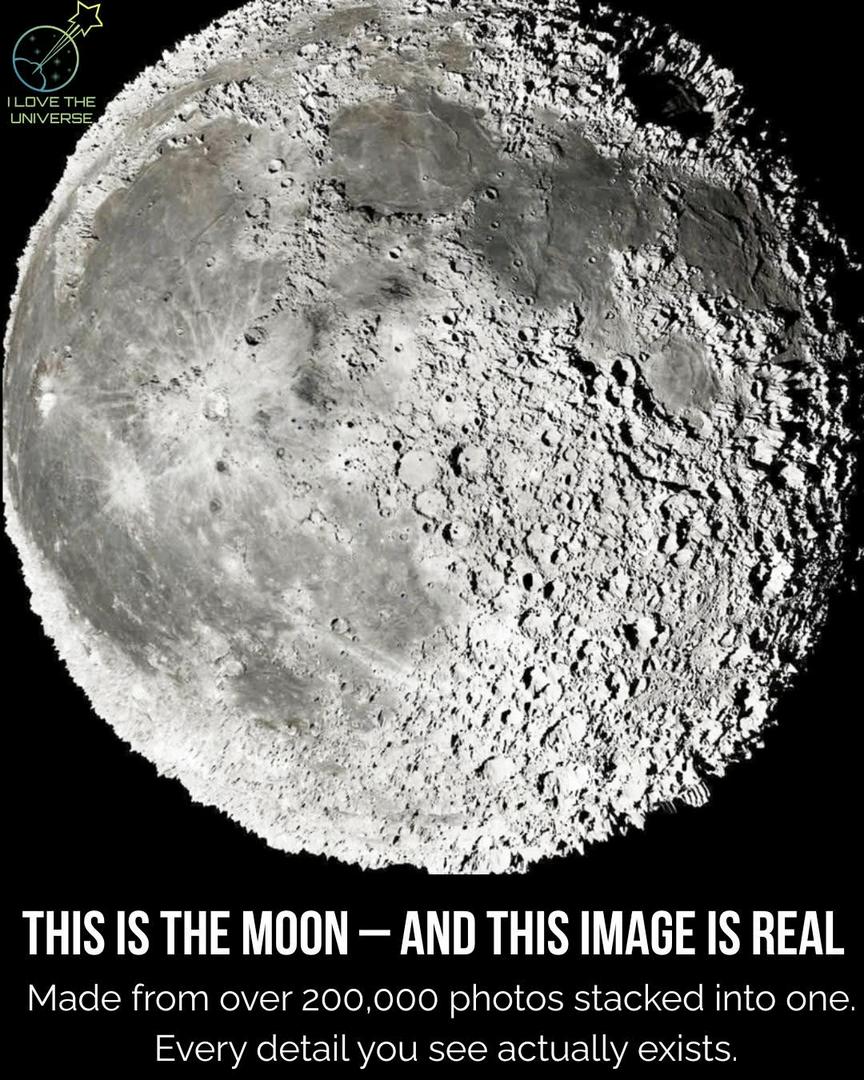
200,000 photos. One Moon. 🌕 Astrophotographer Andrew McCarthy didn’t capture this image in a single shot. He pointed his telescope at the Moon… and started recording. For hours, his camera collected over 200,000 individual frames — each one capturing tiny fragments of detail: craters, ridges, shadows, subtle textures. But raw images aren’t enough. Using a technique called stacking, he combined thousands of the sharpest frames together — reducing atmospheric distortion and revealing details normally blurred by Earth’s turbulent air. Then came the precision work. The Moon was divided into multiple sections, each processed separately at extreme resolution. Every segment was sharpened, aligned, and stitched into a single massive mosaic. And finally — color. Not added for style, but carefully enhanced to reveal real mineral differences across the lunar surface — tones our eyes can’t naturally see. What you’re looking at isn’t just a photo. It’s the result of: • patience measured in hours • processing measured in weeks • and precision measured in pixels Next time you look at the Moon… remember: This is what it really looks like — when nothing is left hidden. Image Credit: Andrew McCarthy and @cosmic_background #Moon #Astrophotography #Space #Astronomy #Universe #NightSky #Explore #Science

justme

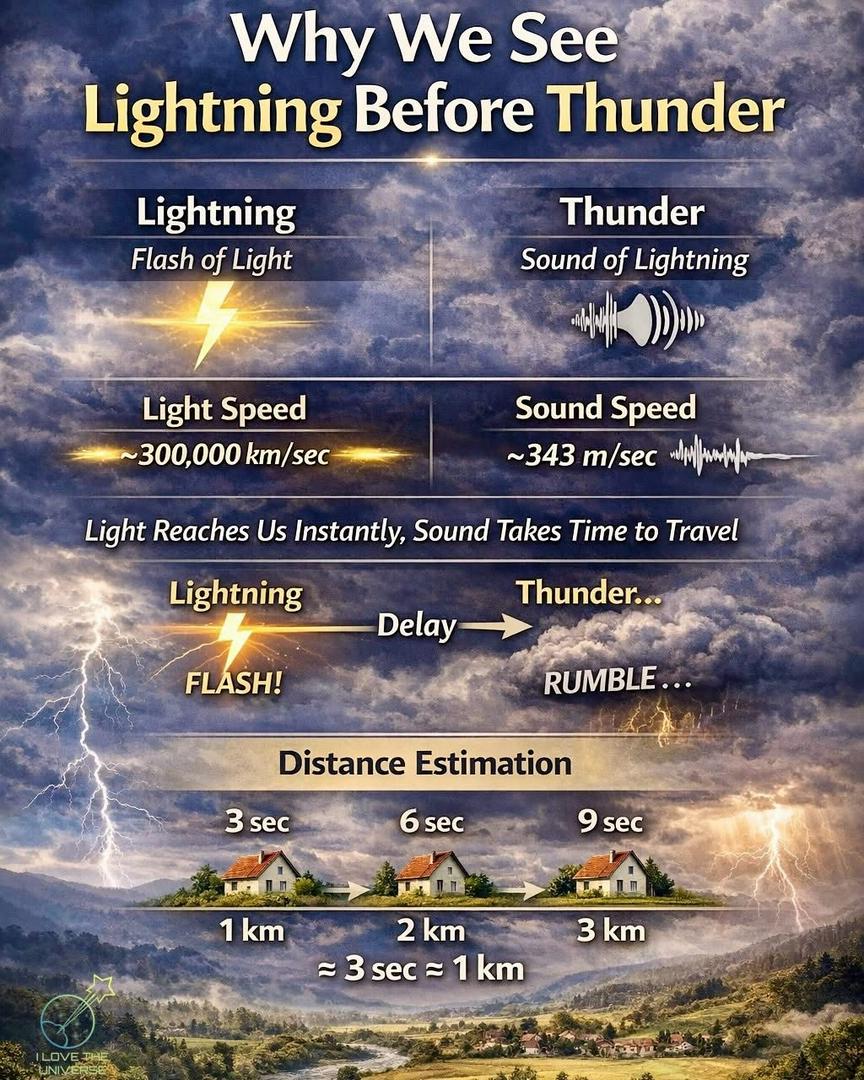
When a storm approaches, we always notice the lightning ⚡️ before we hear the thunder 💥 — and that’s no accident. Light travels at incredible speed, reaching our eyes almost instantly, while sound moves much slower through the air. That’s why thunder comes a few moments after the flash. But thunder is more than just a noise — it forms when the air is heated to over 30,000°C (54,000°F) in a split second. This intense heat causes the air to expand rapidly, producing a powerful shockwave we hear as a deep rumble. By counting the seconds between the flash and the sound, we can even estimate how far away the storm is. Nature isn’t just putting on a show — it follows precise physics every single time. #Lightning #Thunder #Science #Weather #Nature #Physics #DidYouKnow

justme

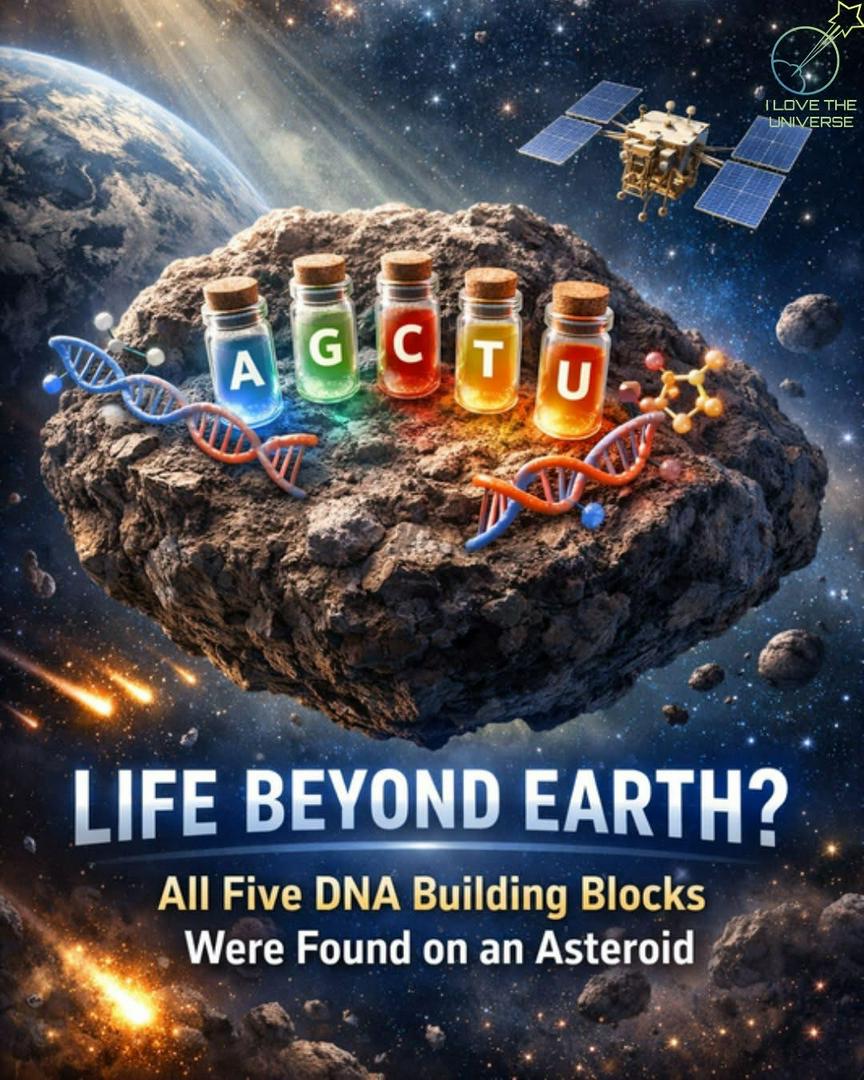
🚨 BREAKING: We may not be as alone as we once thought… A small, ancient space rock has just shaken everything we know about life in the Universe. Japanese scientists studying asteroid Ryugu have confirmed something extraordinary: within just 5.4 grams of material brought back by the Hayabusa2 mission, they found all five nucleobases - the essential building blocks of DNA and RNA. ✅ Adenine ✅ Guanine ✅ Cytosine ✅ Thymine ✅ Uracil For the first time ever, a single celestial body contains a complete and balanced set of the molecules needed to store and pass on life’s information. Let that sink in… 🌌 This isn’t just chemistry. This is the language of life - written in the dust of space. 💡 What does it mean? It suggests something truly mind-blowing: The ingredients for life may not be rare at all… they could be everywhere. Scientists now believe asteroids like Ryugu may have delivered these building blocks to early Earth, seeding our planet long before life began. Even more fascinating - Ryugu likely formed in a water-rich environment, where these complex molecules could slowly assemble over millions of years. And here’s the big question… If the recipe for life exists across the Solar System - or even the galaxy - then… 👉 How many other worlds have already used it? We still don’t know how these molecules became living organisms. But one thing is becoming clearer with every discovery: 🤔 Life might not be a miracle unique to Earth… 😲 It might be a cosmic inevitability. And that changes everything. What do you think — are we alone? 👇 #Space #Asteroid #Science #Astronomy #OriginsOfLife #NASA #Hayabusa2 #Ryugu #Universe #Cosmos #LifeInTheUniverse

justme

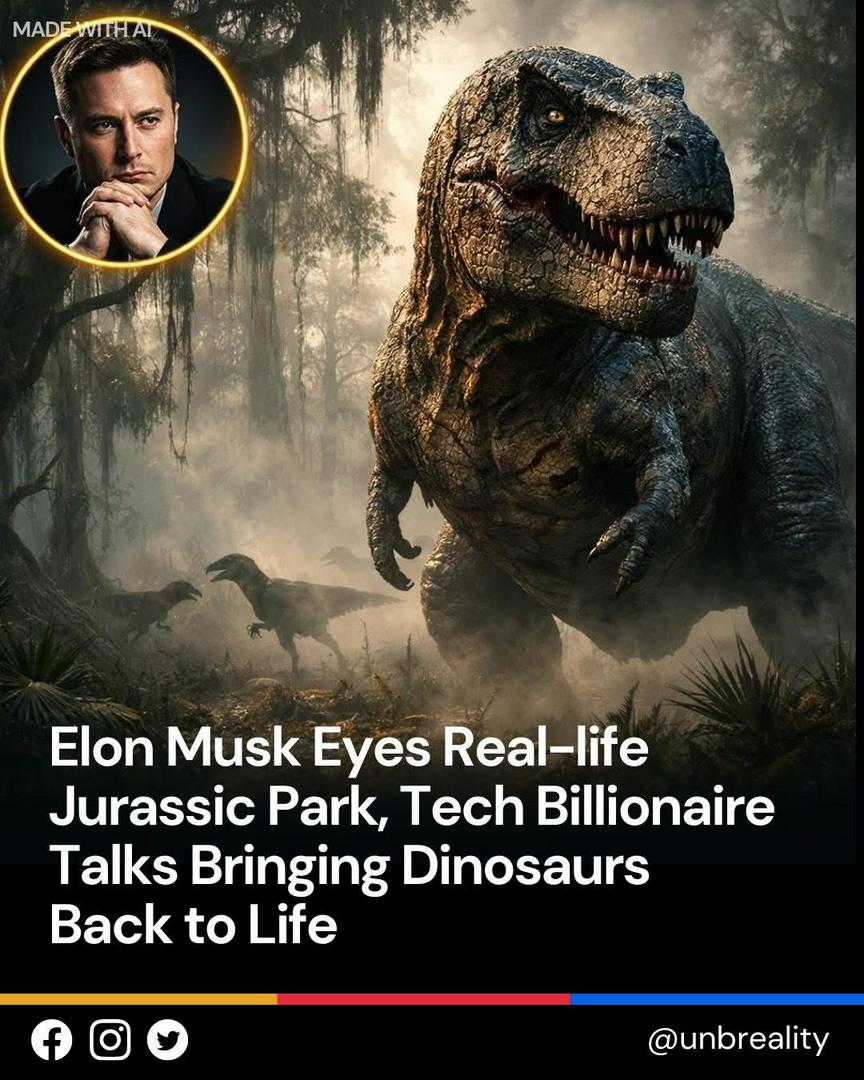
The idea of a real-life “Jurassic Park” pops up often and even Elon Musk has joked about it, but the science tells a very different story. Researchers are actively working on De-extinction, using tools like CRISPR to potentially bring back recently extinct animals such as the woolly mammoth or the dodo. These efforts rely on recovering usable DNA from preserved remains and editing the genes of closely related living species. Dinosaurs, however, are a completely different case. DNA breaks down over time, and after about 1 million years, it becomes too degraded to recover. Since dinosaurs went extinct around 66 million years ago, there is no intact DNA left to work with. The famous idea of extracting dinosaur DNA from amber (like in Jurassic Park) is not scientifically viable with current knowledge. So while de-extinction is real and advancing, a dinosaur theme park remains firmly in the realm of science fiction—for now. #DeExtinction #Genetics #Science #JurassicPark #fblifestyle

The Signal Wire

🚨 BREAKING SIGNAL: The Future of Healthcare Is Already Here Welcome, Health, Wellness & Tech Enthusiasts. It’s your Health Revolutionary StoryTelHER. And this isn’t hype. It’s a quiet shift most people are missing. AI. Wearables. Virtual Care. Personalized Medicine. Digital Twins. This isn’t “coming soon.” It’s operational. Now. What This Actually Means For You: 🧠 AI → earlier detection before symptoms escalate 📲 Telehealth → access without geography ⌚ Wearables → real-time biometrics in your pocket 🧬 Personalized Medicine → treatment designed for your biology 🧍🏽‍♀️ Digital Twins → predictive modeling of your health future Healthcare is shifting: Reactive → Predictive Institution-based → Integrated One-size-fits-all → Precision-built The future isn’t just hospitals. It’s data + lifestyle + clinical intelligence working together. Smarter. Faster. Personal. ⚡ Signal Question: Which excites you most? 1️⃣ AI 2️⃣ Wearables 3️⃣ Telehealth 4️⃣ Personalized Medicine Comment the number. I’m analyzing the signal. Follow @Healthy.Insights for forward-thinking, science-backed. Save this if you believe care should be predictive not reactive. #BreakingNews #getinspired #Inspiration #breakingsignal #breaking #Justin #healthyinsights #HealthNews #Science

justme

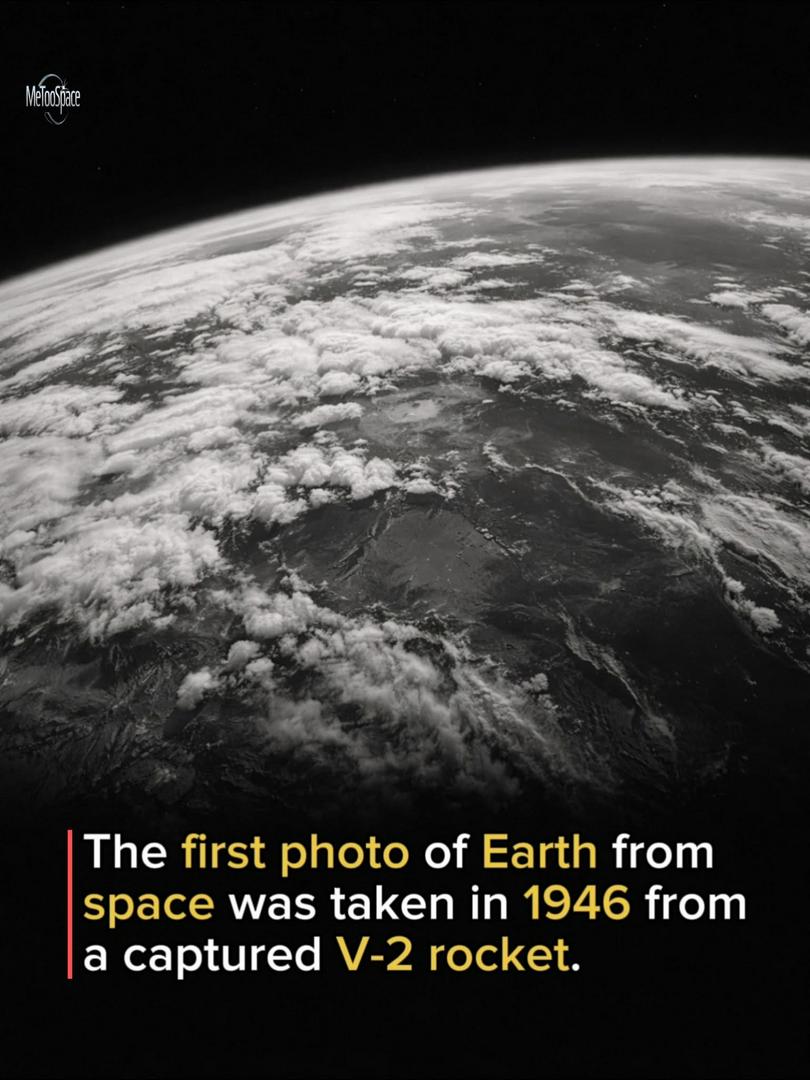
First Photo of Earth From Space (1946) The first photograph of Earth from space was taken on October 24, 1946, using a captured German V-2 rocket launched by the United States from White Sands Missile Range in New Mexico. After World War II, American scientists used these rockets for research. They attached a small 35mm motion picture camera to the rocket, which automatically took pictures as it rose to an altitude of about 105 kilometers (65 miles) above Earth. From that height, the camera captured a stunning black-and-white image showing the curve of our planet against the darkness of space. This was the first time humans had ever seen Earth from beyond the atmosphere. Although the rocket later crashed back to the ground, the film survived inside a protective steel container. This historic moment marked the beginning of space photography and opened the door to future missions, satellites, and eventually astronauts traveling into space. It was a small step toward the space age but a giant leap in how humanity viewed its home planet. #space #science #fact #facts