Tag Page space

#space
justme

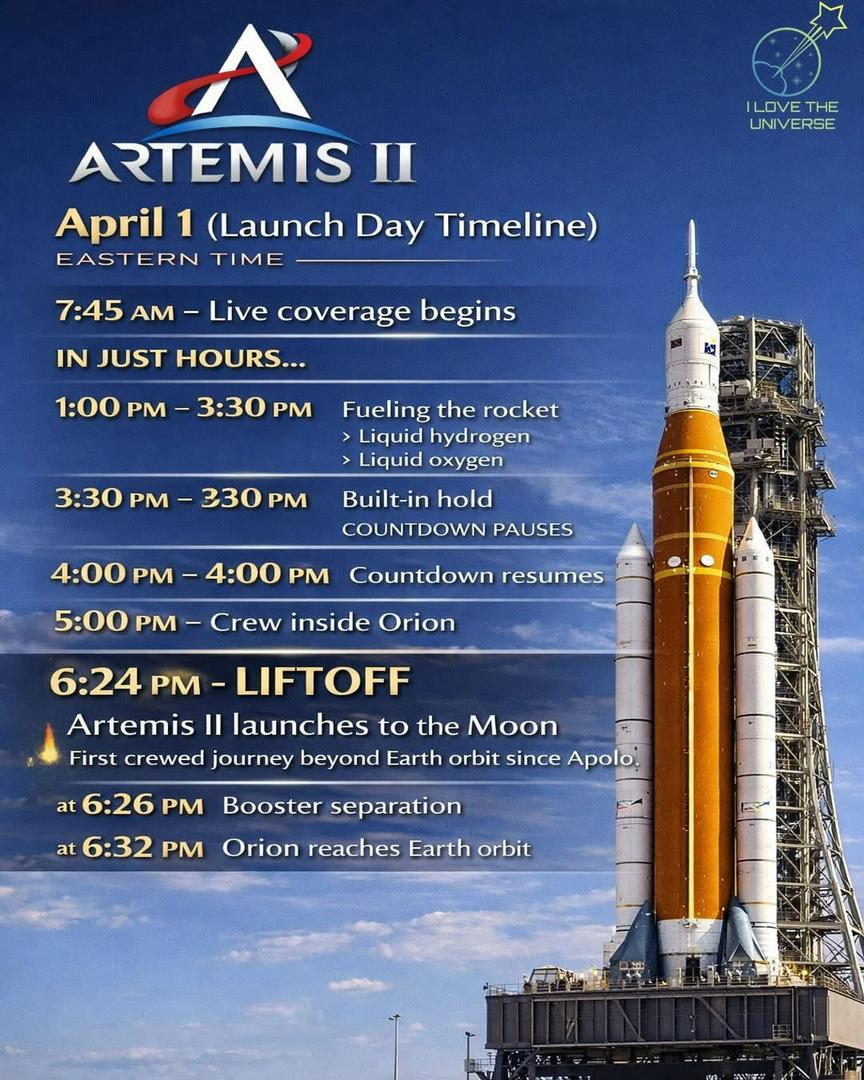
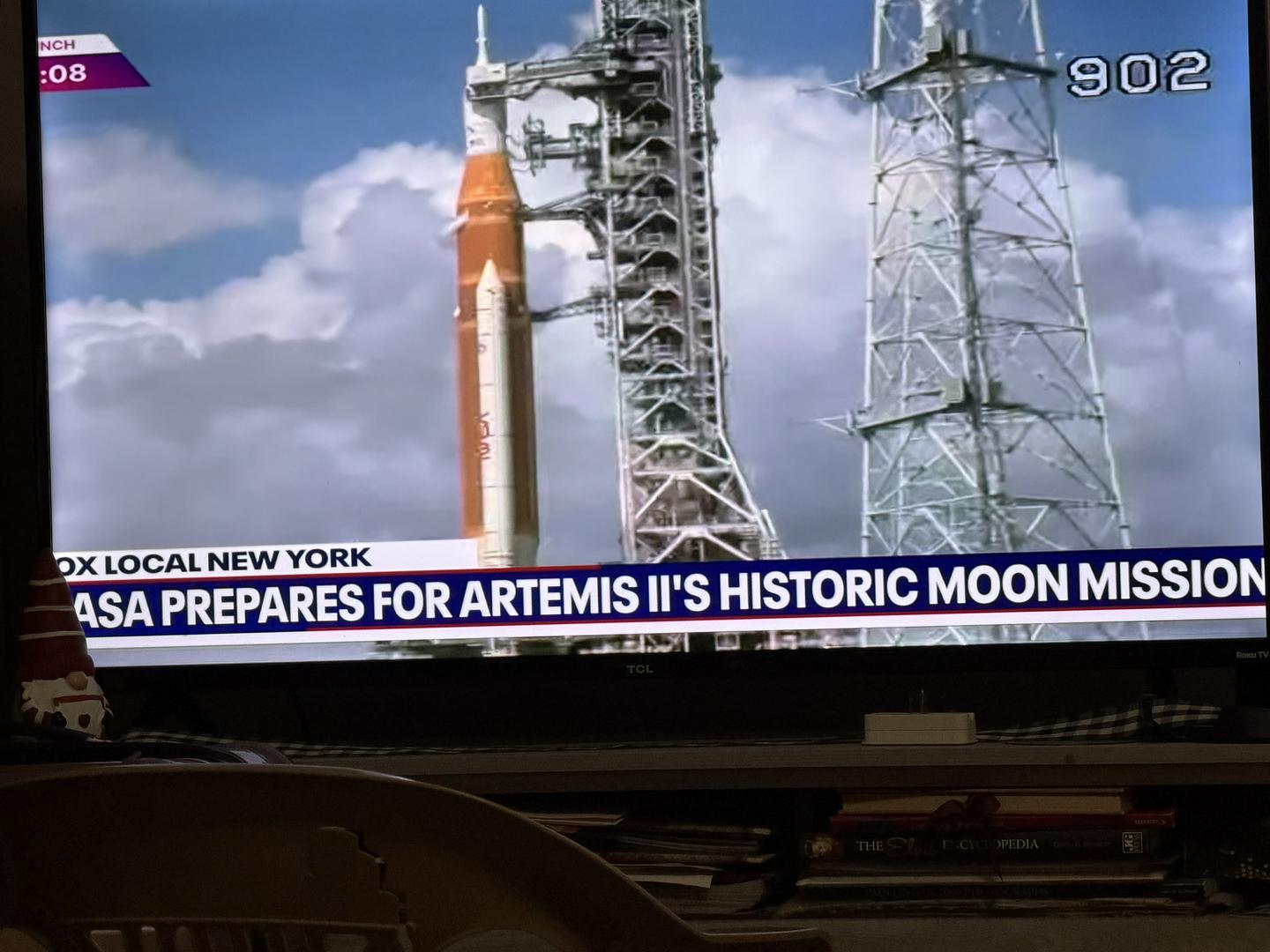
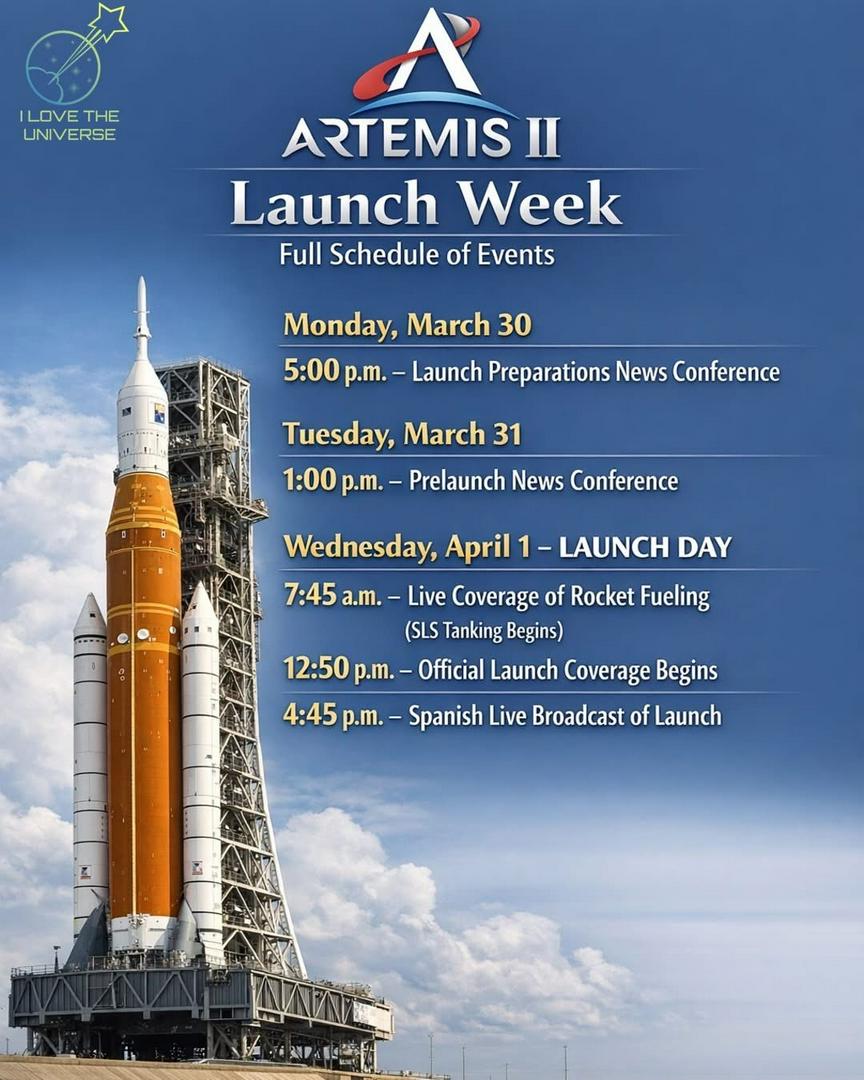
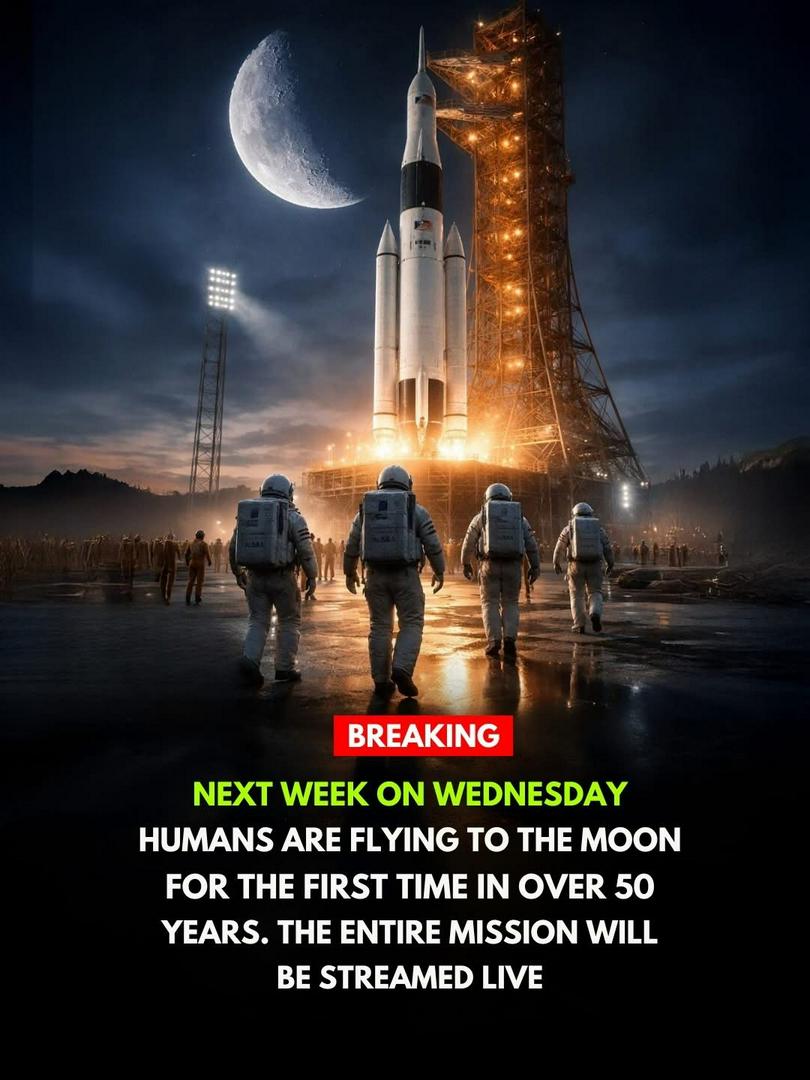
🚀 HUMANITY RETURNS TO THE MOON — ARTEMIS II LAUNCH WEEK More than 50 years after Apollo 17 mission, we’re standing on the edge of history again. This is the countdown to Artemis II — the first mission that will send astronauts around the Moon and back in a new era of exploration. 📅 Monday, March 30 🕔 5:00 p.m. – Final launch preparations briefing 📅 Tuesday, March 31 🕐 1:00 p.m. – Prelaunch press conference 📅 Wednesday, April 1 — LAUNCH DAY 🕢 7:45 a.m. – Live coverage begins as the Space Launch System is fueled 🕛 12:50 p.m. – Official launch broadcast starts 🕟 4:45 p.m. – Spanish live coverage of liftoff Carrying humans aboard the Orion spacecraft, this mission will push us beyond Earth orbit once again — farther than any crew has traveled in decades. No landing this time. Just a bold step… back into deep space. 🌕 The Moon is no longer the finish line — it’s the beginning. Watch it. Feel it. Share it. Because this isn’t just another launch… This is humanity rising again. #Artemis #NASA #MoonMission #Space #Launch #DeepSpace #Orion #SLS

justme

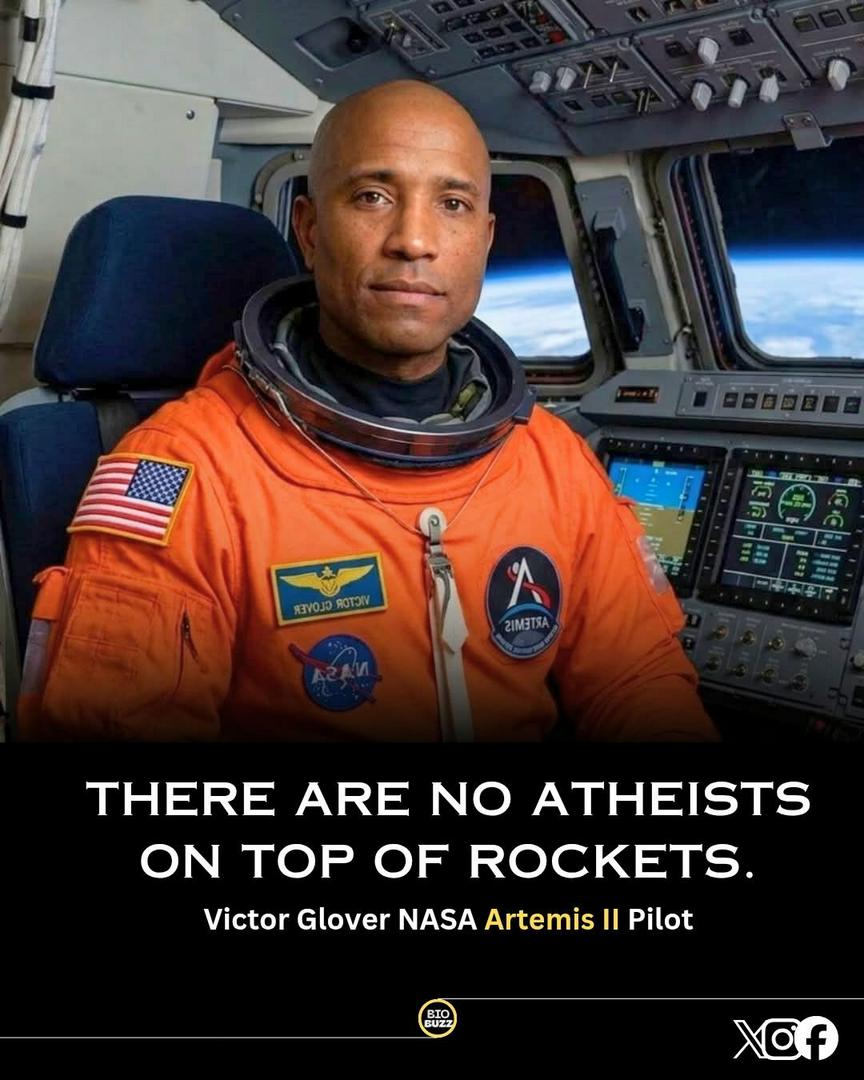
The last time humans ventured beyond Earth orbit was December 1972. Apollo 17. Gene Cernan and Harrison Schmitt walked on the lunar surface. Then they climbed back into their spacecraft, lifted off, and left. And for 54 years — no human being went back. That changes in six days. Artemis II will carry four astronauts on a 10-day journey around the Moon and back to Earth. Not a landing. Not yet. But a free-return trajectory that will carry them farther from Earth than any human being has traveled since the final Apollo mission — swinging them around the far side of the Moon before gravity pulls them back home. The crew: Reid Wiseman — Commander. A Navy test pilot and veteran astronaut who has already spent 167 days aboard the International Space Station. Victor Glover — Pilot. A Navy aviator and NASA astronaut who will become the first person of color to travel beyond Earth orbit. Christina Koch — Mission Specialist. A NASA astronaut who holds the record for the longest single spaceflight by a woman, spending 328 consecutive days in space. Jeremy Hansen — Mission Specialist. A Canadian Space Agency astronaut and former Royal Canadian Air Force fighter pilot. This will be his first spaceflight — and he will become the first Canadian to leave Earth orbit. Four people. Four firsts. One mission. They won't land on the Moon. But they will do something that hasn't happened in over half a century: they will see it up close, with their own eyes, through a window, from a spacecraft they are flying themselves. They will watch it fill the entire frame as they swing around its far side — a view so rare that only 24 human beings in history have ever experienced it. All of them in the 1960s and 70s. The entire mission will be streamed live by NASA. Every burn. Every maneuver. Every moment the crew looks out that window at a Moon that suddenly isn't a dot in the sky anymore — it's a world, and they're next to it. The launch window opens April 1 at 4:20 UTC. Six days from now. We are

justme

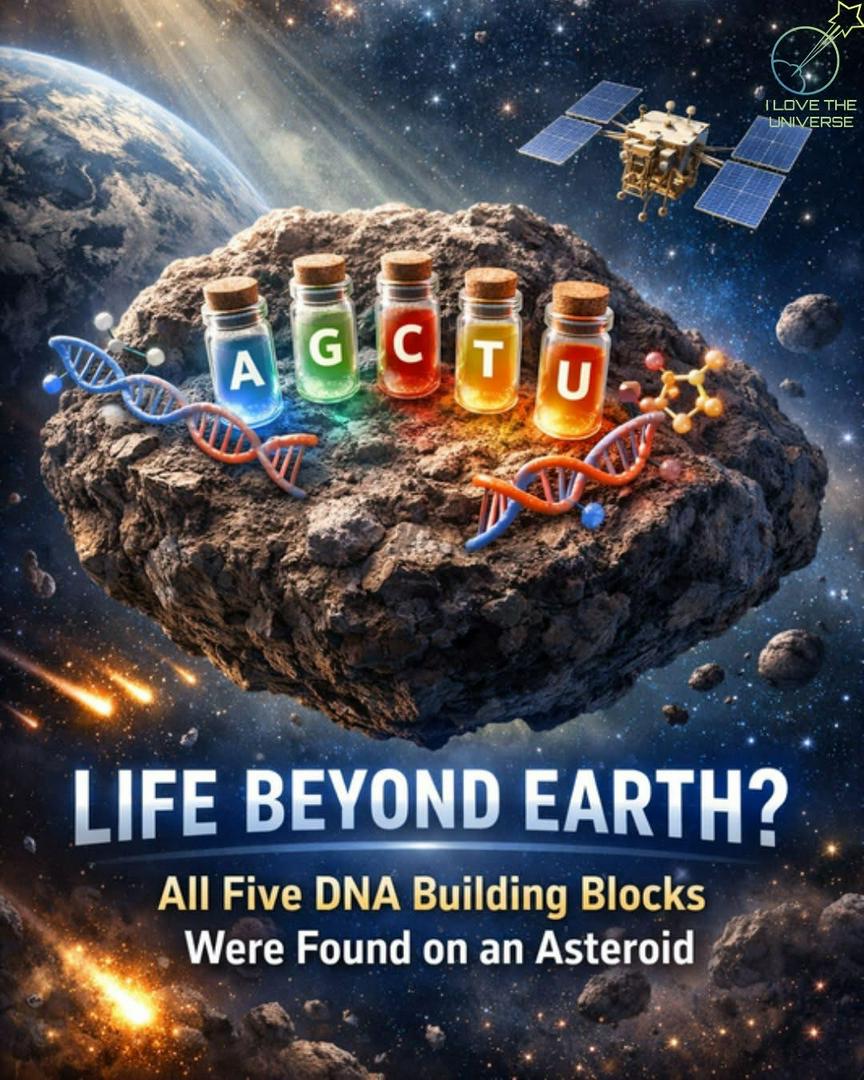
🚨 BREAKING: We may not be as alone as we once thought… A small, ancient space rock has just shaken everything we know about life in the Universe. Japanese scientists studying asteroid Ryugu have confirmed something extraordinary: within just 5.4 grams of material brought back by the Hayabusa2 mission, they found all five nucleobases - the essential building blocks of DNA and RNA. ✅ Adenine ✅ Guanine ✅ Cytosine ✅ Thymine ✅ Uracil For the first time ever, a single celestial body contains a complete and balanced set of the molecules needed to store and pass on life’s information. Let that sink in… 🌌 This isn’t just chemistry. This is the language of life - written in the dust of space. 💡 What does it mean? It suggests something truly mind-blowing: The ingredients for life may not be rare at all… they could be everywhere. Scientists now believe asteroids like Ryugu may have delivered these building blocks to early Earth, seeding our planet long before life began. Even more fascinating - Ryugu likely formed in a water-rich environment, where these complex molecules could slowly assemble over millions of years. And here’s the big question… If the recipe for life exists across the Solar System - or even the galaxy - then… 👉 How many other worlds have already used it? We still don’t know how these molecules became living organisms. But one thing is becoming clearer with every discovery: 🤔 Life might not be a miracle unique to Earth… 😲 It might be a cosmic inevitability. And that changes everything. What do you think — are we alone? 👇 #Space #Asteroid #Science #Astronomy #OriginsOfLife #NASA #Hayabusa2 #Ryugu #Universe #Cosmos #LifeInTheUniverse

justme

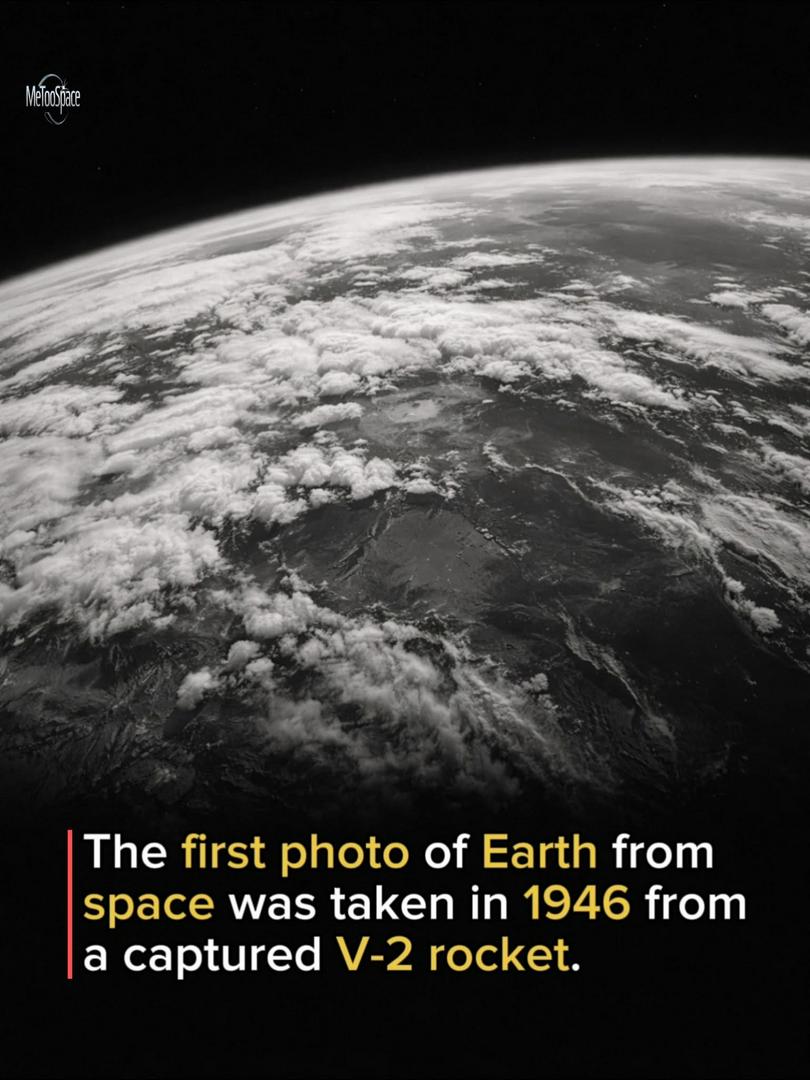
First Photo of Earth From Space (1946) The first photograph of Earth from space was taken on October 24, 1946, using a captured German V-2 rocket launched by the United States from White Sands Missile Range in New Mexico. After World War II, American scientists used these rockets for research. They attached a small 35mm motion picture camera to the rocket, which automatically took pictures as it rose to an altitude of about 105 kilometers (65 miles) above Earth. From that height, the camera captured a stunning black-and-white image showing the curve of our planet against the darkness of space. This was the first time humans had ever seen Earth from beyond the atmosphere. Although the rocket later crashed back to the ground, the film survived inside a protective steel container. This historic moment marked the beginning of space photography and opened the door to future missions, satellites, and eventually astronauts traveling into space. It was a small step toward the space age but a giant leap in how humanity viewed its home planet. #space #science #fact #facts

justme

🌕 March 3 Blood Moon Eclipse: Be Prepared for 58 Minutes of Deep Red Moonlight On March 3, skywatchers around the world will witness a breathtaking Blood Moon eclipse, as the Moon turns a deep red color for about 58 minutes during totality. This happens during a total lunar eclipse when the Earth moves directly between the Sun and the Moon, casting a shadow that filters sunlight and gives the Moon its dramatic red glow. Nearly 6 billion people across different continents will have a chance to see this rare event with the naked eye, weather permitting. No special equipment is needed just look up at the night sky at the right time. It’s a perfect moment to gather with family, take photos and experience one of nature’s most beautiful celestial events. Don’t forget to check your local timing and be prepared to enjoy this unforgettable red Moon spectacle! #space #science #fact #facts

justme

In 1977, scientists recorded the “Wow! Signal,” a brief but powerful burst of radio waves that has puzzled experts ever since. Its origin remains unexplained, a whisper from the cosmos that still sparks questions decades later. For a moment, the world seemed to pause, imagining we were not alone. The signal arrived with perfect clarity, as if deliberately sent, yet it vanished just as suddenly. That fleeting contact reminds us how vast and silent space can be, and how fragile our understanding of the universe truly is. Researchers continue to study patterns in the signal, comparing them to natural cosmic phenomena and human-made interference. Subtle irregularities hint at intelligence rather than chance, though no definitive proof has emerged. Each analysis is a quiet exploration at the frontier of knowledge, where curiosity meets uncertainty. To think of aliens reaching across light-years is both humbling and awe-inspiring. It evokes reflection on our place in the cosmos, the patience required for discovery, and the persistent hope that some messages are meant to awaken wonder rather than provide answers. Even today, the “Wow! Signal” lingers in the imagination. What other cosmic whispers are traveling through space, waiting to be noticed, understood, or perhaps never fully explained? #DeepUniverse #fblifestyle #WowSignal #aliens #SETI #space #discovery #mystery #cosmicwonder #science

Tag: space - Page 2 | LocalAll