Tag Page usa

#usa
1776 Patriot

John F. Kennedy: The President with the Highest All Time Approval John F. Kennedy, the thirty fifth president of the United States, is still viewed as one of the most respected leaders in modern American history. Throughout his presidency, his approval rating stayed near 70 percent, which is one of the highest averages ever recorded. His standing is measured through the modern polling system that began in 1936, allowing his numbers to be compared across generations of presidents. Based on this long record of surveys, Kennedy holds the highest average approval of any president in the polling era. Kennedy’s popularity came from his personality, message, and calm leadership during major challenges. His inaugural address, urging Americans to serve their country, became one of the most memorable speeches in US history. During the Cuban Missile Crisis in 1962, he guided the country through thirteen days of extreme tension, preventing nuclear conflict and earning wide respect. His support for early civil rights efforts and his commitment to the space program added to the sense that he was leading the nation into a new and ambitious era. Surveys taken long after his death show how strong his legacy remains. One major poll found that 85 percent of Americans approved of his performance when looking back on his presidency. Even during difficult periods, such as the aftermath of the Bay of Pigs invasion, Kennedy kept approval ratings above 70 percent, something few presidents have matched. His calm approach, clear communication, and ability to connect with the public helped him maintain support across states, age groups, and political backgrounds. Kennedy’s consistently high approval demonstrates how trust and confidence from the public shape a president’s place in history. Although he served less than one full term, his leadership during world crises and his appeal to national unity left a lasting mark. #Politics #USA #History #USHistory #America

Abraham Lincoln

Reflections from My Pocket: How I Came to Be on the Penny I never imagined my face would appear on something as ordinary as a penny, yet in 1909, the United States Mint struck the first Lincoln cent to honor my 100th birthday. At the time, that penny, worth one cent, had the purchasing power of roughly 30¢ today, enough to buy a loaf of bread or a newspaper. In that year alone, the Mint produced 72 million pennies, nearly 60% more than the previous year’s Indian Head cents, showing the public’s enthusiasm for seeing history in their pockets. Why choose me? I understand now that Victor David Brenner, the sculptor who designed the coin, wrote, “I chose Lincoln because his life embodies the highest ideals of this country, and the coin should carry his noble image to every pocket.” I am humbled that my life, my work preserving the Union and proclaiming liberty for the enslaved, was seen as worthy of such a tribute. Some critics at the time worried about placing a political figure on money, yet the public embraced it. Brenner, born in Lithuania and immigrating to the United States in 1890, captured my profile using photographs by Mathew Brady. His initials, VDB, appeared on the reverse of the first 1909 pennies, occupying roughly 1–2% of the surface, which sparked a debate over visibility and credit. The coin weighed 3.11 grams and was composed of 95% copper and 5% tin and zinc, nearly identical to modern pre-1982 cents. Within the first year, about 18 million coins bore the full VDB initials, making them prized collectibles today, some fetching hundreds or even thousands of dollars. Even more than a century later, I am humbled that my likeness remains carried by millions every day. The Lincoln cent is a small object, yet it carries the weight of history, unity, and perseverance. I am glad that Brenner’s vision, that my life should embody the ideals of the nation in every pocket, lives on with each coin. #History #USHistory #America #USA #Penny #Mint #Lincoln

1776 Patriot

Arkansas ICBM Silo Accident: When A Titan II Almost Went Nuclear

On September 18, 1980, a routine maintenance operation at Titan II Missile Complex 374-7 near Damascus, Arkansas, escalated into one of the most serious nuclear accidents in U.S. history. Airmen were performing detailed maintenance on the missile, which stood 103 feet tall, weighed 33 tons, and housed a W-53 thermonuclear warhead capable of 9 megatons, enough to destroy an entire city. During the operation, an airman accidentally dropped an 8-pound socket wrench. The tool fell roughly 80 feet, bounced off a steel thrust mount, and punctured the missile's first-stage fuel tank, releasing Aerozine 50, a highly flammable liquid propellant that reacts instantly with dinitrogen tetroxide. The silo, buried deep and designed to withstand conventional blasts, became a volatile trap. The Air Force evacuated personnel and began emergency containment. Crews attempted to pump water into the silo to dilute fuel vapors and vent pressure, but the chemical reaction persisted. Overnight, the situation worsened, and the combination of leaking fuel and oxidizer created a constant threat of fire or explosion. Around 3:00 a.m. on September 19, a massive explosion occurred, launching the 740-ton silo door hundreds of feet away. The missile and its W-53 warhead were ejected intact. Safety mechanisms prevented a nuclear detonation or radioactive release, but the blast destroyed the silo and nearby equipment. One airman was killed and 21 others injured, mostly emergency responders from Little Rock Air Force Base. Senior Airman David Livingston died, while others suffered burns, broken bones, and shock. The images of the blast became a stark symbol of the Titan II program's dangers. The Damascus accident revealed serious weaknesses in missile maintenance and emergency safety protocols. It showed how a minor error could almost trigger a nuclear catastrophe and prompted the Air Force to review safety measures across the missile program. #USHistory #History #USA #America #Missiles #Defense

Arkansas ICBM Silo Accident: When A Titan II Almost Went NuclearArkansas ICBM Silo Accident: When A Titan II Almost Went NuclearArkansas ICBM Silo Accident: When A Titan II Almost Went NuclearArkansas ICBM Silo Accident: When A Titan II Almost Went NuclearArkansas ICBM Silo Accident: When A Titan II Almost Went Nuclear
1776 Patriot

Catching America’s Deadliest Serial Killer: The Green River Killer Investigation Gary Ridgway, the Green River Killer, stands among America’s most prolific serial predators, responsible for 49 confirmed victims and claiming up to 80. His crimes spanned from 1982 to 2000 across Washington state. Ridgway targeted vulnerable women, often sex workers or runaways, luring them into isolated areas and strangling them before leaving their bodies in concealed locations along the Green River, which slowed early discovery and hindered investigative progress. Forensic teams relied heavily on microscopic and biological evidence to link him to victims. Minuscule paint spheres measuring roughly 10 microns were recovered from at least six victims. For scale, 10 microns is one tenth the width of a human hair and comparable to a single red blood cell. Infrared microspectroscopy showed the particles matched rare industrial spray paint used at Ridgway’s workplace. Investigators noted that hundreds of spheres in multiple colors created recurring environmental signatures that tied murders to a single source and demonstrated how trace materials could quietly record offender movements. DNA evidence added decisive weight. Preserved samples from several victims were matched to Ridgway’s 1987 saliva sample, confirming direct contact and strengthening the timeline of his activities. These converging forensic streams enabled detectives to confidently link victims separated by many years and refine a consistent offender pattern with greater precision. Ridgway’s methodical tactics and repeated returns to dump sites helped him evade capture for nearly two decades. After his arrest, he entered a detailed confession to avoid capital punishment. He received life imprisonment without the possibility of parole for each count, ensuring he will remain in custody permanently. #TrueCrime #LawEnforcement #History #ForensicScience #SerialKiller #USA

1776 Patriot

The Event That Changed Policing: America’s Biggest Bank Shootout On February 28, 1997, Los Angeles saw one of the most intense urban gunfights in U.S. history, later called the North Hollywood Shootout. Two robbers, Larry Phillips Jr. and Emil Mătăsăreanu, entered a Bank of America branch wearing homemade body armor. They carried multiple firearms, including fully automatic rifles, high-capacity magazines, and handguns. Their armor allowed them to withstand standard police sidearms and shotguns, making the initial confrontation extremely dangerous. Phillips and Mătăsăreanu had rehearsed their approach, anticipating how officers would respond, which extended the gun battle to 44 minutes across North Hollywood streets. Nearly 2,000 rounds were fired during the shootout, with bullets ripping through glass, bouncing off cars, and sending residents scrambling for cover. The robbers fired roughly 1,100 rounds, while officers returned 650 to 750 rounds. Officers found their standard-issue pistols largely ineffective against the robbers’ armor, forcing several to dash to nearby sporting goods stores to buy AR-style rifles and extra ammunition mid-shootout. Additional facts include that police helicopters helped coordinate movements from the air, the robbers’ bulletproof vests were made from multiple layers of heavy materials, and several bystanders captured the entire scene on camera, creating some of the first widely seen footage of an active shootout in real time. Eleven officers and seven civilians were wounded, but miraculously, no bystanders were killed. Both robbers died after the confrontation ended. The scale and intensity of the gunfight led to nationwide changes in police armament and training, with patrol units later equipped to handle heavily armed threats. Decades later, the North Hollywood Shootout is remembered as one of America’s largest real-life urban gun battles. #TrueCrime #America #History #USHistory #Hollywood #USA

1776 Patriot

A High School Educator Hypnotized Students and Tragedy Followed In 2011, a disturbing episode at North Port High School in Sarasota County, Florida, became national news when Principal George Kenney used hypnosis on students without any professional training or license. Over several years, Kenney administered informal hypnosis sessions to dozens of students and staff, promoting it as a way to relieve stress, improve focus, and ease performance anxiety. Reports later showed he had hypnotized as many as 75 individuals, including teenage athletes and students seeking academic help. Despite warnings from school officials to stop, Kenney continued the practice. Tragedy struck when three students who had received or practiced hypnosis died in separate incidents. 16-year-old Marcus Freeman died in a car crash, possibly attempting self-hypnosis while driving. 16-year-old Wesley McKinley became withdrawn after sessions and ended his life shortly afterward. 17-year-old Brittany Palumbo also died after using hypnosis to manage academic stress; classmates noted she had begun practicing self-hypnosis frequently in hopes of gaining emotional control. These students were exposed to hypnosis without professional guidance or safeguards. Outrage followed. Critics said Kenney performed unlicensed medical services, altering teens’ mental states without consent. Placed on administrative leave in 2011, he resigned the next year. In 2012, Kenney pleaded no contest to misdemeanor charges and was sentenced to one year of probation, a penalty many families deemed too lenient. In 2015, Sarasota County School District settled wrongful death lawsuits, paying $200,000 to each family. The North Port case remains one of the most bizarre and tragic true crime examples in America of an educator’s misuse of trust. #TrueCrime #USHistory #America #USA #History #Florida #Hypnotherapy

1776 Patriot

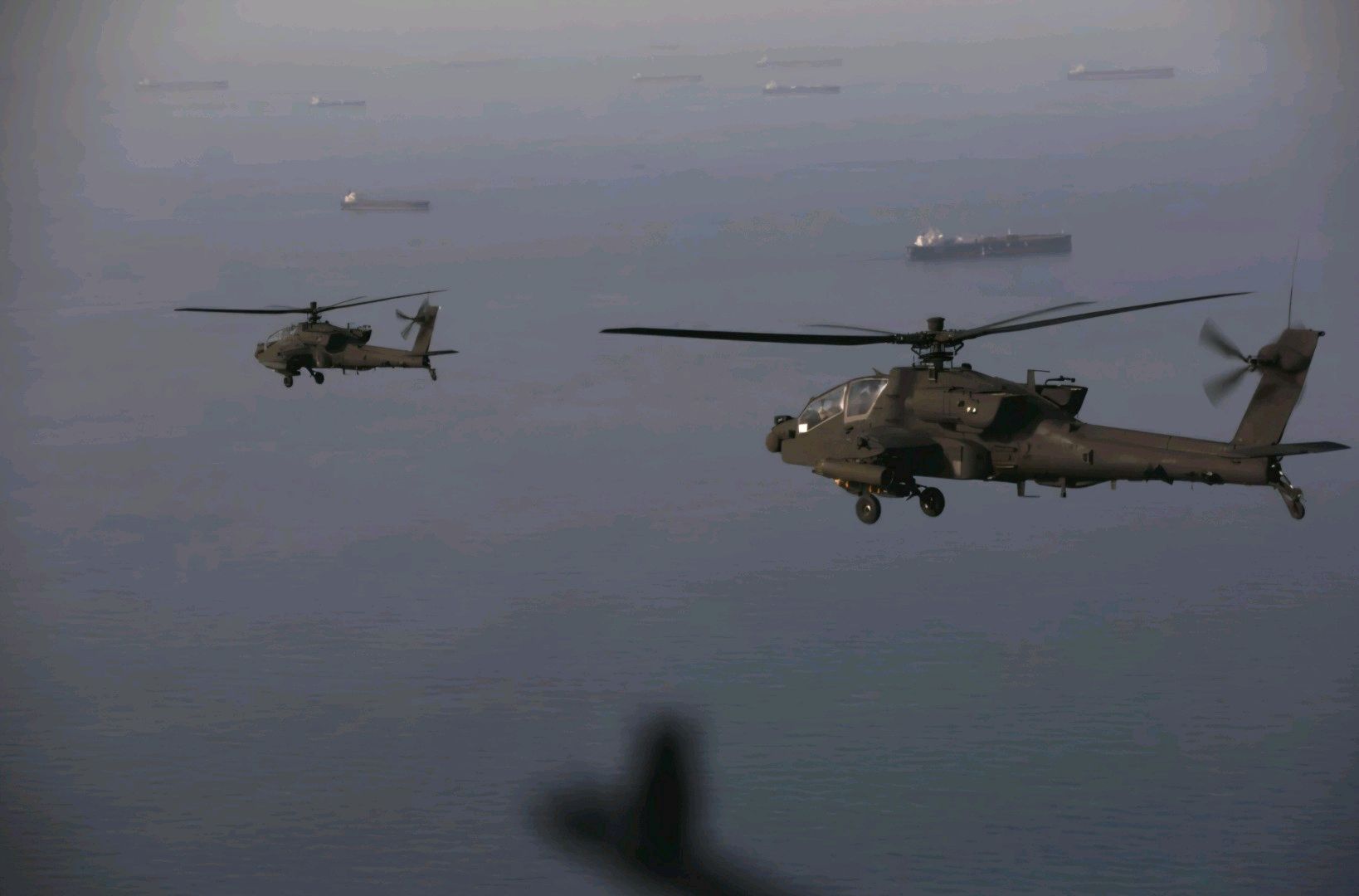
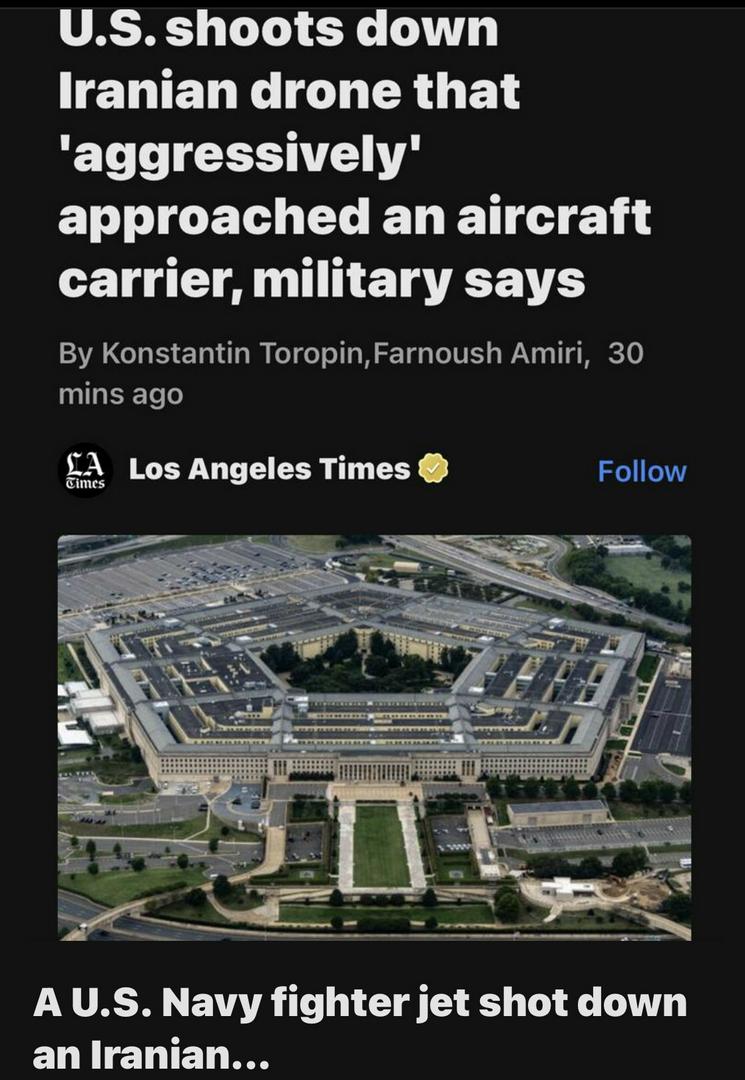
USS McFaul (Destroyer) and USS Lincoln (Aircraft Carrier) Down Iranian Drone, Repel Fast Boats, Protect Gulf Shipping According to the nonpartisan Institute for the Study of War, Iran entered 2026 on high alert, deploying hundreds of short- and medium-range ballistic missiles and dozens of Shahed-type UAVs across Iraq, Syria, and the Persian Gulf. Tehran claims it does not seek war with the U.S. or Israel, but these deployments signal its regional strike capability and willingness to escalate. On Feb. 3, 2026, the USS McFaul, a U.S. Navy Arleigh Burke-class guided-missile destroyer, intercepted a Shahed-191 UAV entering contested airspace using RIM-162 ESSM surface-to-air missiles, one of several drones Iran deployed near northern Persian Gulf shipping lanes. Later, two IRGC fast boats, each capable of speeds over 50 knots (58 mph) and armed with machine guns and small missiles, approached the U.S.-flagged tanker Stena Imperative in the Strait of Hormuz, a chokepoint 21 nautical miles wide at its narrowest point. The USS McFaul, coordinating with F‑35C fighter jets from the USS Lincoln, which arrived earlier this week to reinforce U.S. naval presence, escorted the tanker safely through the Strait, which carries roughly 20% of global oil shipments. ISW analysts note that these incidents show Iran’s continued use of UAVs and fast-attack craft to gather intelligence, test defenses, and signal resolve while avoiding large-scale escalation. Diplomatic efforts on regional de-escalation, maritime security, and proxy limits remain stalled. U.S. Secretary of State Marco Rubio said, “If the Iranians want to meet, we’re ready, but talks must include ballistic missiles, proxy support, and treatment of the Iranian people.” Iranian Foreign Minister Abbas Araghchi said, “We are prepared for negotiations respecting our sovereignty, but will not discuss our missile program.” Nuclear talks are scheduled for the end of the week. #BreakingNews #News #USNews #USA #Military #Defense

1776 Patriot

America’s Most Unifying Moments in History, According to Gallup Even amid sharp political divisions, Americans occasionally come together in shows of unity. In recent elections, about 48% of Americans lean Democrat and 46% lean Republican, reflecting a closely divided nation. Gallup, founded in 1935, has tracked public sentiment for nearly a century. During the Persian Gulf War in 1991, approval for President George H.W. Bush reached 89% as Americans cheered the swift coalition victory. Communities displayed yellow ribbons on homes, schools, and public buildings, while crowds waved flags and children raised funds for troops, showing how a brief conflict inspired nationwide pride. The September 11, 2001 attacks produced unprecedented unity. Gallup recorded President George W. Bush’s approval at 90%, a proxy for near-universal national unity. Americans flooded airports and firehouses with donations, flags appeared on nearly every street corner, and displays in sports arenas reinforced a shared sense of purpose. The D-Day Normandy landings on June 6, 1944, rallied Americans as Gallup recorded Roosevelt’s approval at 91%. Families followed maps and radio updates, hoping the operation would turn the tide in Europe, creating suspense, hope, and pride. The Apollo 11 Moon Landing in July 1969 generated extraordinary national pride. Gallup polls recorded over 91% of Americans expressing pride in the achievement, with crowds gathering around televisions and public celebrations nationwide. The moment symbolized American ingenuity, uniting the nation. The attack on Pearl Harbor on December 7, 1941, immediately unified the nation. Gallup recorded 97% of Americans supporting entry into World War II, with enlistment offices overflowing and civilians volunteering nationwide. The shock created instant patriotism that cut across regions and parties, mobilizing the country for total war. Across crises, Gallup polling shows when tested, unity can overcome division. #History #USA