Category Page entertainment

justme

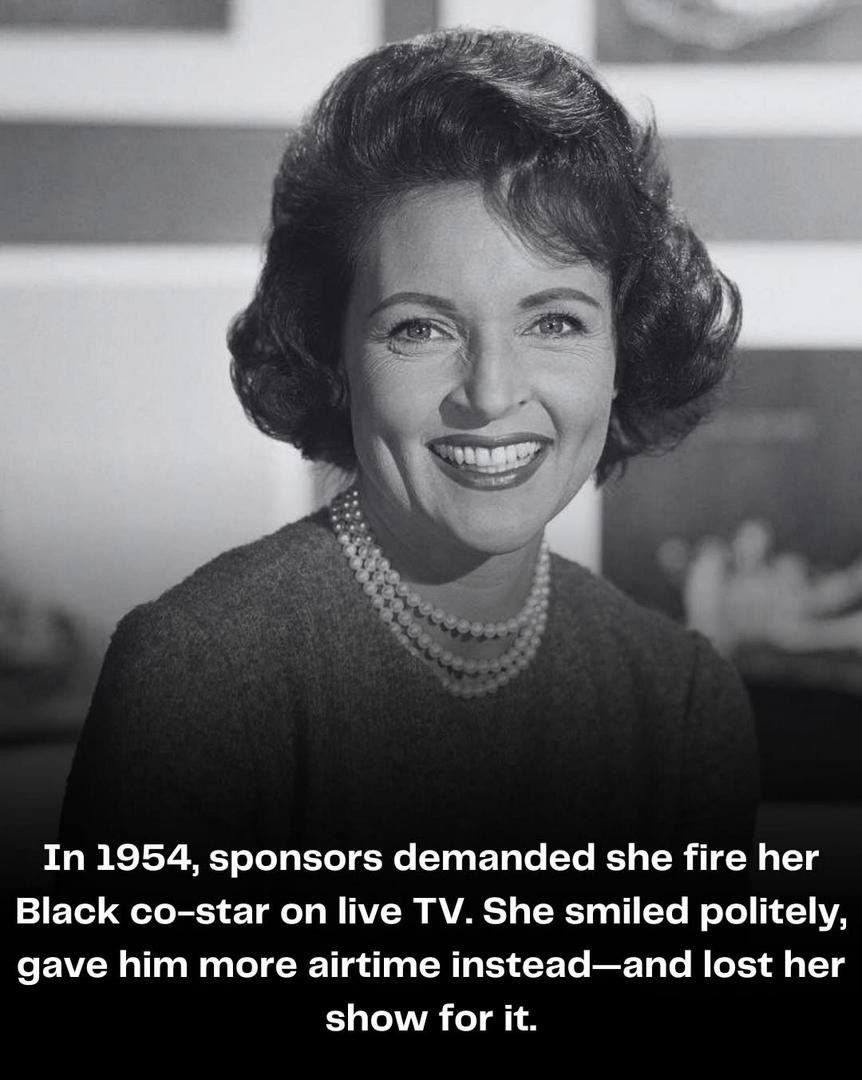
In 1954, sponsors demanded she fire her Black co-star on live TV. She smiled politely, gave him more airtime instead—and lost her show for it. Betty White spent eighty years making America laugh—and just as long dismantling every boundary Hollywood placed in her way. Before she became America's grandmother, before she was the nation's sweetheart, before the memes and the late-career renaissance, Betty White was a 1940s television insurgent doing things women were simply not allowed to do. She wasn't just acting on television. She was writing scripts. Producing segments. Running entire shows. Making creative decisions that were supposed to be reserved exclusively for men. At a time when women weren't welcome in writers' rooms, when female perspectives were considered commercially unviable, when actresses were expected to smile, say their lines, and defer to male authority on every creative question, Betty White controlled her own content. While other actresses waited passively for roles to be offered, Betty built them herself—armed with impeccable comedic timing, sharp intelligence, and a smile that could disarm and devastate in equal measure. Then came 1954, and the moment that revealed exactly who she was beneath the charm. Betty was hosting her own variety program, The Betty White Show, on NBC. It was a daily talk show—live, ambitious, and entirely under her creative control. One of her regular featured performers was Arthur Duncan, a gifted Black tap dancer whose performances lit up the stage every week with genuine joy and extraordinary talent. Then the letters started arriving. Angry viewers—especially from Southern affiliates—demanded Arthur Duncan's immediate removal from the show. They didn't want to see a Black performer featured regularly on their television screens. Sponsors echoed the complaints, threatening to pull advertising support. . #

The Black Apple News Network

He Never Forgot Where He Came From”: A$AP Rocky Pays Rent for Harlem Tenants in Building He Once Called Home By SDWJR | TBA News Network In an era where celebrity philanthropy is often performative and fleeting, A$AP Rocky has delivered a powerful reminder of what it means to stay rooted in one’s beginnings. The Harlem-born rapper and fashion icon has stepped in to cover January 2026 rent for every tenant in the Harlem apartment building where he once lived — a gesture that blends gratitude, memory, and tangible community impact. According to REVOLT, the rent relief initiative is part of a broader partnership between A$AP Rocky and Bilt, the housing and rewards platform, and arrives just as he rolls out his highly anticipated album Don’t Be Dumb. Rather than centering the moment solely on sales or hype, Rocky chose to anchor the campaign in the very neighborhood that helped shape him — Harlem. This move resonates deeply at a time when housing insecurity continues to plague urban communities, particularly in historically Black neighborhoods facing aggressive gentrification. For tenants in the building, the relief is not symbolic — it’s real. One full month of rent paid means breathing room, dignity, and stability during uncertain economic times. Rocky’s collaboration with Bilt extends beyond rent relief. The campaign also includes a limited-edition vinyl release tied to Don’t Be Dumb, merging art, commerce, and community in a way that feels intentional rather than exploitative. It’s a model that suggests artists can leverage brand partnerships without disconnecting from the people who supported them before fame arrived. What makes this moment especially powerful is its personal nature. This wasn’t a random building selected for optics. This was home. Harlem raised A$AP Rocky, and now, at a point of global influence, he’s returning that investment — not with speeches, but with action. In a cultural landscape where wealth often creates distance, Rocky’s decision

Michael Martin

AMEN

AMEN
Trevor Wayne

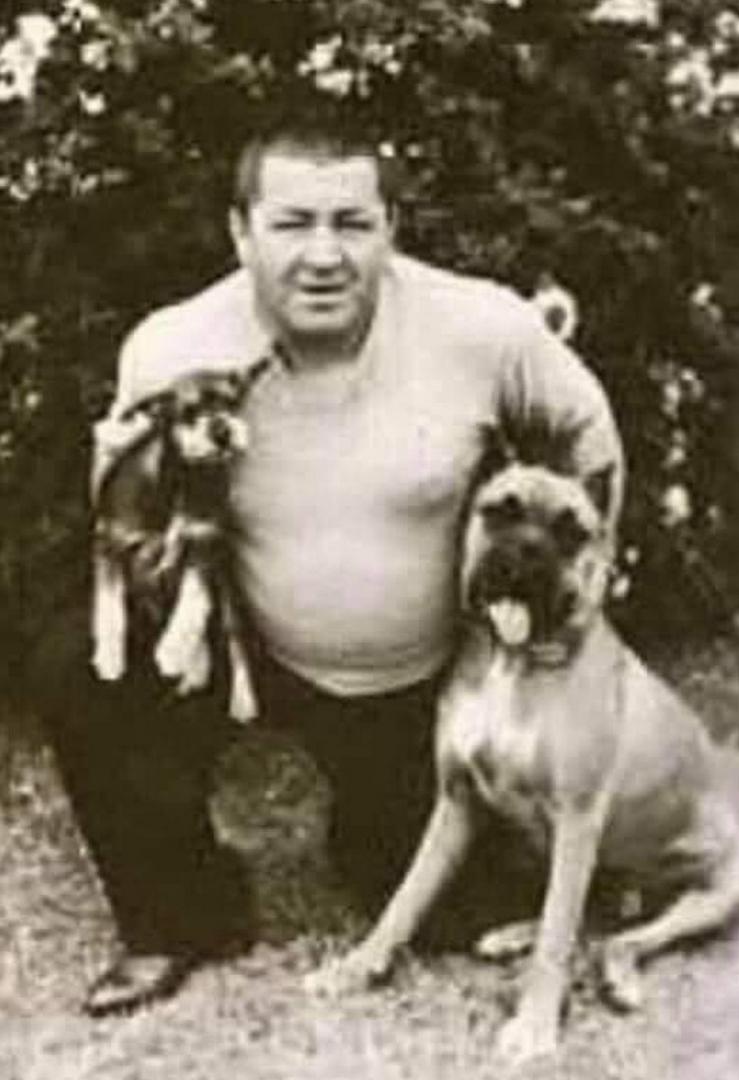
Jerome Horwitz, famous for playing CURLY in "THE THREE STOOGES", was known to all as a protector of dogs. Curly's contract with Columbia Pictures included a clause that allowed his dogs to accompany him on the studio lot. Columbia limited it to no more than two dogs at a time, this due to the puppies' unplanned on-camera appearances from time to time. You can still see those surprise dog on set invasions in the first few short films. Typically surrounded by various dogs, Curly was known to come home with a stray dog ​​and foster it until he could find it a permanent home. When the Stooges were out on the road, Curly took it upon himself to find a new home for at least one stray dog ​​in every town they visited. Curly is estimated to have saved and rescued more than 5,000 dogs in his lifetime. This makes him a man ahead of his time, with a very admirable concern for man's best friend.

justme

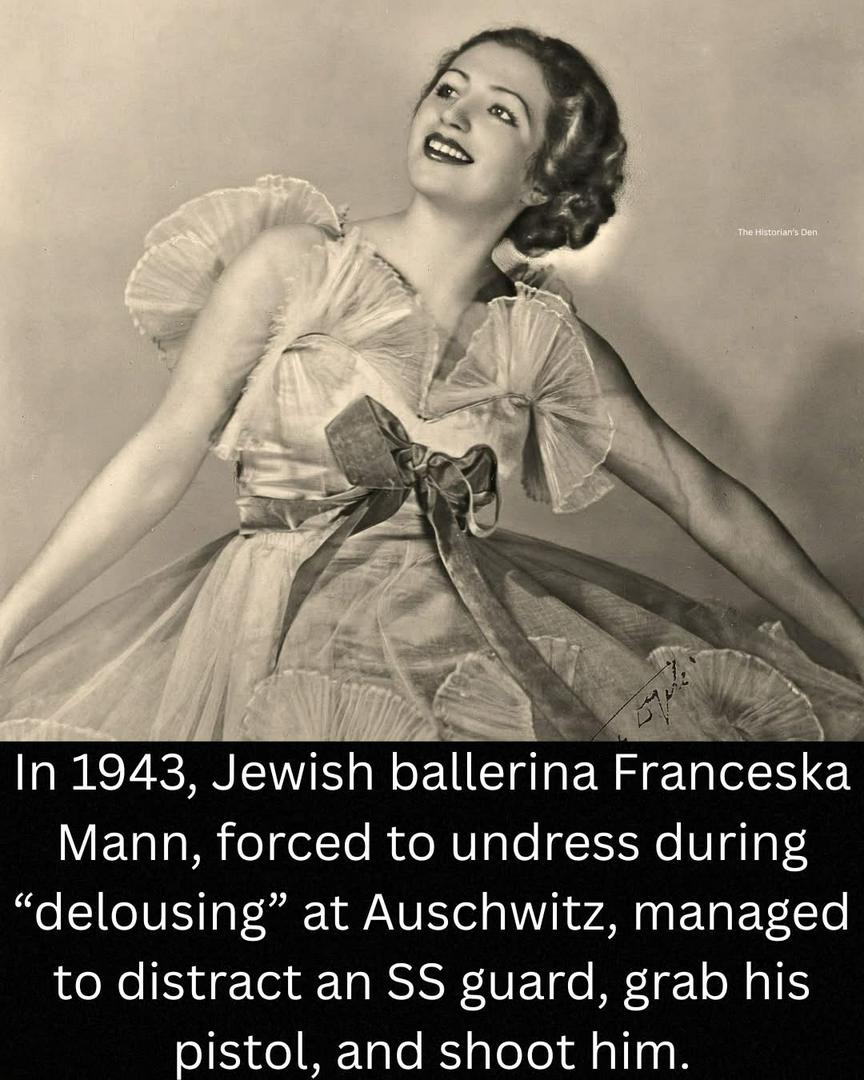
In October 1943, Jewish ballerina Franceska Mann, one of Warsaw’s most promising dancers, was among a transport of prisoners taken from the Hotel Polski roundup and sent to Auschwitz-Birkenau. Upon arrival, she and the others were ordered into a so‑called “delousing” room, a deception commonly used to disguise the gas chambers. Mann had been a rising star in pre‑war Warsaw, performing at the Melody Palace and training at the city’s top ballet schools. When the Warsaw Ghetto was liquidated earlier that year, she was swept up in the chaos and deported under the false promise of “resettlement” in Switzerland, one of the cruel tricks used by the Nazis to lure remaining Jews out of hiding. Inside the undressing room at Birkenau, Mann realized what was actually happening. Instead of surrendering to terror, she acted. According to survivor testimonies, she distracted an SS guard, seized his pistol, and shot him. The struggle triggered a brief uprising in the room, with several other women joining in. It was quickly suppressed, but it remains one of the very few documented acts of armed resistance inside Auschwitz itself. Her story endures because it challenges the myth that victims went passively. Even in the most controlled, brutal environment imaginable, people like Franceska Mann found moments of defiance, small flashes of humanity and courage that history should never forget. #legend #thehistoriansden

justme

A young woman singing in the car. New Africa/Shutterstock.com Why you can remember every word of a song from 25 years ago – but not why you walked into the room Published: March 6, 2026 11:35am EST Michelle Spear, University of Bristol While driving recently, a long-forgotten song came on the radio. I found myself singing along; not only did I know all the lyrics to a song I hadn’t heard in 25 years or more, but I also managed to rap along. How is it that I could give this rendition, but often cannot remember what I came into the room for? It is tempting to treat these moments as evidence of cognitive decline. A quiet, creeping sense that something is slipping. But the contrast between flawlessly (it was) performing a decades-old song and forgetting a just-formed intention is not a sign that memory is failing. It is a demonstration of how memory works. We tend to talk about “memory” as if it were a single thing. It isn’t. Remembering song lyrics relies on long-term memory – networks distributed across the brain that store information consolidated over years. These include language areas in the temporal lobes, auditory cortex, motor regions involved in speech production, and emotional circuits of the brain that help tag experiences as meaningful. Music is neurologically extravagant: it recruits multiple systems at once – rhythm, language, movement and emotion. That multiplicity strengthens encoding. Each time you repeated those lyrics – in your bedroom, in a car, at a party – you reinforced the synaptic connections involved. Over time, the pathway becomes efficient and stable. Retrieval becomes almost automatic. One great story in your inbox every afternoon Try our Substack By contrast, remembering why you walked into the kitchen relies on working memory – the brain’s temporary holding space. Working me

1776 Patriot

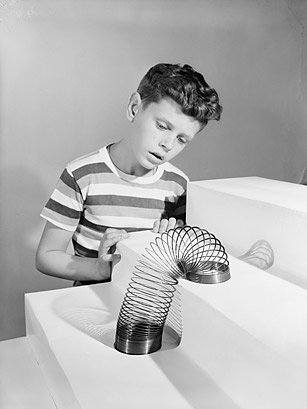
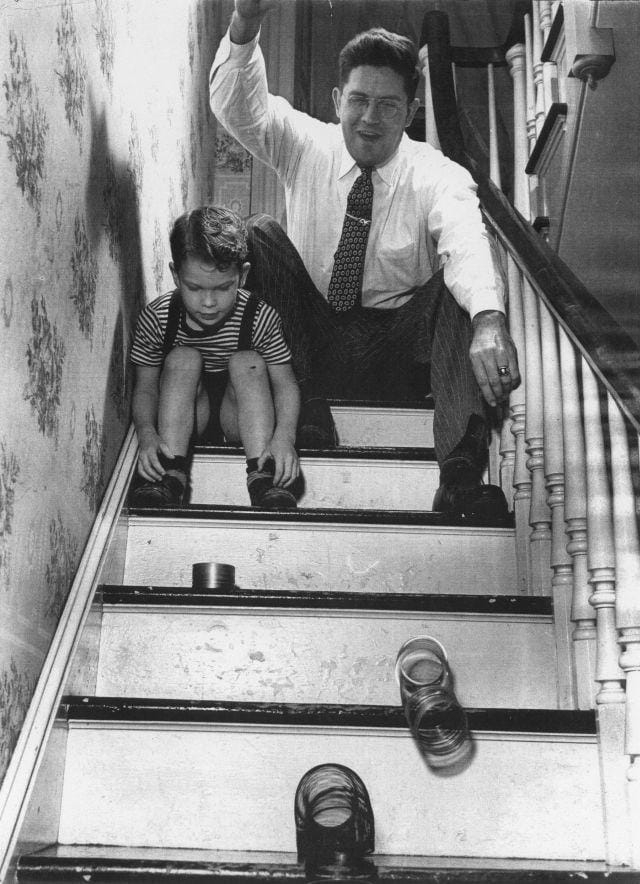
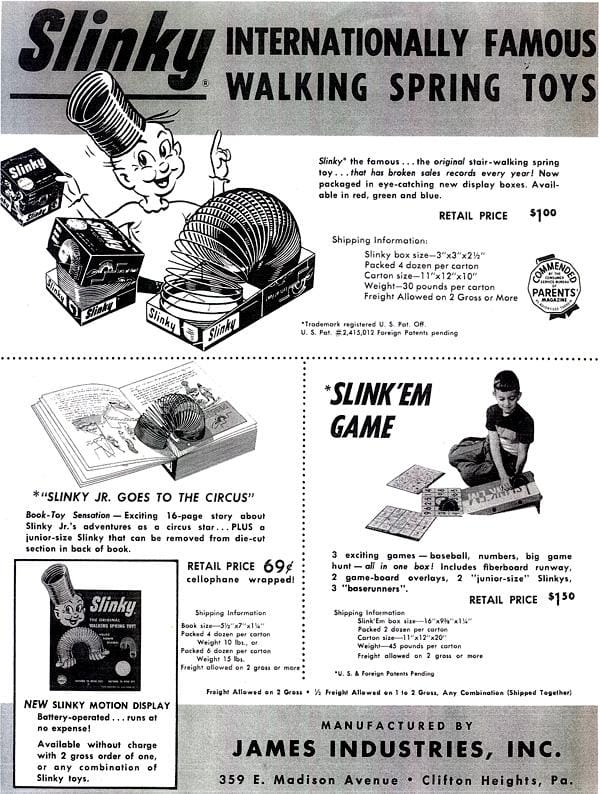
WWII Walking Wonder: The Untold Story of the Slinky In 1943, naval engineer Richard James was working in his Philadelphia workshop on tension springs meant to stabilize sensitive instruments aboard battleships during World War II. While adjusting a spring, it slipped from his hands and “walked” across the floor in a mesmerizing motion. James was astonished. He and his wife, Betty, immediately realized this accidental movement could be the basis for a playful invention. They experimented with dozens of prototypes, measuring how far springs could travel, how many flips they could make, and how quickly they could complete a descent. After testing hundreds of coils, they determined that a spring 2.5 inches in diameter made from high-grade Swedish steel produced the most consistent walking effect. Slight variations in coil thickness, tension, and length drastically changed the motion, and only about 2% of springs tested achieved the ideal “walk.” The war influenced materials and timing: steel was rationed, making their carefully sourced Swedish steel highly valuable, and small-scale production required meticulous hand-winding and testing. Post-war America’s shift to consumer goods in 1945 created the perfect market moment, allowing the Jameses to bring their invention to stores. Each original Slinky sold for $1, equivalent to roughly $17 today. Finally, they revealed the creation to the public: at Gimbels department store in Philadelphia, 400 units were displayed, and all sold within 90 minutes. By the early 1950s, Slinky was sold in over 30,000 stores nationwide, and more than 50 million units were purchased by 1960. Today, over 300 million Slinkys are sold annually worldwide, including metal, plastic, glow-in-the-dark, and themed editions like Disney and Star Wars. The toy also serves as an educational tool, demonstrating wave motion, gravity, and momentum in classrooms across the globe. #WWII #WWIIHistory #USHistory #History #America #USA #Military #Toys
pbrewer

new orleans: culture trip or drunken circus? 🎷🍹

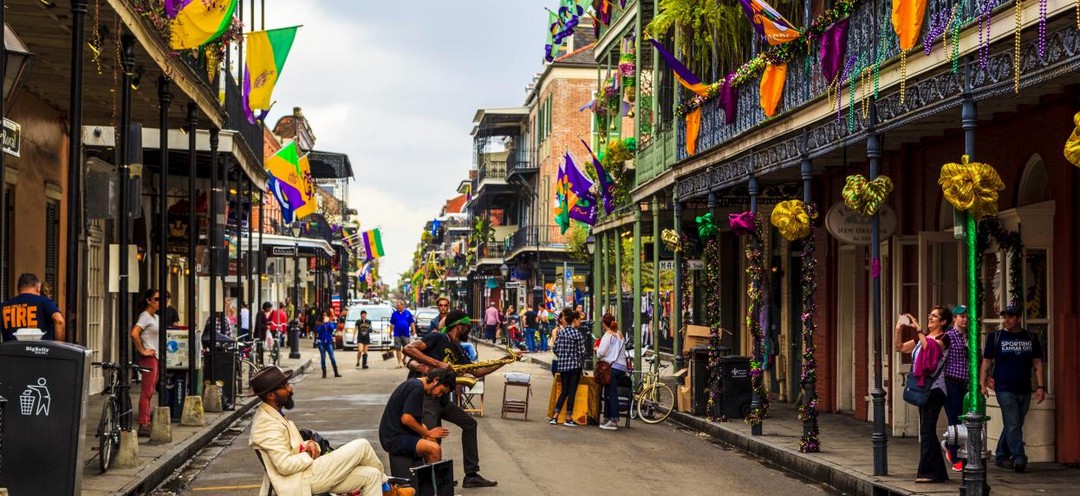
I went to New Orleans dreaming of jazz echoing through cobblestone streets, the smell of gumbo in the air, and locals dancing to brass bands under the sunset. But Bourbon Street at night felt more like Las Vegas with a hangover. Tourists stumbled from bar to bar with plastic cups, yelling “Mardi Gras!” in October. Street performers fought for tips, and the jazz was drowned out by EDM blasting from neon-lit clubs. I watched a man dressed as a clown take selfies in front of a 200-year-old church — and people cheered. Locals told me, “We love visitors, but they don’t love the real New Orleans. They just love the party.” And they’re right. Somewhere between the hurricanes (the drink) and the hurricanes (the storms), the city’s soul got commercialized. Is this still cultural celebration — or cultural exhaustion? #Travel #NewOrleans

new orleans: culture trip or drunken circus? 🎷🍹