Explore Page

Dan

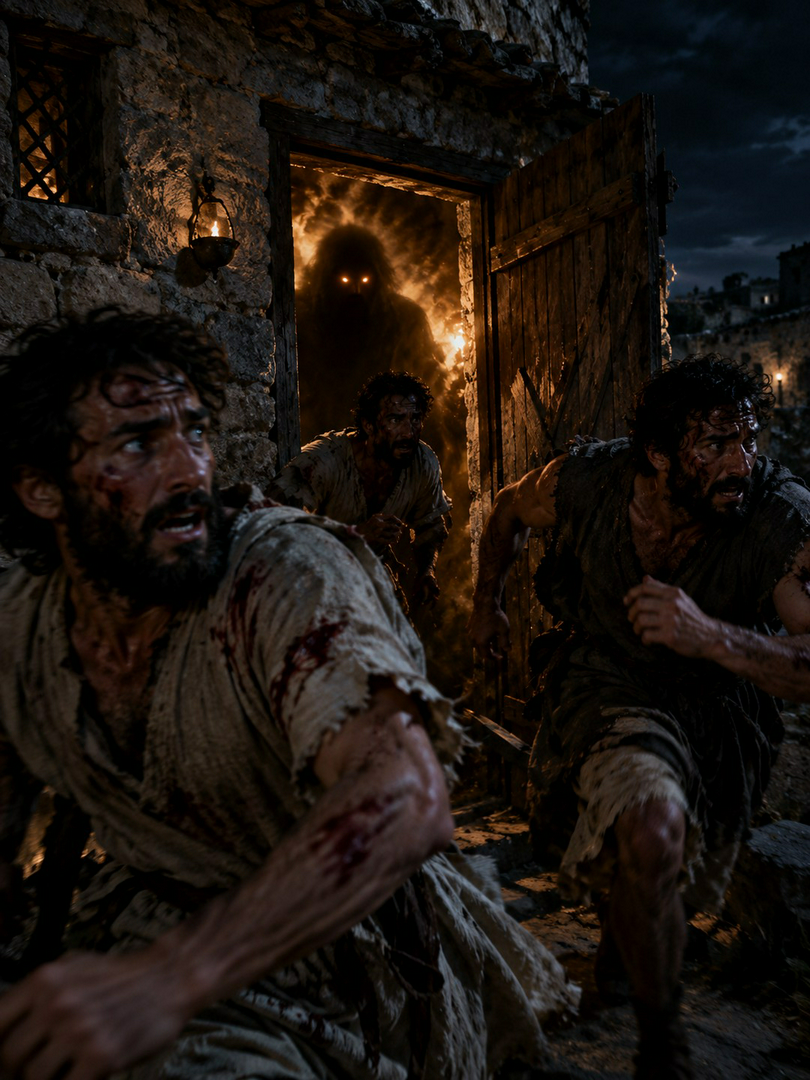
Your question, What is the key to truly knowing God? The very same question you’re asking was asked by an apostle. He asked Jesus how will you make yourself known unto us but not unto the rest of the world? Here is what was written. John 14:22 “Judas saith unto him, not Iscariot, Lord, how is it that thou wilt manifest thyself unto us, and not unto the world? Jesus answered and said unto him, If a man love me, he will keep my words: and my Father will love him, and we will come unto him, and make our abode with him.” Abode means home. How is this made possible. Listen again what Jesus said again. John 17:1 “These words spoke Jesus, and lifted up his eyes to heaven, and said, Father, the hour is come; glorify your Son, that your Son also may glorify you: As t You have given him power over all flesh, that he should give eternal life to as many as you have given him. And this is life eternal, that they might know you the only true God, and Jesus Christ, whom you have sent.” It’s all about knowing that the Father and Son has revealed themselves unto you and through you. Eternal life is what Jesus came to give us and it is a personal relationship with him and the Father. How can we know for sure that we know the Lord? It is by his love that he places in our heart that we know him. It is by the comfort of his Holy Spirit that we walk in. It is written as the church grew they walked in the fear of the Lord and the comfort of the Holy Spirit. There is no greater than these two. For the fear the Lord is to hate evil. Proverbs 8:13 “The fear of the LORD is to hate evil: pride, and arrogancy, and the evil way, and the froward mouth, do I hate.” The fear of the Lord separates from these things. The comforts of the Holy Spirit give us strength to endure. Acts 9:31 “Then had the churches rest throughout all Judaea and Galilee and Samaria, and were edified; and walking in the fear of the Lord, and in the comfort of the Holy Ghost,” By these we come to know God dwells in us.

dan

Your question, What is the key to truly knowing God? The very same question you’re asking was asked by an apostle. He asked Jesus how will you make yourself known unto us but not unto the rest of the world? Here is what was written. John 14:22 “Judas saith unto him, not Iscariot, Lord, how is it that thou wilt manifest thyself unto us, and not unto the world? Jesus answered and said unto him, If a man love me, he will keep my words: and my Father will love him, and we will come unto him, and make our abode with him.” Abode means home. How is this made possible. Listen again what Jesus said again. John 17:1 “These words spoke Jesus, and lifted up his eyes to heaven, and said, Father, the hour is come; glorify your Son, that your Son also may glorify you: As t You have given him power over all flesh, that he should give eternal life to as many as you have given him. And this is life eternal, that they might know you the only true God, and Jesus Christ, whom you have sent.” It’s all about knowing that the Father and Son has revealed themselves unto you and through you. Eternal life is what Jesus came to give us and it is a personal relationship with him and the Father. How can we know for sure that we know the Lord? It is by his love that he places in our heart that we know him. It is by the comfort of his Holy Spirit that we walk in. It is written as the church grew they walked in the fear of the Lord and the comfort of the Holy Spirit. There is no greater than these two. For the fear the Lord is to hate evil. Proverbs 8:13 “The fear of the LORD is to hate evil: pride, and arrogancy, and the evil way, and the froward mouth, do I hate.” The fear of the Lord separates from these things. The comforts of the Holy Spirit give us strength to endure. Acts 9:31 “Then had the churches rest throughout all Judaea and Galilee and Samaria, and were edified; and walking in the fear of the Lord, and in the comfort of the Holy Ghost,” By these we come to know God dwells in us.

Farobag Homi Cooper

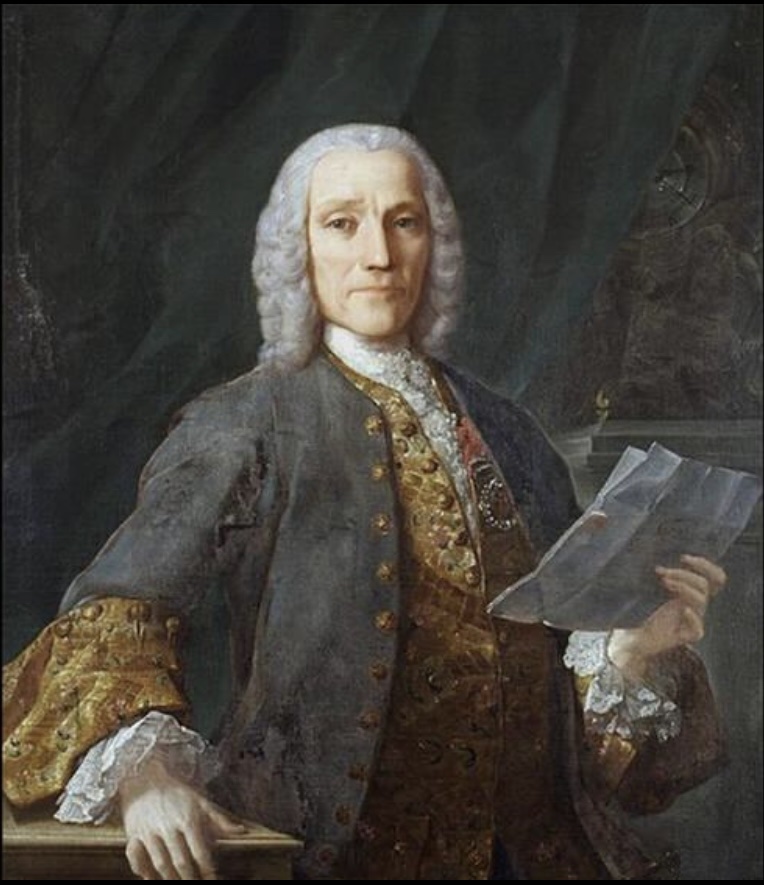
Henry Purcell was born on September 10, 1659 to a musical family in Westminster, London. Purcell was England’s greatest composer of the Restoration period and one of the most important English composers before the 20th century. His music combines English contrapuntal tradition, Italian melody, French dance rhythms, and a remarkable feeling for harmony and word setting. He was recognized as a prodigy from a young age, singing in the Chapel Royal's choir and composing as a child, as evidenced by a published three-part song surviving from when he was only 8 years old. Purcell had an unusually sophisticated harmonic language for his time. He could move between major and minor, dissonance and resolution, and chromatic harmony with extraordinary freedom. His word painting was also exceptional. Dido’s lament, “When I am laid in earth,” is particularly famous for its descending chromatic bass and extraordinary emotional intensity. “As poetry is the harmony of words, so music is that of notes; and as poetry is a rise above prose and oratory, so is music the exaltation of poetry.” “Tis women who make us love; 'tis love that makes us sad; 'tis sadness makes us drink; 'tis drink that makes us mad.”

justme

At sixteen years old, Paul Anka was hopelessly in love with a girl who barely knew he existed. Her name was Diana Ayoub. She was eighteen. Poised. Beautiful. And completely unaware that a shy teenager in Ottawa had been watching her from a distance. Paul was not confident around girls. He was small for his age. Awkward. Quiet. But there was one place where he knew exactly what to say. At the piano. So in early 1957, he did what young songwriters have always done with feelings they cannot speak aloud. He turned them into music. Paul wrote a song for Diana. A plea from a boy who wanted to be noticed by someone who had no idea how deeply he felt. Then he decided to do something extraordinary with it. He borrowed one hundred dollars from his uncle. Skipped school. Packed a suitcase with demo tapes. And flew alone to New York City. He was sixteen years old. The music business was not exactly waiting for teenage songwriters from Canada. Professional writers dominated the industry. Experienced producers controlled the doors. A nervous kid with a homemade love song was easy to dismiss. Then Paul reached ABC-Paramount Records. Producer Don Costa agreed to hear him. The recording was simple. A young voice. A melody. A feeling that sounded real because it was. Costa heard something others had missed. Not polish. Truth. The label released “Diana” in July 1957. Then everything changed. Radio stations began receiving requests. The song climbed charts. North America. Europe. Beyond. Millions of people heard the words Paul had written for one girl in Ottawa. The teenager who had struggled to get anyone’s attention suddenly had the attention of the world. “Diana” sold more than a million copies and transformed Paul Anka into an international star before he had even finished high school. And Diana Ayoub? She never became his girlfri

justme

FDA-APPROVED OPTUNE PAX ADDS A NEW WEAPON AGAINST LOCALLY ADVANCED PANCREATIC CANCER A new type of cancer treatment is giving some patients with locally advanced pancreatic cancer another option. In February 2026, the U.S. FDA approved Optune Pax, a wearable device that delivers Tumor Treating Fields (TTFields) to the abdomen. It is approved for adults with locally advanced pancreatic cancer, used together with the chemotherapy drugs gemcitabine and nab-paclitaxel. (U.S. Food and Drug Administration) HOW IT WORKS: WEARABLE DEVICE → adhesive arrays are placed on the skin of the abdomen → the device delivers alternating electrical fields called Tumor Treating Fields → the fields interact with dividing cancer cells → they can disrupt processes involved in cell division → the treatment is given together with gemcitabine + nab-paclitaxel chemotherapy WHY THIS MATTERS: Pancreatic cancer remains one of the most difficult cancers to treat, particularly when a tumor is locally advanced and cannot initially be removed surgically. Optune Pax offers a different approach: instead of relying only on drugs, it adds electrical fields designed to interfere with cancer-cell division. The treatment is also non-invasive and portable. Patients can receive the therapy at home while continuing their other cancer treatment. (U.S. Food and Drug Administration) REFERENCES: • U.S. FDA — “FDA Approves First-of-Its-Kind Device to Treat Pancreatic Cancer,” February 12, 2026. (U.S. Food and Drug Administration) • Babiker HM, et al. — “Randomized, Open-Label, Pivotal Phase III PANOVA-3 Study,” 2025. (PubMed) • ClinicalTrials.gov — PANOVA-3, NCT03377491. (ClinicalTrials.gov) • Optune Pax — FDA-approved indication and safety information. (Optune Pax) DISCLAIMER: This content is for educational and informational purposes only. It is not intended to diagnose, treat, cure, or prevent any disease or medical condition. Optune Pax is an FDA-approved treatment for a specific group of adults