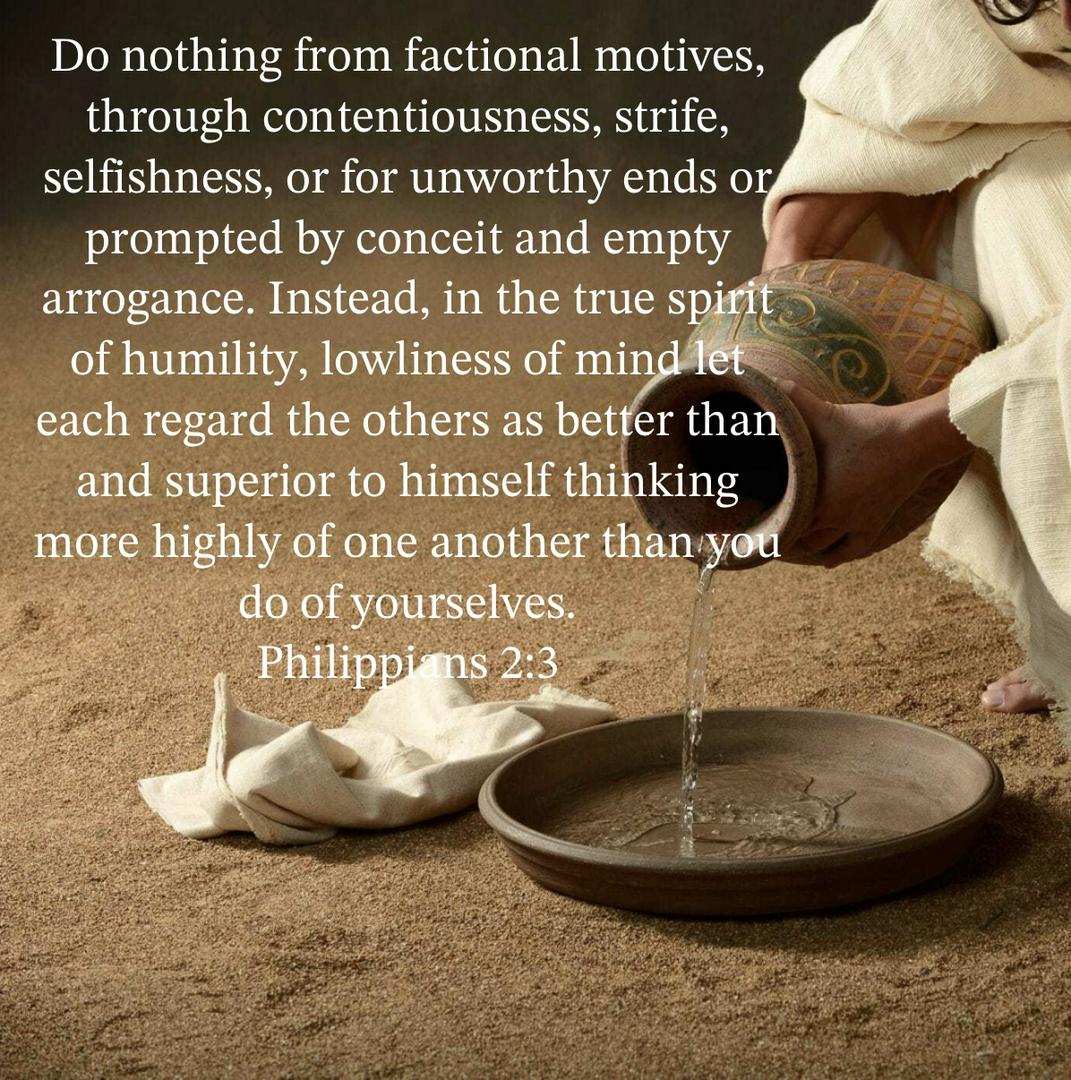
Philippians 2:3 From prison, Paul expresses his gratitude for the gifts from Philippi and encourages the believers to, in humility, stand firm and be unified in the faith. Even as he writes in the darkness, the light shines through him, an example of one who takes hold of the joy and doesn’t let go. His circumstances didn’t keep him from being humble, standing firm and being united with believers even when they were apart. We don’t hear Paul complaining about his captivity or cursing the judgment that put him there, or shaking his fist at the One Who allowed it. Instead, his heart is for the churches he planted. He warned them against factional motives, contentiousness, strive, and selfishness. He encouraged humility, lowliness of mind, and selflessness. Again, we see hearts of men haven’t changed over the years and have need of the reminder, the encouragement to stand strong in what we know to be true. To stand firm against our ‘human nature’, to choose righteousness over the desires, the natural impulses of the flesh. Paul‘s letter was addressed to the church, us. His warning, reminder and encouragement, indeed, has fallen on deaf ears, as we sit up and take notice of the condition of many churches today. Our prayer is one of humility and not self-righteousness. We pray for the believers affected by the brokenness, we pray hard hearts would be softened, and the spirit of repentance would flow in Truth through the body of Christ. There are not two truths, there is only one and we pray it fills His house. Perhaps God is shaking the church, separating wheat from the chaff, separating good from evil. We can only press in, knowing His will be done and all would come to repentance. Lord, strengthen us in humility, bind us together in harmony, help us to stand firm in the Truth, and not waiver from it. Keep us mindful of Who You are in us, Your power in us to accomplish Your will Your way.