1/1

JFK’s Final Moments: Parkland Surgeons vs. Official Story
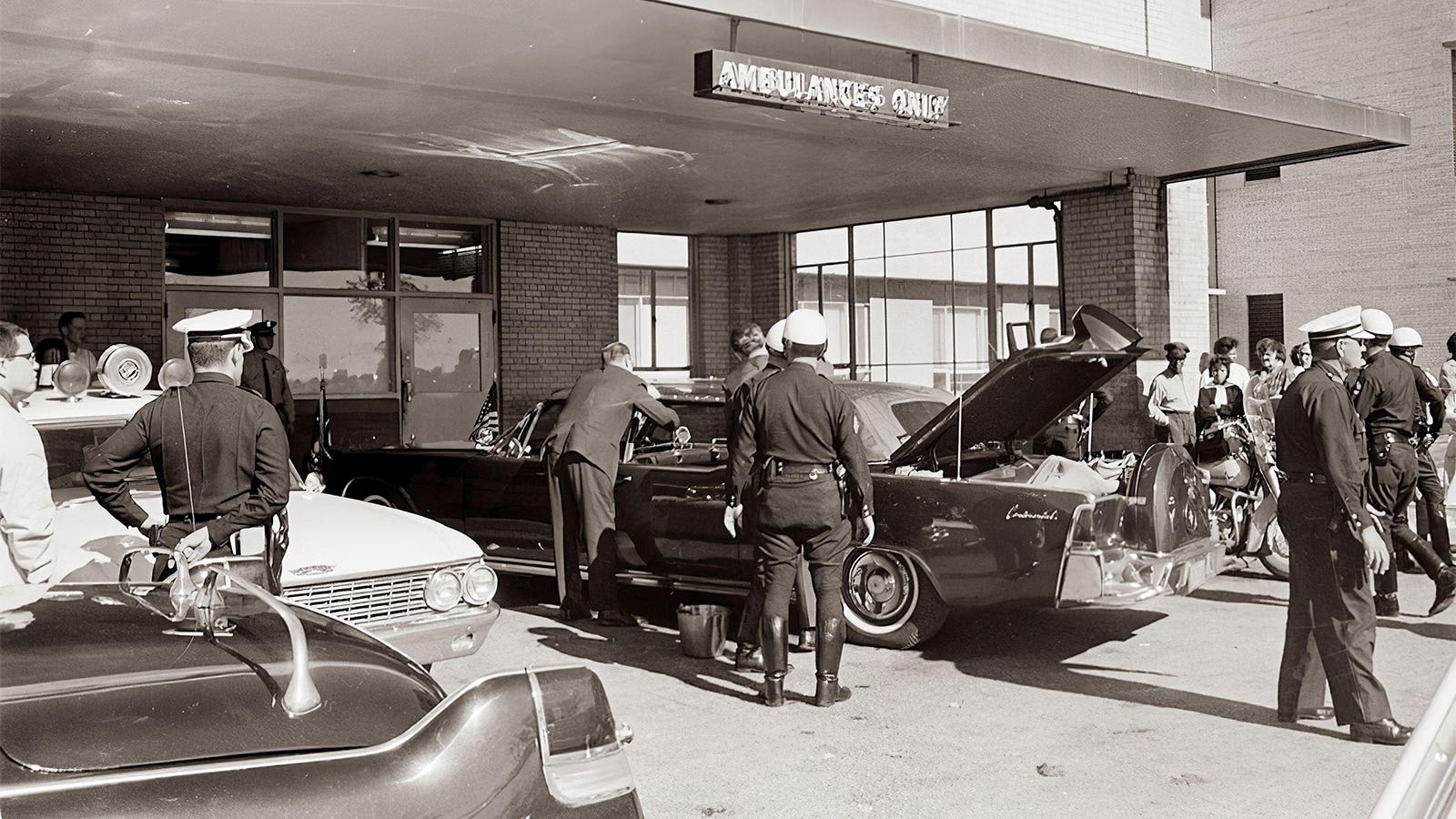
When President John F. Kennedy arrived at Parkland Memorial Hospital on November 22, 1963, the trauma team faced shocking devastation. Doctors, including Dr. Charles Carrico, Dr. Malcolm Perry, Dr. Kemp Clark, and Dr. Robert Jones, immediately recognized the gravity of his injuries, leaving several visibly shaken. Their accounts, given during frantic efforts to save the President, later appeared to conflict with the official Bethesda autopsy, fueling decades of speculation. Dr. Carrico first noted a small, round wound in Kennedy’s throat just below the Adam’s apple. To him, it looked like a clean entry rather than an exit wound. Dr. Perry, performing an emergency tracheostomy to help Kennedy breathe, confirmed this impression at a press conference, describing it as a likely entry wound, shocking reporters and suggesting a shot from the front. The head wound left the deepest impression. Dr. Clark and Dr. Jones both described a massive blowout at the rear of the skull. Dr. Jones recalled seeing a large portion of bone and brain missing, with cerebellar tissue exposed, indicating catastrophic rear damage. Other doctors noted brain tissue spilling out and skull fragments displaced in multiple directions. The destruction was so severe that it suggested, to trained surgeons, a shot entering from the front and exiting the rear. Their separate testimonies remarkably aligned in describing the chaos and scale of the injury. The official autopsy at Bethesda, however, described the head wound differently, placing the defect at the top and right side of the skull and concluding all shots came from behind. The throat wound was reinterpreted as an exit from a bullet entering Kennedy’s back. Later-released JFK files highlighted disputes among witnesses, missing evidence, and internal pressure, raising questions about whether the Parkland doctors’ observations, including Dr. Jones’ vivid description, were altered to fit the lone-gunman narrative. #Kennedy #History #USHistory
2025-09-17

Leon Borst
I never believed that Oswald was the main shooter. There is no way in hell he could of fired 3 shots rapidly with a bolt action gun. First shot maybe but the next 2 no cause he’d have to move his head to rack in another shell then find Kennedy in the scope which is not easy ask anyone who hunts with a scope it takes time to refocus perfectly to see your target clearly. He got shot from the front cause the bullet entered from when it exits that bullet expands that’s why his skull exploded in back . Oswald was nothing but a scapegoat that way Ruby took him out. I still say Johnson was in on it he wanted to be president or the guys behind the shooting wanted Johnson in cause they could manipulate him.
09-18
Croswell, MI
Reply(15)
66

Linda Gifford
Vietnam happened because of this. Kennedy would have stopped it.
09-18
Palm Desert, CA
Reply(13)
62

William Johnson
Just about every person who follows this tragedy believes the shots came from the front. There were more than 1 shooter. Why does the Government continue to treat the American people as if they are stupid. Just tell the truth.
09-19
Orlando, FL
Reply(7)
46

Marjorie Sisson
Huge cover-up.
09-17
Tucson, AZ
Reply
49

charlie miller
of course that shot came from the front. his head went backwards. even the film showed that
09-18
Deer Trail, CO
Reply(2)
41

ken harto
Oswald was never the shooter he was a patsy that's why Roby took hem out
09-22
Ontario, CA
Reply(9)
36

Lisa Eckerlein-bean
I was a little kid when I saw Kennedy get shot. The first shot made his head go forward, but the next shot threw his head back. I remember telling my mom that two bad men shot the President. To this day I still believe there was more than one gunmen.
09-20
Saugerties, NY
Reply(1)
39

Shanna Neeser
The point is people need to know the truth surrounding a national tragedy. So what if it happened 60 plus years ago. That was a horrific event for the entire nation and even as a little child at the age of four, I can remember watching the coverage on television and being keenly aware of the level of mourning of the American people. That was a terrible time in American history. That is why it matters!!
09-18
Inkom, ID
Reply(1)
38

panaram
Wow. My son had mentioned this and I’d never heard about it- explains why Jackie was covered in brain matter and was scrambling onto the back of the car to gather parts of his skull. It would have all been propelled forward if he was hit from “the grassy knoll”
09-18
Duxbury, MA
Reply(7)
33

Cindy Taylor
watching the infamous video, you can plainly see how JFK's head lurched backwards. This would indicate a shot from the front. And Kennedy himself clutched his neck in the front. If the bullet came from the back, he never would have grabbed his throat.
09-18
Kodak, TN
Reply(1)
32
More comments ...
write a comment...