1/1
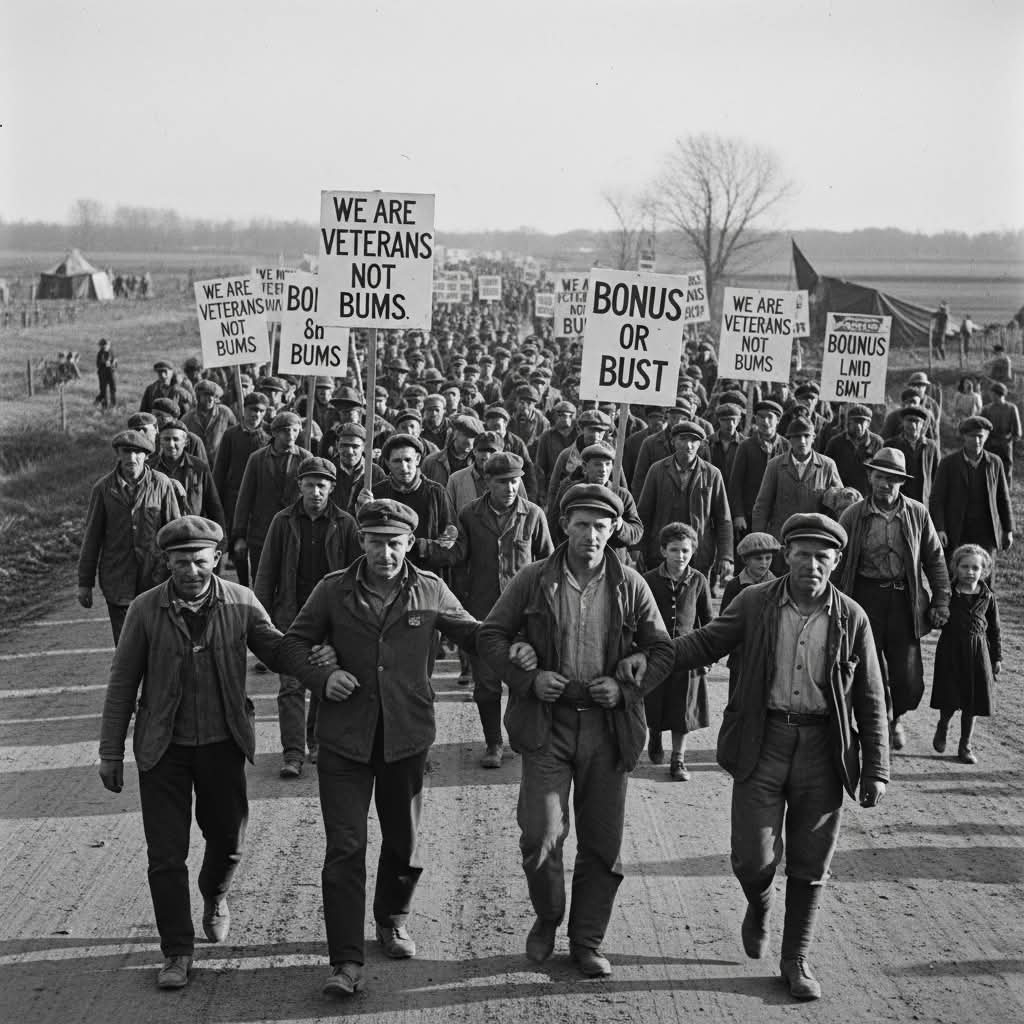
The Untold Battles of American Veterans After War Across U.S. history, veterans returning from war often faced neglect despite public praise. Continental soldiers after 1783 struggled to receive promised pay and pensions, delayed by 6 to 12 months. Some threatened to march on Congress in the Newburgh Conspiracy. General Washington’s appeal prevented crisis but revealed how fragile veteran support was. After the Civil War, Northern soldiers were publicly honored, yet many lived with poverty, lingering injuries, and untreated trauma. Confederate veterans faced economic devastation and social disruption. World War I soldiers returned to limited jobs. “Shell shock” now recognized as PTSD was often untreated. In 1932, 17,000 veterans and families formed the Bonus Army in Washington D.C., demanding early payment of bonuses scheduled for 1945. Living in tents along the Anacostia River during the Great Depression, they were forcibly evicted by troops; several were injured, illustrating neglect despite service. World War II veterans fared better. Many returned to ticker tape parades and benefited from the GI Bill offering education and housing. However, racial disparities limited access for Black veterans, and mental health issues often went unaddressed. Vietnam veterans rarely received parades and often faced hostility or silence. Employment and PTSD treatment were difficult to access. Studies show roughly 30 percent experienced PTSD, and repeated low level blast exposure in combat or training can cause CTE like brain pathology recently recognized in military research. Iraq and Afghanistan veterans face 20 percent PTSD prevalence and 12 to 15 percent traumatic brain injuries. Despite public respect, many encounter barriers to care, employment, and reintegration. History shows that real recognition requires sustained mental health support, equitable benefits, and societal commitment, not just words. #History #USHistory #America #Veterans #PTSD #SupportOurVeterans #USA
2025-12-09

KL McIntire
funny we.can give illegal immigrants $$$ but we.cannot give these ww2 vets the $500 our government promised of course the lefts president FDR who promised it another leftist lie
12-10
Jacksonville, NC
Reply
1

Diane Gibbs
sad..SOME ARE MISTREATED NOT APPRECIATED.DIE YOUNG.PTSD🥰
12-09
Salem, VA
Reply
1
More comments ...
write a comment...