1/1
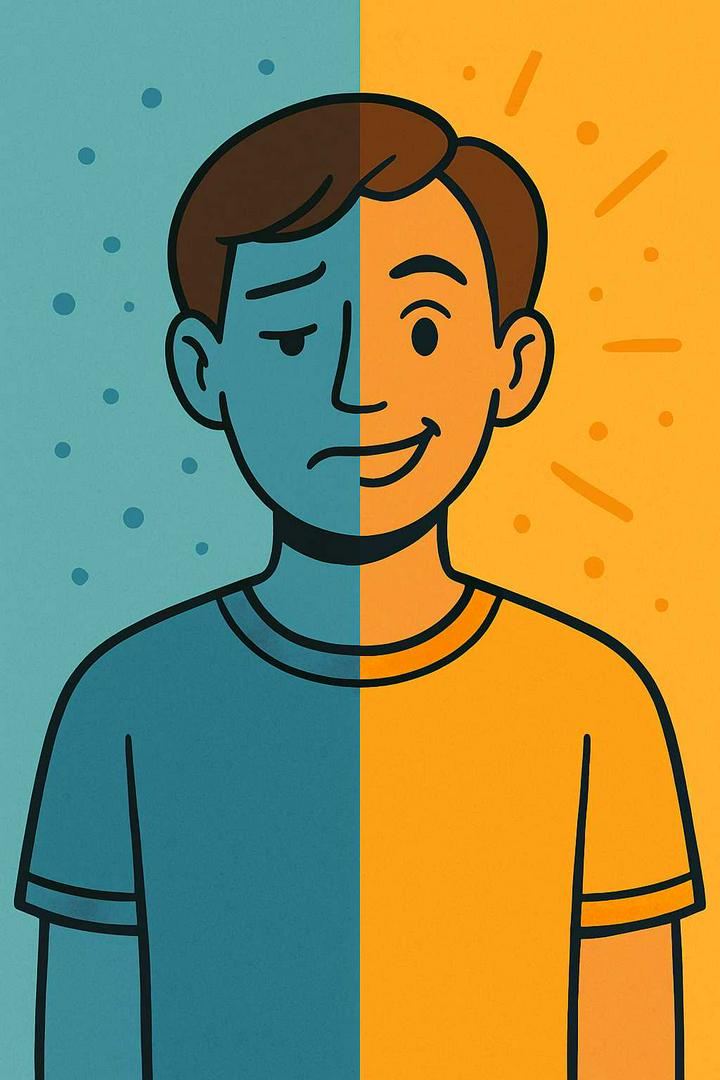
Bipolar disorder is often misunderstood because people usually see the surface and not the science behind it. The story goes back nearly two thousand years when early physicians noticed a pattern of deep sadness followed by long bursts of intense energy. They did not have the language for it, but they knew it was more than moodiness. It was a condition that followed people through seasons of their lives and shaped how they functioned day to day. Modern research shows that bipolar disorder is connected to how the brain regulates energy, motivation, and sleep. These shifts in chemistry can pull someone into a depressive state or push them into a fast moving state where thoughts race and everything feels amplified. It is not a choice and not something a person can control through willpower. Bipolar disorder often appears in late adolescence or early adulthood. Stress, trauma, or major life changes can trigger episodes, but the condition itself is rooted in the brain. With treatment, structure, and support many people manage their symptoms and build stable lives. The challenge is that stigma still makes people afraid to speak openly or seek help. The story behind bipolar disorder is a reminder that mental health is not always visible. People can struggle quietly while working, parenting, or caring for others. Understanding this condition creates space for compassion instead of judgment. It helps replace stereotypes with facts and encourages people to get help early instead of waiting until things fall apart. #MentalHealthAwareness #BipolarDisorder #BrainHealth #UnderstandingMatters
2025-12-11

Jean Bradley
I have family members who suffer from this mental illness and some suffer from schizophrenia too and I’m the kinda person that doesn’t do mental illness but I’ve had to learn to be patience and kind and nonjudgmental with my mental ill children and siblings and that hard for me at first. It was kinda like l blame them for being mental ill as children or as adults l had to learn it’s not there fault the way there brain is wired. And once l realized that it wasn’t there fault and it runs in our family and they had to control on it. It took me years because l thought about is how it affected me l never thought about the hell they maybe living in with this mental illness. I had to use my love and compassion and most of all my understanding and look at there just sick a different kinda sickness and they can never be fixed or repaired but they can just learn how to live with there mental illnesses. And l constantly remind myself that sense it’s in our gene pool it could have been me. 🙏🏼
12-11
Philadelphia, PA
Reply(6)
4
Jean Bradley
Bipolar depression is a treatable mental illness but you have to be willing to to take control and do what the doctor tell you to do and have good support systems in the black and brown community a lot of my people don’t even go and seek help they just live there lives doing crazy shit or should l say things that a not apart of there personality and that’s the sad part about this mental illness. And it must be really scary for them especially as they age. We have to learn how to none judgmental of people who suffer from all mental illnesses and be more kinda as well understanding. And not be so focused on how it affects us and try to help our family and friends who suffer from all these mental illnesses. It’s just that simple guys. 🙏🏼and pray for them as well .
12-11
Philadelphia, PA
Reply
6

Kerry
I live with bipolar and personality disorder because of things that happened as a child and let me tell you it's hard to deal some days. On my lows I sleep 2 to 3 days away
On my highs I am up for a week. I have medication but it affects me on all levels. I am slowly learning to manage my life according to my disorders and I am 57. This really sucks 🤔🤔🤔😆😆🥰🥰😲😲
.
12-11
Jasper, AL
Reply(1)
4

Sherrie Jones Lindsey
My son was misdiagnosed. He indeed is bipolar level 2. Years of upset and downs. But the last year and a half with right meds he is doing better than ever.
12-11
Adrian, MI
Reply
4

nana78
Stop!!! Bipolar disorder is a depression which is often misdiagnosed especially in the state of Illinois. You can laugh so hard there are tears in eyes and these ignorant fools will diagnose with bipolar depression just to slap a fake ass label on people to medicate just to medicate more and medicate again… all because the medicationsssss had side effects that caused more side effects on top of other side effects that they then use to excuse themselves for providing even more medications. It’s a crying shame what much of the country has become
12-11
Reply(2)
2

Corey B
They throw Bi Polar Disorder around like spilling candy.... It is widely misdiagnosed and is extremely close to Major Depression and other non spectrum Depression Disorders. Some people who have it can't get out of bed as others can with NO medicine to do so. Because of this there are definitely levels to it but again they pass it around like it's just another thing. Regardless it takes TIME to really know if someone has it more than likely not 15 min first session with A psychologist. Like most get...
12-11
Hopewell, VA
Reply
2

Patricia m Visnofsky
I had friend that had it🗣️only scared me once that day hadn't taking is medication mom said need to go into the hospital for a few days
12-11
Roxbury Township, NJ
Reply
1

Italian Princess
Very erratic illness. Sometimes people do not believe a person does not suffer from it if they are intelligent. It does not stop the sleeping patterns, mood swings, highs and lows of energy and at times off beat behavior. I know a person who has it and is the sweetest person in the world but our work environment which has favoritism in it turns them into an aggressive loud beast...but only to the ones they feel are unfair. However, the intelligence is not lost and neither is the ability to perform their job. Strangest thing, and job is a place that helps people with disabilities? They need work as they can't even see what's right in front of them! 😆😆😆😆
12-12
Yonkers, NY
Reply

Kim Walker
runs in my family! I believe it's a chemical imbalance of brain and each person's levels differ and most who have it have other issues with health as well I believe their is a cure just getting people right meds to stabilize their chemicals and hormones 🙏they find a solution and save lives
12-13
Reply
More comments ...
write a comment...