1/1

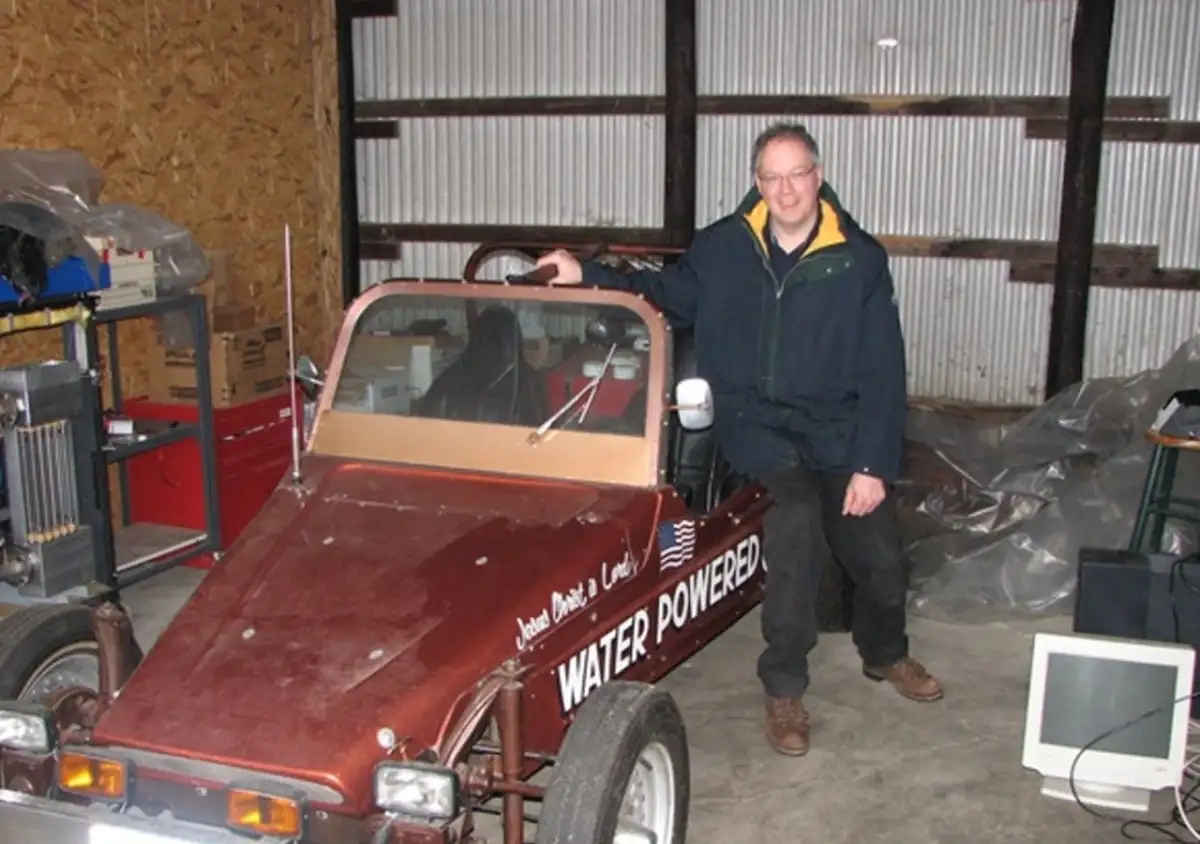
Poisoned or Natural Death? The Stanley Meyer Case and the Car That Could Run on Water Stanley Meyer was an American inventor who claimed to have developed a car that could run on water using a hydrogen based system. He said his technology split water into hydrogen and oxygen on demand to fuel a car without gasoline. Meyer often stated, “I want to give the world a clean energy source that cannot be controlled.” His invention drew global attention, skepticism, and legal scrutiny before his sudden death in 1998. Meyer collapsed while eating at a restaurant in Grove City, Ohio, during a meeting with European investors who were interested in funding and developing his water fuel technology. Witnesses claimed he said, “They poisoned me,” sparking speculation that energy interests or other powerful groups wanted to suppress his invention. However, no verified evidence of poisoning exists. The official cause of death was a cerebral aneurysm, a sudden rupture of a blood vessel in the brain. Medical experts note aneurysms can happen without warning and may resemble poisoning in their suddenness. No toxicology reports showed poison, and no homicide investigation followed. Legally and medically, his death was ruled natural. Some critics question whether the government could have influenced legal or medical findings to prevent public knowledge of Meyer’s technology, citing the Invention Secrecy Act, which allows suppression of sensitive inventions. While there is no proof, the law demonstrates that inventions with potential national impact can be legally restricted, keeping them hidden for decades. Meyer’s story sits at the crossroads of bold claims, secrecy, and sudden death. Was this simply a tragic medical event, or could powerful forces have deliberately kept a revolutionary invention hidden from the world? #Science #Physics #USA #History #USHistory #America #Physics
Grove City, Ohio • 2025-12-15

Teddy Eckard
just like Tesla the government broke into his home while his family were at his funeral! communistic government we have just do whatever they want!
12-27
Marion, OH
Reply(1)
2

scott
big oil would have not been big oil if that car had been made....would have cost them billions...when billions of dollars are at stake people "fix" that problem and fast....and at any cost....ANY cost.....I've listened to enough American scandal to know how this really went down
05-11
Reply

Barney Cash Jr
What happened to Stanley Meyer's patents on his device?
05-03
Toledo, OH
Reply

nope
Everybody knows he was murdered
05-06
Reply
More comments ...
write a comment...