1/1

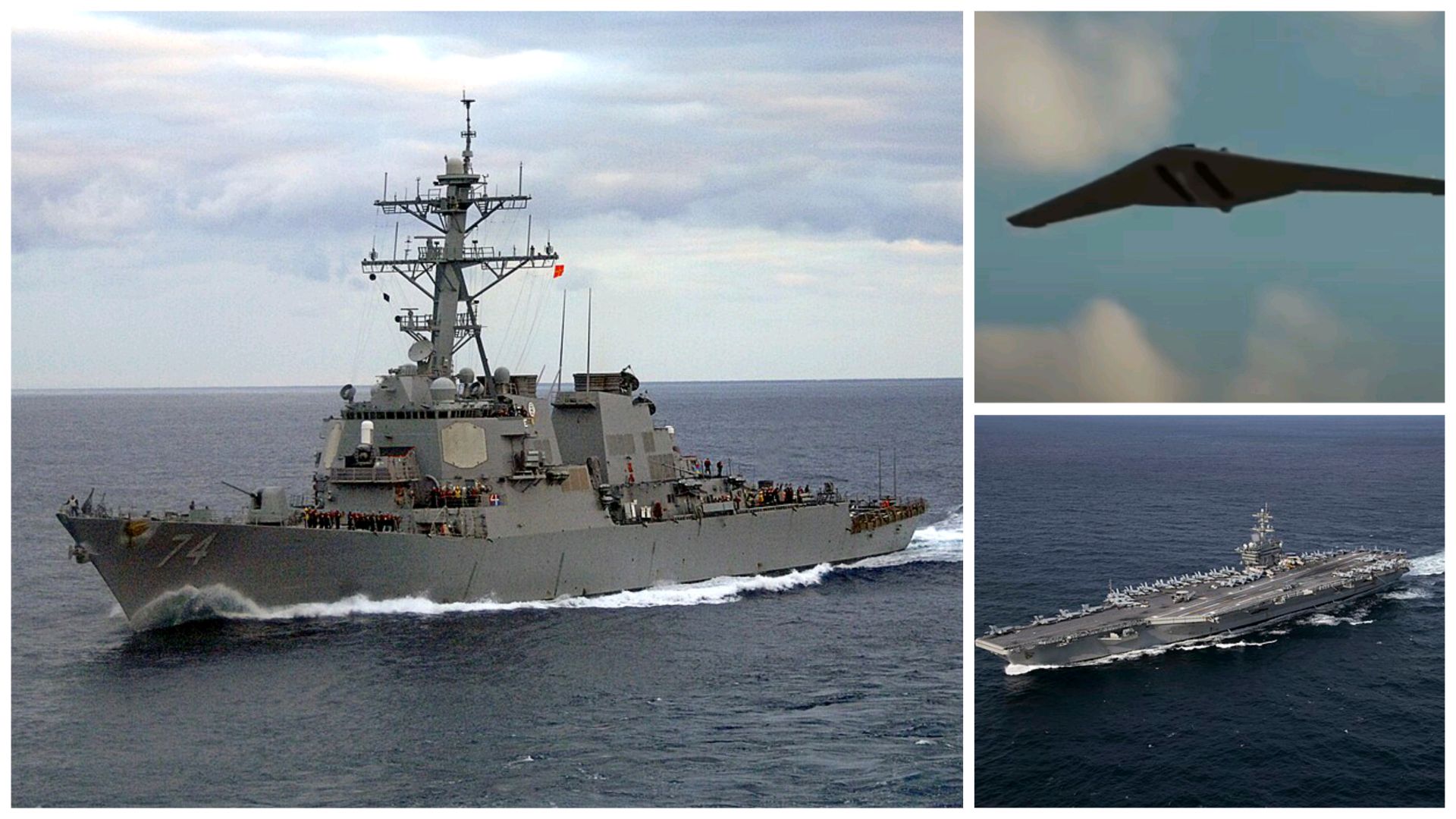
USS McFaul (Destroyer) and USS Lincoln (Aircraft Carrier) Down Iranian Drone, Repel Fast Boats, Protect Gulf Shipping According to the nonpartisan Institute for the Study of War, Iran entered 2026 on high alert, deploying hundreds of short- and medium-range ballistic missiles and dozens of Shahed-type UAVs across Iraq, Syria, and the Persian Gulf. Tehran claims it does not seek war with the U.S. or Israel, but these deployments signal its regional strike capability and willingness to escalate. On Feb. 3, 2026, the USS McFaul, a U.S. Navy Arleigh Burke-class guided-missile destroyer, intercepted a Shahed-191 UAV entering contested airspace using RIM-162 ESSM surface-to-air missiles, one of several drones Iran deployed near northern Persian Gulf shipping lanes. Later, two IRGC fast boats, each capable of speeds over 50 knots (58 mph) and armed with machine guns and small missiles, approached the U.S.-flagged tanker Stena Imperative in the Strait of Hormuz, a chokepoint 21 nautical miles wide at its narrowest point. The USS McFaul, coordinating with F‑35C fighter jets from the USS Lincoln, which arrived earlier this week to reinforce U.S. naval presence, escorted the tanker safely through the Strait, which carries roughly 20% of global oil shipments. ISW analysts note that these incidents show Iran’s continued use of UAVs and fast-attack craft to gather intelligence, test defenses, and signal resolve while avoiding large-scale escalation. Diplomatic efforts on regional de-escalation, maritime security, and proxy limits remain stalled. U.S. Secretary of State Marco Rubio said, “If the Iranians want to meet, we’re ready, but talks must include ballistic missiles, proxy support, and treatment of the Iranian people.” Iranian Foreign Minister Abbas Araghchi said, “We are prepared for negotiations respecting our sovereignty, but will not discuss our missile program.” Nuclear talks are scheduled for the end of the week. #BreakingNews #News #USNews #USA #Military #Defense
2026-02-05
write a comment...