1/1

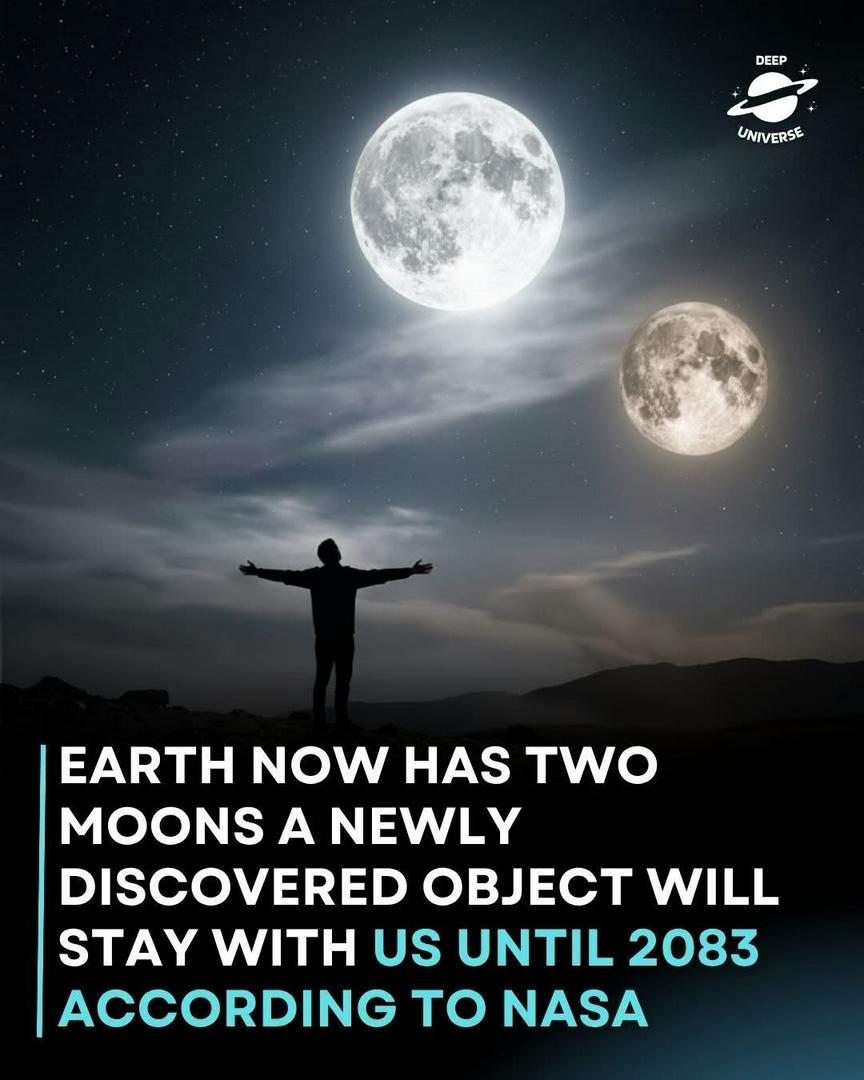
Astronomers have identified a small near-Earth asteroid temporarily captured by Earth’s gravity, creating the rare illusion of a second moon sharing our skies and orbit for a limited period, a finding that has sparked widespread fascination and confusion across science communities and social media. The object, believed to be a few meters to around 10 meters wide, follows a horseshoe-like path influenced by Earth’s gravitational pull and the Sun’s dominant force. Observations from ground-based telescopes and NASA-supported surveys suggest it is not a permanent satellite but a transient visitor, similar to other mini-moon events recorded in recent years across observatories worldwide. Scientists explain that these temporary moons form when small asteroids drift close enough to Earth to be trapped briefly in its gravitational field before escaping back into solar orbit. A key insight from recent studies shows that such captures may be more common than once thought, but most remain undetected due to their small size and faint reflectivity. Beyond the data, the discovery reminds us how dynamic and crowded near-Earth space really is, where invisible objects quietly move alongside our planet for weeks or months without notice. It also highlights how modern astronomy is constantly refining our understanding of what counts as a 'moon' in a universe filled with shifting gravitational relationships. Even as headlines simplify it into a second moon, the reality is more subtle and fleeting, yet no less remarkable. It is a brief companion in Earth’s long journey around the Sun, leaving behind a reminder that the cosmos still holds quiet surprises waiting just beyond routine observation. #DeepUniverse #fblifestyle #SpaceDiscovery #Cosmos #Universe #Science #Astronomy #UnknownPhenomena #NearEarthObjects #SpaceScience
2026-04-25

Dana Holmes
I'm going to look for that
04-26
Grifton, NC
Reply

Brandon Lopez
ux̌😲💕💕

04-27
Lancaster, PA
Reply
More comments ...
write a comment...