Tag Page Universe

#Universe
justme

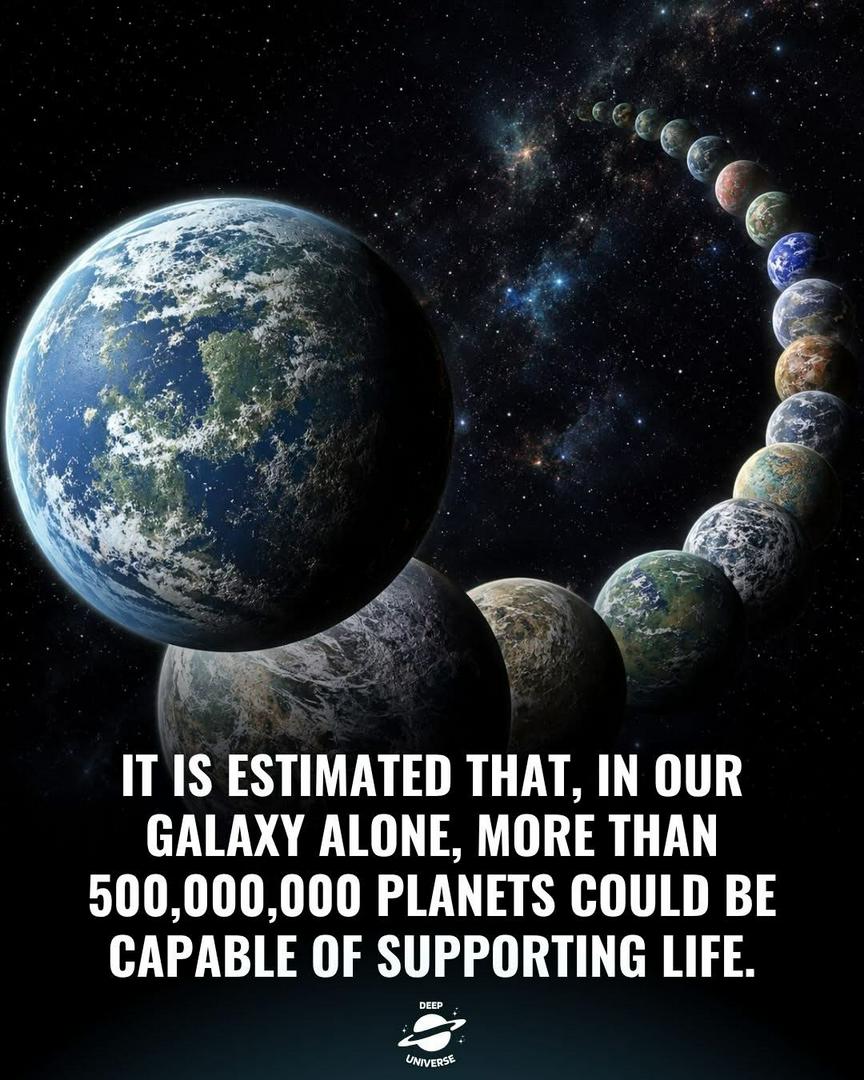
Astronomers estimate that the Milky Way may contain over 500 million planets capable of supporting life, a staggering figure that transforms the galaxy from a quiet star field into a vast landscape of possible living worlds hidden in plain sight. This prediction comes from long term data gathered by missions such as NASA’s Kepler Space Telescope and ESA’s exoplanet surveys, which monitored tiny dips in starlight caused by orbiting planets. By studying thousands of confirmed exoplanets and scaling patterns across billions of stars, scientists began to map how common Earth sized worlds may actually be. Within this research, planets in the so called habitable zone appear surprisingly frequent, especially around red dwarf stars which make up the majority of the Milky Way. Even conservative models suggest that a significant fraction of stars could host rocky planets with conditions where liquid water might exist under the right atmospheric balance and orbital stability. A surprising insight from recent statistical models is that potentially habitable planets are not rare exceptions but may be a repeating outcome of planetary formation. The galaxy seems to naturally produce Earth like environments whenever the right combination of dust, gravity, and time comes together across billions of years of cosmic evolution. Seen in this light, the night sky stops being empty and starts feeling crowded with hidden possibilities. Each point of light may carry its own unseen worlds, some possibly quiet, some active, and some still waiting for the right conditions to begin something that could resemble life, leaving us inside a universe that feels far less alone than it appears. #DeepUniverse #fblifestyle #SpaceDiscovery #Universe #Cosmos #ScienceFacts #Exoplanets #Astronomy #UnknownPhenomena"

justme

Former U.S. intelligence officer David Grusch testified under oath in 2023 before a House Oversight subcommittee, stating that he had been informed of alleged programs involving unidentified anomalous phenomena and claimed that non human biological material had been recovered in some investigations, though these assertions remain unverified by publicly released physical evidence. During the hearing held in Washington D.C., Grusch described information he received while working within U.S. intelligence and defense related agencies, including claims of legacy programs that allegedly studied crashed objects of unknown origin. However, he also acknowledged that he had not personally seen extraterrestrial spacecraft or biological entities, and much of his testimony was based on second hand reporting from other officials and classified sources. The Pentagon and Department of Defense responded by stating that there is no confirmed evidence of extraterrestrial life or reverse engineered alien technology, while emphasizing that many UAP reports are still under investigation through the All domain Anomaly Resolution Office. This office was created to improve standardised reporting of aerial and space related anomalies observed by military personnel. One key insight from scientific and intelligence analysis is that “unidentified” simply means insufficient data, not confirmation of non human origin. Many cases historically attributed to unknown phenomena have later been linked to atmospheric effects, sensor limitations, classified aircraft tests, or misinterpretation of visual data, especially in high stress or low visibility environments. #DeepUniverse #UFO #DavidGrusch #SpaceDiscovery #Universe #Cosmos #BlackHoles #SpaceMysteries #Extraterrestrial #Astrophysics #fblifestyle"

justme

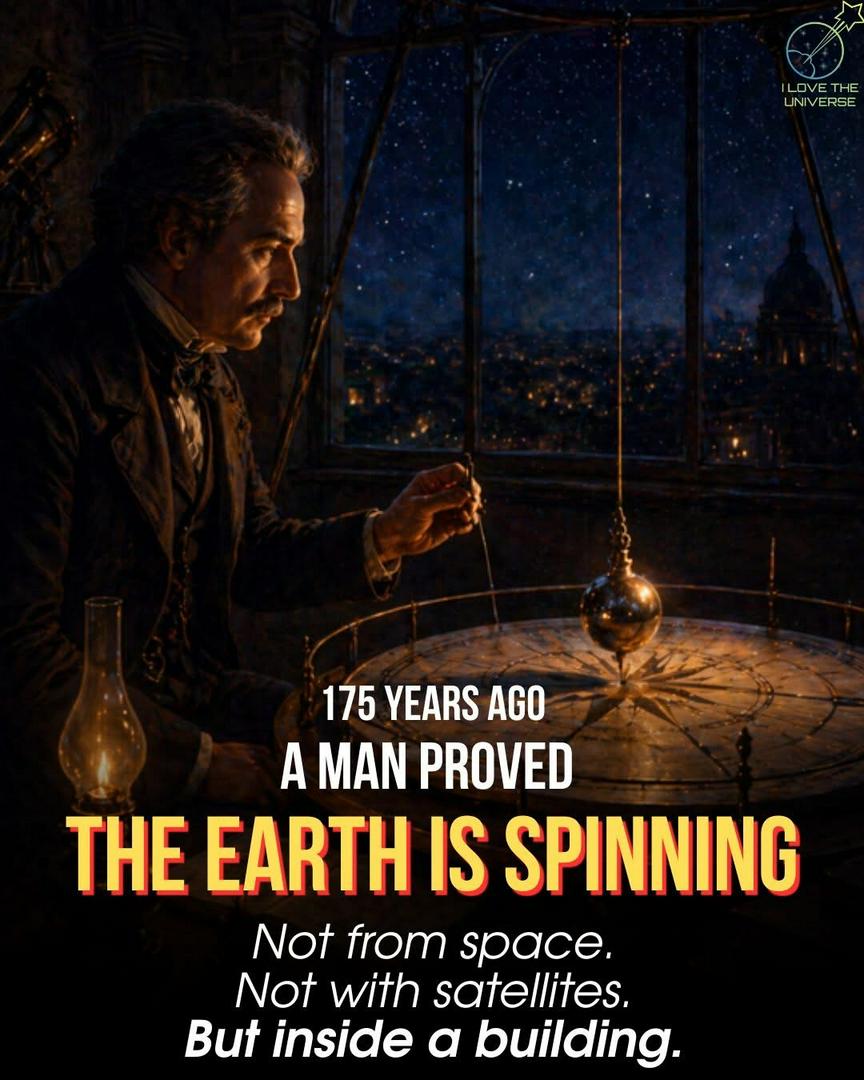
In 1851, a simple experiment proved that Earth is spinning. Not from space. Not with satellites. But inside a building… with a swinging weight. For centuries, people believed that Earth rotates. But proving it was another challenge. The French physicist Léon Foucault came up with a brilliant idea. He suspended a heavy metal ball from a long wire and set it in motion. Back and forth… perfectly steady. At first glance, nothing seemed unusual. But slowly, something incredible happened. The direction of the swing began to change. Not because the pendulum moved differently… but because the Earth beneath it was turning. The pendulum kept its direction in space. The ground did not. With a single, elegant experiment, Foucault made the rotation of Earth visible. No rockets. No space travel. Just a swinging weight… revealing that our planet is constantly in motion. #Science #Physics #Earth #Astronomy #DidYouKnow #ScienceFacts #Cosmos #Universe #STEM #SpaceScience

justme

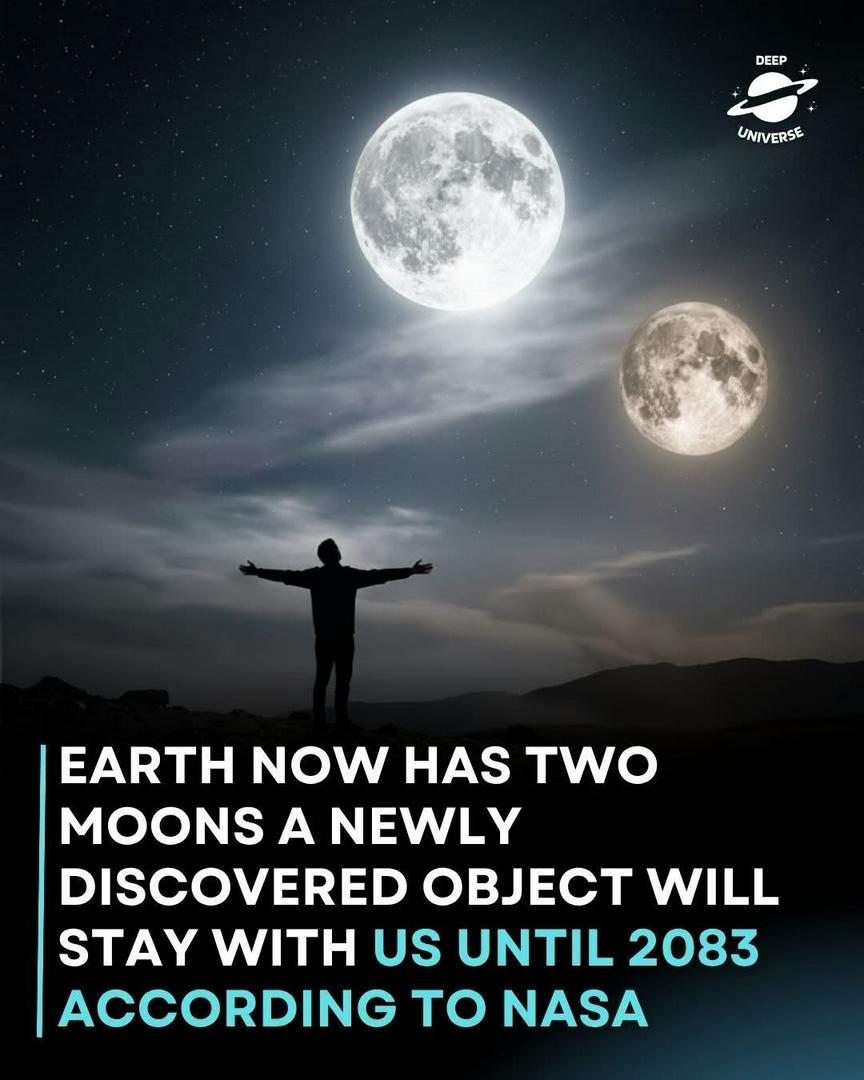
Astronomers have identified a small near-Earth asteroid temporarily captured by Earth’s gravity, creating the rare illusion of a second moon sharing our skies and orbit for a limited period, a finding that has sparked widespread fascination and confusion across science communities and social media. The object, believed to be a few meters to around 10 meters wide, follows a horseshoe-like path influenced by Earth’s gravitational pull and the Sun’s dominant force. Observations from ground-based telescopes and NASA-supported surveys suggest it is not a permanent satellite but a transient visitor, similar to other mini-moon events recorded in recent years across observatories worldwide. Scientists explain that these temporary moons form when small asteroids drift close enough to Earth to be trapped briefly in its gravitational field before escaping back into solar orbit. A key insight from recent studies shows that such captures may be more common than once thought, but most remain undetected due to their small size and faint reflectivity. Beyond the data, the discovery reminds us how dynamic and crowded near-Earth space really is, where invisible objects quietly move alongside our planet for weeks or months without notice. It also highlights how modern astronomy is constantly refining our understanding of what counts as a 'moon' in a universe filled with shifting gravitational relationships. Even as headlines simplify it into a second moon, the reality is more subtle and fleeting, yet no less remarkable. It is a brief companion in Earth’s long journey around the Sun, leaving behind a reminder that the cosmos still holds quiet surprises waiting just beyond routine observation. #DeepUniverse #fblifestyle #SpaceDiscovery #Cosmos #Universe #Science #Astronomy #UnknownPhenomena #NearEarthObjects #SpaceScience

justme

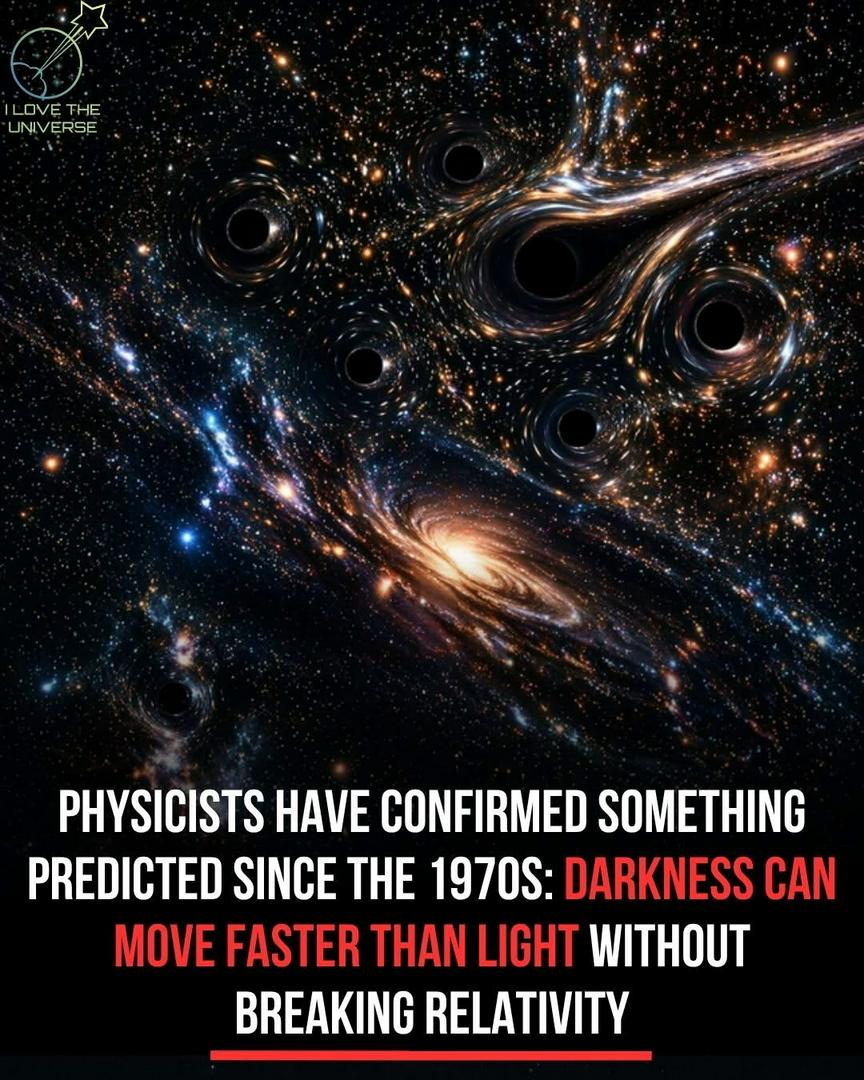
🚨 Something impossible just happened… or did it? Scientists have just observed motion that appears to be faster than light — and somehow… it doesn’t break physics. 🤯✨ But here’s the twist: What they saw wasn’t a particle, not even energy… It was pure nothingness. Inside exotic materials like boron nitride, waves of light and sound interact in such a precise way that they cancel each other out — creating tiny moving “points of darkness.” ⚫ And these dark points? They can move faster than light. No rules broken. No paradoxes. Just reality being far stranger than we imagined. Because these points carry no mass, no energy, no information, Einstein’s limits remain untouched — yet we’re witnessing something that looks like it defies them. 👉 And here’s something even more fascinating: Back in the 1970s, physicists had already predicted that such “points of nothing” could exist and behave in unusual ways — possibly even appearing to move faster than light. At the time, it was just theory. Today, we’re finally watching it happen. 👉 Think about that for a second… We’re now able to track the motion of nothing — moving faster than the fastest thing in the Universe. This discovery isn’t just mind-blowing… It could change how we study waves, light, and even quantum systems — unlocking ways to observe processes that were simply invisible before. The Universe keeps reminding us: The deeper we look… the weirder it gets. 🌌 💬 What do you think — is this the beginning of something bigger? 🔁 Share this with someone who loves space & physics! #Space #Physics #Science #Universe #MindBlown #Quantum #LightSpeed #Astronomy #DidYouKnow 🚀

justme

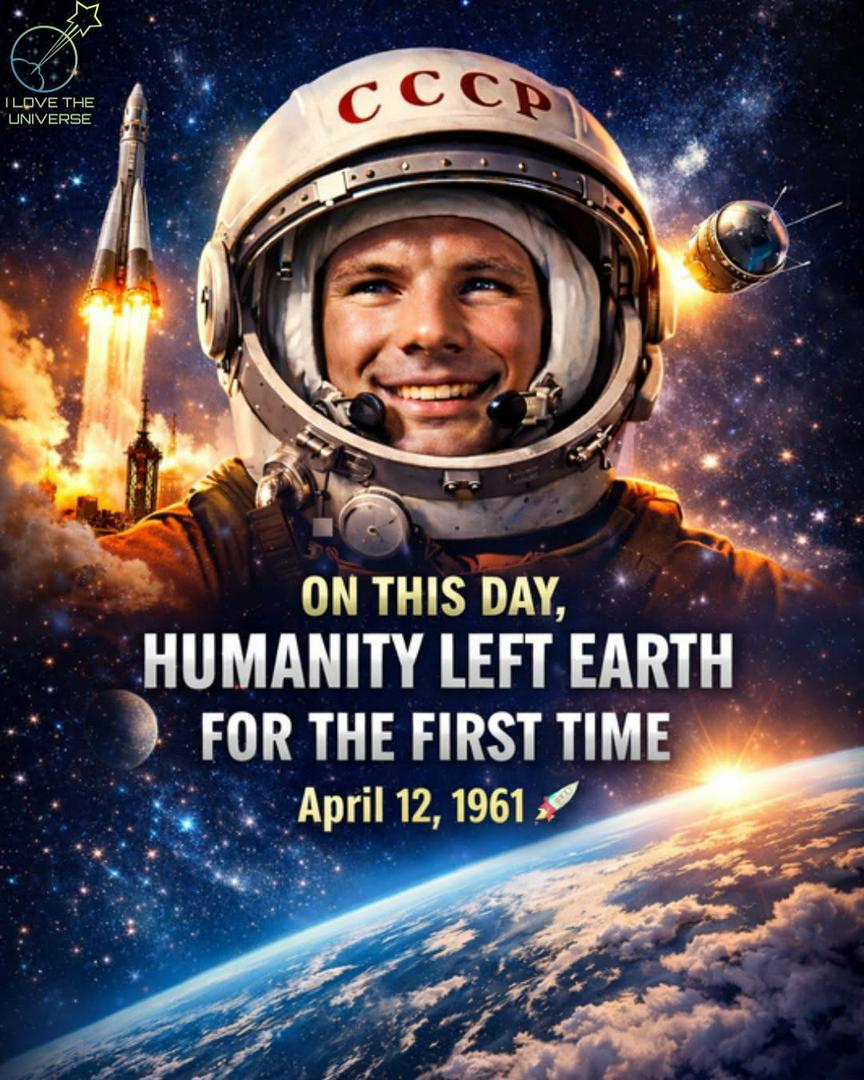
He didn’t just go to space… He changed humanity forever. 🚀 On April 12, 1961, Yuri Gagarin became the first human to leave Earth. In just 108 minutes, aboard Vostok 1, he orbited our planet once… But what he really did was something far bigger. He proved that we are not bound to this world. For the first time in history, a human looked back at Earth not as a place… but as a fragile blue world floating in the infinite dark. 🌍 No borders. No countries. Just one home. That single flight ignited a fire that still burns today — from the Moon landings… to Mars dreams… to the missions happening right now. And maybe the most powerful part? 👉 Every astronaut since… every rocket… every mission… exists because of that one moment. Because someone dared to go first. We didn’t just reach space that day… we discovered who we are capable of becoming. We are explorers. We are dreamers. And space is only the beginning. — If this moment gives you chills… you’re not alone. Share it. Let more people feel it. 🌌 #Space #YuriGagarin #April12 #Humanity #Astronomy #Cosmos #SpaceExploration #NASA #History #Universe #Earth #Inspiration

justme

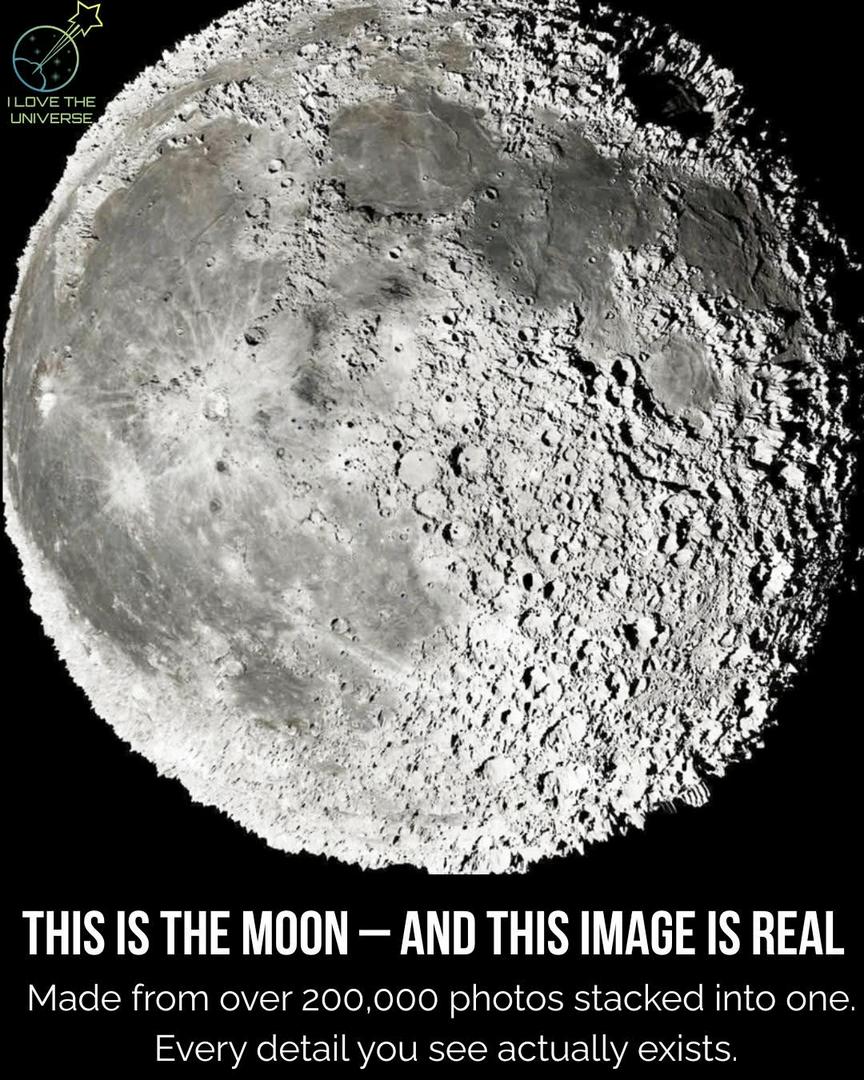
200,000 photos. One Moon. 🌕 Astrophotographer Andrew McCarthy didn’t capture this image in a single shot. He pointed his telescope at the Moon… and started recording. For hours, his camera collected over 200,000 individual frames — each one capturing tiny fragments of detail: craters, ridges, shadows, subtle textures. But raw images aren’t enough. Using a technique called stacking, he combined thousands of the sharpest frames together — reducing atmospheric distortion and revealing details normally blurred by Earth’s turbulent air. Then came the precision work. The Moon was divided into multiple sections, each processed separately at extreme resolution. Every segment was sharpened, aligned, and stitched into a single massive mosaic. And finally — color. Not added for style, but carefully enhanced to reveal real mineral differences across the lunar surface — tones our eyes can’t naturally see. What you’re looking at isn’t just a photo. It’s the result of: • patience measured in hours • processing measured in weeks • and precision measured in pixels Next time you look at the Moon… remember: This is what it really looks like — when nothing is left hidden. Image Credit: Andrew McCarthy and @cosmic_background #Moon #Astrophotography #Space #Astronomy #Universe #NightSky #Explore #Science

justme

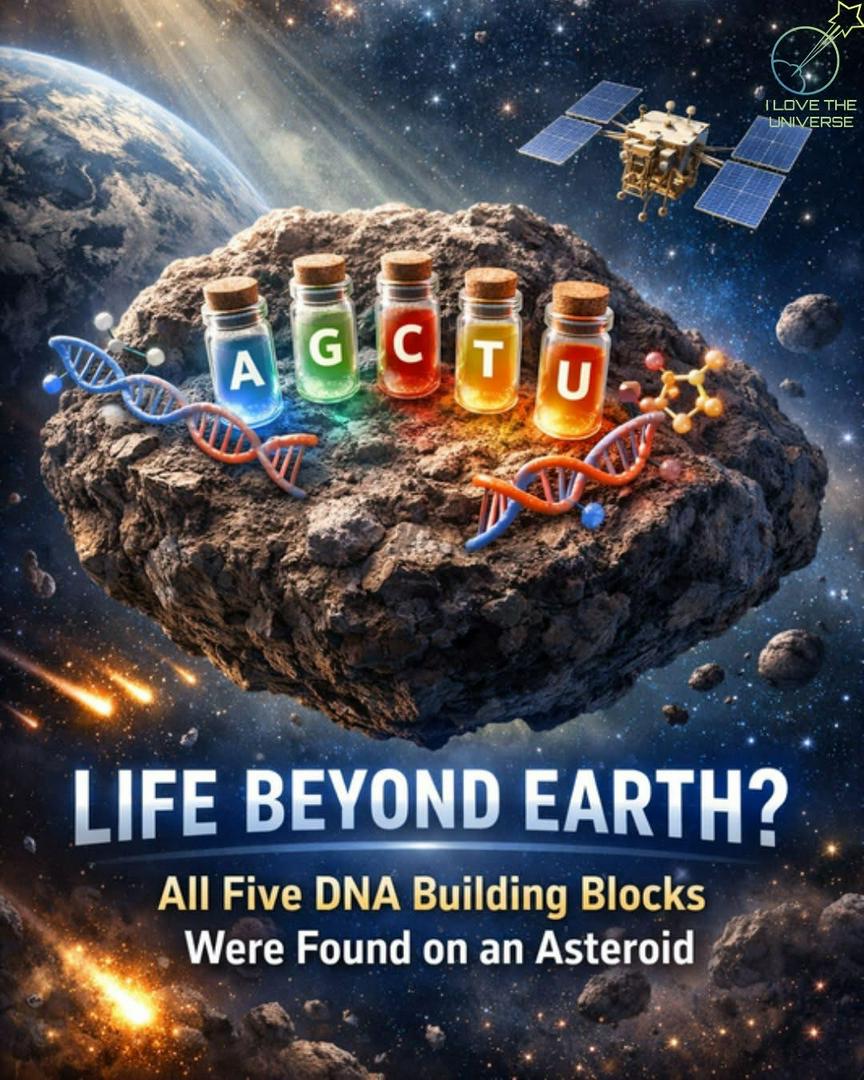
🚨 BREAKING: We may not be as alone as we once thought… A small, ancient space rock has just shaken everything we know about life in the Universe. Japanese scientists studying asteroid Ryugu have confirmed something extraordinary: within just 5.4 grams of material brought back by the Hayabusa2 mission, they found all five nucleobases - the essential building blocks of DNA and RNA. ✅ Adenine ✅ Guanine ✅ Cytosine ✅ Thymine ✅ Uracil For the first time ever, a single celestial body contains a complete and balanced set of the molecules needed to store and pass on life’s information. Let that sink in… 🌌 This isn’t just chemistry. This is the language of life - written in the dust of space. 💡 What does it mean? It suggests something truly mind-blowing: The ingredients for life may not be rare at all… they could be everywhere. Scientists now believe asteroids like Ryugu may have delivered these building blocks to early Earth, seeding our planet long before life began. Even more fascinating - Ryugu likely formed in a water-rich environment, where these complex molecules could slowly assemble over millions of years. And here’s the big question… If the recipe for life exists across the Solar System - or even the galaxy - then… 👉 How many other worlds have already used it? We still don’t know how these molecules became living organisms. But one thing is becoming clearer with every discovery: 🤔 Life might not be a miracle unique to Earth… 😲 It might be a cosmic inevitability. And that changes everything. What do you think — are we alone? 👇 #Space #Asteroid #Science #Astronomy #OriginsOfLife #NASA #Hayabusa2 #Ryugu #Universe #Cosmos #LifeInTheUniverse

Tag: Universe | LocalAll