1/1

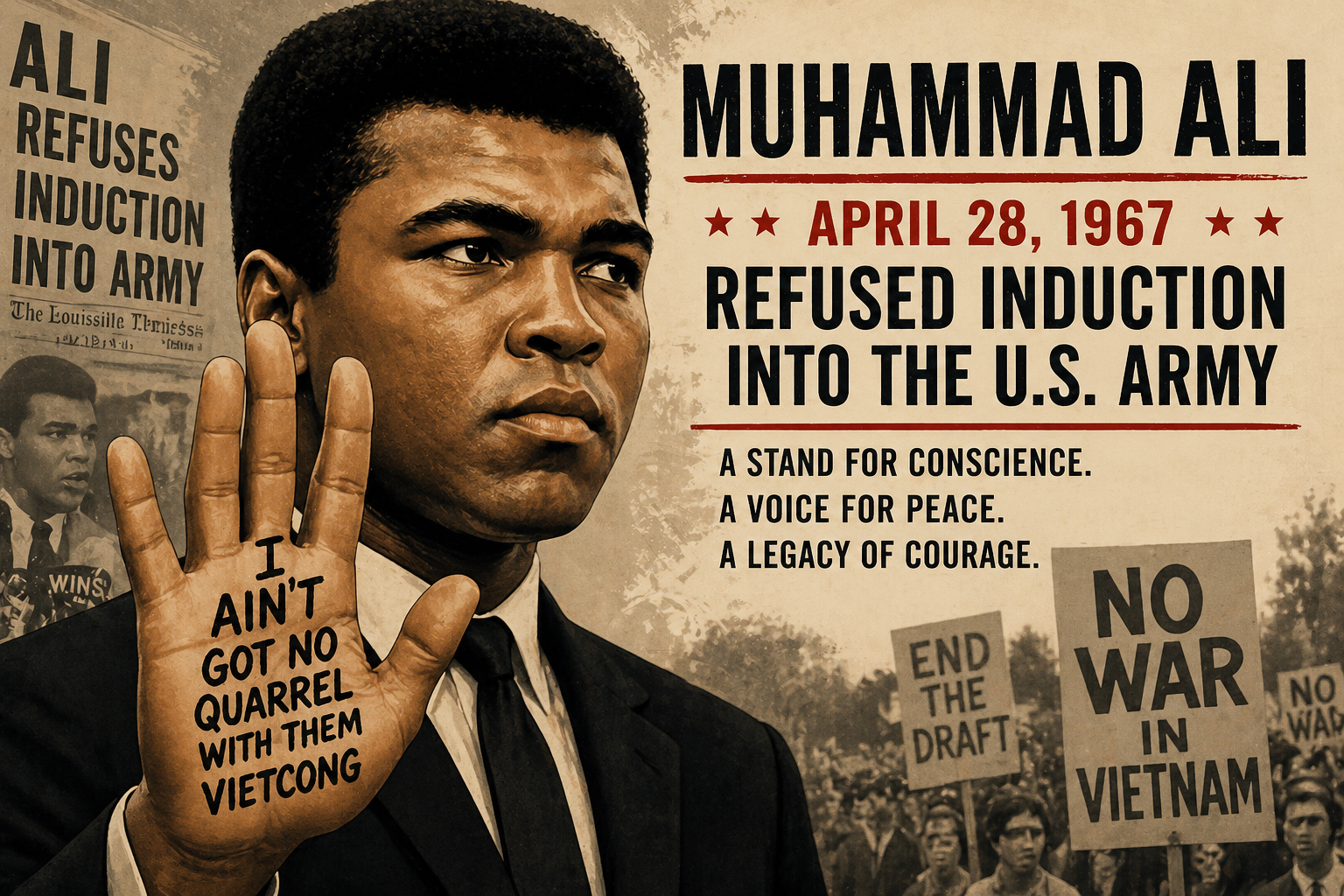
On April 28, 1967, Muhammad Ali stood in Houston and refused induction into the U.S. Army during the Vietnam War. His reason was rooted in his Muslim faith and his belief that he was a conscientious objector. He famously opposed fighting in a war abroad while Black Americans were still fighting for basic rights at home. Ali was immediately stripped of his heavyweight title and boxing license. In June 1967, he was convicted of draft evasion, sentenced to five years in prison, fined $10,000, and banned from boxing during what should have been the peak years of his career. He stayed free while appealing the case, but he lost nearly four years in the ring. The public reaction was fierce. Many called him unpatriotic. Others saw him as brave, principled, and ahead of his time. His stand connected sports to faith, conscience, race, politics, and the growing antiwar movement. Ali did not just risk money or fame. He risked his freedom. In 1971, the U.S. Supreme Court unanimously overturned his conviction in Clay v. United States. By then, Ali had become more than a boxing champion. He became a symbol of resistance, sacrifice, and the right to follow one’s conscience, even when the whole country tells you to sit down and be quiet. Muhammad Ali’s refusal remains one of the most powerful acts of protest in sports history. He lost his title, but he never lost his voice. #MuhammadAli #VietnamWar #SportsHistory #CivilRights #BlackHistory
Houston, Texas • 2026-04-28

Walker
A brave soul
04-28
Akron, OH
Reply
2

Bri
👊🏽🖤❤️💚
11d
Reply
More comments ...
write a comment...