1/1

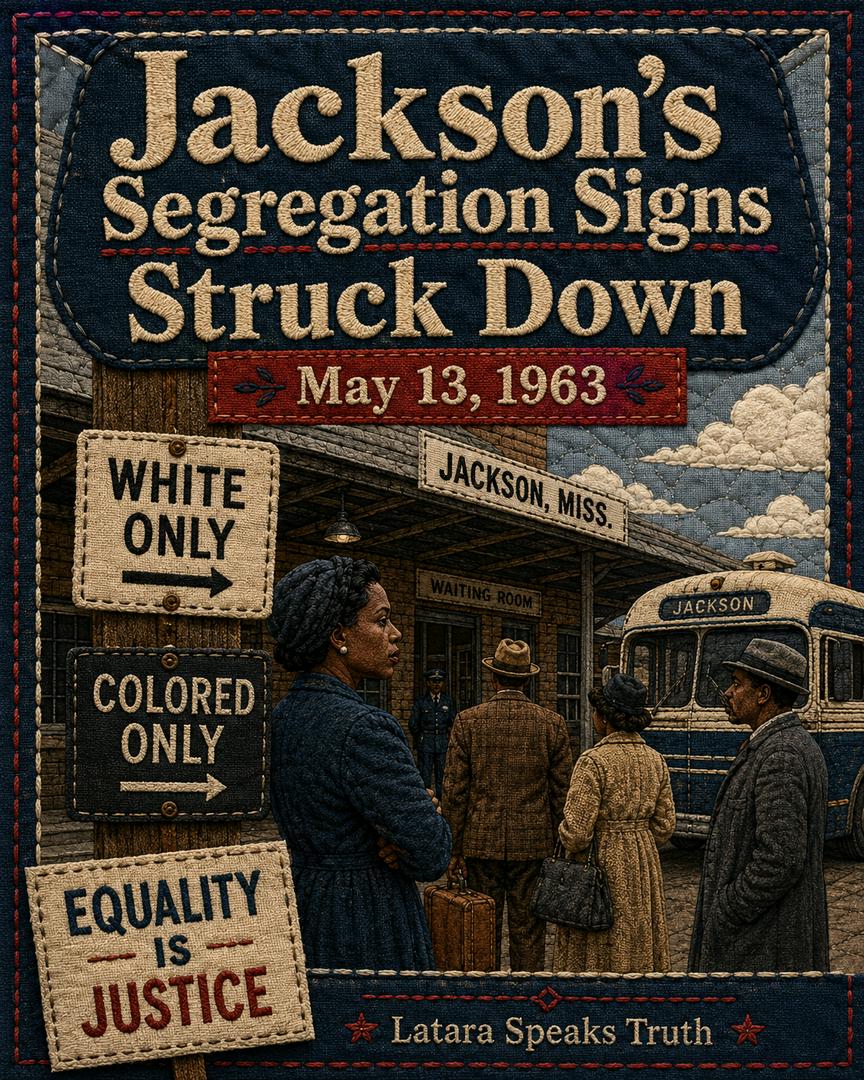
May 13, 1963… A federal appeals court ruled against Jackson, Mississippi’s attempt to keep segregation alive through city-backed signs. The case was United States and Interstate Commerce Commission v. City of Jackson. At the center were sidewalk signs near transportation terminals directing people to “White Only” and “Colored Only” waiting rooms. By then, federal law and Interstate Commerce Commission rules had moved against segregation in interstate transportation facilities. But Jackson found another way. Police placed signs outside the terminals and tried to keep racial separation standing from the sidewalk. That detail matters. These were not random signs. The wording said “By Order Police Department,” making clear this was not only custom or habit. This was public power used to preserve separation. The Fifth Circuit saw through it. The court ruled against Jackson’s use of city authority to maintain segregated spaces after the law had moved in another direction. This story shows how segregation did not disappear just because a court ruling or agency rule said it should. Local governments looked for loopholes. If one door closed, they tried another one. If carriers could no longer keep separate waiting rooms, the city tried to keep the same message alive with police-backed sidewalk signs. History remembers the marches, speeches, laws, and famous cases. But some revealing moments are smaller. A sign on a sidewalk. A city order. A waiting room. An attempt to keep people in their “place” after the law had started saying otherwise. On May 13, 1963, the court made clear Jackson could not use public authority to keep segregation standing under a different name. The signs looked simple, but carried the weight of a whole system. The ruling reminds us that progress was fought in courtrooms too, line by line, sign by sign, until the old system had fewer places left to hide too. #CivilRightsHistory #OnThisDay #MississippiHistory #AmericanHistory
Jackson, Mississippi • 19 days ago
write a comment...