1/1
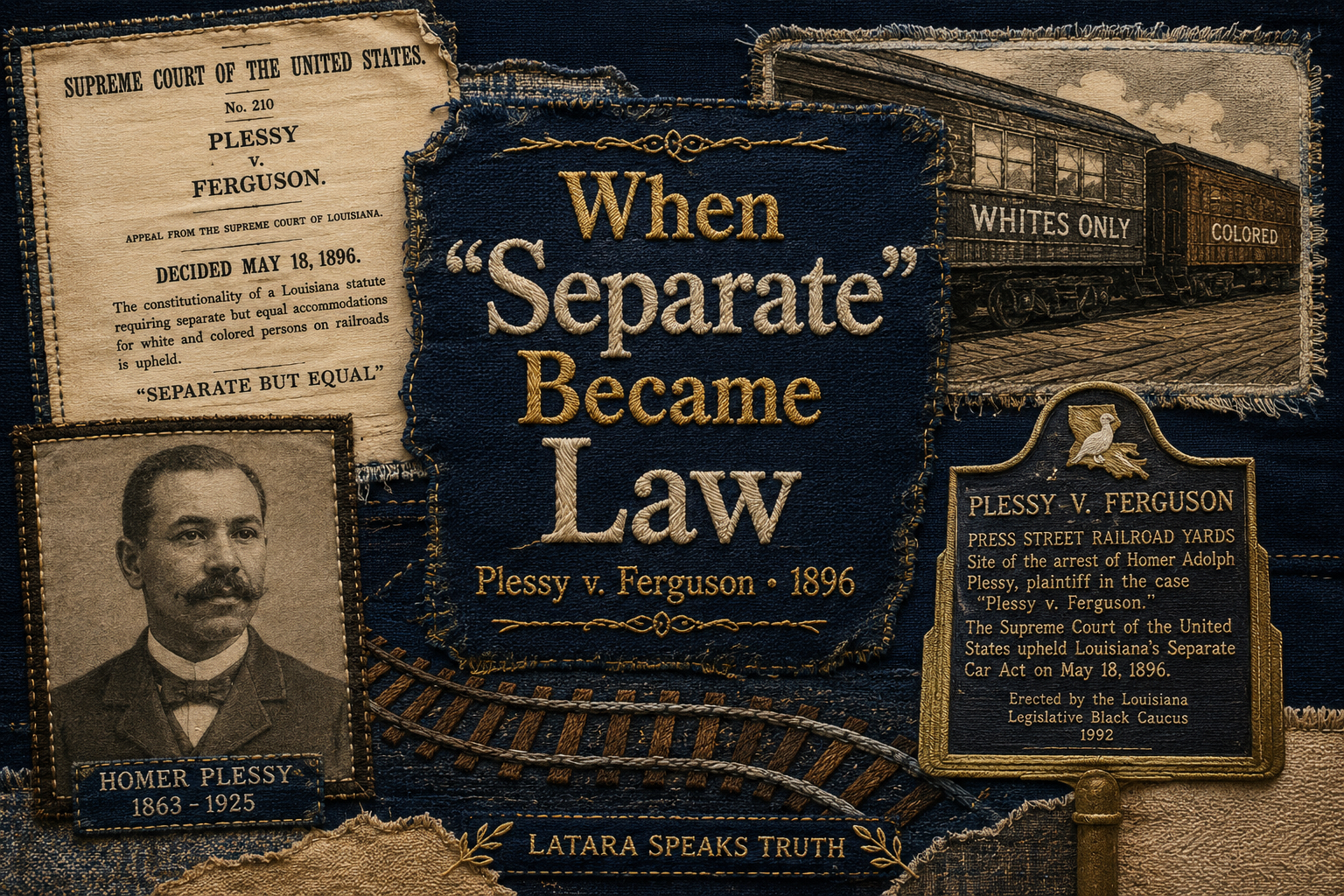
1896… Plessy v. Ferguson was decided. On May 18, 1896, the U.S. Supreme Court handed down one of the most damaging decisions in American legal history. In Plessy v. Ferguson, the Court upheld Louisiana’s Separate Car Act and gave constitutional cover to the doctrine of “separate but equal.” The case began when Homer Plessy, a man of mixed ancestry, challenged Louisiana’s segregation law by sitting in a whites-only railroad car. His arrest became the center of a constitutional fight over whether forced segregation violated the 13th and 14th Amendments. The Supreme Court ruled against Plessy in a 7 to 1 decision. That ruling gave states legal permission to expand Jim Crow segregation across transportation, schools, public spaces, and everyday life. But one justice saw the danger clearly. Justice John Marshall Harlan dissented, warning that the Constitution should not tolerate racial classes among citizens. For decades, “separate but equal” was used to defend a system that was never truly equal. Separate schools, separate seating, separate entrances, separate facilities, separate lives. The damage did not end in one courtroom. It shaped generations. In 1954, Brown v. Board of Education rejected segregation in public schools, declaring that separate educational facilities were inherently unequal. But undoing Jim Crow took more than one decision. It took lawsuits, protests, organizing, federal action, and people willing to challenge a system built to keep them in their place. Plessy v. Ferguson is a reminder that law can be used to protect rights, but it can also be used to excuse injustice. That is why history matters. Because some decisions do not just decide a case. They decide how long a nation is willing to look away. #PlessyVFerguson #OnThisDay #AmericanHistory #LegalHistory #CivilRightsHistory #JimCrowHistory #HomerPlessy #SupremeCourtHistory #HistoryMatters
Louisiana • 12 days ago
Fred's here
They never tell you that before Plessy , black people were not even allowed to ride public transportation. Plessy ,at least , allowed knack people to use public transportation albeit in a separate car or at the back of a bus . Now, they want to paint it in negative terms .
11d
Winnfield, LA
Reply
More comments ...
write a comment...