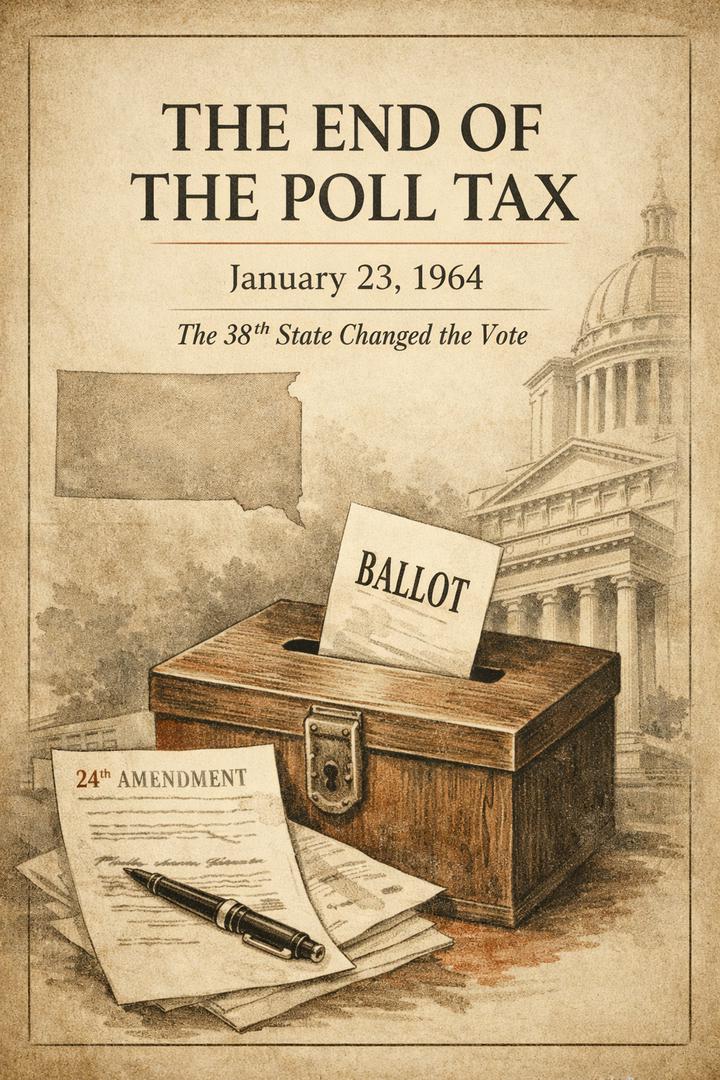
On January 23, 1964, a quiet legislative vote in South Dakota echoed across the entire United States. By becoming the 38th state to ratify the 24th Amendment, South Dakota provided the final “yes” needed to cement a fundamental change in American democracy…the official end of the poll tax in federal elections.
For decades, the poll tax had operated as a so-called legal barrier to the ballot box. Framed as a simple administrative fee, it was anything but neutral in practice. In many Southern states, voters were required to pay not only the current tax but accumulated fees for every year they had not voted. This system disproportionately blocked Black Americans and poor white citizens from participating in elections. Combined with literacy tests, intimidation, and economic retaliation, the poll tax ensured political power remained tightly controlled.
The road to the 24th Amendment was long and deliberate. Proposed by Congress in 1962, it required approval from three-fourths of the states. As 1964 began, the nation watched the count inch closer to the threshold. When South Dakota’s legislature ratified the amendment on January 23, it crossed the constitutional finish line, making the amendment law.
The amendment marked a major victory for voting access by declaring that the right to vote in federal elections could not be conditioned on payment. Still, the work was unfinished. Some states continued to impose poll taxes in state and local elections until the Supreme Court struck them down entirely in 1966.
Today, the anniversary of South Dakota’s ratification stands as a reminder that voting rights have never been freely handed over. They have been argued for, organized for, and fought for…often quietly, often against resistance, but always with lasting impact.
#OnThisDay #USHIstory #VotingRights #Democracy #24thAmendment #CivilRightsHistory #SouthDakota #HistoryMatters