Tag Page AfricanDiaspora

#AfricanDiaspora
LataraSpeaksTruth

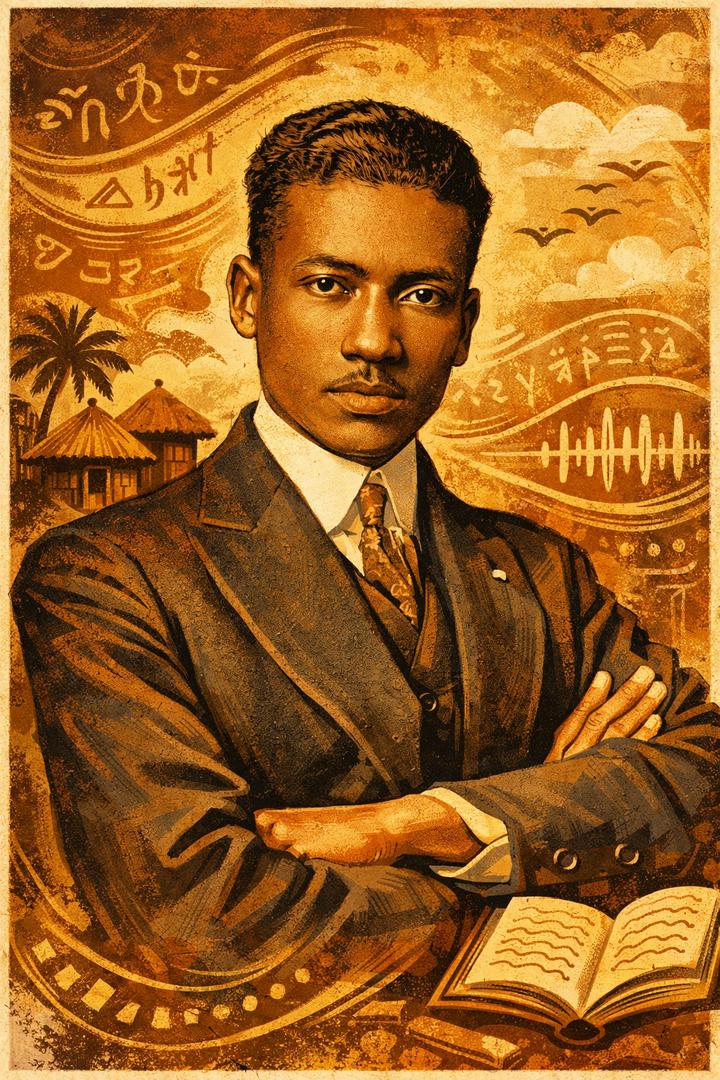
Lorenzo Dow Turner didn’t just study language…he rescued it from erasure. At a time when mainstream scholarship insisted that the descendants of enslaved Africans had lost their original languages and intellectual systems, Turner did the unthinkable…he listened. And what he heard shattered a lie that had been protected for generations. Through years of meticulous research, field recordings, and direct engagement with Gullah Geechee communities, Lorenzo Dow Turner proved that Gullah Geechee speech was not broken English or linguistic decay. It was retention. African grammar, vocabulary, tonal patterns, and structure had survived the Middle Passage and centuries of forced assimilation. Languages like Wolof, Mende, Yoruba, and others were still echoing in everyday speech along the Sea Islands of the American South. This was more than linguistics. It was evidence of memory. Of continuity. Of intelligence that refused to die quietly. Turner showed that culture didn’t disappear under bondage…it adapted, disguised itself, and passed from mouth to ear when books were forbidden and history was denied. Why does this matter now. Because language is proof of humanity. If language survived, then so did knowledge systems, values, and ways of understanding the world. Turner’s work dismantled the myth that enslavement erased African identity. It didn’t. It challenged the idea that survival must look pristine to be legitimate. Sometimes survival sounds like a cadence. A rhythm. A way of speaking that carries centuries inside it. Lorenzo Dow Turner didn’t just document a people. He restored truth to the record. #LorenzoDowTurner #GullahGeechee #LanguageIsMemory #CulturalSurvival #HiddenHistory #AfricanDiaspora #AmericanHistory #Linguistics #WeRemember

LataraSpeaksTruth

After sustained European contact along the African coast, forced transport carried Africans into the Caribbean, Central America, and parts of South America under Spanish and Portuguese rule. These were Indigenous lands already destabilized by conquest, disease, and forced labor. Africans entered the Americas inside an existing colonial crisis. Early colonies relied heavily on Indigenous enslavement for mining, plantations, and tribute. Violence, displacement, and epidemics drove steep population loss. As that labor base was destroyed, colonizers expanded the purchase and trafficking of African captives to meet production demands. This was a policy shift tied to profit, not a natural transition. Africans and Indigenous peoples met under coercion. Sometimes they labored side by side. Sometimes they were pushed into conflict by colonial control. In some regions, Africans escaped and found refuge with Indigenous nations. In others, both groups were targeted by the same legal regimes. The pattern varied by place, but the power structure did not. Racial categories were still developing. Status laws differed across colonies and changed over time. Before hereditary racial slavery hardened, identity could be more fluid, though never equal. These early collisions shaped later racial slavery, land seizure, and the regulation, or denial, of mixed communities. #ColonialHistory #AfricanDiaspora #IndigenousHistory #AtlanticWorld #EarlySlavery #History

LataraSpeaksTruth

In May 1803, a group of captive Igbo people from West Africa reached the Georgia coast through a system that treated human beings like cargo. After arriving through Savannah, they were being transported toward plantations in the Sea Islands region. But somewhere between arrival and ownership, they refused the future that had been assigned to them. Accounts describe resistance during transport near St. Simons Island, with captives breaking control long enough to reach the shoreline at Dunbar Creek. What happened next has echoed for over two centuries. Oral histories carried in Gullah Geechee communities, alongside later written records, remember the Igbo choosing the water rather than bondage. Not confusion. Not accident. A decision. The details are debated, including how many drowned, who survived, and what happened in the moments after. Many tellings suggest at least ten to twelve people died, while others were captured again. But the heart of the story holds steady across sources. There was revolt. There was refusal. And there was a legacy that turned this place into sacred ground. Igbo Landing is remembered as more than tragedy. It is remembered as a declaration. A line drawn in saltwater. Proof that enslaved people were never simply captured and compliant. They fought, even when the only exit left was the sea. #IgboLanding #StSimonsIsland #GeorgiaHistory #GullahGeechee #AfricanDiaspora #SlaveResistance #AmericanHistory #HiddenHistory #UntoldStories #HistoryMatters

LataraSpeaksTruth

Fort Mose was founded in 1738 just north of St. Augustine, Florida, and it does not get talked about enough. It punches a clean hole through the myth that freedom for Africans in “early America” only started later. Under Spanish Florida, it was called Gracia Real de Santa Teresa de Mosé. Governor Manuel de Montiano ordered it built as a fortified settlement where freedom seekers escaping British colonies could live as free people by law. Not a rumor…not a loophole…a recognized community with a name and a mission. Spain offered freedom with conditions. Convert to Catholicism, pledge loyalty to the Spanish Crown, and be willing to help defend the colony. Yes, it was politics aimed at weakening the British. But politics still opened a door…and people ran through it anyway. Fort Mose was not just a fort. It was a neighborhood. Families building lives with legal standing in a world designed to deny them personhood. The community organized a militia, led by Captain Francisco Menéndez, proof that Africans were not only surviving…they were holding rank, defending land, and negotiating power. Life there was never soft. In 1740, during General James Oglethorpe’s siege of St. Augustine, British forces took Mosé. Days later, Spanish troops, Indigenous allies, and the Black militia counterattacked in what’s remembered as the Battle of Bloody Mose. The fort was destroyed in the fighting, but the resistance was real, and the message was louder than the smoke. Still, the receipt stands. In 1738 there was a free Black community living under law on land that would become the United States. They ran, organized, fought, and built…long before the timeline most of us were handed even “starts.” #FortMose #BlackHistory #SpanishFlorida #StAugustine #FloridaHistory #ColonialHistory #FreedomSeekers #MaroonHistory #AfricanDiaspora #HiddenHistory
You've reached the end!