Tag Page AmericanHistory

#AmericanHistory
LataraSpeaksTruth

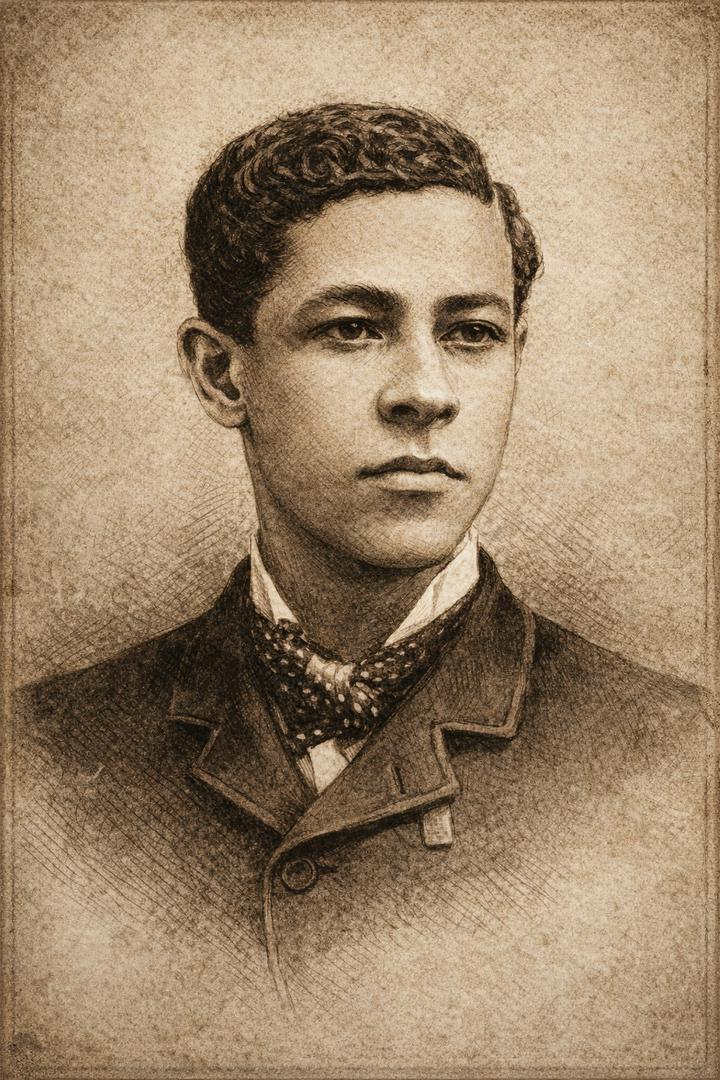
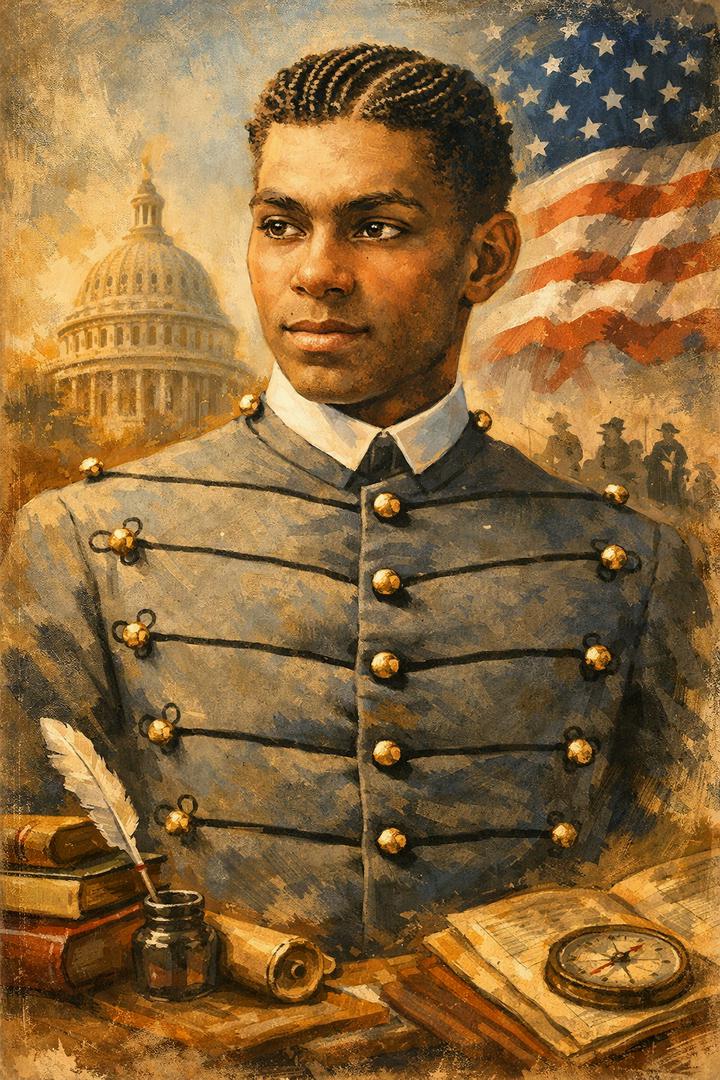
March 21, 1856 - Henry Ossian Flipper was born in Thomasville, Georgia, into slavery. His life began in a nation that had already decided how far Black people were supposed to go, and how firmly they were supposed to stay in their place. Flipper had other plans. He came of age during Reconstruction and, in 1873, was appointed to the U.S. Military Academy at West Point, one of the most elite institutions in the country. Getting in was one battle. Surviving it was another. He faced harassment, isolation, and open hostility, yet refused to be broken by any of it. In 1877, Henry Ossian Flipper became the first Black graduate of West Point and the first Black commissioned officer in the regular U.S. Army. That was no small ceremonial first. It was a direct blow against a system built to exclude Black Americans from military leadership, prestige, and power. His success proved what had always been true: the barrier was never ability, it was racism. After graduation, Flipper served with the 10th Cavalry, one of the famed Buffalo Soldier regiments. His career reflected discipline, endurance, and service, even as injustice continued to follow him. Still, history remembers what matters most: Henry Ossian Flipper crossed a line this country never intended for a Black man to cross… and he did it in uniform. His name deserves to be spoken with respect, not tucked away like a footnote. Sources: National Archives, U.S. Army #OnThisDay #BlackHistory #HenryOssianFlipper #WestPoint #BuffaloSoldiers #MilitaryHistory #BlackExcellence #HiddenHistory #AmericanHistory #BlackPioneers

LataraSpeaksTruth

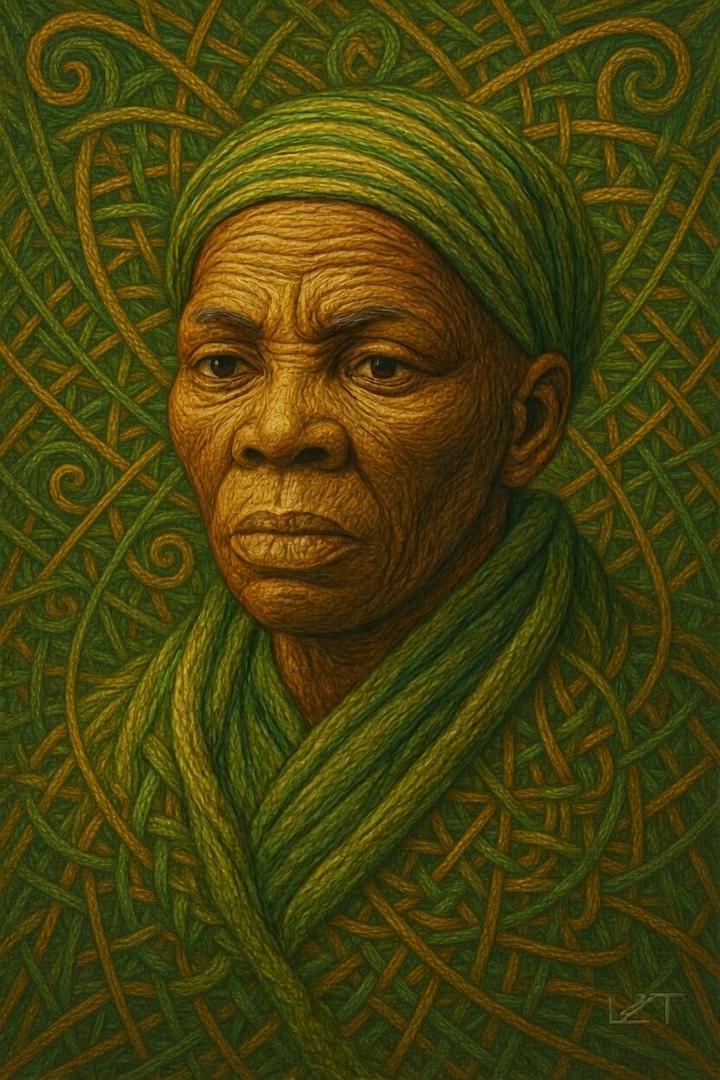
On March 10, 1913, Harriet Tubman died in Auburn, New York, closing the life of one of the boldest freedom fighters this country has ever known. Born into slavery in Maryland around 1822, Tubman escaped bondage, then risked her life again and again by returning south to help others flee to freedom in the North and Canada. She became the most famous conductor of the Underground Railroad, guiding enslaved people toward freedom when capture could have meant torture or death. Her courage was not symbolic. It was lived. It was tested. And it never backed down. Tubman’s work did not stop with escape. During the Civil War, she served the Union cause as a nurse, scout, and spy, proving again that Black women were doing essential work for a nation that still denied them full recognition. In her later years, she continued serving her community in Auburn, where she helped establish a home for elderly and poor Black people in need. Even near the end of her life, Harriet Tubman was still doing what she had always done, showing up for her people. March 10 is not just the date of her passing. It is a date to remember what real sacrifice looks like. Harriet Tubman did not wait for permission to do what was right. She moved with faith, with nerve, and with a kind of strength history still struggles to measure. #HarrietTubman #BlackHistory #OnThisDay #WomensHistory #UndergroundRailroad #CivilWarHistory #AmericanHistory #BlackWomenInHistory #FreedomFighter #NewsBreakHistory

LataraSpeaksTruth

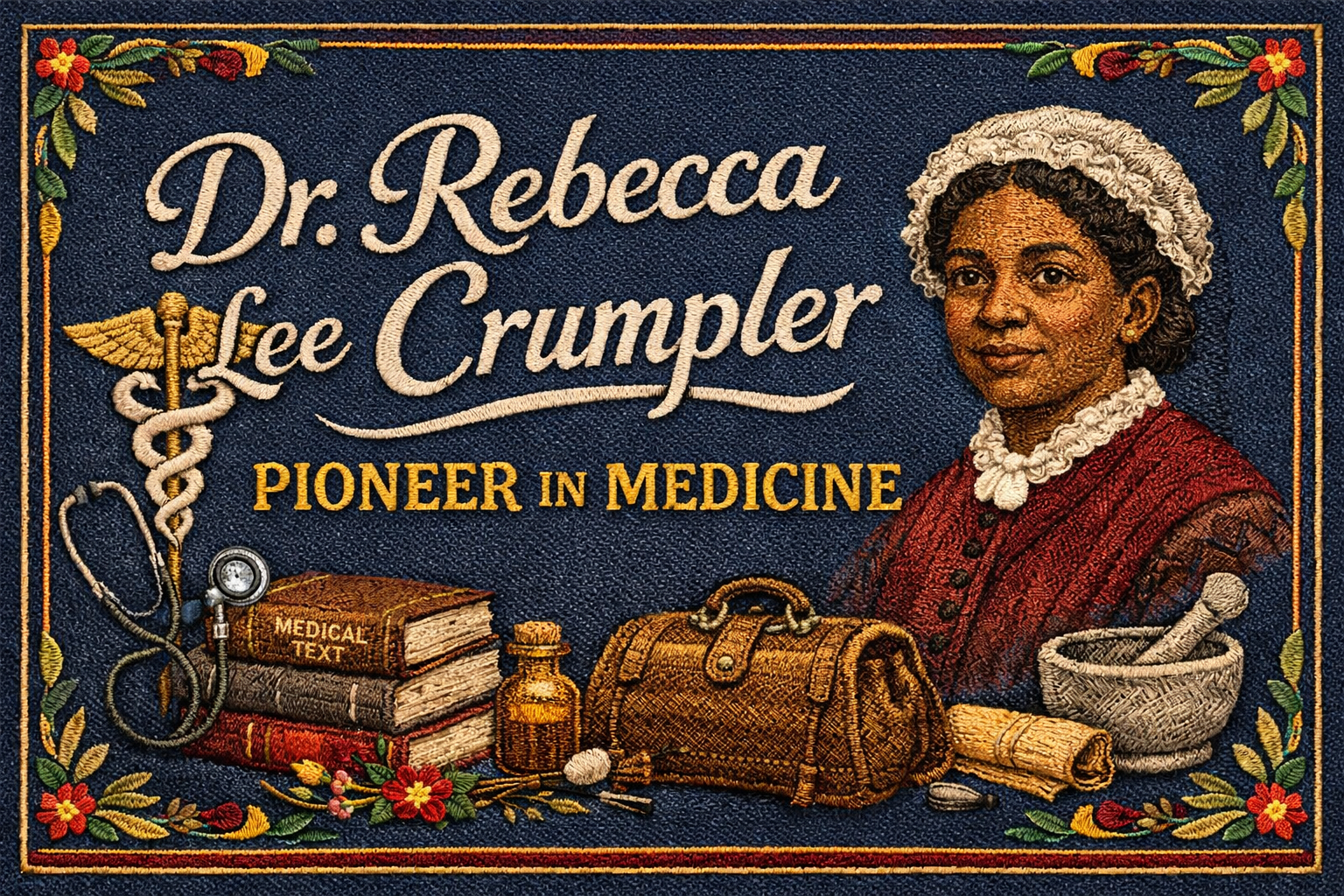
On March 9, 1895, Dr. Rebecca Davis Lee Crumpler died in Hyde Park, Massachusetts. Her death marked the close of a life that helped change American medical history. She is widely recognized as the first Black woman in the United States to earn a medical degree, graduating from the New England Female Medical College in 1864. At a time when both race and sex were used to shut people out of education and the professions, Dr. Crumpler entered medicine anyway and made history by doing work many believed she should never have been allowed to do. Before becoming a physician, she worked as a nurse for years. That experience shaped the kind of doctor she became. After earning her degree, she practiced in Boston and later in Richmond, Virginia, after the Civil War. There, she cared for newly freed Black people who had long been denied proper medical treatment. She focused especially on women and children, serving people too often ignored by the medical system and by the country itself. Her legacy matters not only because she was first, but because of who she chose to serve. Dr. Crumpler worked in a profession dominated by white men and pushed through racism, sexism, and open disrespect. In 1883, she published A Book of Medical Discourses, based on her medical experience caring for women and children. It stands among the earliest medical books published by an African American physician. Too often, history turns people like her into a quick fact and moves on. But Rebecca Crumpler was more than a milestone. She was a physician, writer, healer, and a woman who refused to let this country’s barriers define her reach. Her name belongs in the foundation of American medical history…not as a footnote, but as a pillar. #RebeccaLeeCrumpler #BlackHistory #WomensHistory #BlackWomenInMedicine #MedicalHistory #AmericanHistory #HiddenHistory #MassachusettsHistory #BlackExcellence #Trailblazer #HealthcareHistory #HistoryMatters

AčT/Cæř

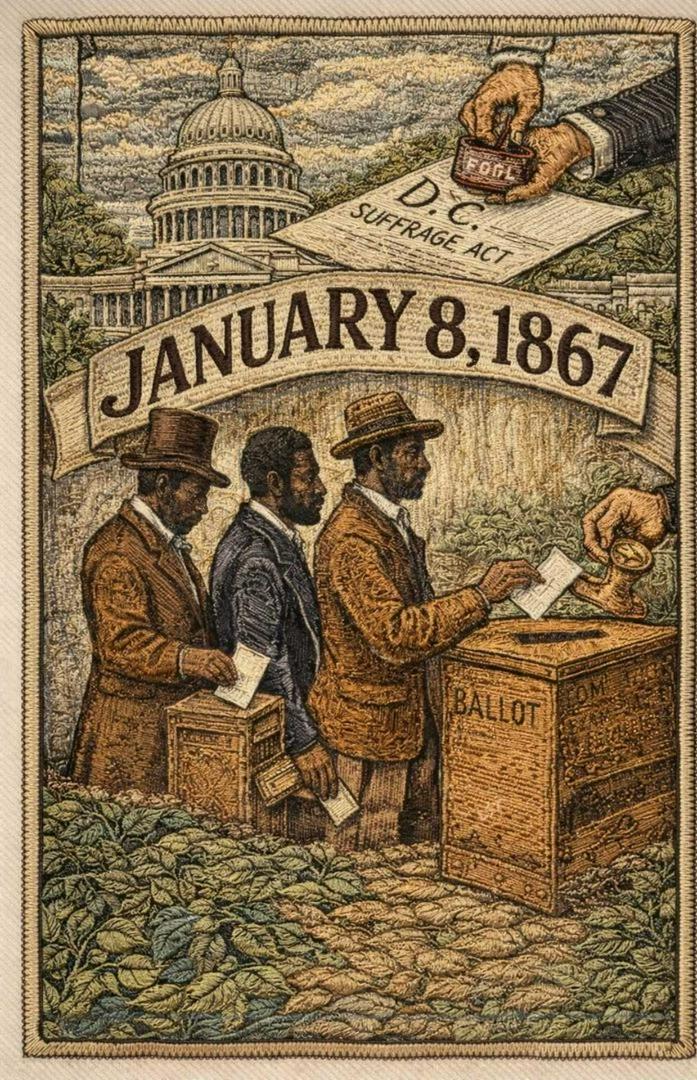
January 8, 1867 marks a turning point in American history that is rarely given the attention it deserves. On this day, Congress passed the District of Columbia Suffrage Act, granting Black men in Washington, D.C the legal right to vote in municipal elections and public referenda. This happened three years before the 1 5th Amendment, at a time wher most of the nation still viewed Black political participation as a danger rather than a riaht. This was not a promise for the future or a symbolic gesture. It was an immediate, enforceable change written directly into law. The decision did not come quietly or without resistance. President Andrew Johnson vetoed the act, arguing that extending votina riahts to Black men was premature and would destabilize the country. Congress reiected that argument and overrode his veto the same day. That override mattered It made clear that Reconstruction was not only about ending slavery on paper but about redistributing political power in real time. Washington, D.C. became a proving ground, showing that Black civic participation could exist and function despite fierce opposition The importance of Januarv 8, 1867 is often overlooked because it does not fit neatly into the simplified version of history many are taught. Voting rights did not suddenly appear with the 15th Amendment. They were demanded, tested, expanded restricted, and attacked repeatedly. This moment captures Black men exercisinc political agency while the nation was still debating whether they deserved it. It reminds us that progress has never required national comfort or unanimous approval. Rights have always moved forward through pressure, confrontation, and refusal to wait. January 8 stands as proof that access was forced open long before the country was ready to admit it #January8 #OnThisDay #BlackHistory #ReconstructionEra #VotinaRichts #DistrictOfColumbia #AmericanHistory #HiddenHistory #CivilRights

LataraSpeaksTruth

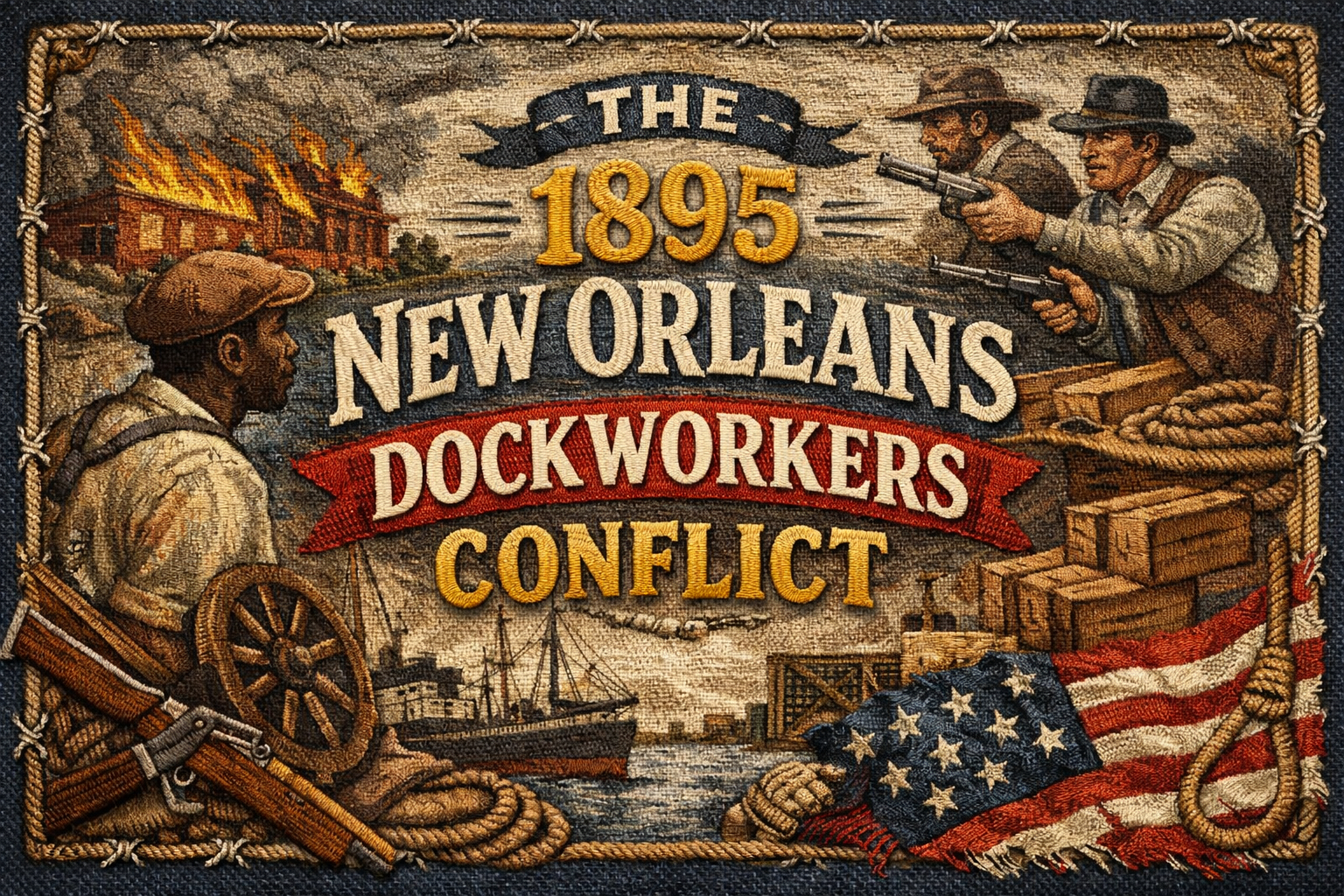
On March 9, 1895, between 300 and 500 armed white men in New Orleans targeted Black dockworkers by attacking the Morris Public Bathhouse, where equipment used by Black laborers was stored. About half of their tools were seized and thrown into the river. This was not random violence. It was organized intimidation meant to punish Black workers for becoming too visible, too independent, and too competitive on the waterfront. Two days later, the violence escalated even further, as white mobs attacked Black dockworkers directly and killed six men on the levee. What happened in New Orleans showed how racial terror could be used to break labor power before it had the chance to grow. After the Panic of 1893, some shipping companies turned to lower-paid Black labor to weaken white unions, and employers benefited from the racial division that followed. Violence did what negotiation would not: it crippled livelihoods, deepened distrust, and helped destroy the fragile possibility of sustained worker unity across racial lines. This history matters because attacks on Black workers were never only about prejudice. They were also about control—control of wages, control of jobs, control of who could rise, and control of who had to remain vulnerable. The dockworkers conflict was not just about the waterfront. It was about crushing Black economic strength before it could take root. #BlackHistory #LaborHistory #NewOrleansHistory #BlackWorkers #Dockworkers #AfricanAmericanHistory #RacialViolence #EconomicJustice #HiddenHistory #AmericanHistory

LataraSpeaksTruth

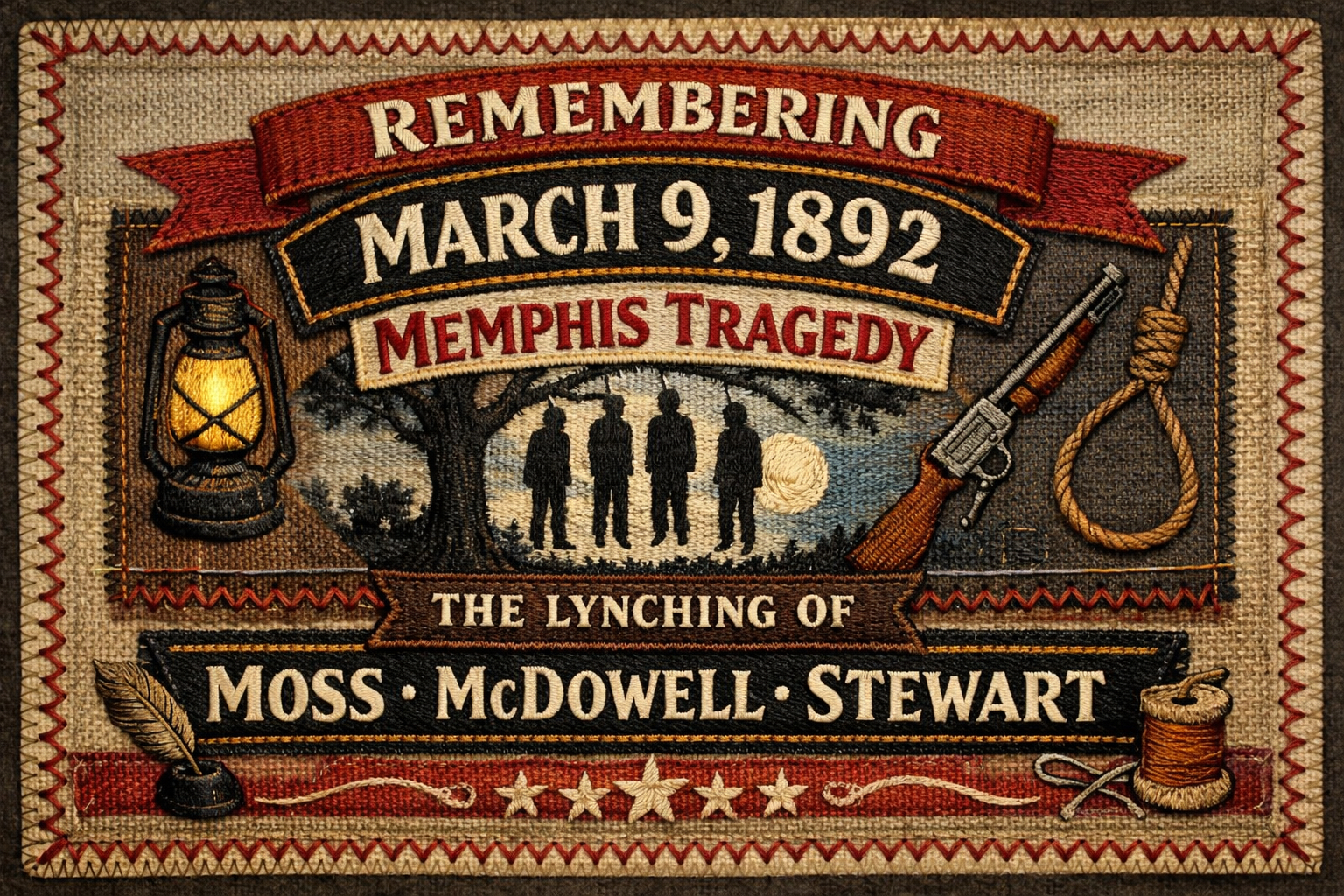
On March 9, 1892, Thomas Moss, Calvin McDowell, and Will Stewart were taken from a Memphis jail by a white mob and lynched. They were not criminals brought to justice. They were Black businessmen connected to the People’s Grocery, a successful Black owned store that had become a source of pride in the community and a threat to white resentment. Their murders were not random. They happened in a climate where Black progress itself could be treated as a target. Thomas Moss was more than a grocer. He was a respected postman, a family man, and a friend of Ida B. Wells. Moss, McDowell, and Stewart had built something meaningful in a world that often punished Black success for daring to exist. After a racial conflict near the store and rising white hostility, the three men were jailed. Then the law gave way to mob violence. In the dark of night, they were dragged out and killed without trial, without mercy, and without consequence for the people who did it. This was one of the moments that lit a deeper fire in Ida B. Wells. She had already begun speaking out, but the murder of these men made the truth even harder to ignore. She understood what many refused to say plainly. Lynching was not about justice. It was about power, terror, and control. It was a weapon used to crush dignity, silence progress, and remind Black people that even success could make them a target. The killing of Moss, McDowell, and Stewart remains one of the clearest examples of how racial violence was used to destroy not only lives, but community strength, economic independence, and hope. Their story still matters because it forces this country to face what was done when Black people tried to build for themselves. #OnThisDay #BlackHistory #IdaBWells #ThomasMoss #CalvinMcDowell #WillStewart #MemphisHistory #PeoplesGrocery #AmericanHistory #HiddenHistory
LataraSpeaksTruth

Jan Ernst Matzeliger was an inventor whose work transformed the shoe industry during the late nineteenth century. He was born on September 15, 1852, in Paramaribo, Suriname, which was then called Dutch Guiana. His father was a Dutch engineer, and his mother was a Black Surinamese woman. As a young man, Matzeliger developed mechanical skills while working around machinery and ships before later immigrating to the United States. In the 1870s, Matzeliger settled in Lynn, Massachusetts, a city known at the time as a major center of shoe manufacturing. During this period, one of the most difficult and expensive steps in making a shoe was the process called lasting. Lasting is the step where the upper part of a shoe is pulled and shaped around a form called a last and then attached to the sole. Before Matzeliger’s invention, this step had to be done by hand by skilled craftsmen known as lasters, making the process slow and costly. Matzeliger studied the problem carefully and began developing a machine that could perform this task automatically. After years of experimentation, he successfully created the shoe lasting machine, which could attach the upper part of a shoe to the sole far faster than hand labor. He received a patent for the lasting machine in 1883. His invention greatly increased production in shoe factories and helped make footwear more affordable for ordinary people. Matzeliger’s work became widely used in the shoe manufacturing industry and played a major role in the growth of mass shoe production in the United States. Although his invention had a major impact, he did not live long after his success. He died on August 24, 1889, at the age of 36. His contribution to industrial manufacturing remains an important part of American history, Black history, and the development of modern footwear production. #JanErnstMatzeliger #Inventors #AmericanHistory #IndustrialHistory #BlackHistory #Innovation #ShoeIndustry #HistoryMatters #LataraSpeaksTruth

LataraSpeaksTruth

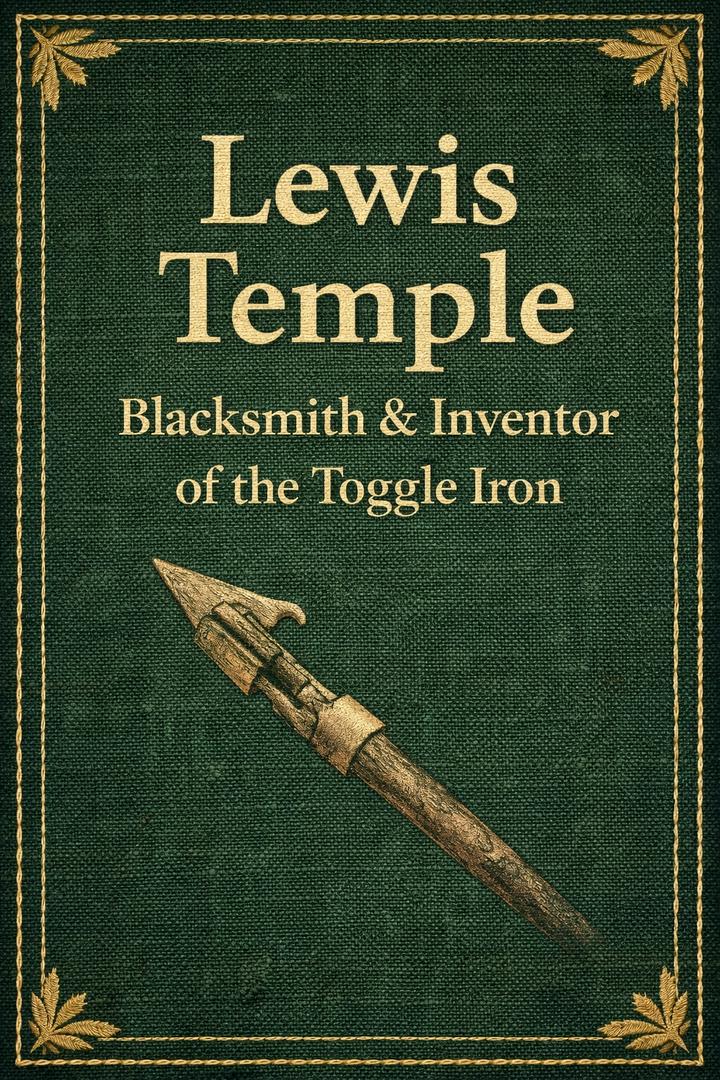
Lewis Temple’s story is not just about invention. It is about how skill, observation, and lived experience can shape an industry, even when the person behind the breakthrough does not receive the full credit he deserves. Born around 1800 in Richmond, Virginia, Lewis Temple later built his life in New Bedford, Massachusetts, where he worked as a blacksmith. By the 1830s, he had established himself along the waterfront, making iron tools and fittings used in the whaling trade. In a city tied closely to the sea, Temple understood the demands of the work and the problems whalers faced. He became best known for improving the whaling harpoon with a design called the toggle iron. Unlike earlier harpoons, Temple’s version was far more effective at staying lodged after striking a whale. That improvement made voyages more successful and more profitable at a time when whaling was a major part of the American economy. But Lewis Temple was more than a man who made a better tool. He was a Black craftsman and inventor whose work reflected precision, intelligence, and practical engineering. He studied the problem, understood the labor, and created a solution with lasting impact. Innovation like that does not happen by accident. It comes from deep knowledge and skill. Temple never patented his invention, so others copied the design and benefited from it financially. Even so, his name remains tied to one of the most important technological improvements in the history of whaling. Lewis Temple deserves to be remembered not as a footnote, but as part of a larger truth. Black history is not only a story of endurance. It is also a story of innovation, engineering, and vision. Black minds helped improve this country and move it forward. That is not a side note in history. That is history. #LewisTemple #BlackHistory #AmericanHistory #HiddenHistory #BlackInventors #Innovation #NewBedford #UntoldStories #HistoricalTruth
LataraSpeaksTruth

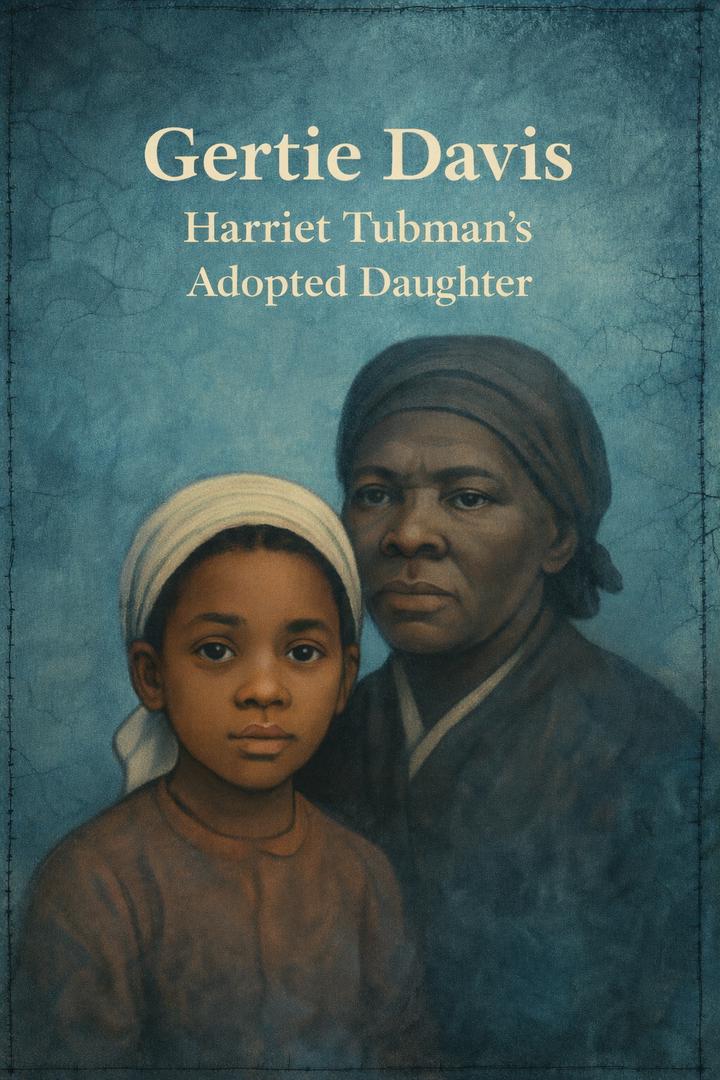
Gertie Davis is one of the lesser-known names connected to Harriet Tubman’s life, and her story offers a glimpse into Tubman’s later years in Auburn, New York. After the Civil War, Harriet Tubman settled in Auburn and later married Nelson Davis. Together, they adopted a young girl named Gertie Davis. While Harriet Tubman became widely known for her work as a conductor on the Underground Railroad, a Union scout and nurse, and a freedom fighter, much less was recorded about the family life she built in the years that followed. Historical records about Gertie Davis are limited. What is known is that she was part of the Tubman household and appears in the story of Harriet Tubman’s later life. Her presence reminds us that Tubman’s life was not only defined by public courage and national history, but also by home, caregiving, and family. That matters because history often reduces people to their most famous roles. Harriet Tubman is rightly remembered for her extraordinary bravery, but she was also a wife, a mother figure, and a woman who created a home in the midst of a life shaped by struggle and service. Gertie Davis may not be widely documented, but her name still carries meaning. She represents a quieter part of Harriet Tubman’s story, one rooted in family life and the personal world Tubman built after years of sacrifice. Sometimes history is loud. Sometimes history lives in the small details, in the names that appear only briefly, and in the lives that stand just beyond the spotlight. Gertie Davis was one of those lives. #GertieDavis #HarrietTubman #BlackHistory #AmericanHistory #HiddenHistory #LataraSpeaksTruth #repost
LataraSpeaksTruth

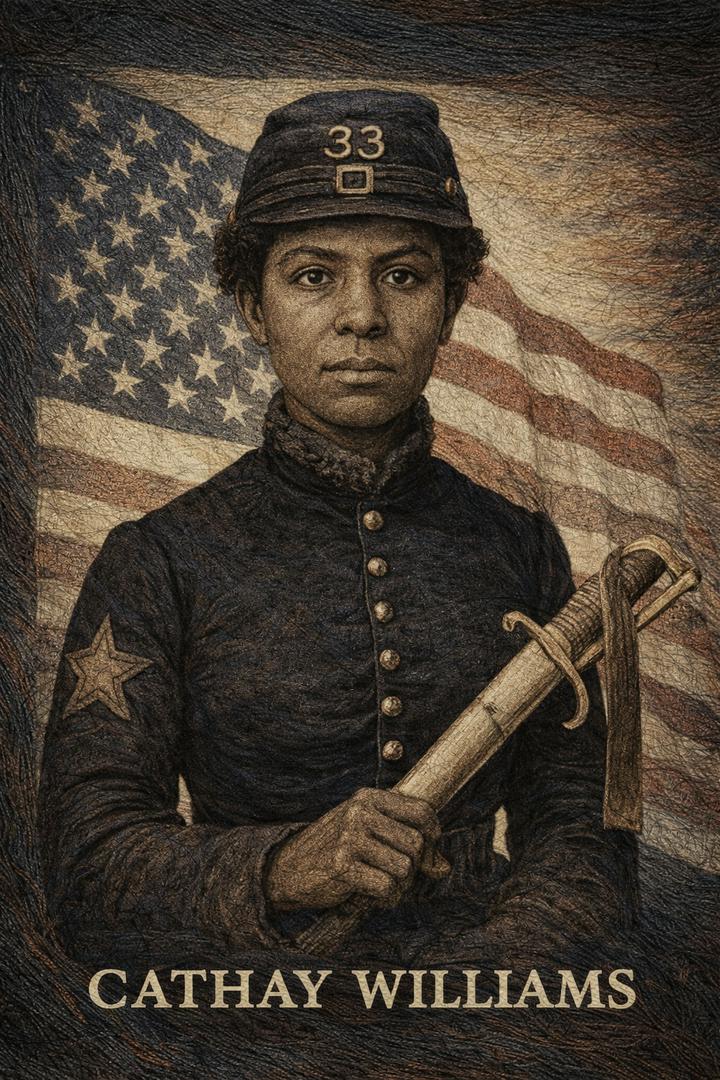
Cathay Williams was born in September 1844 in Independence, Missouri, to an enslaved mother and a free father. Because her mother was enslaved, Cathay was also born into slavery. As a young woman, she was forced into labor for Union troops during the Civil War, working as a cook and washerwoman and traveling with the army through parts of the South. That experience brought her close to military life long before she officially entered it. After the war, Williams chose a path few women of her time could even imagine. On November 15, 1866, she enlisted in the United States Army in St. Louis under the name William Cathay. Since women were barred from military service, disguising herself as a man was the only way she could join. She served in Company A of the 38th U.S. Infantry, one of the African American regiments created after the Civil War and later tied to the legacy of the Buffalo Soldiers. For nearly two years, she performed the duties expected of any soldier. Her secret remained hidden until repeated illness and hospital visits led army doctors to discover she was a woman. She was discharged on October 14, 1868. Years later, Williams applied for a military disability pension, describing her service and failing health, but her claim was denied. Much of her later life remains unclear, but her place in history does not. Today, Cathay Williams is remembered as the only documented woman known to have served as a Buffalo Soldier and one of the most remarkable women in American military history. #OurHistory #CathayWilliams #BuffaloSoldiers #MilitaryHistory #BlackHistory #WomensHistory #AfricanAmericanHistory #HiddenFigures #AmericanHistory #LataraSpeaksTruth

Tag: AmericanHistory - Page 6 | LocalAll