Tag Page BlackHistory

#BlackHistory
LataraSpeaksTruth

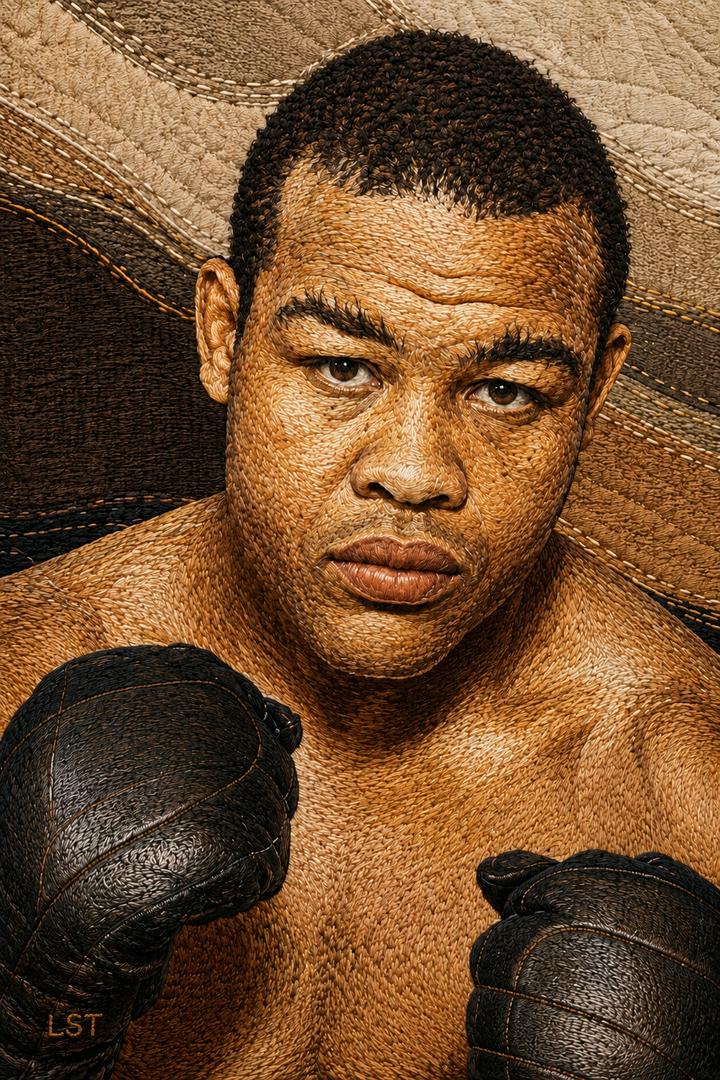
May 13, 1914… Joe Louis was born. Joseph Louis Barrow, known to the world as Joe Louis and “The Brown Bomber,” was born in Lafayette, Alabama. He grew from a child of the South into one of the most important heavyweight champions boxing has ever known. Louis’ family later moved to Detroit, where his path began to change. As a young man, he found boxing, and boxing revealed something powerful in him. He was calm, disciplined, and dangerous in the ring. His hands spoke clearly enough. In 1937, Joe Louis became world heavyweight champion. He held that title for nearly 12 years, defending it 25 times, one of the greatest records in boxing history. His reign made him a sports legend, but his meaning reached beyond the ring. At a time when segregation still shaped daily life in America, Louis became a symbol of pride for many Black Americans. Every victory carried extra weight because he was fighting in a country that praised his talent while still denying people who looked like him full equality. His 1938 rematch with German boxer Max Schmeling became one of the most famous fights in history. Schmeling had defeated Louis in 1936. By the time they met again, Nazi Germany was rising, and the world was watching. Louis knocked Schmeling out in the first round. That victory was not just a boxing moment. It became a national moment. For many people, it felt like a stand against hate and oppression. During World War II, Louis served in the U.S. Army and became part of America’s wartime image. He helped boost morale and remained a public figure whose fame crossed sports, politics, and culture. Joe Louis’ story is about more than punches and titles. It is about discipline, pressure, representation, and legacy. He carried himself with quiet strength in a loud and unfair world. Born on May 13, 1914, Joe Louis became more than a champion. He became history in gloves. #JoeLouis #BoxingHistory #BlackHistory #SportsHistory #OnThisDay
LataraSpeaksTruth

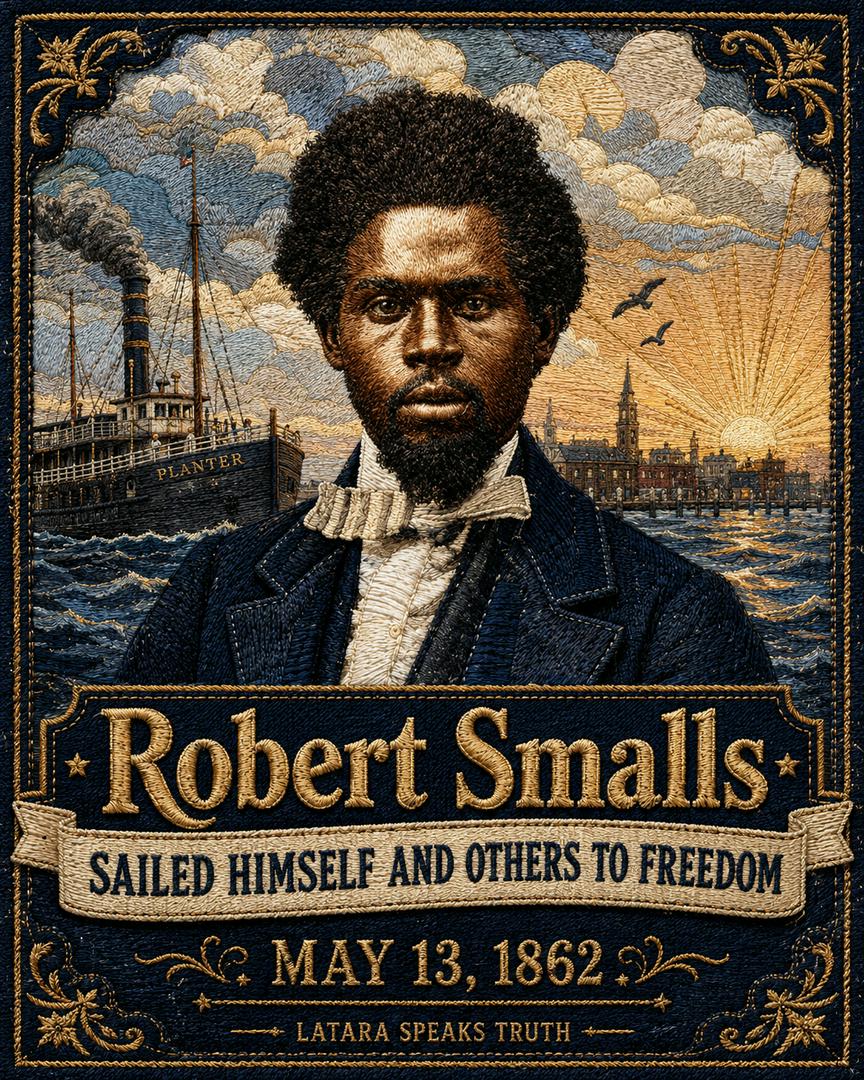
May 13, 1862… Robert Smalls turned a Confederate ship into a vessel of freedom. Robert Smalls was enslaved in Charleston, South Carolina, but he was no ordinary passenger in history. He worked as a skilled pilot aboard the Confederate steamer Planter, learning the waters, signals, routes, and habits of the men who thought they controlled him. In the early morning hours of May 13, Smalls and other enslaved crew members made a bold move. While the white officers were away from the ship, they took control of the Planter. Smalls used his knowledge of Confederate routines to guide the vessel through Charleston Harbor, passing checkpoints and heavily armed defenses. This was not just an escape. It was strategy. It was courage under pressure. It was a man using every skill he had been forced to learn and turning it into a path toward freedom. The Planter carried more than the men who worked aboard it. It carried families, including women and children, all risking death for a chance to live free. The group made it through Confederate waters and reached the Union blockade that morning. According to the National Park Service, about sixteen freedom seekers escaped aboard the ship. Smalls did not only free himself. He helped free others. He also delivered the Planter and valuable Confederate materials to Union forces, proving that Black courage and intelligence were already shaping the war long before the nation was ready to fully admit it. His story did not end on the water. Robert Smalls later became a Civil War hero, a public servant, and a Reconstruction-era political leader. He served in Congress and became one of the most important figures to rise from slavery into national leadership. May 13 matters because Robert Smalls showed what freedom looked like before it was handed down on paper. He did not wait for someone to write his future. He sailed straight into it. #RobertSmalls #BlackHistory #CivilWarHistory #FreedomStory

LataraSpeaksTruth

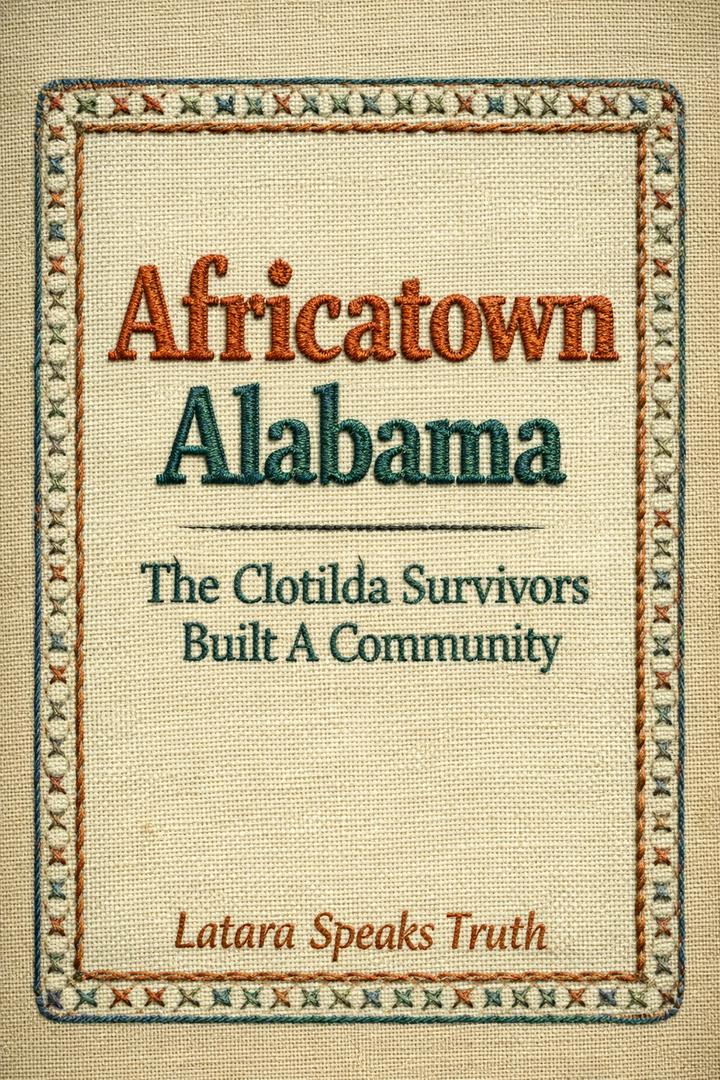
In 1860, long after the United States banned the international slave trade in 1808, a ship called the Clotilda was used to smuggle about 110 captive Africans into the Mobile area in Alabama. The people behind it knew it was illegal. After the captives were brought ashore, the crew burned the ship and sank it in the Mobile River delta to hide the evidence. After emancipation, many survivors wanted to return to West Africa, but they could not afford passage. So they did something powerful and practical. They pooled money, bought land north of Mobile, and built an independent community that became known as Africatown, often linked to its founding around 1866. It was not just a place to live. It was a decision to rebuild on their own terms with churches, a school, family networks, mutual aid, and cultural memory held tight. One of the most well known survivors was Oluale Kossola, often called Cudjo Lewis. He lived until 1935 and shared his story in detail, helping keep names, places, and experiences from being lost. For generations, outsiders doubted Africatown’s origin story. Then in May 2019, archaeologists and the Alabama Historical Commission confirmed a wreck as the Clotilda, backing up what descendants had been saying all along. They tried to erase the crime. Africatown refused to disappear. #Africatown #Clotilda #MobileAlabama #AlabamaHistory #BlackHistory #HiddenHistory #UntoldHistory #AmericanHistory #HistoryMatters #CudjoLewis

LataraSpeaksTruth

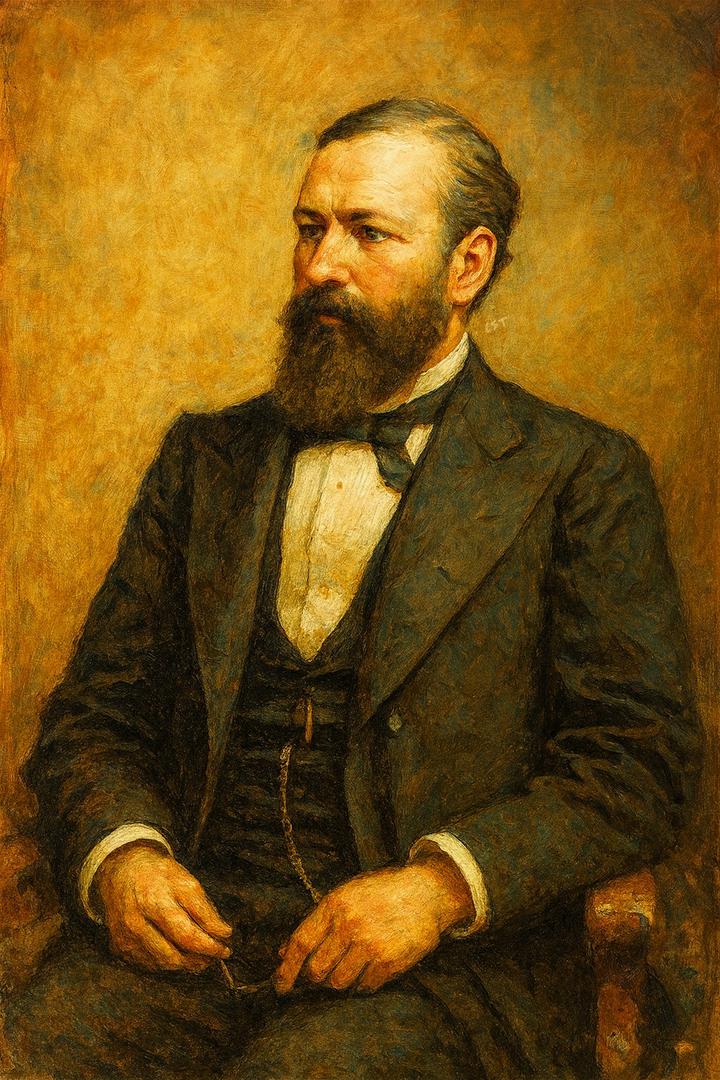
On December 9, 1872, P.B.S. Pinchback stepped into history as acting governor of Louisiana… the first Black governor in the United States. It’s one of those moments the textbooks whisper about, but it deserves a full-volume replay. Pinchback didn’t slide into power on easy mode; he fought through the chaos of Reconstruction, served as lieutenant governor, and rose to the top when the governor was impeached. His time in office was short, but sometimes it only takes a few bold weeks to shake up a century. And before someone pops into the comments with the usual, “Are you sure he was Black? He looks white…” let’s clear the air. A lot of people from that era had lighter complexions because of the grim reality of slavery: white enslavers fathered children with enslaved women, then left those kids to grow up with zero privilege, zero protection, and zero of the benefits their fathers enjoyed. Looking white didn’t grant them a shortcut. Pinchback lived, fought, and served as a Black man…?fully, openly, and without apology. His life is a reminder that history is complicated, messy, and shaped by truths many would rather ignore. Yet through it all, he carved out space where none existed and rewrote what leadership could look like in America. #TodayInHistory #BlackHistory #PBS_Pinchback #Reconstruction #LouisianaHistory #AmericanHistory #HiddenHistory #TruthMatters

Brandon_Lee

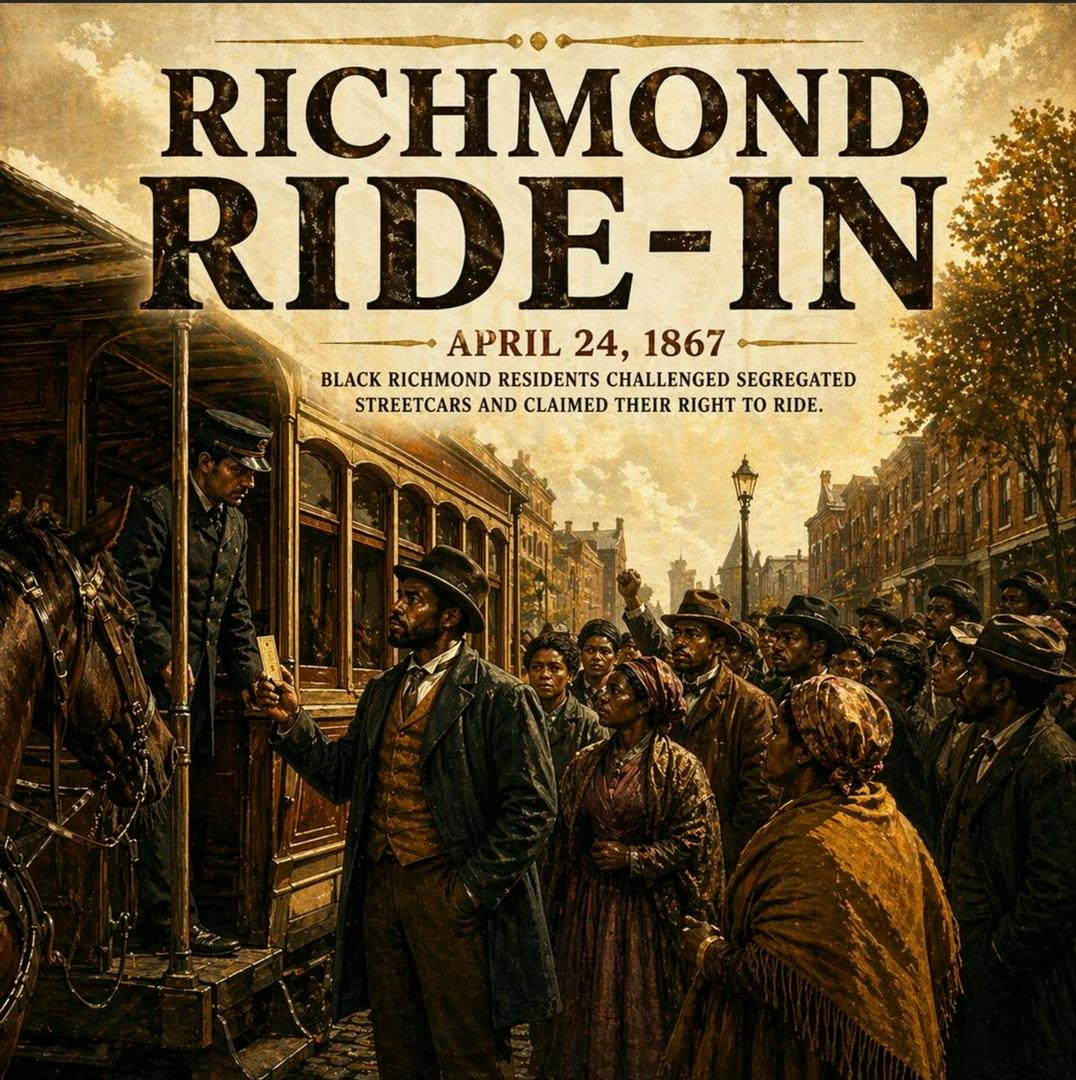
On April 24, 1867, Black residents in Richmond, Virginia made it clear that the fight for equal treatment did not begin in the 1950s. t was Reconstruction. Slavery had officially ended through the 13th Amendment barely more than a vear earlier, but freedom or paper did not mean equal rights in everyday ife. In Richmond, Black passengers were being denied access to privately operated horse-drawn streetcars, even when they had paid for a ticket One of the people connected to this protest was Christopher Jones. According to historical records, Jones bought a ticket for a Richmond streetcar and attempted to ride When he was refused, a crowd gathered in support of his right to board. He was later arrested for disturbing the peace But the people did not back downBlack Richmond residents organized protests against the streetcar company's racial restrictions. This was not iust about transportation. It was about citizenship public space, dignity, and whether freedom would mean anything beyond words written into law. That is what makes this historv so important. Long before the Montgomery Bus Boycott long before Rosa Parks became a nationa symbol, Black communities were already challenging segregation in public transportation. They were using protest oublic pressure, and collective action to demand what should have already been theirs. The Richmond Streetcar Protest reminds us that civil rights history did not suddenly appear in the 20th century. It had deep roots in Reconstruction, when newly freed people were fighting to define what freedom would actually look like in public life April 24, 1867 deserves to be remembered because it shows us something powerful. The pushback started early The courage was already there. And the demand was simple: if we paid to ride, we had the riaht to ride. #BlackHistory #ReconstructionHistory #RichmondVA #CivilRightsHistory #HiddenHistory

LataraSpeaksTruth

A man could escape slavery, build a life, find work, and still not be safe. That was the reality Charles Nalle faced in 1860. He had escaped slavery in Virginia and made his way to Troy, New York, but the Fugitive Slave Act meant that even in the North, freedom could still be challenged by law. When Nalle was arrested in Troy on April 27, 1860, his capture did not go unanswered. Word spread quickly, and a crowd gathered. Harriet Tubman, who was in Troy at the time, joined local abolitionists and community members who fought to stop Nalle from being forced back into slavery. The rescue became one of the boldest public freedom actions before the Civil War. It was not quiet. It was not symbolic. It was people putting their bodies between one man and a system determined to claim him. Charles Nalle’s story matters because it reminds us that freedom was not always one clean moment. For many, it had to be defended again and again. He was not just “the man Harriet Tubman helped rescue.” He was Charles Nalle, a husband, a father, a worker, a freedom seeker, and a man whose name deserves to be remembered. On this day, we say his name too. #CharlesNalle #HarrietTubman #BlackHistory #FreedomStory #LataraSpeaksTruth

LataraSpeaksTruth

Fort Mose was founded in 1738 just north of St. Augustine, Florida, and it does not get talked about enough. It punches a clean hole through the myth that freedom for Africans in “early America” only started later. Under Spanish Florida, it was called Gracia Real de Santa Teresa de Mosé. Governor Manuel de Montiano ordered it built as a fortified settlement where freedom seekers escaping British colonies could live as free people by law. Not a rumor…not a loophole…a recognized community with a name and a mission. Spain offered freedom with conditions. Convert to Catholicism, pledge loyalty to the Spanish Crown, and be willing to help defend the colony. Yes, it was politics aimed at weakening the British. But politics still opened a door…and people ran through it anyway. Fort Mose was not just a fort. It was a neighborhood. Families building lives with legal standing in a world designed to deny them personhood. The community organized a militia, led by Captain Francisco Menéndez, proof that Africans were not only surviving…they were holding rank, defending land, and negotiating power. Life there was never soft. In 1740, during General James Oglethorpe’s siege of St. Augustine, British forces took Mosé. Days later, Spanish troops, Indigenous allies, and the Black militia counterattacked in what’s remembered as the Battle of Bloody Mose. The fort was destroyed in the fighting, but the resistance was real, and the message was louder than the smoke. Still, the receipt stands. In 1738 there was a free Black community living under law on land that would become the United States. They ran, organized, fought, and built…long before the timeline most of us were handed even “starts.” #FortMose #BlackHistory #SpanishFlorida #StAugustine #FloridaHistory #ColonialHistory #FreedomSeekers #MaroonHistory #AfricanDiaspora #HiddenHistory

LataraSpeaksTruth

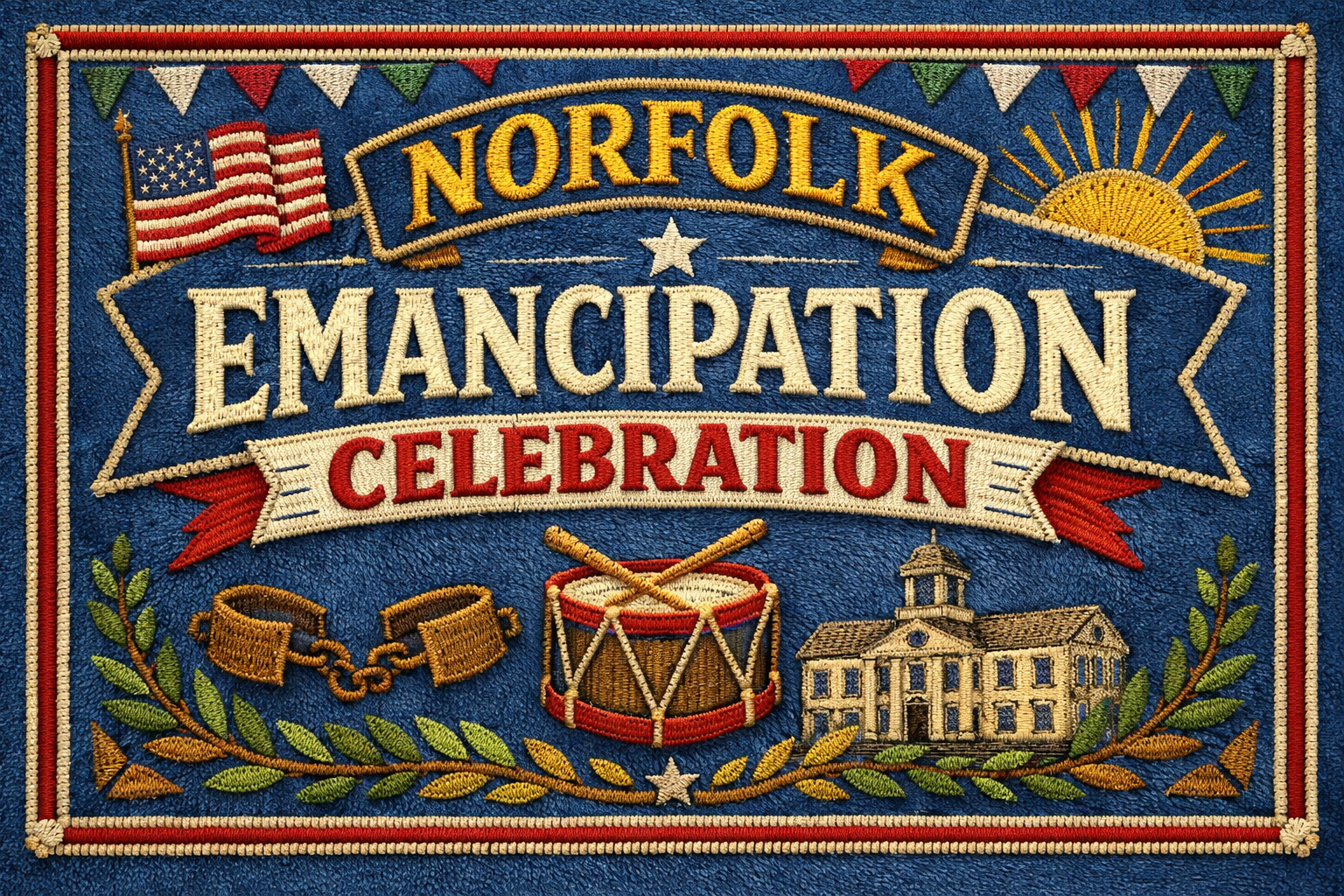
On January 4, 1863, just days after the Emancipation Proclamation took effect, Black residents of Norfolk, Virginia held one of the earliest documented public celebrations of emancipation in the United States. Norfolk had been under Union control since 1862, making it one of the few Southern cities where such a gathering was possible at the time. A contemporary newspaper dispatch dated January 4, 1863, later reproduced by Encyclopedia Virginia, described a procession of at least 4,000 Black men, women, and children moving through the city. The report noted organized marching, music, banners, and speeches, reflecting both celebration and political awareness. This was not a spontaneous gathering. It was a coordinated public declaration of freedom by people who understood the historical weight of the moment. The Emancipation Proclamation did not immediately free all enslaved people, nor did it end slavery everywhere. Its reach depended heavily on Union military presence. Norfolk’s status as an occupied city created conditions where freedom could be openly acknowledged and collectively celebrated, even while much of the Confederacy remained untouched by the proclamation’s enforcement. This January 4 procession stands as an early example of what emancipation looked like in practice rather than on paper. It shows Black communities asserting visibility, dignity, and collective memory at the very start of freedom’s uncertain road. Long before emancipation celebrations became annual traditions, Norfolk’s Black residents marked the moment themselves, in public, and on record. #January4 #BlackHistory #Emancipation #NorfolkVirginia #ReconstructionEra #CivilWarHistory #AfricanAmericanHistory #USHistory #FreedomStories

AčT/Cæř

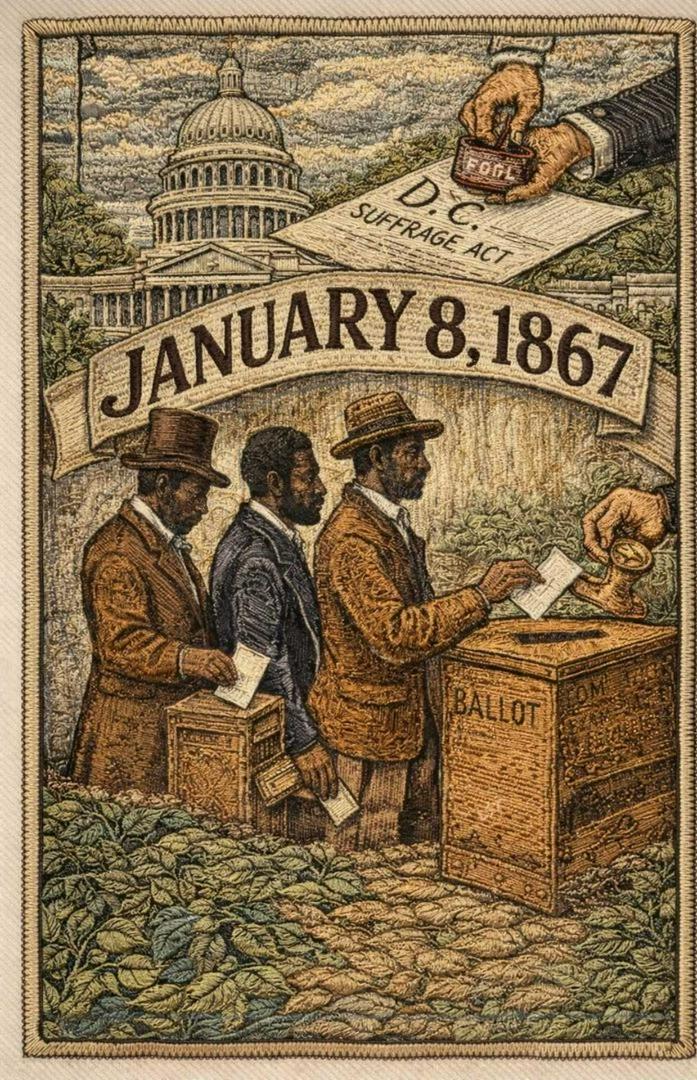
January 8, 1867 marks a turning point in American history that is rarely given the attention it deserves. On this day, Congress passed the District of Columbia Suffrage Act, granting Black men in Washington, D.C the legal right to vote in municipal elections and public referenda. This happened three years before the 1 5th Amendment, at a time wher most of the nation still viewed Black political participation as a danger rather than a riaht. This was not a promise for the future or a symbolic gesture. It was an immediate, enforceable change written directly into law. The decision did not come quietly or without resistance. President Andrew Johnson vetoed the act, arguing that extending votina riahts to Black men was premature and would destabilize the country. Congress reiected that argument and overrode his veto the same day. That override mattered It made clear that Reconstruction was not only about ending slavery on paper but about redistributing political power in real time. Washington, D.C. became a proving ground, showing that Black civic participation could exist and function despite fierce opposition The importance of Januarv 8, 1867 is often overlooked because it does not fit neatly into the simplified version of history many are taught. Voting rights did not suddenly appear with the 15th Amendment. They were demanded, tested, expanded restricted, and attacked repeatedly. This moment captures Black men exercisinc political agency while the nation was still debating whether they deserved it. It reminds us that progress has never required national comfort or unanimous approval. Rights have always moved forward through pressure, confrontation, and refusal to wait. January 8 stands as proof that access was forced open long before the country was ready to admit it #January8 #OnThisDay #BlackHistory #ReconstructionEra #VotinaRichts #DistrictOfColumbia #AmericanHistory #HiddenHistory #CivilRights

Tag: BlackHistory - Page 5 | LocalAll