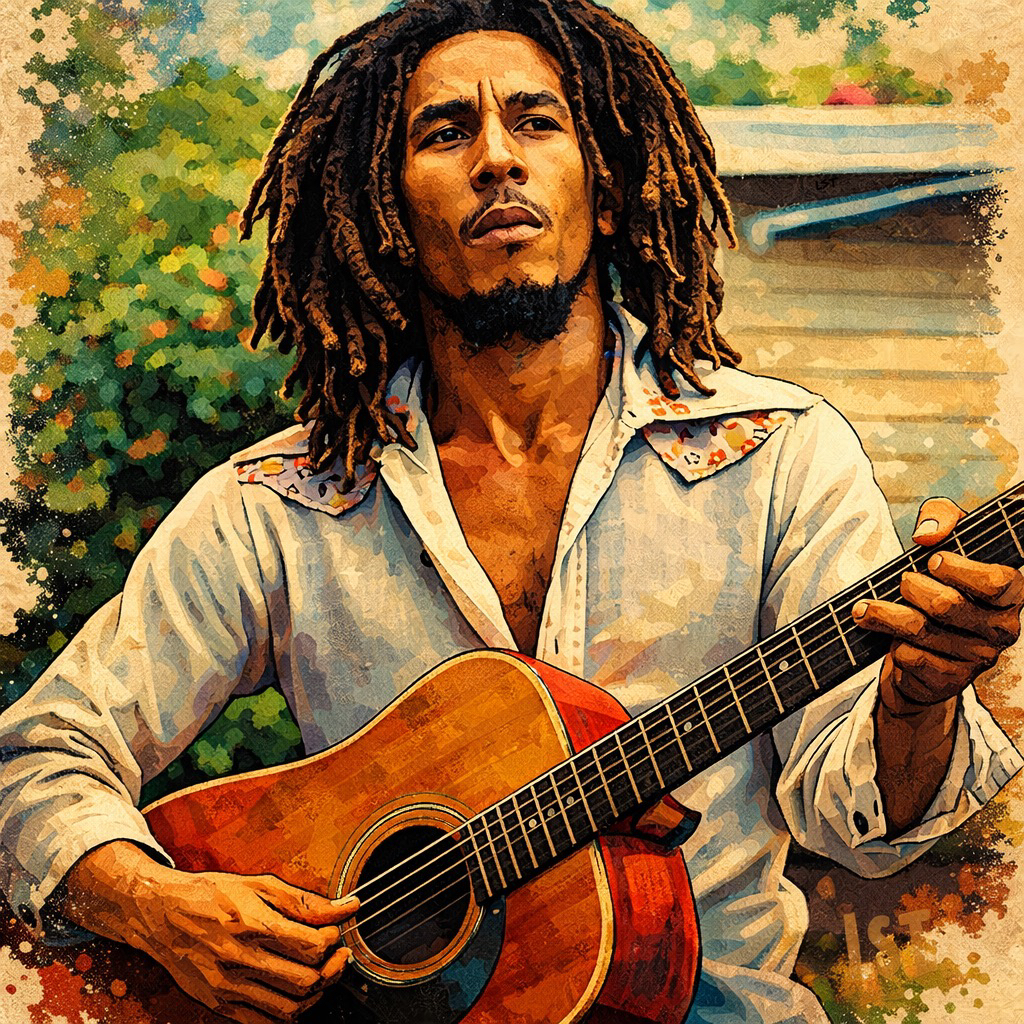
On February 6, 1945, Bob Marley was born in Nine Mile, Jamaica. Decades later, his voice would become one of the most recognizable sounds in the world, not because it chased trends, but because it spoke plainly about life, power, faith, struggle, and survival.
Marley came up during a time when Jamaica was navigating post-colonial identity, political tension, and economic hardship. Music wasn’t just entertainment. It was a public square. Reggae became a way to document what people were living through, and Marley emerged as one of its most powerful messengers. His lyrics pulled from everyday reality, Rastafarian belief, and global consciousness without softening the message.
Albums like Catch a Fire, Rastaman Vibration, Exodus, and Uprising carried themes of resistance, spiritual grounding, unity, and self-determination. Songs like “Get Up, Stand Up,” “Redemption Song,” “No Woman, No Cry,” and “One Love” didn’t just chart. They traveled. They crossed borders, languages, and generations because the emotions behind them were universal.
Marley’s influence extended far beyond music. He became a symbol of cultural pride and global awareness at a time when Caribbean voices were often ignored or minimized. Even as his fame grew, his message stayed rooted in people over profit, justice over comfort, and truth over silence.
Marley died in 1981 at just 36 years old, but his work never stopped moving. His music continues to be sampled, studied, quoted, and lived with, not as nostalgia, but as instruction. On his birthday, the legacy isn’t about celebration alone. It’s about remembering how powerful it is when art refuses to be quiet.
Bob Marley didn’t just sing about freedom. He insisted it be spoken out loud.
#BobMarley #OnThisDay #February6 #ReggaeHistory #MusicLegacy #CulturalImpact #GlobalMusic #Jamaica