Tag Page FutureOfMedicine

#FutureOfMedicine
The Signal Wire

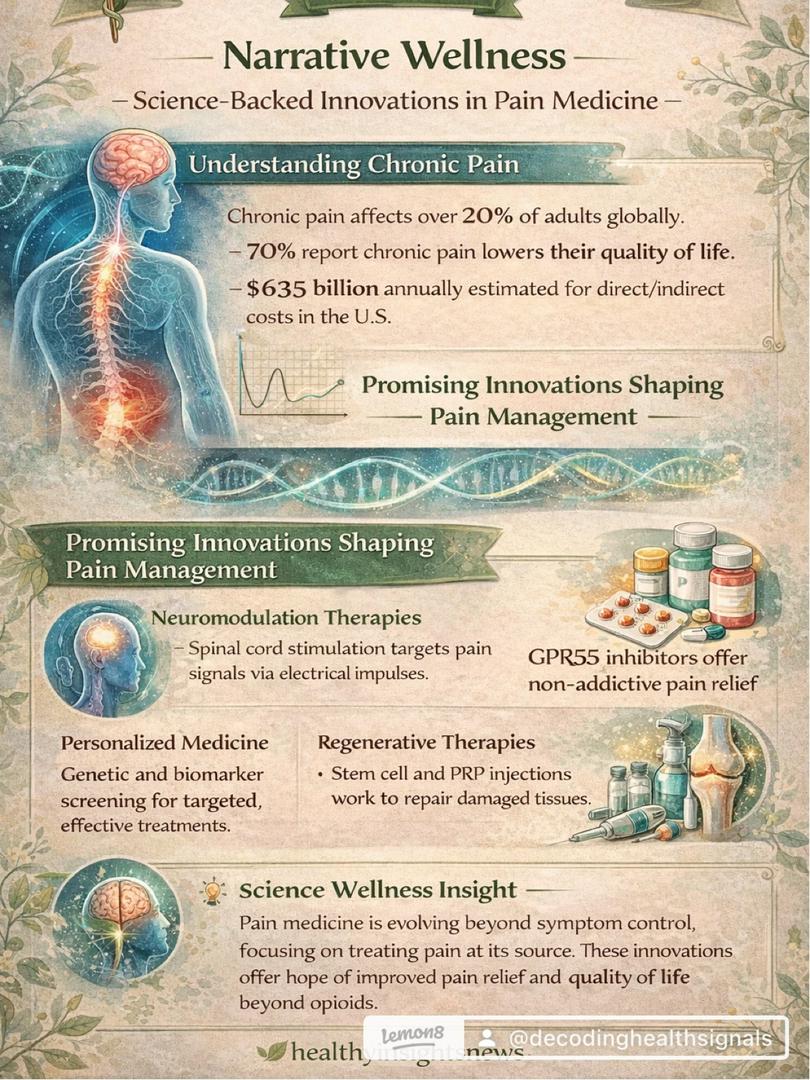
Breaking NEWS - Health Talk - The Future of Pain Medicine Pain Medicine Enters a New Era of Precision Treatment Chronic pain affects more than 20% of adults globally. • 70% report reduced quality of life • $635 billion annually in U.S. direct and indirect costs For decades, pain care centered on symptom control. Mask the signal. Suppress the inflammation. Manage the discomfort. But the signal is changing. Pain medicine is quietly transitioning from reaction to precision. Neuromodulation therapies now target pain pathways directly through electrical signaling interrupting transmission at the neural level. Genetic and biomarker screening is guiding treatment selection, reducing trial-and-error prescribing. Regenerative therapies like stem cells and PRP aim to repair tissue instead of numbing symptoms. Non-opioid molecular targets, including GPR55 pathway research, are expanding options beyond dependency risk. The industry is moving from: “Control the symptom.” to “Decode and treat the source.” This is not incremental innovation. It is structural recalibration in a post-opioid healthcare era. Pain medicine is no longer just pharmaceutical. It is neurological, regenerative, and data-driven. The question is not whether innovation is happening. The question is whether systems will adapt fast enough. Follow @thesignalwire for early detection of healthcare shifts before they scale. Is the healthcare system prepared to pivot from symptom control to signal-based, precision care? #HealthPolicy #PainInnovation #PrecisionMedicine #ChronicPain #MedicalResearch #TheSignalWire #HealthSignals #PrecisionMedicine #PainInnovation #FutureOfMedicine #HotTopic #BreakingNews #HealthNews #BiomedicalGrad #BiomedicalEngineering

justme

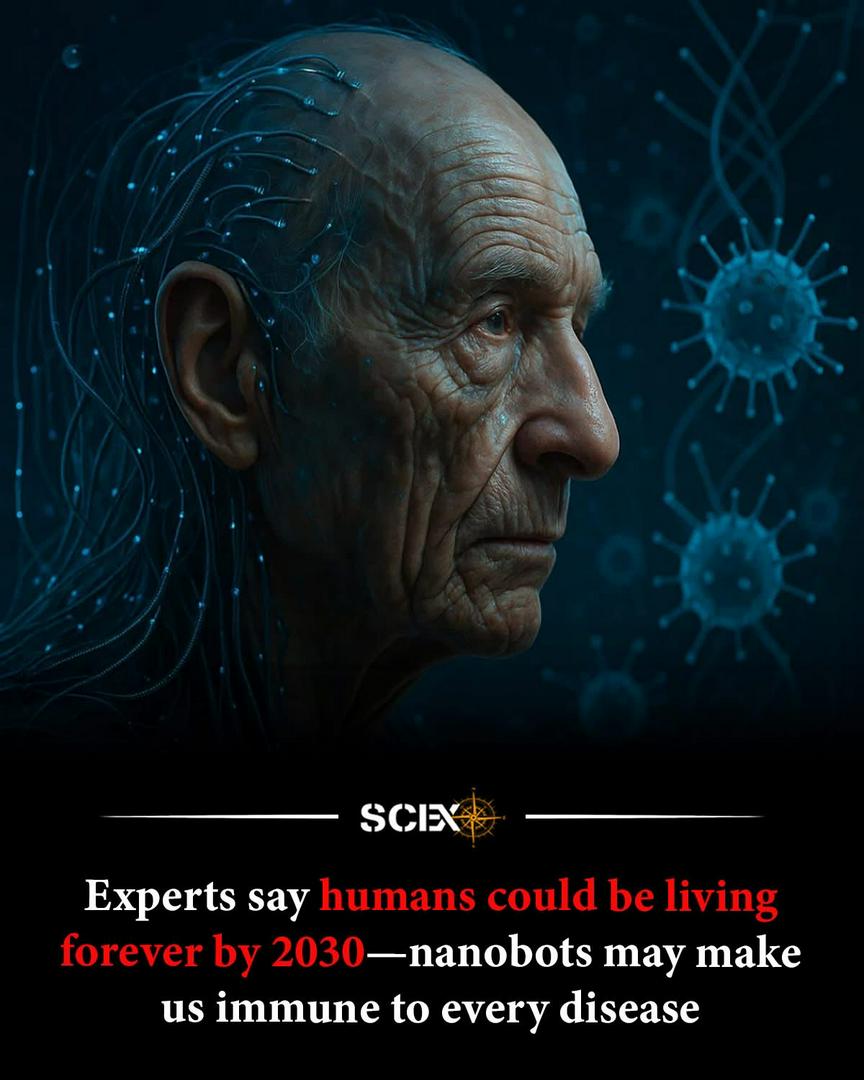
The idea that humans could achieve biological immortality within this decade sounds like something straight out of science fiction. But according to futurist and former Google engineer Ray Kurzweil, it may not be as far-fetched as it seems. Kurzweil predicts that by 2030, advances in nanotechnology could allow microscopic machines—often called medical nanobots—to move through the human body like an internal repair crew. These devices, he suggests, would monitor our cells in real time, fixing DNA damage, clearing arterial plaque, destroying cancer cells before tumors ever form, and even reversing aspects of aging at the molecular level. Instead of treating disease after symptoms appear, this approach would prevent breakdown before it happens. Think of it as upgrading the human body with a built-in maintenance system—one capable of constantly repairing wear and tear that currently leads to aging, frailty, and death. Kurzweil’s confidence is rooted in his belief in exponential technological growth. Fields like artificial intelligence, biotechnology, and robotics are evolving at accelerating rates. As computational power expands and our ability to manipulate matter at the nanoscale improves, he argues that medical nanorobotics could move from theory to clinical reality faster than many expect. That said, the scientific community remains cautious. While nanomedicine is already being explored in targeted drug delivery and cancer therapy, fully autonomous nanobots capable of large-scale cellular repair are still theoretical. Major hurdles remain—biocompatibility, immune response, precision control, and long-term safety among them. If breakthroughs do arrive, however, the implications would go far beyond medicine. Biological immortality would reshape economics, population dynamics, ethics, relationships, and even the meaning of human life. Retirement, generational change, and the concept of “natural lifespan” would need redefining. Whether 2030 proves to be an ambitio
justme

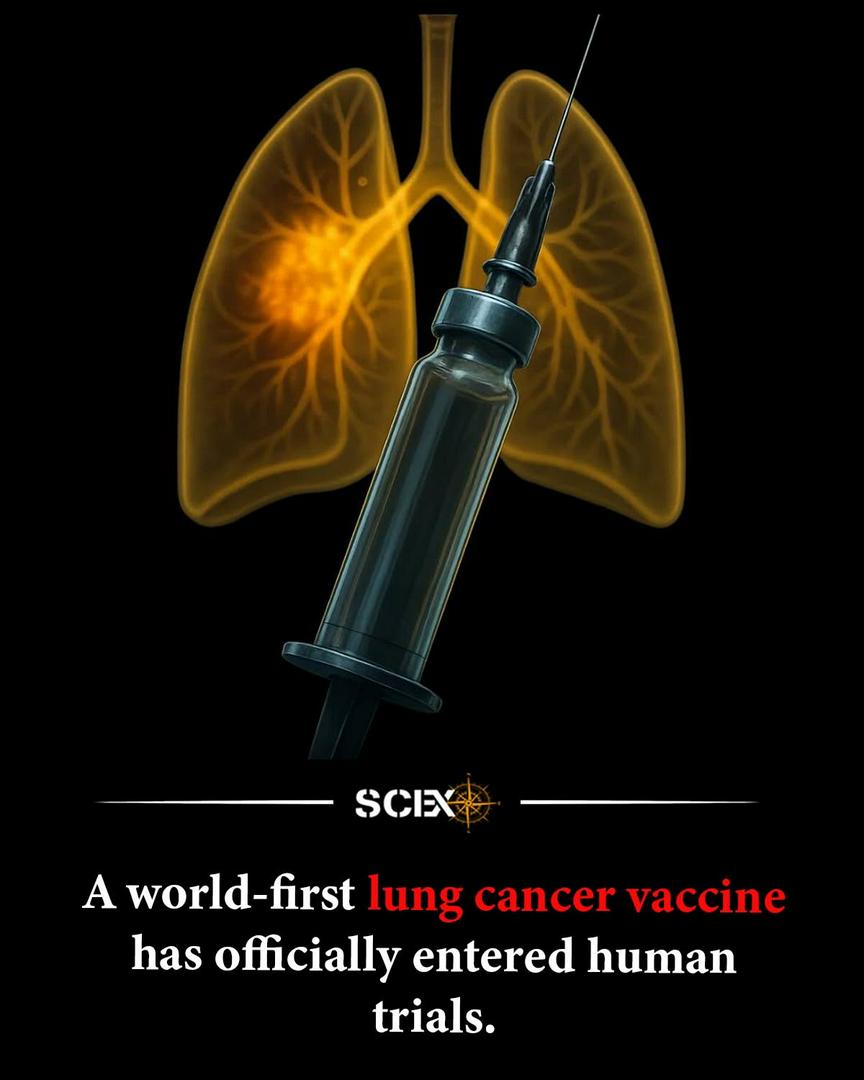
A major milestone in cancer research has just been reached. For the first time, a lung cancer vaccine has entered human clinical trials, marking a new chapter in how the disease could be treated in the future. The experimental vaccine, BNT116, has been developed by BioNTech, the biotechnology firm widely known for its role in creating an mRNA COVID-19 vaccine. This time, the mRNA technology is being used to tackle non-small cell lung cancer (NSCLC) — the most common and deadliest form of lung cancer worldwide. Instead of attacking tumors with traditional chemotherapy or radiation, BNT116 works by training the immune system to recognize cancer-specific markers. The goal is not only to destroy existing cancer cells but also to prevent the disease from returning, something that remains a major challenge for lung cancer patients today. The phase 1 trial is now underway at 34 research centers across seven countries, including the UK, the United States, and Germany. While early-stage trials focus primarily on safety, researchers are hopeful that this approach could eventually transform lung cancer into a condition that is easier to control — or even prevent from coming back. If successful, this vaccine could represent a shift toward personalized, immune-based cancer treatments, offering new hope to thousands of patients worldwide. Source: BioNTech / Clinical trial announcements #LungCancer #CancerVaccine #mRNA #MedicalBreakthrough #CancerResearch #ClinicalTrials #Biotech #FutureOfMedicine #ScienceExplorist #fblifestyle

Curiosity Corner

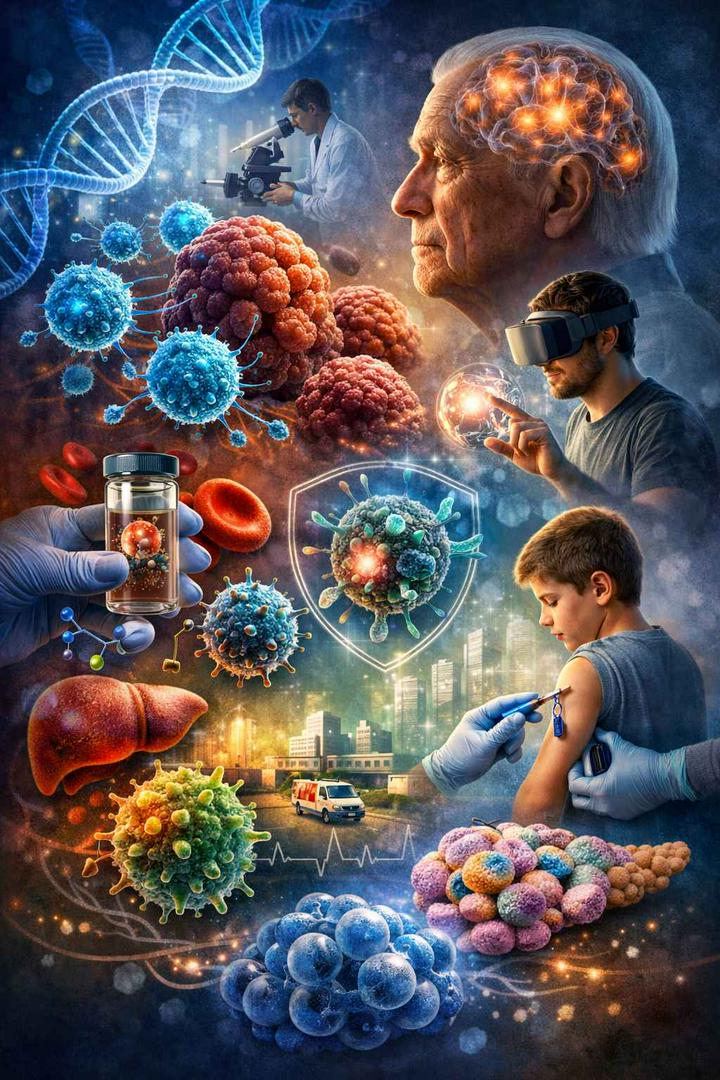
The Future of Medicine: Diseases We’ll Treat in the Next 10 Years In the next 10 years many currently incurable diseases should become routinely treatable due to advances in gene therapy, cell therapy, and targeted treatments. Inherited single gene disorders lead this shift. Over 7,000 rare genetic diseases exist and 80 percent result from a single gene mutation. More than 30 gene therapies are approved globally and 200 are in phase 2 or 3 trials. Sickle cell disease affects 20,000,000 people and gene edited therapies reduce pain crises by over 90 percent, leaving many symptom free for years. Cancer care is advancing. Blood cancers such as leukemia and lymphoma show 60–90 percent complete remission with CAR T therapy versus under 30 percent for chemotherapy. Solid tumors benefit from bispecific antibodies and cell therapies, extending survival in metastatic disease where median survival was under 12 months. Neurodegenerative diseases are becoming modifiable. Alzheimer disease affects 55,000,000 people. New antibody therapies slow cognitive decline by 25–35 percent in early stage patients, and tau or synaptic targeted drugs aim to improve this. Parkinson gene therapy trials report sustained motor gains for years. Infectious diseases are transforming. HIV affects 39,000,000 people. Long acting injectables reduce daily medication by 90 percent and cure-focused trials show drug-free remission in growing cohorts. Hepatitis B affects 296,000,000 people, with functional cure therapies in late stage trials. Type 1 diabetes affects 9,000,000 people. Stem cell derived insulin implants restore insulin independence in over 60 percent of participants. These advances could shift millions from lifelong disability to controlled or reversible disease within a decade. #FutureOfMedicine #MedicalResearch #MedicalAdvances #FutureTherapies

You've reached the end!
Tag: FutureOfMedicine | LocalAll