Tag Page LatinoHistory

#LatinoHistory
LataraSpeaksTruth

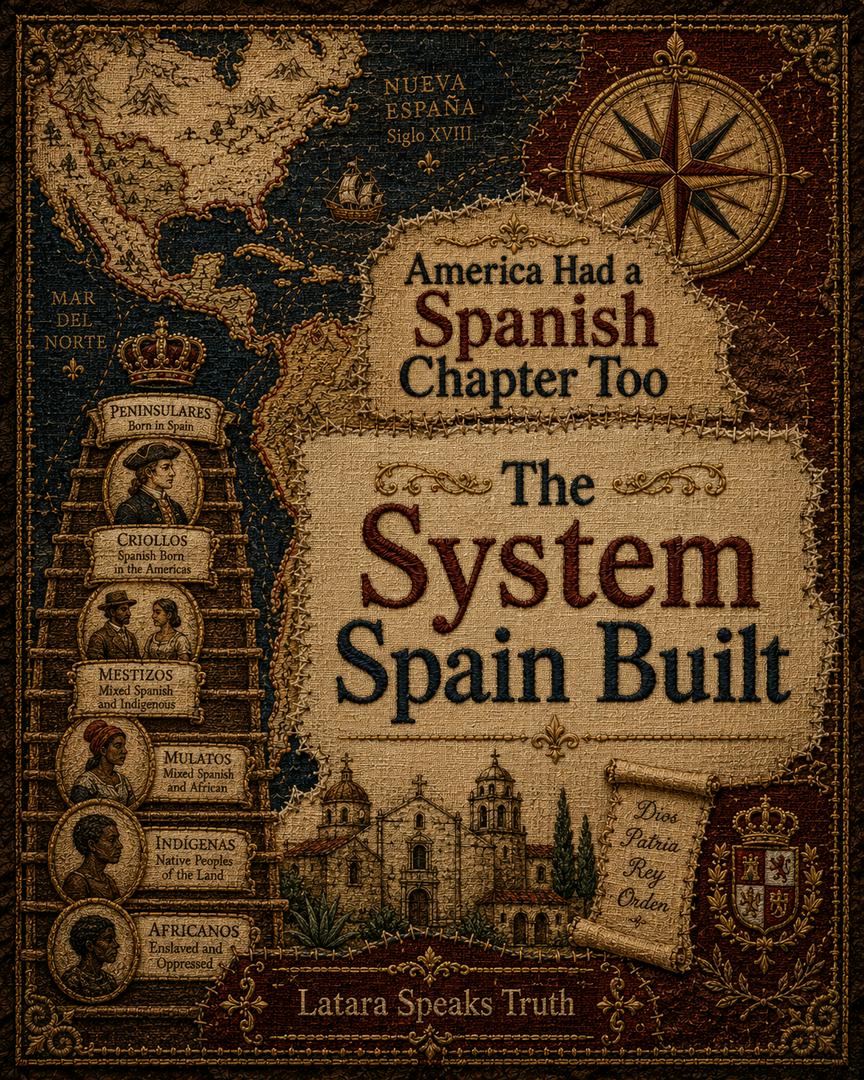
The System Spain Built Before we keep moving forward, we have to look at the system Spain built in the Americas. When Spain expanded its empire, it did not only take land. It built a social order. Spanish colonial society developed a racial hierarchy often called the casta system. At the top were Spaniards born in Spain. Below them were people of Spanish descent born in the Americas. Beneath that were mixed-race groups, Indigenous people, and people of African descent. This was not just prejudice floating in the air. It was structure. The system shaped who had access to power, land, education, church authority, legal protection, and social status. It also shaped who was pushed into forced labor, taxed, controlled, converted, displaced, or treated as less than fully equal. Indigenous people were forced into colonial systems that reshaped their land, labor, language, and spiritual life. African people and their descendants were brought into the Americas through slavery and placed near the bottom of colonial society. Spanish elites gained wealth through land control, plantations, mines, forced labor, and laws that protected their position. The casta system also created labels for mixed-race people, turning ancestry into a ranking system. A person’s background could affect how they were seen, where they fit, and how close they were allowed to stand to power. That is why this history matters. Spanish America was not built only through exploration. It was built through hierarchy. And long before modern debates about race, language, borders, and belonging, Spain had already created a system that taught people where they were supposed to stand. Some were placed close to power. Others were pushed to the bottom. And the effects of that colonial order did not disappear just because empires changed names. #LataraSpeaksTruth #AmericanHistory #LatinoHistory #HispanicHeritage #HiddenHistory

LataraSpeaksTruth

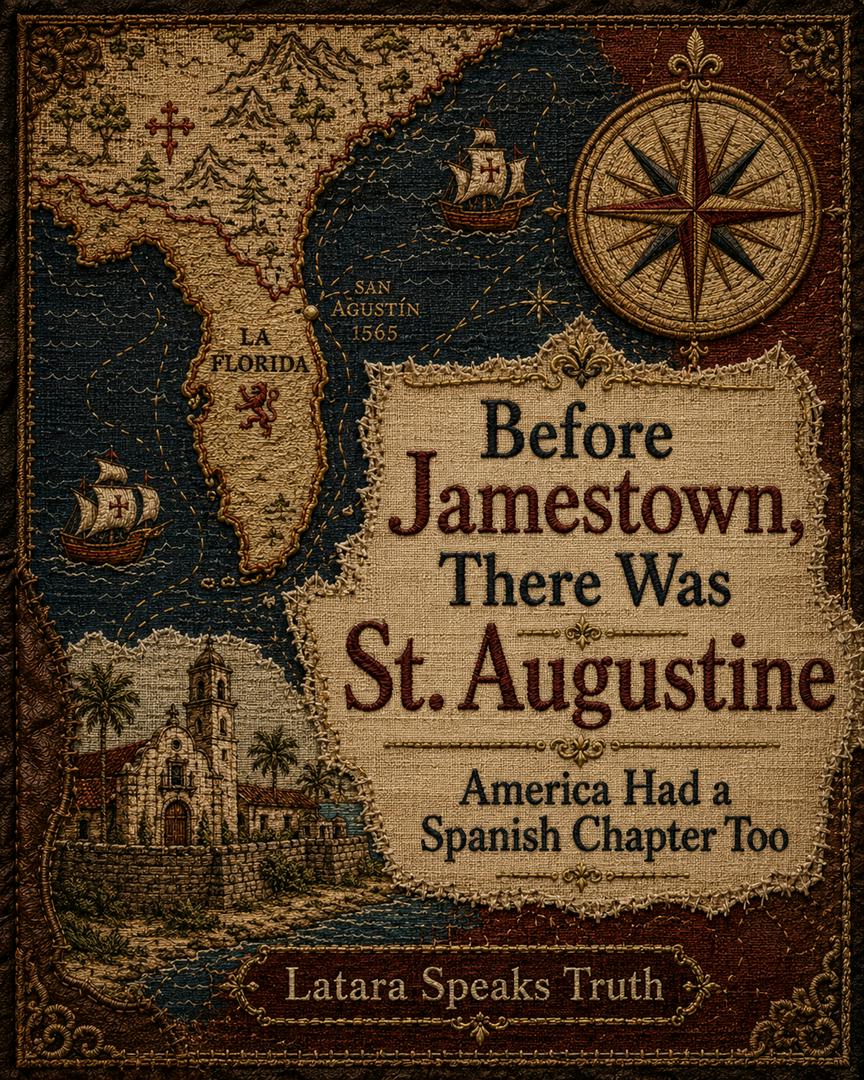
Before Jamestown, There Was St. Augustine Before many Americans learned about Jamestown, Plymouth Rock, or the Pilgrims, Spanish Florida was already part of the story. In 1565, Pedro Menéndez de Avilés founded St. Augustine in what is now Florida. The city is recognized as the oldest continuously occupied settlement of European and African American origin in the United States. It was founded decades before Jamestown and Plymouth. That matters because early American history did not begin only with English settlers. It also included Spanish colonization, Indigenous land, forced labor, African presence, Catholic missions, military outposts, and communities shaped under empire. St. Augustine was built on land where Indigenous people already lived. Spanish colonists first occupied the Timucua village of Seloy, and conflict grew between Spanish settlers and Indigenous communities before the settlement later shifted to the site of modern St. Augustine. African people were also there from the beginning. When people talk about African presence in early America, many start with 1619 in Virginia. That story is important, but it is not the only beginning. In Spanish Florida, free and enslaved Africans were already part of the settlement in the 1500s. That means the Spanish chapter of American history was never only Spanish. It was Indigenous. It was African. It was European. It was forced together through conquest, survival, labor, violence, religion, and resistance. This is why the history matters. Once people understand St. Augustine, they understand that Spanish-speaking history in America did not arrive late. It was already being written before English colonies became the center of the classroom story. This was not a side chapter. It was one of the first chapters. And many people were never taught it that way. #LataraSpeaksTruth #AmericanHistory #LatinoHistory #HispanicHeritage #HiddenHistory
LataraSpeaksTruth

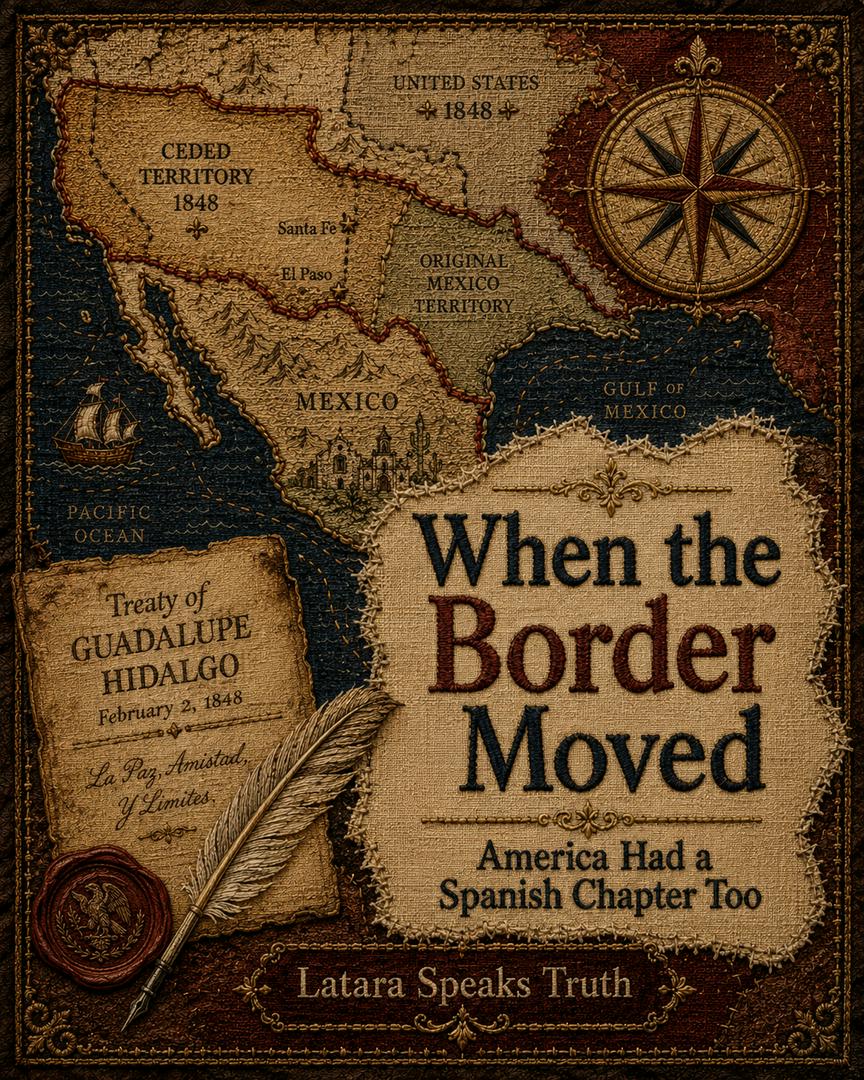
May 19, 1848…The Treaty That Redrew the Map On May 19, 1848, Mexico ratified the Treaty of Guadalupe Hidalgo, one of the most consequential agreements in North American history. The treaty had already been signed on February 2, 1848, after the Mexican American War. The United States ratified it on March 10. But Mexico’s ratification on May 19 moved the agreement closer to becoming official between both nations. This was not just paperwork. By the terms of the treaty, Mexico ceded about 55 percent of its territory to the United States. That land later became all or parts of California, Nevada, Utah, New Mexico, Arizona, Colorado, Oklahoma, Kansas, and Wyoming. Mexico also gave up claims to Texas and accepted the Rio Grande as the southern boundary of Texas. The map changed, but the human impact lasted for generations. Thousands of Mexican residents suddenly found themselves living inside U.S. borders. The treaty promised certain protections connected to property and citizenship, but promises written on paper were not always honored in real life. In many places, Mexican American families later faced land loss, legal battles, discrimination, and pressure from settlers and courts that did not treat them equally. That is why this treaty still matters. It shaped the American Southwest. It shaped Mexican American identity. It shaped border politics, land ownership, citizenship, and the way history is remembered. For the United States, it was expansion. For Mexico, it was loss. For the people living on that land, it was a life-changing shift they did not get to control. May 19 deserves to be remembered because it marks the Mexican ratification of a treaty that redrew borders and changed the future of two nations. #History #AmericanHistory #MexicanAmericanHistory #LatinoHistory #OnThisDay

You've reached the end!