Tag Page MalcolmX

#MalcolmX
LataraSpeaksTruth

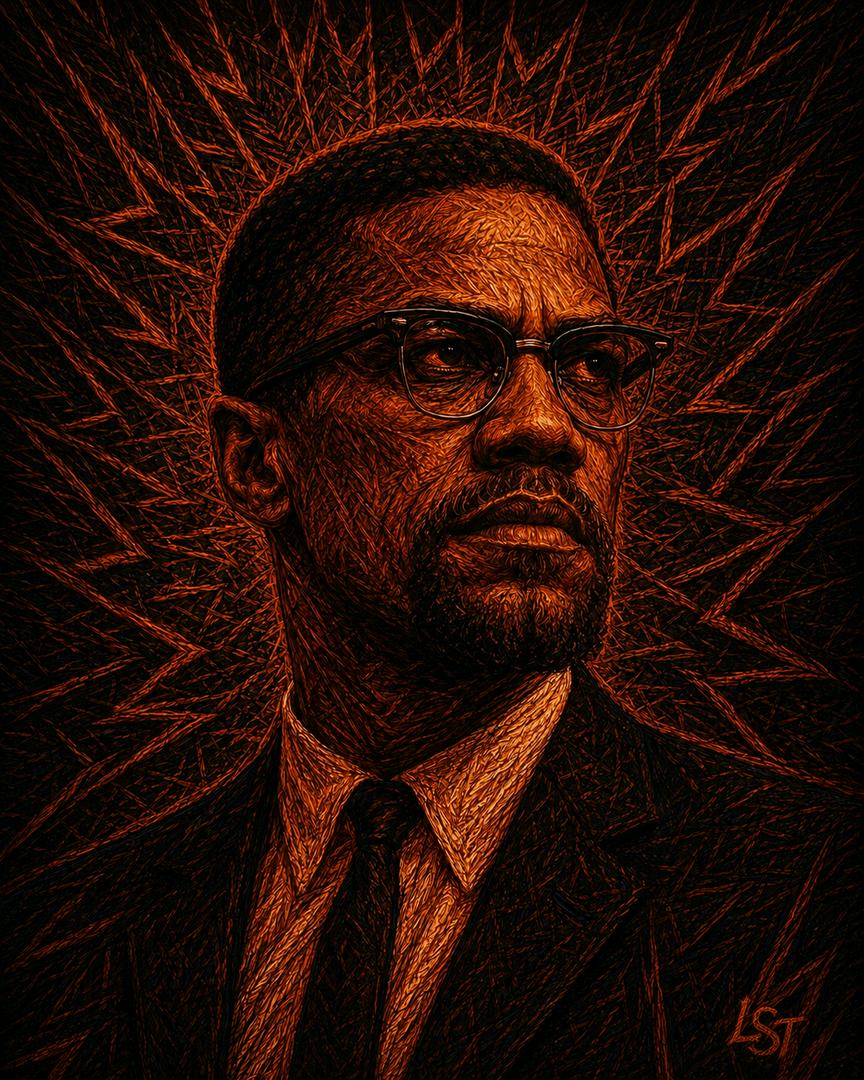
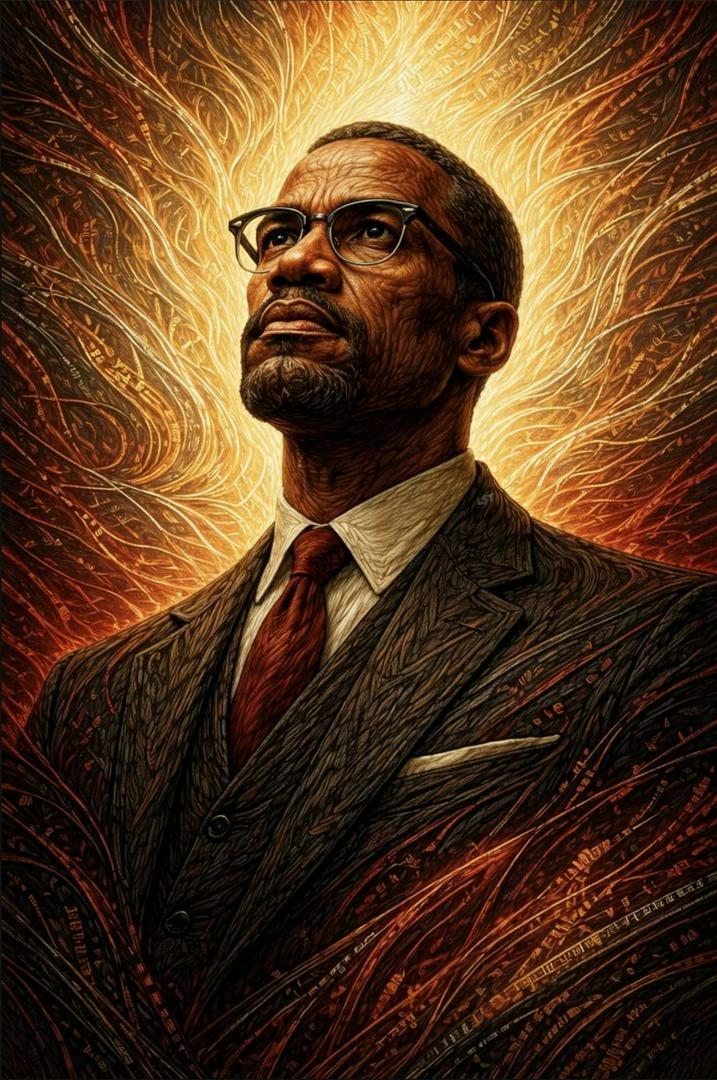
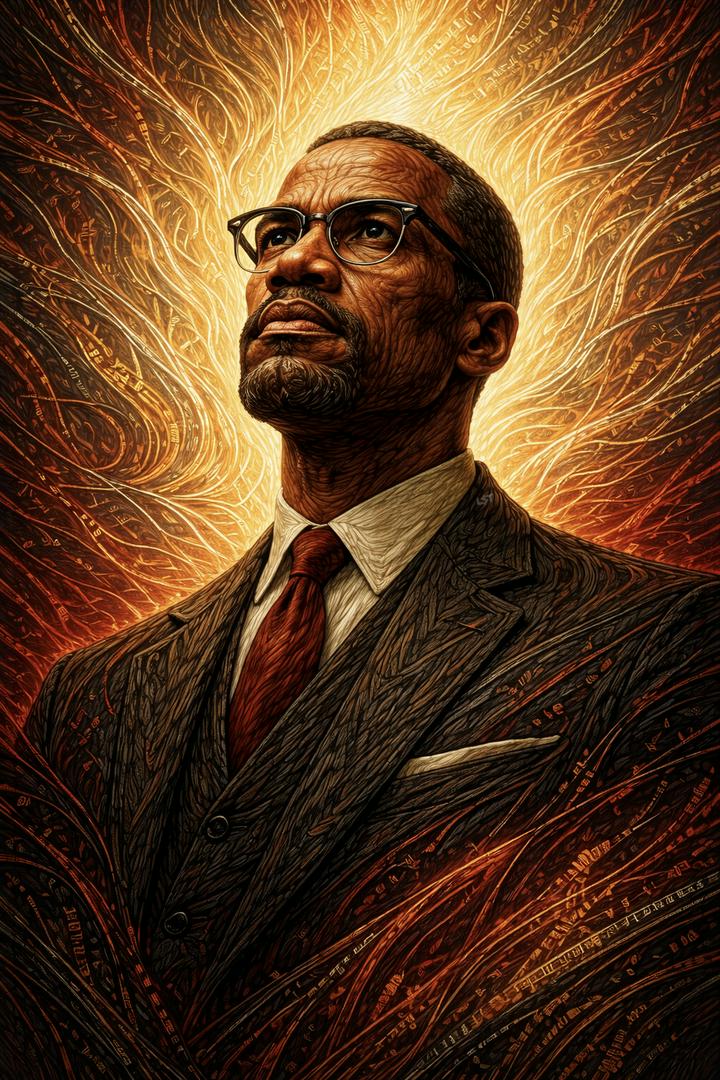
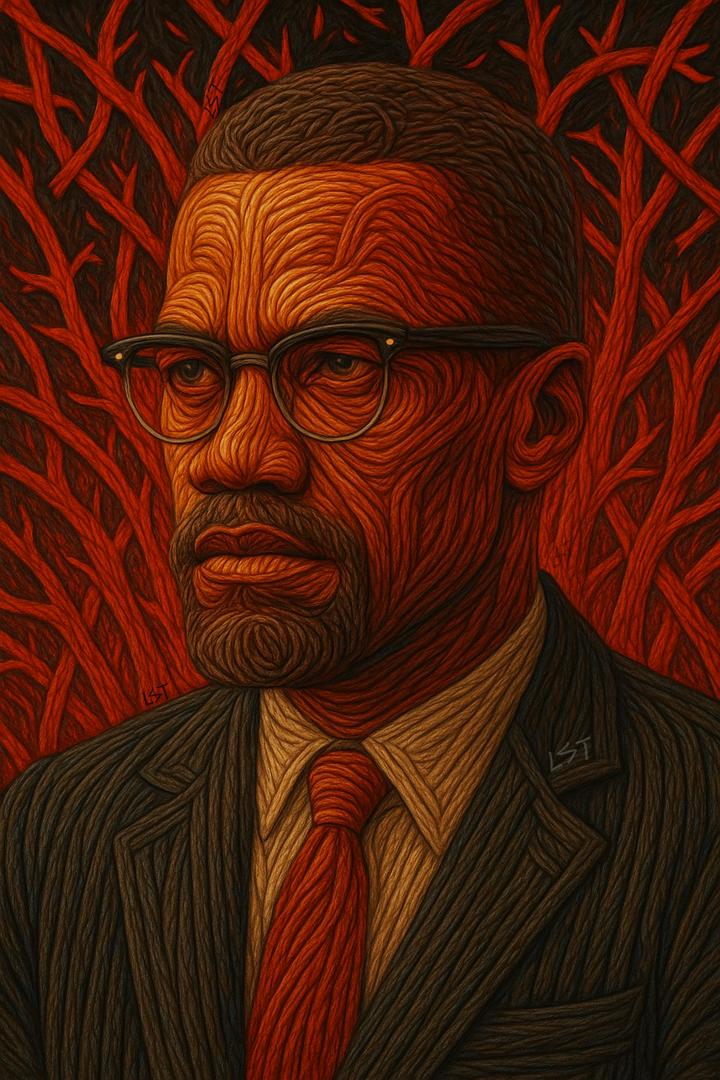
May 19, 1925, Malcolm X was born Malcolm Little in Omaha, Nebraska, and the world did not yet know a voice had arrived that would shake America awake. He was born to Earl and Louise Little, parents connected to Marcus Garvey’s teachings and the belief that Black people deserved dignity, self-respect, and self-determination. Malcolm came from a family marked by race, resistance, and danger. His childhood was not soft. His family faced threats, displacement, and tragedy. His father died when Malcolm was young, and his mother later struggled under grief, poverty, and institutional pressure. His early life showed how America could break a Black family apart and then blame the child for surviving the pieces. But Malcolm survived. He went through hardship, prison, transformation, faith, discipline, study, and rebirth. Malcolm Little became Malcolm X, rejecting a surname tied to slavery and claiming an identity that refused to bow. Later, after his pilgrimage to Mecca, he became El-Hajj Malik El-Shabazz, with a broader view of justice, faith, and humanity. Malcolm X was powerful because he made people confront what they wanted to ignore. He spoke about racism, police brutality, poverty, Black pride, self-defense, global human rights, and the hypocrisy of a country preaching freedom while denying it to Black people. Some called him too harsh. But sometimes truth only sounds harsh to people comfortable with the lie. His life was cut short on February 21, 1965, when he was assassinated in New York. But his words did not die with him. They kept moving through generations, through classrooms, speeches, books, protests, music, and every person who learned that loving yourself in a world that taught you not to is an act of resistance. Malcolm X was not just history. He was a warning. He was a mirror. And he was a reminder that Black dignity was never something to beg for. It was something to stand on. #MalcolmX #BlackHistory #OnThisDay #HumanRights #BlackVoices
LataraSpeaksTruth

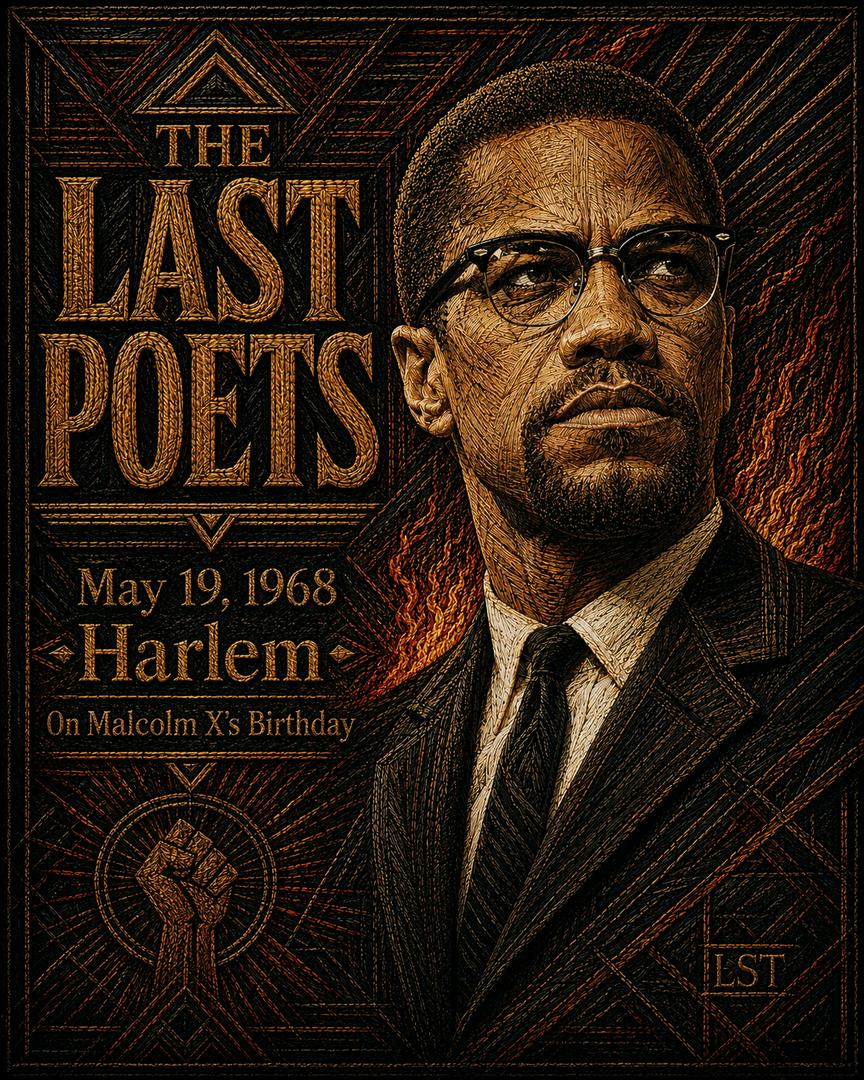
May 19, 1968, was not just another day in Harlem. On Malcolm X’s birthday, a group of Black poets gathered at Mount Morris Park, now Marcus Garvey Park, in East Harlem. Out of that moment came The Original Last Poets, a spoken-word group that helped turn poetry into a weapon, a warning, a sermon, and a soundtrack for Black consciousness. This was only three years after Malcolm X was assassinated. The country was still bleeding from the murder of Dr. King. Black America was grieving, organizing, questioning, and refusing to keep begging a country to see its humanity. The Last Poets stepped into that fire with rhythm, truth, and language sharp enough to cut through silence. They were not just “performing poetry.” They were speaking to a people who had been lied on, locked out, watched, policed, and told to be patient while injustice kept eating at the table. Their words carried the energy of the streets, the church, the rally, the drum circle, and the classroom. They spoke about racism, power, revolution, identity, and what it meant to be Black in a country that wanted Black culture but not Black freedom. That is why so many people call them early ancestors of hip-hop. Before rap became an industry, there were voices like theirs using cadence, repetition, rhythm, and truth-telling to move a crowd. They showed that spoken words could hit like music before a beat even dropped. And let’s be real, that matters. Because hip-hop did not come out of nowhere. It came from pain. It came from resistance. It came from people using whatever they had to tell the truth when the official story kept lying. The Original Last Poets remind us that Black art has always been bigger than entertainment. Sometimes it is testimony. Sometimes it is protest. Sometimes it is survival with a microphone. On May 19, 1968, poetry stood up in Harlem and spoke with its chest. #BlackHistory #TheLastPoets #HipHopHistory #SpokenWord #BlackCulture #MalcolmX #HarlemHistory

Brandon_Lee

On April 25, 1961, Malcolm X and James Baldwin appeared in a WBAI radio broadcast in New York titled Black Muslims vs. the Sit-ins. The conversation also included Leverne McCummins. and it was not casual talk. It was a serious public exchange about racism, protest, integration, dignity, and what real freedom was supposed to mean in America At the time. sit-ins had become one of the most visible forms of protest against segregation. Young people were sitting at unch counters, refusina to move, and challenging a system that told them where they could eat, sit, learn, live, and belong. Malcolm X, speaking from the position of the Nation of Islam, challenged the idea that gaining access to spaces controlled by white societv should be treated as thehighest expression of freedom. His argument was not simplv about restaurants. It was about power. He questioned whether ntegration alone could solve a deeper problem rooted in racism, dependency, and control. James Baldwin brought another kind of weight to the discussion. Baldwin understood the moral violence of racism but he also understood the human cost of being forced to fight for basic recognition His voice often pushed bevond slogans and into the painful question underneath it all: what does America do to the people it refuses to fullv see? That is what made this exchange so mportant. It was not just a disagreement. It was a window into a larqer debate happening across the country. Should freedom mean access to the same public spaces, or should it meanself-determination beyond a system that had already proven itself hostile? More than six decades later, the conversation still hits because the questions were never small. Equality, power dentity, protest, and dignity were all sitting at that table Heavy hitters in one room. No small talk. No soft edges. Just truth beina tested out loud #MalcolmX #JamesBaldwin #OnThisDay #HistoryMatters #AmericanHistory

LataraSpeaksTruth

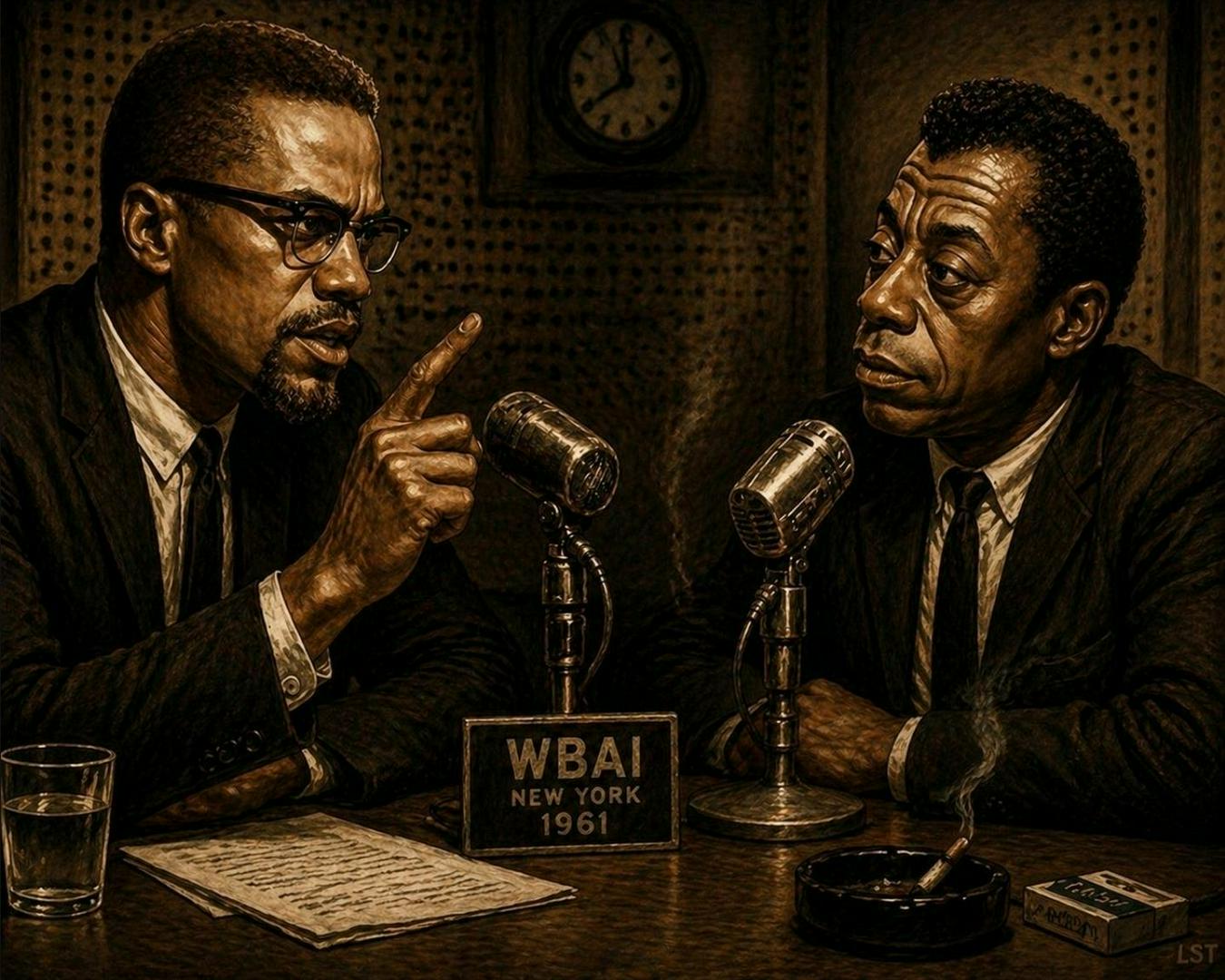
On April 25, 1961, Malcolm X and James Baldwin appeared in a WBAI radio broadcast in New York titled Black Muslims vs. the Sit-ins. The conversation also included Leverne McCummins, and it was not casual talk. It was a serious public exchange about racism, protest, integration, dignity, and what real freedom was supposed to mean in America. At the time, sit-ins had become one of the most visible forms of protest against segregation. Young people were sitting at lunch counters, refusing to move, and challenging a system that told them where they could eat, sit, learn, live, and belong. Malcolm X, speaking from the position of the Nation of Islam, challenged the idea that gaining access to spaces controlled by white society should be treated as the highest expression of freedom. His argument was not simply about restaurants. It was about power. He questioned whether integration alone could solve a deeper problem rooted in racism, dependency, and control. James Baldwin brought another kind of weight to the discussion. Baldwin understood the moral violence of racism, but he also understood the human cost of being forced to fight for basic recognition. His voice often pushed beyond slogans and into the painful question underneath it all: what does America do to the people it refuses to fully see? That is what made this exchange so important. It was not just a disagreement. It was a window into a larger debate happening across the country. Should freedom mean access to the same public spaces, or should it mean self-determination beyond a system that had already proven itself hostile? More than six decades later, the conversation still hits because the questions were never small. Equality, power, identity, protest, and dignity were all sitting at that table. Heavy hitters in one room. No small talk. No soft edges. Just truth being tested out loud. #MalcolmX #JamesBaldwin #OnThisDay #HistoryMatters #AmericanHistory

Freddy Gibbs

On March 8, 1964, Malcolm X publicly announced his break from the Nation of slam, a decision that marked one of the most important turning points of his life and one of the sharpest pivots in modern Black political historv. This was not a quiet separation. It was a public break with the organization that had helped shape his national image and amplify his voice, but it was also the beginning of a deeper transformation that would define his fina year. By then, Malcolm had alreadv become one of the most powerful and unforgettable voices in America. He spoke with discipline force, and clarity. He challenged the country in a way few others dared to do, naming the violence, hypocrisy, and racial cruelty that many wanted softened or ignored. Through his work in the Nation of Islam, he helped inspire pride, structure, and self-definition for many Black people searching forlanguage strong enough to confront what thev had lived through But Malcolm was evolving. He was questioning what he once defended. He was wrestling with betrayal, truth, and the imits of the path he had been on. His break from the Nation of Islam was not only political. It was personal, spiritual, and intellectual. It marked the opening of the last chapter of his life, a chapter shaped by deeper reflection and a broader vision, Later that same year, Malcolm traveled through Africa and the Middle East and made his pilgrimage to Mecca. Those experiences expanded his worldview and sharpened his understanding of the struggle before him. He began speaking not only about racism in the United States, but about human riqhts on a qlobal scale. His language grew wider. His vision grew deeper. His commitment to truth neverweakened. March 8 matters because it marks the moment Malcolm stepped awav from what made him famous and moved toward what made him fuller. Some men remain where they are praised. Malcolm followed the truth, even when it cost him everything #MalcolmX #BlackHistory #OnThisDay #March8

LataraSpeaksTruth

On March 8, 1964, Malcolm X publicly announced his break from the Nation of Islam, a decision that marked one of the most important turning points of his life and one of the sharpest pivots in modern Black political history. This was not a quiet separation. It was a public break with the organization that had helped shape his national image and amplify his voice, but it was also the beginning of a deeper transformation that would define his final year. By then, Malcolm had already become one of the most powerful and unforgettable voices in America. He spoke with discipline, force, and clarity. He challenged the country in a way few others dared to do, naming the violence, hypocrisy, and racial cruelty that many wanted softened or ignored. Through his work in the Nation of Islam, he helped inspire pride, structure, and self-definition for many Black people searching for language strong enough to confront what they had lived through. But Malcolm was evolving. He was questioning what he once defended. He was wrestling with betrayal, truth, and the limits of the path he had been on. His break from the Nation of Islam was not only political. It was personal, spiritual, and intellectual. It marked the opening of the last chapter of his life, a chapter shaped by deeper reflection and a broader vision. Later that same year, Malcolm traveled through Africa and the Middle East and made his pilgrimage to Mecca. Those experiences expanded his worldview and sharpened his understanding of the struggle before him. He began speaking not only about racism in the United States, but about human rights on a global scale. His language grew wider. His vision grew deeper. His commitment to truth never weakened. March 8 matters because it marks the moment Malcolm stepped away from what made him famous and moved toward what made him fuller. Some men remain where they are praised. Malcolm followed the truth, even when it cost him everything. #MalcolmX #BlackHistory #OnThisDay #March8

LataraSpeaksTruth

When Malcolm X Spoke On Kennedy’s Death

On December 1, 1963, Malcolm X was asked for his reaction to the assassination of President John F. Kennedy. He was one of the most closely watched public figures in the country at the time, and reporters pressed him for a comment. Malcolm X responded with the words that would echo for decades. He said it was a case of chickens coming home to roost. He framed the event as part of a larger pattern of violence in the United States during that era. He argued that a nation shaped by political bloodshed could not avoid that same violence returning to its doorstep. The remark caused an immediate national uproar. It was interpreted as insensitive and divisive, and it clashed with the public grief that followed the assassination. The Nation of Islam suspended him from speaking publicly after the comments. His relationship with the organization would continue to strain in the months that followed. This moment is often oversimplified, but it marked a turning point. It pushed Malcolm X to reconsider his alliances, rethink his voice, and eventually pursue a broader message about global human rights. What happened on December 1 became one of the first steps toward the transformation that shaped the final years of his life. #MalcolmX #OnThisDay #AmericanHistory #PoliticalHistory #NewsBreakCommunity #HistoricVoices #HistoricMoments #AmericanLegacy

When Malcolm X Spoke On Kennedy’s Death
You've reached the end!