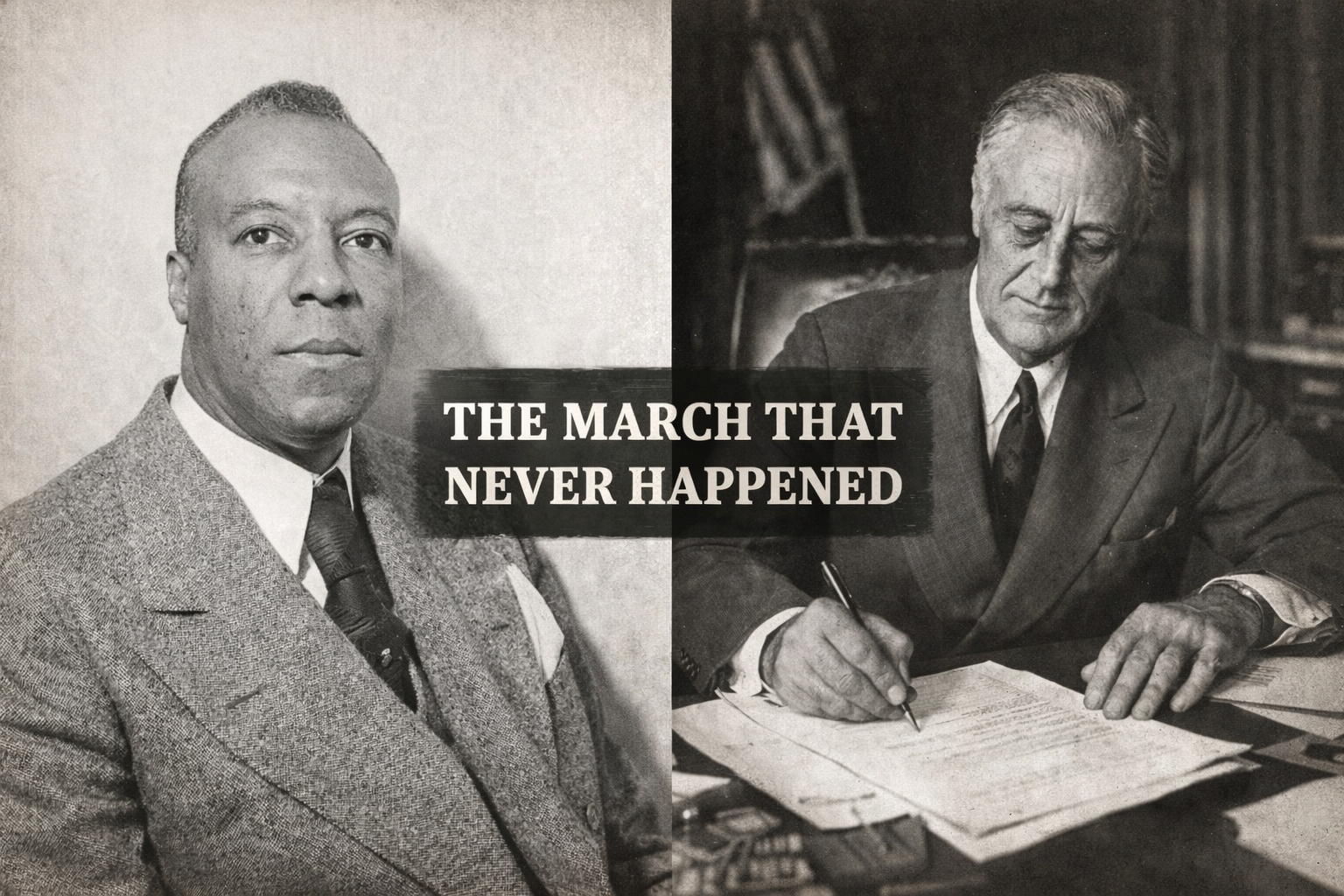
In 1941, as the United States ramped up for World War II, Black workers were largely excluded from defense industry jobs despite the surge in federal contracts and factory expansion. Segregation and discrimination were openly enforced, even as the nation claimed to be fighting for democracy overseas. A. Philip Randolph, president of the Brotherhood of Sleeping Car Porters, challenged that contradiction head-on. He understood that moral appeals alone would not move power… leverage would.
Randolph issued a call for a March on Washington, proposing to bring tens of thousands of Black workers to the nation’s capital to protest discriminatory hiring practices in defense industries and federal employment. This was not a symbolic gesture. It was a calculated show of force rooted in labor organizing, discipline, and numbers. The message was unmistakable… access to wartime jobs was not negotiable, and equality would not be postponed for national convenience.
The pressure reached the White House. Before the march could take place, President Franklin D. Roosevelt intervened. In June 1941, he signed Executive Order 8802, banning racial discrimination in defense industries and establishing the Fair Employment Practices Committee to investigate violations. It marked the first federal action against employment discrimination since Reconstruction.
The March on Washington never happened. It didn’t need to. Roosevelt stepped in because the pressure was undeniable. Randolph called off the march because the demand had been met. The moment stands as proof that organized resistance does not always need to march to win… sometimes the threat alone is enough to force power to move.
#APhilipRandolph #MarchOnWashington #ExecutiveOrder8802 #BlackLaborHistory #AmericanHistory #WWIIHomeFront #FairEmployment #CivilRightsBeforeTheMovement #HistoryMatters