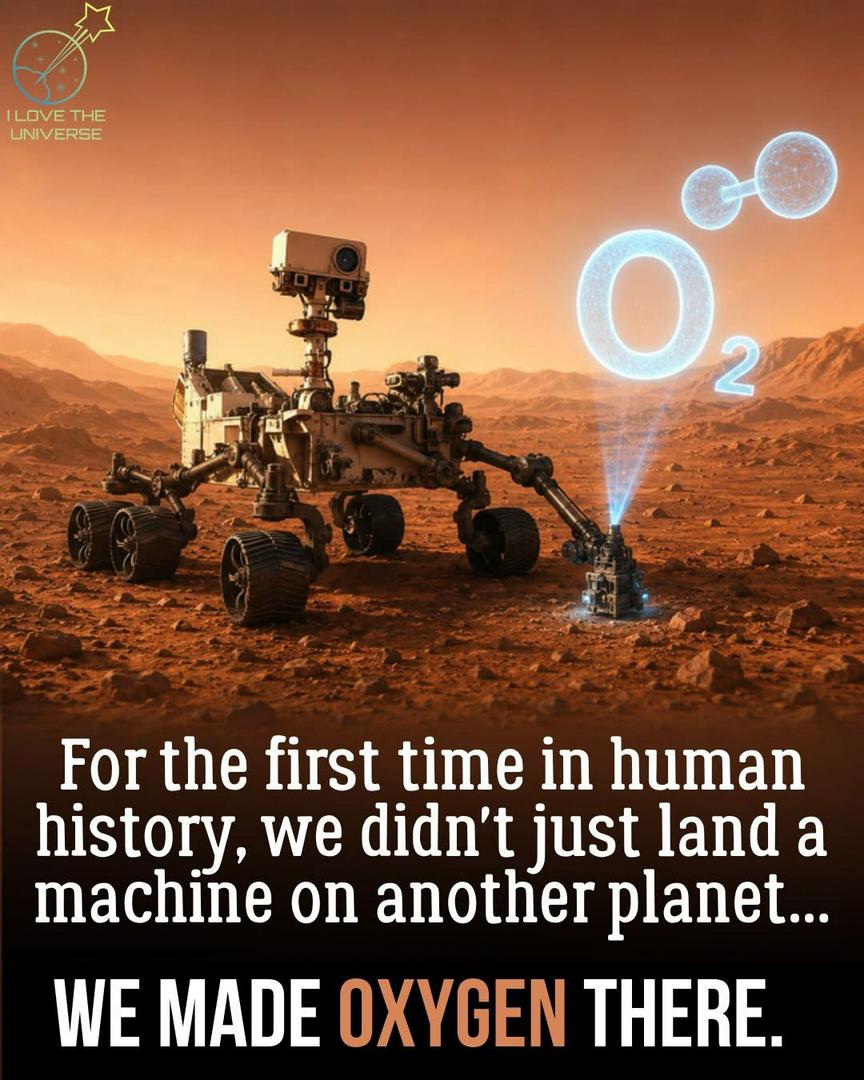
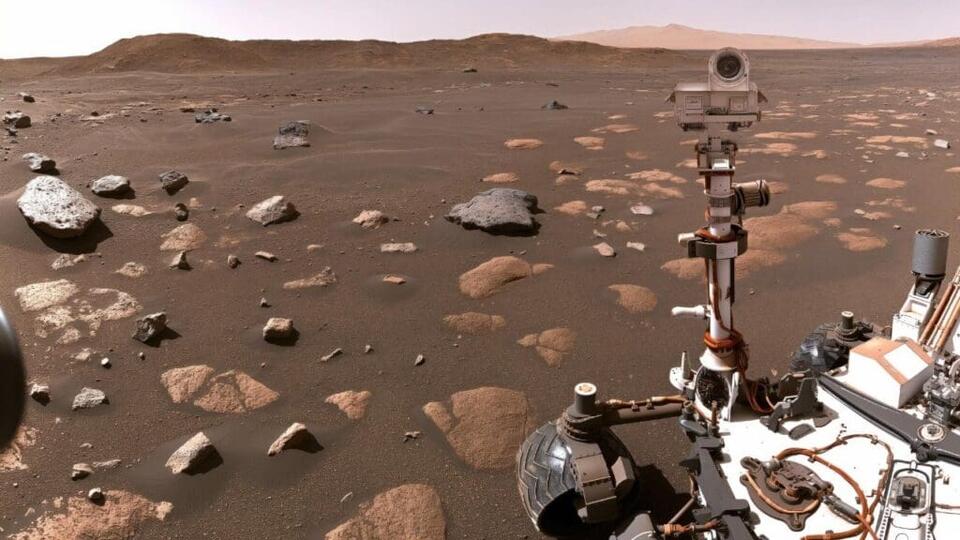
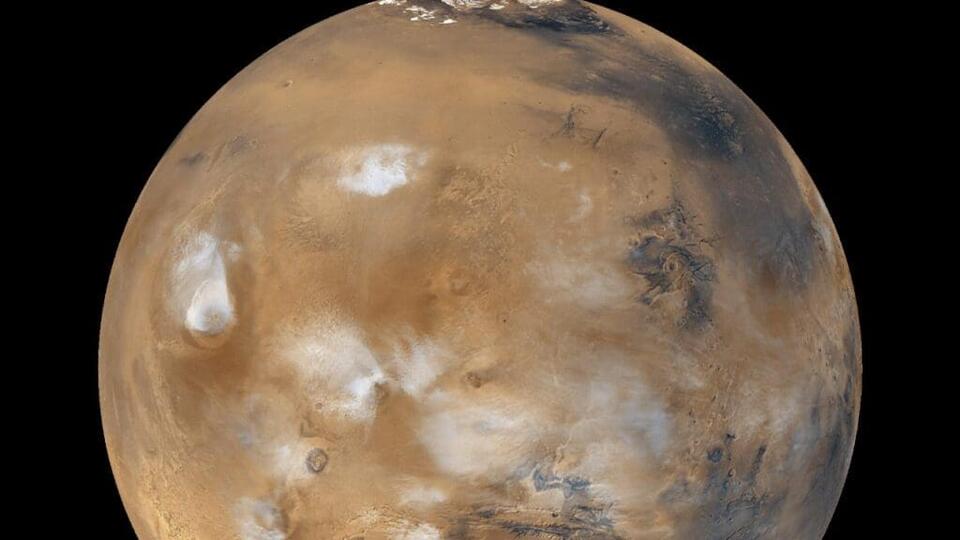
justme +Follow🚀 For the first time in human history, we didn't just land a machine on another planet... We made oxygen there. Think about that for a moment. On a world where the atmosphere is 95% carbon dioxide, where humans cannot breathe, a small device aboard NASA's Perseverance rover quietly achieved something extraordinary. It took the thin Martian air and transformed it into oxygen. Not in a laboratory on Earth. Not in a simulation. On Mars. The experiment, called MOXIE, proved that future explorers may not need to bring every breath of air with them across millions of kilometers of space. Instead, they could create it right where they land. And oxygen isn't just for breathing. The same technology could one day help produce the oxidizer needed for rocket fuel, solving one of the biggest challenges of sending humans to Mars... and bringing them home again. 🌌 Every giant leap begins with a small proof of concept. The Wright brothers flew for 12 seconds. The first computers filled entire rooms. And a toaster-sized machine on Mars just showed us that humans may someday live on another world. One small machine. One distant planet. One giant step toward becoming an interplanetary species. 🛸 Fun fact: During its mission, MOXIE produced enough oxygen to keep an astronaut breathing for dozens of hours, while operating in conditions no human could survive. Do you think we'll see the first human footprint on Mars within the next 20 years? #Mars #NASA #Perseverance #MOXIE #SpaceExploration #Astronomy #Science #Future #RedPlanet #HumansToMars21Share
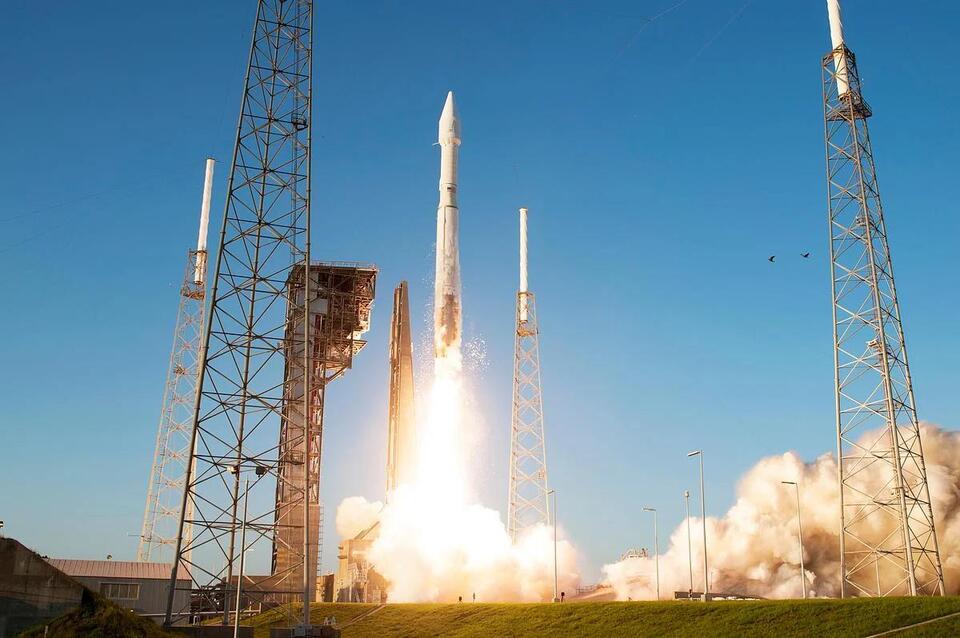
justme +Follow🚨 NASA is set to officially reveal the Artemis III crew on June 9 at 11:00 a.m. EDT during a live announcement from Johnson Space Center in Houston. This marks a major milestone for the future of human space exploration. The astronauts introduced during the event will be assigned to Artemis III — a mission once planned to land humans on the Moon for the first time since Apollo 17 in 1972. But NASA has now significantly reshaped the mission. Instead of being the first Artemis lunar landing, Artemis III is now expected to focus on vital orbital testing between the Orion spacecraft and commercial lunar landers being developed by SpaceX and Blue Origin. According to NASA, the mission will demonstrate key rendezvous and docking operations in Earth orbit — systems considered essential before astronauts attempt future landings near the Moon’s south pole. The mission is currently aiming for launch in 2027. As a result of the updated plan, Artemis IV is now expected to become the mission that finally places humans back on the lunar surface. At the same time, NASA is aggressively expanding its long-term Moon Base ambitions: • robotic cargo deliveries beginning in 2026 • privately developed lunar rovers • scouting drones exploring the lunar south pole • infrastructure designed for a sustained human presence on the Moon NASA says all of this is laying the foundation not just for returning to the Moon — but eventually for sending humans to Mars. More than half a century after Apollo, humanity’s next giant leap is no longer a distant dream. It’s already underway. 🌕🚀 #NASA #Artemis #ArtemisIII #MoonMission #MoonLanding #SpaceExploration #Astronomy #SpaceX #BlueOrigin #Mars #MoonBase #Orion #RocketLaunch #SpaceNews #FutureOfSpace60Share
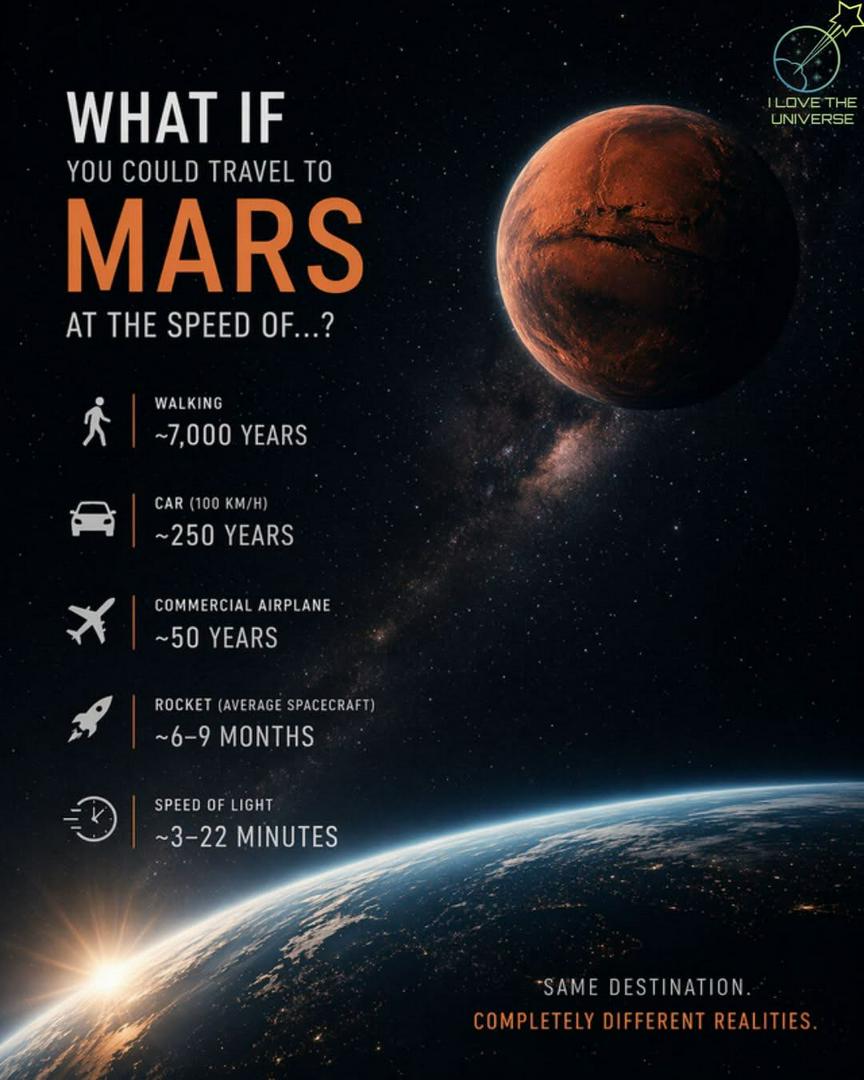
justme +Follow🚀 What if you could travel to Mars at the speed of…? Mars feels close in the night sky — but distance changes everything, depending on how fast you travel. ⏱ From Earth to Mars: 🚶 Walking — ~7,000 years 🚗 Car (100 km/h) — ~250 years ✈️ Commercial airplane — ~50 years 🚀 Rocket (average spacecraft) — ~6–9 months ⚡ Speed of light — ~3–22 minutes Same destination. Completely different realities. 🌌 Space isn’t far — it’s just unimaginably big. #Space #Astronomy #Mars #SpaceTravel #Cosmos #Universe #ScienceFacts #CosmicScale #ExploreSpace20Share
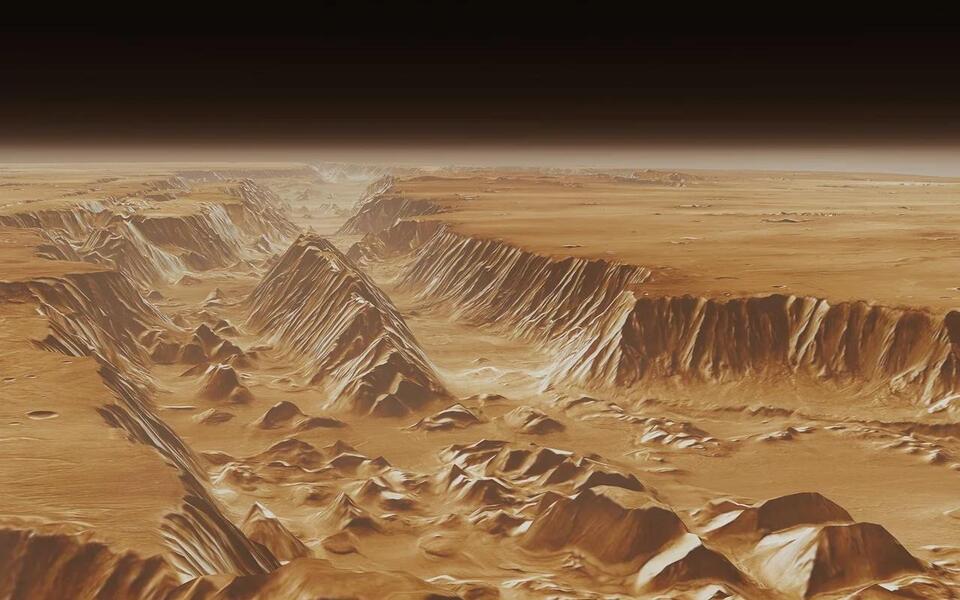
Michael Flores+FollowMars Was Once a Blue Planet?!Scientists just found river deltas in Mars’ giant Valles Marineris canyon, and it’s basically proof that half the planet was once covered by a massive ocean. These deltas look just like the ones where rivers meet oceans on Earth! High-res images show shoreline markers and even dried-up cracks. Imagine Mars with beaches and waves instead of just red dust. Does this change how you think about life on Mars? Drop your wildest theories below! #Science #Mars #SpaceNews10Share
James Brady+FollowMars Might’ve Had Earth’s Life RecipeMars isn’t just a dusty, dead planet—scientists are finding that it had the same chemical ingredients that sparked life on Earth! We’re talking ancient organic molecules, minerals shaped by water, and even “poppy seed” textures in rocks that could be biosignatures. It’s not proof of Martian microbes, but it’s wild to think Mars had all the right stuff for life to start. Are we just one planet in a solar system full of almost-Earths? #Science #Mars #SpaceScience20Share
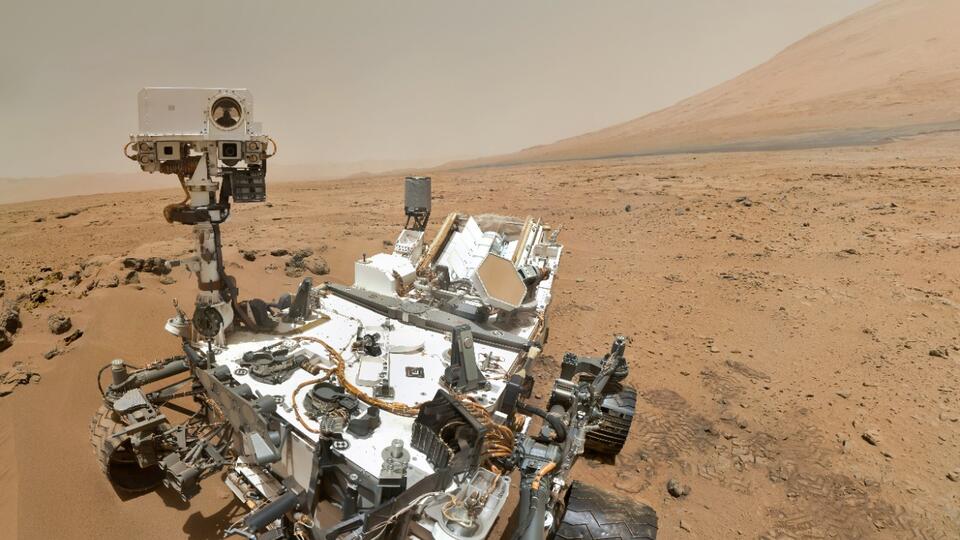
Jennifer Reyes+FollowMars Meteorite: Space Treasure or Martian Oddball?Imagine stumbling on a chunk of cosmic metal during your morning walk—except it’s on Mars! NASA’s Perseverance rover just found a desk-sized rock that might be a giant meteorite, packed with iron and nickel. Why care? These space rocks could be future tool kits for Mars explorers and help scientists piece together Mars’ wild history. Proof that even on a well-trodden path, Mars still surprises! #Business #Industry #Mars10Share
James Brady+FollowCould We Actually Live on Mars?Imagine swapping your backyard for red dust and alien sunsets. Scientists are piecing together how we could actually live on other planets—think recycling every drop of water, building homes from moon dirt, and even making oxygen from thin Martian air. The tech is wild, but the real challenge? Making these places feel like home, not just a high-tech tent. The best part: what we learn could make life better right here on Earth, too. #Science #SpaceLiving #Mars01Share
peterfoster+FollowMars Is Way More Alive Than We Thought!Grab your coffee—NASA just picked up a wild new signal from Mars, and it’s not just a one-off blip. Think of it like your phone buzzing from multiple apps at once: marsquakes, electric dust storms, and weird rock chemistry are all pinging at the same time. The big takeaway? Mars isn’t the quiet, dead planet we pictured. It’s got surprises that could even hint at life, so keep an eye out for more cosmic curveballs! #Business #Industry #Mars200Share
megangibson+FollowMars Has Mini Lightning—For Real!Turns out Mars isn’t just a dusty, quiet planet—NASA’s Perseverance rover picked up actual crackling electric sparks inside Martian dust storms! Scientists thought Mars was too chill for lightning, but these tiny discharges are zapping through the thin air, shaking up everything we thought we knew about the Red Planet’s atmosphere. This could totally change how we hunt for signs of life and prep for future Mars missions. Who knew dust devils could be so electrifying? #Science #Mars #PerseveranceRover20Share
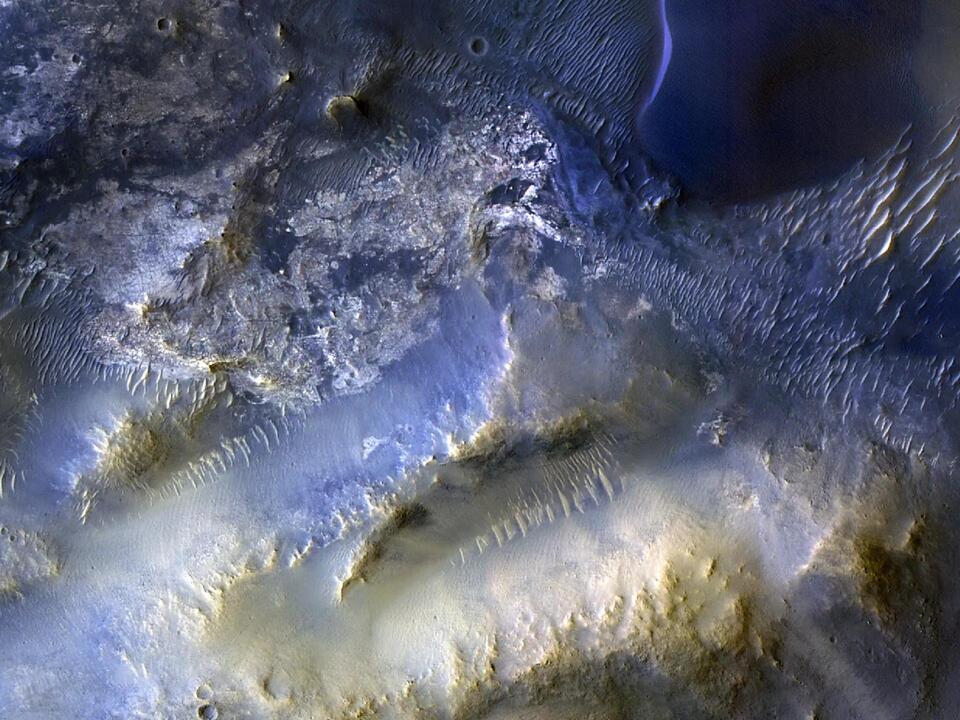
Richard Vaughan+FollowMars Orbiter Hits 100,000 Photos!NASA’s Mars Reconnaissance Orbiter just snapped its 100,000th pic of the Red Planet, and its camera roll is basically the ultimate space photo dump. Since 2006, it’s been capturing wild shots of Martian dunes, craters, and even avalanches. The latest milestone image? A moody landscape near where the Perseverance rover is searching for ancient life. Can you imagine scrolling through THAT gallery? #Science #Mars #NASA10Share