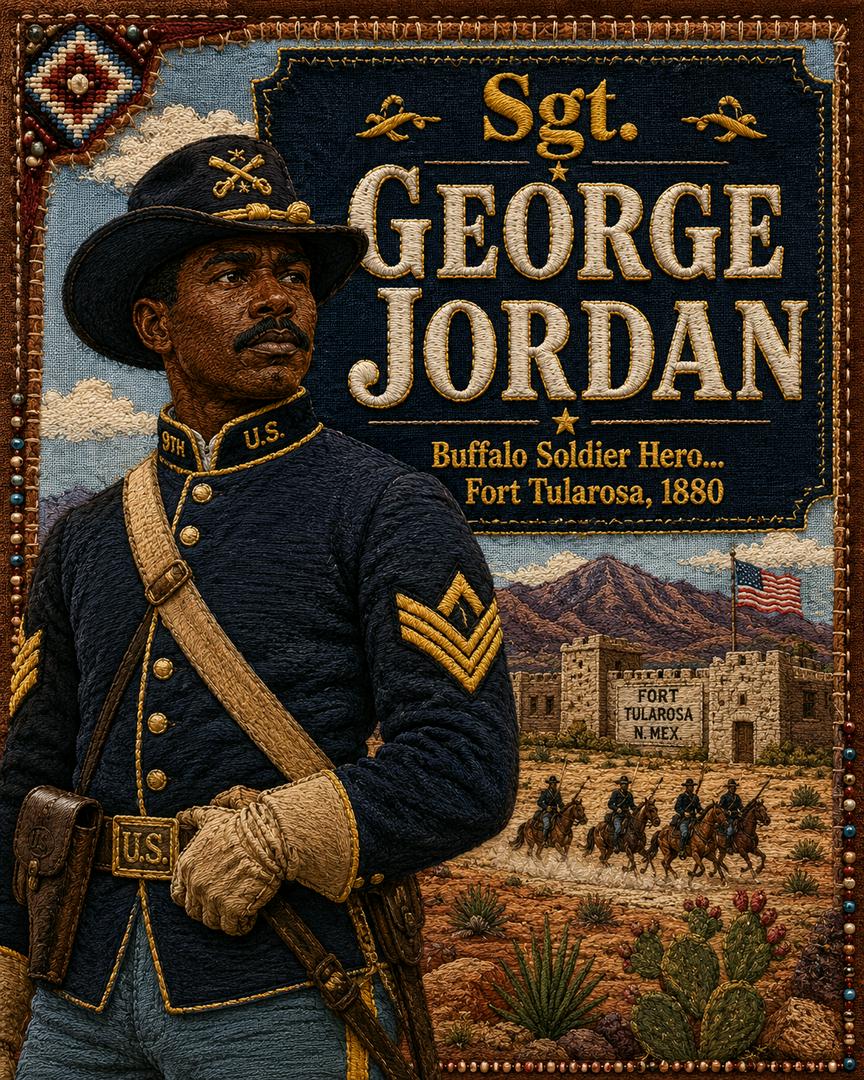
On May 14, 1880, Sgt. George Jordan of Company K, 9th U.S. Cavalry, stood at Fort Tularosa, New Mexico, facing the kind of moment history should never forget.
Jordan was one of the Buffalo Soldiers, Black troops who served the United States after the Civil War while still living under the weight of racism, segregation, and unequal treatment. They wore the uniform, defended the country, and carried themselves with discipline, even when the country did not fully honor their humanity.
At Fort Tularosa, Jordan led a small detachment of only 25 men. In the action later recognized as part of his Medal of Honor service, his unit repulsed a force of more than 100 Apaches. That was not a small stand. That was leadership under pressure. That was courage with no room for panic.
Jordan’s story did not end there. His Medal of Honor also recognized his actions at Carrizo Canyon, New Mexico, on August 12, 1881. There, he held an exposed position under dangerous conditions and helped prevent his command from being surrounded.
Nearly a decade later, on May 7, 1890, Sgt. George Jordan was awarded the Medal of Honor for his service.
What makes this story powerful is not just the battle itself. It is the contradiction behind it. Men like George Jordan served with bravery in a nation that still questioned their worth. They defended forts, protected settlements, and followed orders, even while facing discrimination from the same country they served.
The Buffalo Soldiers were not background figures in American military history. They were builders of legacy. They were disciplined fighters, frontier soldiers, and men whose service deserves to be remembered with the same seriousness given to any other decorated unit.
Sgt. George Jordan’s stand at Fort Tularosa is a reminder that courage does not always come with fair treatment. Sometimes courage shows up anyway.
#GeorgeJordan #BuffaloSoldiers #MilitaryHistory #BlackHistory #MedalOfHonor #OnThisDay