Tag Page OnThisDay

#OnThisDay
LataraSpeaksTruth

December 20, 1868 marks the birth of Harvey Firestone, an American industrialist best known for founding the Firestone Tire and Rubber Company. Firestone was not a Black American, but his relevance to Black history is tied to the influence he exercised during a critical period of educational development in the early twentieth century. Firestone formed a professional relationship with Booker T. Washington, one of the most influential Black educators of the era. Washington promoted industrial education and economic self reliance as practical strategies for advancement within a segregated society. Firestone supported this philosophy through financial contributions and public advocacy, particularly in support of Tuskegee Institute. At a time when Black educational institutions were consistently underfunded, private donations often determined whether schools could expand programs or continue operating at all. Firestone’s backing helped strengthen Tuskegee’s vocational and industrial training initiatives, which emphasized skilled trades and applied learning. These programs prepared students for economic participation during an era when access to professional opportunities was severely restricted. This relationship reflects a broader historical reality. Progress frequently depended on decisions made behind the scenes by individuals who held financial power and social access. While such support did not challenge segregation directly, it helped build durable educational infrastructure that served generations of Black students. In this context, Firestone’s legacy is not one of leadership but of influence. His role illustrates how quiet financial support helped shape access and opportunity during a formative chapter in American history. #OnThisDay #BlackHistoryContext #EducationHistory #TuskegeeInstitute #AmericanHistory

LataraSpeaksTruth

1958… The Day Louisiana’s “Anti-Mixing” Sports Law Finally Fell

On November 28, 1958, a federal three-judge court ruled against Louisiana’s attempt to keep sports segregated forever. The case was called Dorsey v. State Athletic Commission, and it targeted the state’s “anti-mixing” law… a rule that tried to stop Black and white athletes from competing against each other. Louisiana used this law to block integrated boxing matches. Promoters were threatened with jail. Black fighters were refused licenses. White fighters were told to stay in their own lane. The whole thing was designed to protect the old order… and punish anyone who dared to break it. The court struck it down. They called it unconstitutional, discriminatory, and flat-out incompatible with the country’s direction. It was one of the quiet wins that chipped away at segregation’s foundation. Not loud. Not flashy. But necessary. This wasn’t just about sports. It was about the state trying to control who could stand toe-to-toe in public. And the court said no… not anymore. #LataraSpeaksTruth #HistoryMatters #AmericanHistory #HiddenHistory #UntoldStories #OnThisDay #CivilRightsEra

1958… The Day Louisiana’s “Anti-Mixing” Sports Law Finally Fell
LataraSpeaksTruth

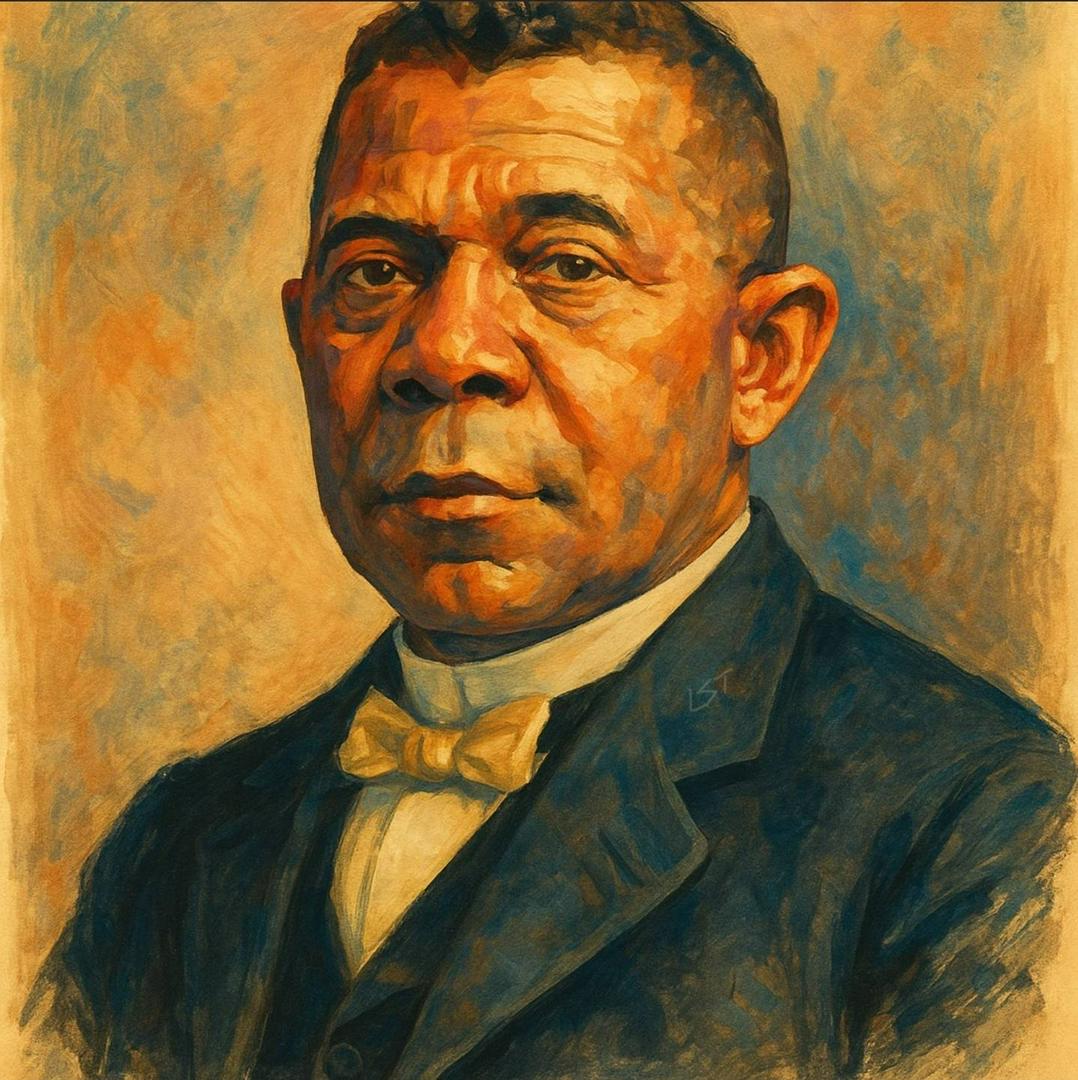
Honoring Booker T. Washington: A Legacy That Still Lifts Us

Let us take a moment to honor the legacy of Booker T. Washington, a man whose life was all grit, vision, and quiet strength. When he passed on November 14th, 1915, the world did not just lose an educator. It lost a builder. A man who carved out hope where the world tried to leave none. As we look back, the Word gives us the perfect lens to see his life through. Psalm 112:6 (CSB) says, “He will never be shaken; the righteous one will be remembered forever.” Washington lived that out. Steady, rooted, and unbothered by storms that tried to pull him down. And here we are, still speaking his name. Proverbs 16:3 (CSB) tells us, “Commit your activities to the Lord, and your plans will be established.” This man committed himself to lifting others through education, discipline, and opportunity. God established that work so deeply that it still stands today. Then we look at Galatians 6:9 (CSB). “Let us not get tired of doing good, for we will reap at the proper time if we do not give up.” That is the blueprint of Washington’s entire life. Do not quit. Do not fold. Keep showing up. And the harvest came. Changed lives. Opened doors. Generations rising higher. So today, as we reflect on his passing, we are reminded of this simple truth. A life committed to God and poured out for others never disappears. It becomes legacy. This is your reflection for the day. Stay grounded, stay faithful, and keep building something that will outlive you. #BookerTWashington #Legacy #HistoryMatters #FaithReflection #ScriptureOfTheDay #Inspiration #EducationHistory #OnThisDay

Honoring Booker T. Washington: A Legacy That Still Lifts Us
LataraSpeaksTruth

Jaleel White, Born November 27, 1976

Some people come into TV history so loud, so unforgettable, so stamped into the culture that you don’t even need their government name to know exactly who they are. Jaleel White is one of those figures. Born in Pasadena in 1976, he walked into sitcom history as a kid and ended up creating one of the most iconic characters television has ever seen. Steve Urkel wasn’t supposed to be a star. He wasn’t even supposed to be a long-term character. But the moment Jaleel walked onto that Family Matters set with the suspenders, the glasses, and that unshakeable commitment to being delightfully annoying, television changed. He turned a side character into a cultural phenomenon. A whole era. A catchphrase that became part of American speech. And behind all of that was a kid who wasn’t afraid to lean into a role that took over primetime. But what people don’t talk about enough is the longevity. Jaleel grew up in front of the world, navigated fame early, and still kept working, from voice acting to guest roles to producing. He stayed grounded… stayed evolving… stayed respected. And even today, the legacy holds. We still quote him. Still laugh at the scenes. Still recognize his impact on 90s Black sitcom culture. His role wasn’t just entertainment… it was representation, visibility, and a reminder that Black nerds existed long before the world decided it was cool. Happy Birthday to a man whose character became a legend… and whose career still keeps unfolding. #JaleelWhite #OnThisDay #FamilyMatters #TVHistory #LataraSpeaksTruth

Jaleel White, Born November 27, 1976
LataraSpeaksTruth

January 25, 1980 marks the launch of Black Entertainment Television, better known as BET. What began as a small cable experiment would grow into one of the most influential media platforms in American cultural history. BET was founded by Robert L. Johnson at a time when cable television was expanding, yet representation was scarce and often filtered through networks that were not built with Black audiences in mind. The channel initially aired just a few hours of programming per day, relying heavily on music videos, reruns, and public affairs content. It was modest by design, but intentional in purpose. The significance of BET’s launch was not about scale. It was about access. For the first time, a cable network centered Black voices, Black music, Black interviews, and Black stories as its core audience rather than an afterthought. It created a national platform for artists, journalists, comedians, and public figures who otherwise struggled for consistent visibility on mainstream television. Over time, BET evolved into a cultural gatekeeper. Shows like Video Soul, BET News, Rap City, and later award programs became reference points for generations. The network documented shifting musical eras, political conversations, fashion trends, and social debates as they unfolded in real time. BET did not just reflect culture…it archived it. While the network has faced criticism and controversy across different eras, its existence changed the media landscape permanently. BET proved that Black-centered programming was not niche, not temporary, and not optional. It was viable, influential, and deserving of space. January 25, 1980 stands as more than a launch date. It marks a moment when representation moved from limited windows to a dedicated channel, setting a precedent that reshaped cable television and cultural storytelling for decades to come. #OnThisDay #January25 #BET #MediaHistory #TelevisionHistory #CulturalHistory #BlackMedia #EntertainmentHistory #AmericanHistory

LataraSpeaksTruth

Happy Heavenly Birthday to John Amos, born December 27, 1939. John Amos represented a kind of strength that didn’t ask for applause. It stood firm, spoke plainly, and carried weight whether the room was listening or not. His presence on screen wasn’t loud, but it was unmistakable…solid, principled, and deeply human. Many first met him as James Evans on Good Times, a role that reshaped how working-class Black fathers were portrayed on television. Amos insisted on dignity, consistency, and realism at a time when those qualities were often written out or softened for comfort. That insistence cost him professionally, but it cemented his legacy. He chose truth over ease, even when the industry pushed back. His reach went far beyond one role. In Roots, Amos brought gravity and humanity to Kunta Kinte, anchoring one of the most important television events in American history. And years later, in Coming to America, he showed another side of that same authority as Cleo McDowell…a proud, hardworking father whose booming voice and unforgettable presence made the character iconic. Even in comedy, Amos carried command. He didn’t disappear into roles…he defined them. John Amos built a career on credibility. He didn’t chase likability. He earned respect. His characters reflected responsibility, boundaries, and backbone…qualities that still resonate because they were never performative. Today, his work continues to speak for him. The roles remain. The standard remains. And the impact remains long after the credits roll. #JohnAmos #ComingToAmerica #GoodTimes #Roots #TelevisionHistory #FilmHistory #ClassicCinema #BlackHollywood #OnThisDay #December27 #HeavenlyBirthday

LataraSpeaksTruth

Marshall Major Taylor Born November 26, 1878

Marshall Major Taylor was born on November 26, 1878, in Indianapolis. He would rise to become one of the most accomplished cyclists of the early twentieth century at a time when organized racing was dominated by white athletes and shaped by racial barriers that followed him at every turn. His career showed what discipline and unmatched talent could overcome long before fairness became part of the conversation. Taylor’s speed gained attention when he was still a child performing bicycle tricks outside a local shop. Those early demonstrations led to training opportunities that pushed him toward competitive racing. By his late teens he began entering professional events where he quickly stood out not only for his ability to accelerate but also for the composure he carried during hostile environments. In 1899 he won the world one mile sprint championship, which placed him among the top athletes of his era. His titles and records reached international audiences including races in Europe and Australia where he found greater professional respect. He set multiple world records during his career, showing how far his skills could go even without the full support many of his competitors enjoyed. Taylor’s legacy represents strength, discipline, and achievement under pressure. His accomplishments influenced future generations of athletes who saw proof that excellence could not be denied even in the face of exclusion. His name remains an important part of cycling history and a reminder of what it looks like to keep moving forward with purpose. #OnThisDay #MarshallTaylor #SportsHistory #CyclingLegend #LataraSpeaksTruth

Marshall Major Taylor Born November 26, 1878
LataraSpeaksTruth

1897… Andrew J. Beard Receives a Patent for the “Jenny Coupler”

On November 23, 1897, Andrew Jackson Beard, a Black inventor from Alabama, received a U.S. patent for one of the most important railroad safety devices of the late 1800s: the automatic car coupler known as the “Jenny Coupler.” Before Beard’s invention, railroad workers had to stand between moving train cars to manually link them together. It was a dangerous job that resulted in countless crushed limbs and deaths. Beard knew those risks firsthand—he had worked around railroads and had seen the toll the old system took on brakemen. His design changed everything. The Jenny Coupler used a pair of locking jaws that snapped together automatically the moment two cars touched. It replaced a life-threatening task with a simple, safer, almost automatic motion. Beard’s patent became part of a nationwide shift toward better railroad safety. His work influenced federal requirements for automatic couplers and helped protect the workers who kept the rail industry running. Even though his name isn’t widely recognized today, Beard’s contribution had a lasting impact. His 1897 patent remains a clear example of how Black inventors helped shape American industrial technology—often without the credit they deserved. #OnThisDay #BlackHistory #AmericanHistory #Inventors #RailroadHistory #SafetyInnovation #UnsungHeroes #CommunityFeed

1897… Andrew J. Beard Receives a Patent for the “Jenny Coupler”
LataraSpeaksTruth

1960… The Day New Orleans Showed Its True Face

On November 29, 1960, the sidewalk outside William Frantz Elementary turned into a scene the country still can’t shake. White segregationist mothers lined the street, screaming as a little Black girl tried to walk into school. Through all that chaos, Daisy Gabrielle held her daughter Yolanda’s hand and kept moving. That walk was courage in real time… the kind that doesn’t wait for applause, just does what’s right. The footage from that day became part of America’s permanent record. Not the cleaned-up version… the real one, showing grown adults trying to block a child’s education because of her skin. And here’s the part people love to pretend they don’t hear… 1960 wasn’t ancient history. It wasn’t “way back then.” Many of the adults in that crowd lived long enough to watch the world pretend this never happened. Progress didn’t fall from the sky… somebody had to push it. #HistoryMatters #AmericanHistory #OnThisDay #NewOrleansHistory #EducationHistory #LataraSpeaksTruth

1960… The Day New Orleans Showed Its True Face
LataraSpeaksTruth

1941… Death of Henrietta Vinton Davis

Henrietta Vinton Davis, a groundbreaking actress, elocutionist, and international advocate, died on November 23, 1941 in Washington, D.C. Her career blended performance and activism during a period when opportunities for Black artists were limited. Davis became widely known through her stage work and later emerged as a prominent figure in the Universal Negro Improvement Association. She traveled, organized, and spoke publicly on issues related to unity, cultural pride, and global awareness among people of African descent. Her passing marked the end of a career that influenced both the performing arts and early twentieth century Black political life. Davis is now recognized as an important figure whose work reached across borders and generations. #BlackHistory #HenriettaVintonDavis #UNIAHistory #CulturalHistory #OnThisDay #PerformingArtsHistory #HistoricFigures #GlobalHistory #AmericanHistory #HistoryMatters

1941… Death of Henrietta Vinton Davis