Tag Page ReconstructionEra

#ReconstructionEra
LataraSpeaksTruth

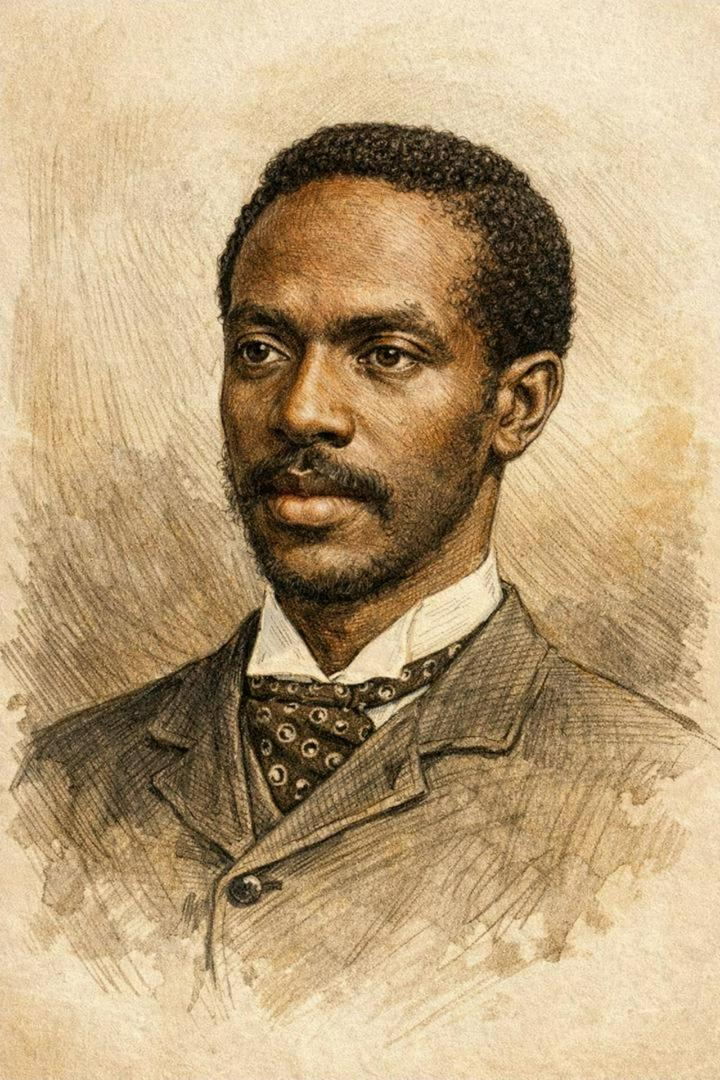
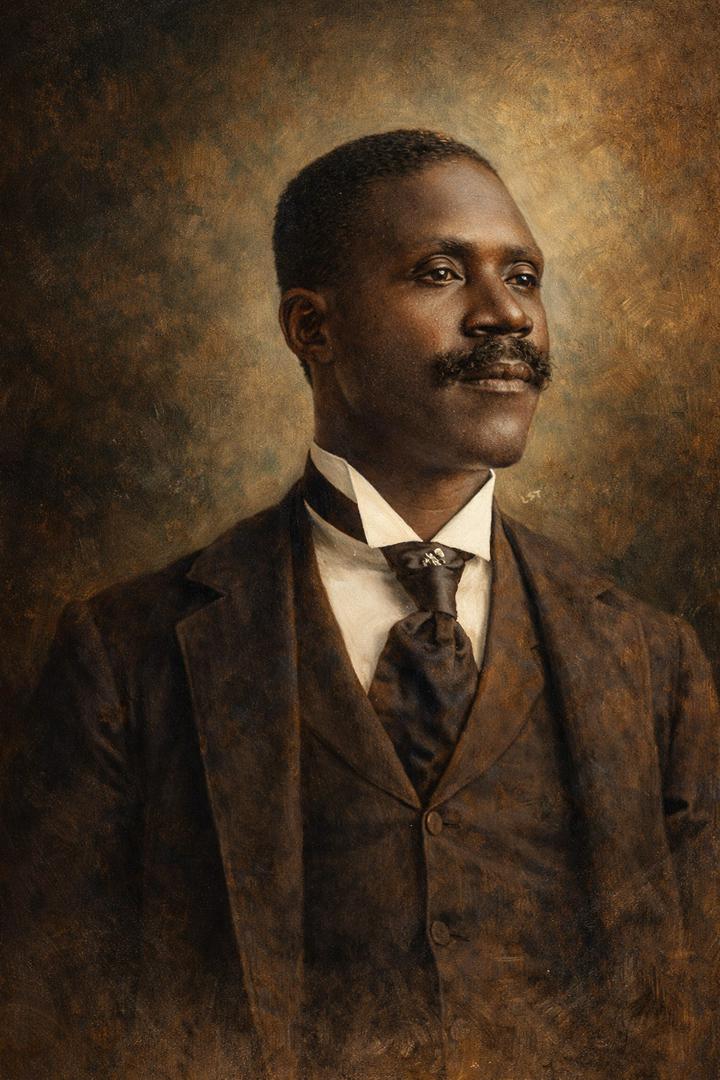
Born enslaved on September 22, 1853 near Rembert in Sumter County, South Carolina, George Washington Murray rose from bondage to the halls of Congress during one of the most hostile eras in American history. After the Civil War, Murray pursued education with purpose and urgency. He attended the University of South Carolina during the brief Reconstruction period when the school was open to Black students, a rare and fragile window of opportunity that would soon slam shut. Education was not just personal advancement for Murray, it was strategy, survival, and resistance. He became a teacher and agricultural expert, believing knowledge was power in a society designed to deny it to Black Americans. From there, he stepped into Republican politics, back when the party still carried the legacy of Reconstruction. In the 1890s, Murray served in the U.S. House of Representatives, representing South Carolina at a time when Black political power was being violently dismantled across the South. Murray was one of the last Black members of Congress in the nineteenth century and during parts of his service, the only one. He spoke openly and unapologetically about lynching, racial terror, and voter suppression while Jim Crow laws tightened their grip. He introduced federal proposals to protect Black voting rights and civil rights, fully aware that Congress was growing less willing to listen and more committed to exclusion. George Washington Murray did not win every fight, but he put injustice on the congressional record and refused silence. In an era demanding submission, he chose courage. That choice still echoes. #GeorgeWashingtonMurray #BlackHistory #ReconstructionEra #BlackCongressmen #AfricanAmericanHistory #CivilRightsHistory #JimCrow #PoliticalCourage #HistoryMatters

LataraSpeaksTruth

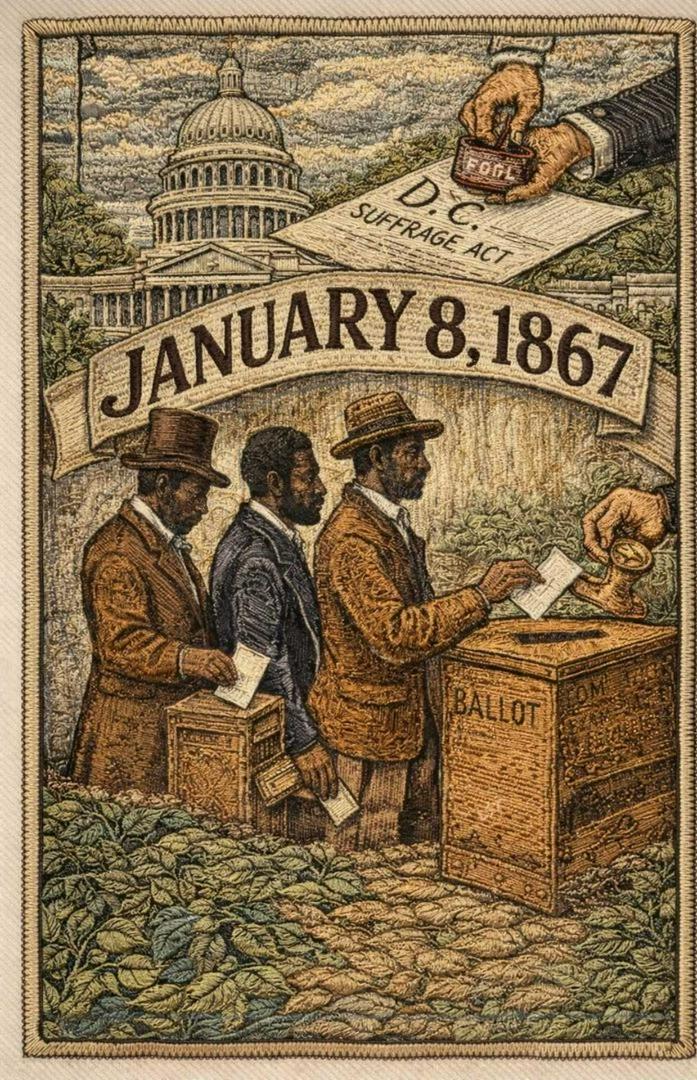
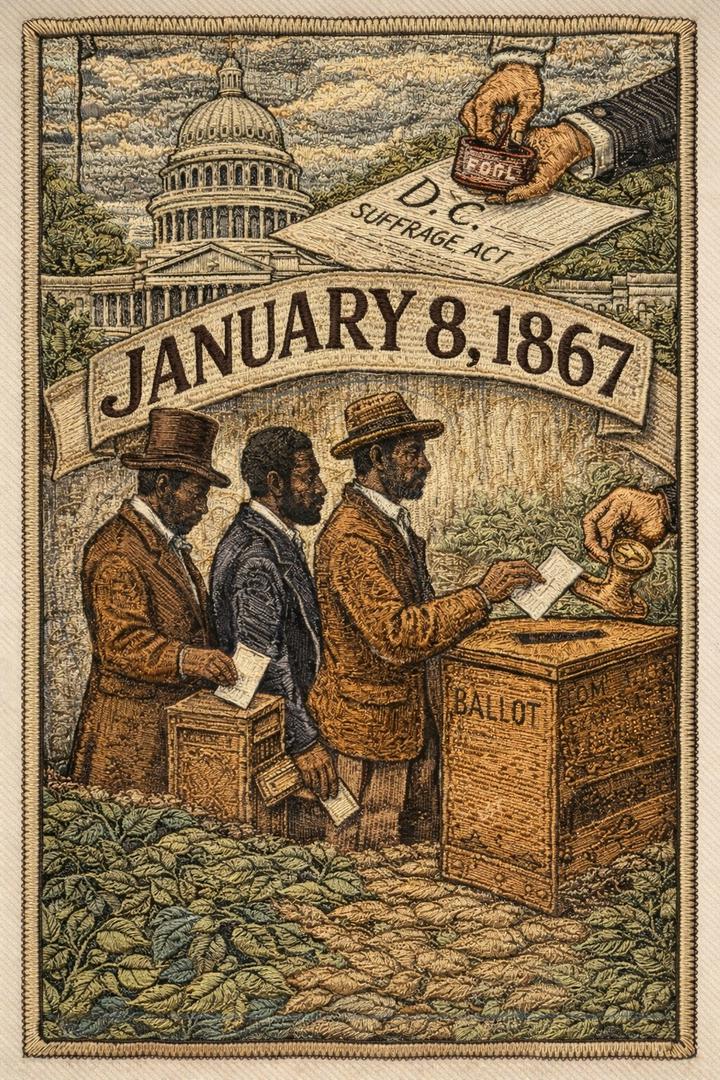
January 8, 1867 marks a turning point in American history that is rarely given the attention it deserves. On this day, Congress passed the District of Columbia Suffrage Act, granting Black men in Washington, D.C. the legal right to vote in municipal elections and public referenda. This happened three years before the 15th Amendment, at a time when most of the nation still viewed Black political participation as a danger rather than a right. This was not a promise for the future or a symbolic gesture. It was an immediate, enforceable change written directly into law. The decision did not come quietly or without resistance. President Andrew Johnson vetoed the act, arguing that extending voting rights to Black men was premature and would destabilize the country. Congress rejected that argument and overrode his veto the same day. That override mattered. It made clear that Reconstruction was not only about ending slavery on paper but about redistributing political power in real time. Washington, D.C. became a proving ground, showing that Black civic participation could exist and function despite fierce opposition. The importance of January 8, 1867 is often overlooked because it does not fit neatly into the simplified version of history many are taught. Voting rights did not suddenly appear with the 15th Amendment. They were demanded, tested, expanded, restricted, and attacked repeatedly. This moment captures Black men exercising political agency while the nation was still debating whether they deserved it. It reminds us that progress has never required national comfort or unanimous approval. Rights have always moved forward through pressure, confrontation, and refusal to wait. January 8 stands as proof that access was forced open long before the country was ready to admit it. #January8 #OnThisDay #BlackHistory #ReconstructionEra #VotingRights #DistrictOfColumbia #AmericanHistory #HiddenHistory #CivilRights

LataraSpeaksTruth

The Opelousas Massacre… The Story They Tried to Erase

On September 28, 1868, the town of Opelousas, Louisiana showed the world exactly how far white supremacy was willing to go to silence Black voices. One Black newspaper editor, Emile Deslondes, challenged the violence and intimidation Black voters were facing. Instead of answering with truth, local white Democrats answered with guns. What followed wasn’t a “riot.” It was a wave. White mobs spread across Opelousas and nearby parishes, dragging Black men out of their homes, hunting down schoolteachers, community leaders, and anyone connected to the Republican Party. It became open-season on Black life. Historians estimate that 200 to 300 Black people were murdered in just a few days… and that’s only what was documented. Many families were never counted. Records vanished. Testimonies disappeared. Louisiana buried this story the same way it buried the bodies… fast, deep, and quiet. The message was loud: “Vote if you want to… but you won’t live to see the next sunrise.” That was the blueprint for voter suppression in the Deep South. Not laws… violence. Not debates… massacres. Opelousas wasn’t a moment. It was a warning. And every time we tell the truth about it, we undo one more piece of the silence they tried to build. History isn’t just dates… it’s accountability. And this one deserves to be spoken out loud. #OpelousasMassacre #LouisianaHistory #HiddenHistory #ReconstructionEra #BlackHistoryMatters #ReclaimTheRecord #HistoryTheyDidntTeachUs #TruthOverSilence #LataraSpeaksTruth

The Opelousas Massacre… The Story They Tried to Erase
LataraSpeaksTruth

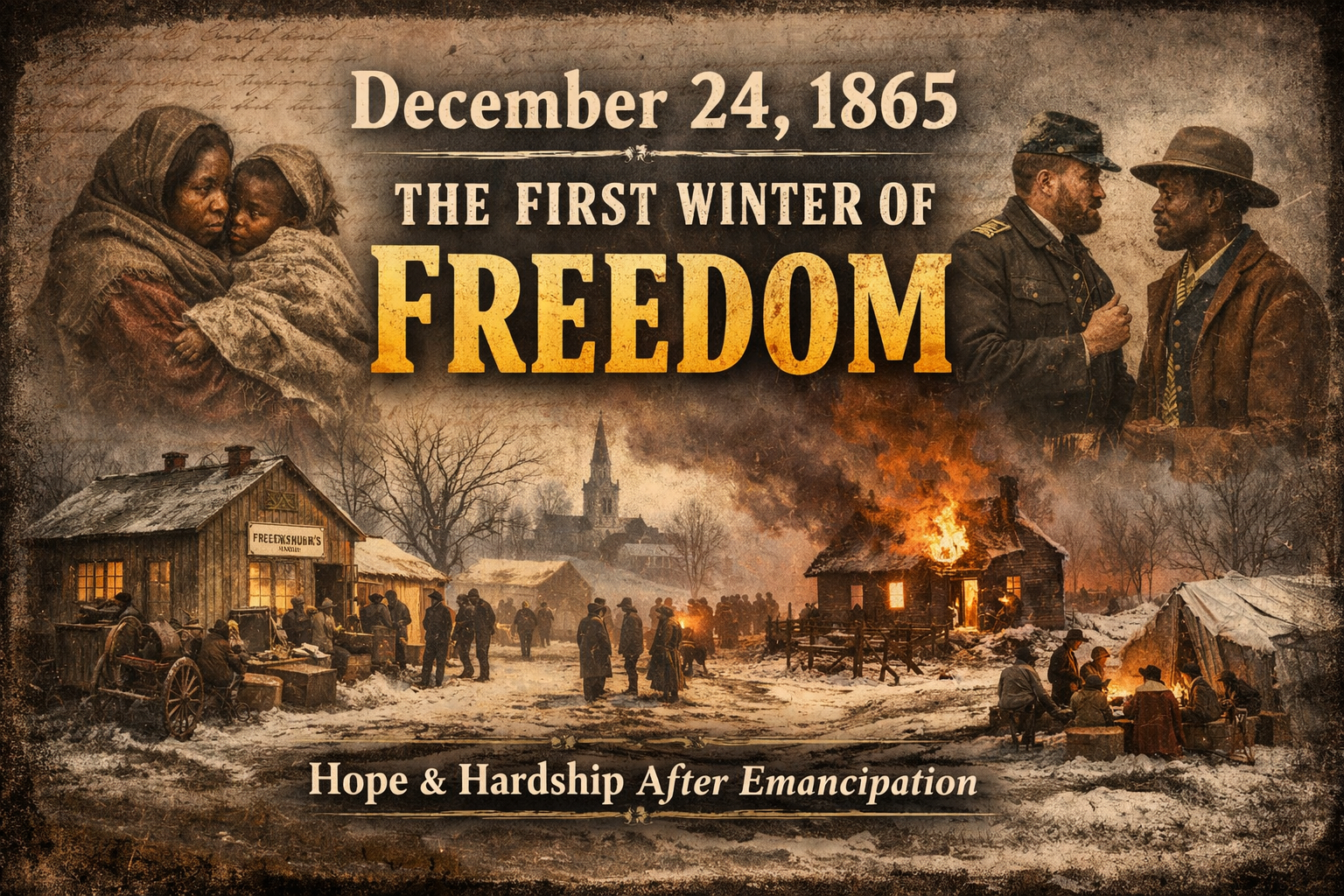
During the first winter of freedom, the Freedmen’s Bureau was actively operating across the South. Food and clothing were being distributed. Families separated by slavery were searching for one another. Schools were being established. Labor contracts were being negotiated. Protection was promised, though rarely guaranteed. Christmas Eve arrived at a moment where freedom existed in law but not in safety. For many formerly enslaved families, December 24 was not about celebration. It was about survival. Parents were learning how to live without ownership hanging over their heads. Children were navigating a world that still treated them as disposable. Communities were trying to understand what freedom meant when violence, intimidation, and economic control remained constant threats. Freedom was real, but fragile. White resistance to Black autonomy was already organizing across the South. Violence and exploitation followed emancipation almost immediately. While the Freedmen’s Bureau worked to stabilize daily life, its authority was limited and often undermined. Protection depended on location, timing, and luck. December 24, 1865 sits inside that uncertainty. It reminds us that emancipation did not come with peace or security. Freedom had to be learned, defended, and negotiated in real time. For many families that Christmas Eve, hope existed quietly, alongside hunger, fear, and unanswered questions. History does not always announce itself loudly. Sometimes it lives in moments of transition, where survival came before celebration and freedom was still being defined. #OnThisDay #December24 #ReconstructionEra #FreedmensBureau #AmericanHistory #HiddenHistory #WinterOfFreedom #HistoricalTruth #LataraSpeaksTruth

LataraSpeaksTruth

The Eutaw Riot – October 25, 1870

In Eutaw, Alabama, a public gathering of Black citizens met in the courthouse square during the Reconstruction era to discuss upcoming elections and community progress. Tensions in the area had been rising, and the event turned tragic when conflict broke out between white and Black residents. Historical accounts report that several people lost their lives and many were injured. In the days that followed, voter turnout among Black citizens fell sharply due to widespread fear and intimidation. This shift helped change the political outcome in Greene County, marking a major setback for Reconstruction efforts in Alabama. The Eutaw Riot became one of the most notable examples of how resistance to racial equality influenced Southern politics after the Civil War. It stands as a reminder of how fragile progress can be when unity gives way to fear. #BlackHistory #EutawRiot #ReconstructionEra #AmericanHistory #LataraSpeaksTruth

The Eutaw Riot – October 25, 1870
LataraSpeaksTruth

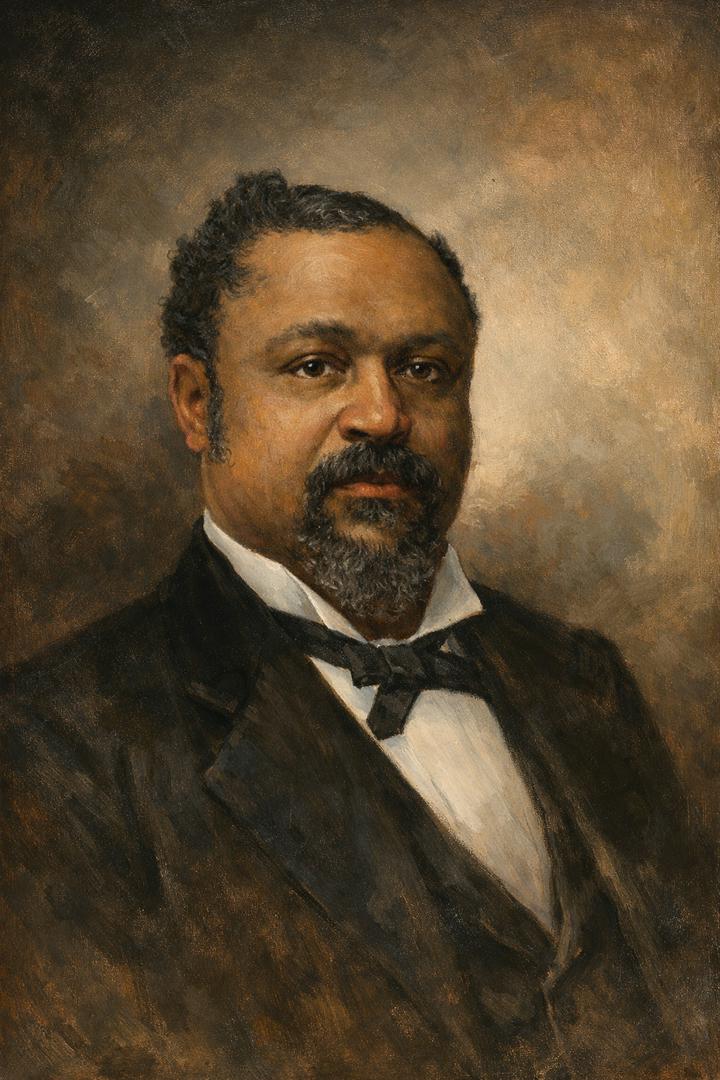
Born December 8, 1868, Henry Hugh Proctor entered the world just as Reconstruction was slipping away. The promises were fading, the tension was thick, and yet he grew into a leader who insisted that hope could be rebuilt if people were willing to do the work. Proctor did not simply become a minister. He became a community strategist, the kind of pastor who believed that faith without structure and support was just noise. When he stepped into leadership at Atlanta’s First Congregational Church, he treated the space like fertile ground. He preached, yes, but he also organized libraries, a gym, job assistance programs, cultural clubs, safe housing for young Black women, and music programs that strengthened spirits in a city determined to limit Black opportunity. He built a full-life resource center long before that phrase existed, proving that the church could be both sanctuary and engine. Proctor helped co-found the National Convention of Congregational Workers Among Colored People, creating a network for Black ministers who were pushing for progress in their own communities. After the violence of the 1906 Atlanta massacre, he worked on interracial committees that aimed to cool the hostility poisoning the South. He did this quietly, intentionally , and with the kind of steady courage that often goes unnoticed by history books. He was not chasing spotlight. He was shaping lives. His influence stretched far beyond his pulpit, carried in the people who found safety, dignity, and opportunity through the institutions he helped build. December 8, 1868 marks the birth of Henry Hugh Proctor, pioneering minister and committed community reformer. #HenryHughProctor #BlackHistory #OnThisDay #CommunityBuilder #AtlantaHistory #ReconstructionEra #FaithAndJustice #UnsungHeroes #AmericanHistory

LataraSpeaksTruth

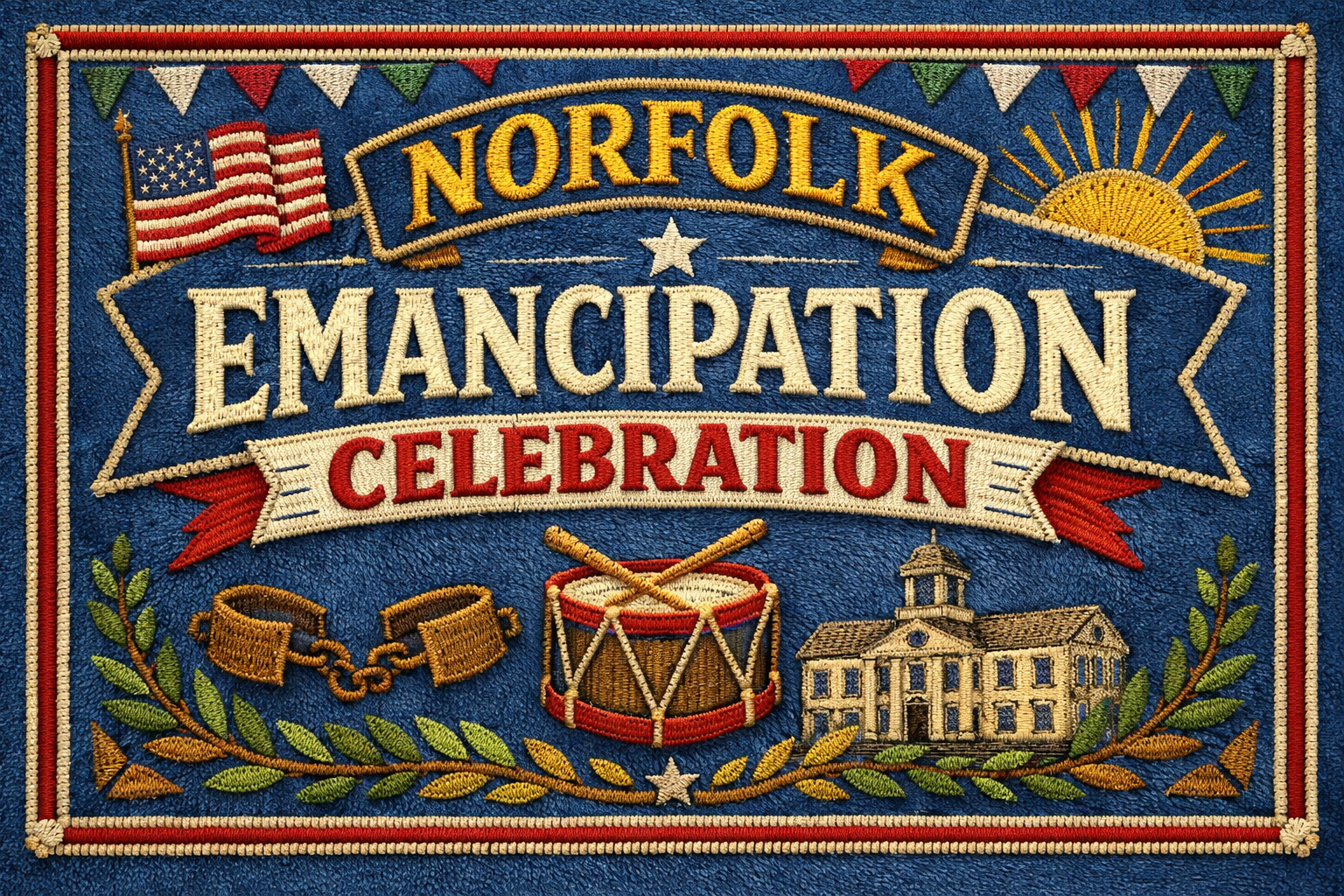
On January 4, 1863, just days after the Emancipation Proclamation took effect, Black residents of Norfolk, Virginia held one of the earliest documented public celebrations of emancipation in the United States. Norfolk had been under Union control since 1862, making it one of the few Southern cities where such a gathering was possible at the time. A contemporary newspaper dispatch dated January 4, 1863, later reproduced by Encyclopedia Virginia, described a procession of at least 4,000 Black men, women, and children moving through the city. The report noted organized marching, music, banners, and speeches, reflecting both celebration and political awareness. This was not a spontaneous gathering. It was a coordinated public declaration of freedom by people who understood the historical weight of the moment. The Emancipation Proclamation did not immediately free all enslaved people, nor did it end slavery everywhere. Its reach depended heavily on Union military presence. Norfolk’s status as an occupied city created conditions where freedom could be openly acknowledged and collectively celebrated, even while much of the Confederacy remained untouched by the proclamation’s enforcement. This January 4 procession stands as an early example of what emancipation looked like in practice rather than on paper. It shows Black communities asserting visibility, dignity, and collective memory at the very start of freedom’s uncertain road. Long before emancipation celebrations became annual traditions, Norfolk’s Black residents marked the moment themselves, in public, and on record. #January4 #BlackHistory #Emancipation #NorfolkVirginia #ReconstructionEra #CivilWarHistory #AfricanAmericanHistory #USHistory #FreedomStories

LataraSpeaksTruth

George W. Ashburn

George W. Ashburn was a white Radical Republican who openly supported political rights for newly freed Black citizens during Reconstruction. That alone made him a target in Columbus, Georgia, where resistance to racial equality was strong and vocal. On March 31, 1868, Ashburn was assassinated inside a boarding house. Witnesses reported that a masked group forced their way in and shot him, a killing widely attributed to early Ku Klux Klan activity. His murder came just weeks after he backed Georgia’s new constitution, which expanded civil rights for Black residents. Because Georgia was still under military rule, his death did not stay a local matter. Federal authorities moved quickly, and on November 23, 1868, the case became national news when a military tribunal charged dozens of white men, some from prominent families, with participating in the assassination. The investigation exposed the organized backlash against Black political progress. It also showed how far opponents of Reconstruction were willing to go to silence anyone advocating for racial equality. But despite the national attention, the case fell apart. Political pressure, intimidation of witnesses, and Georgia’s push to end military oversight led to the charges being dropped. No one was ever convicted. Ashburn’s murder became a symbol of the violent resistance that shaped the end of Reconstruction, a reminder of the dangers faced not only by Black citizens, but by anyone who stood beside them during one of the most volatile periods in American history. #HistoryMatters #AmericanHistory #ReconstructionEra #GeorgiaHistory #CivilWarLegacy #PostWarSouth #HistoricalRecord #USHistoryStory #OnThisDayHistory

George W. Ashburn
You've reached the end!