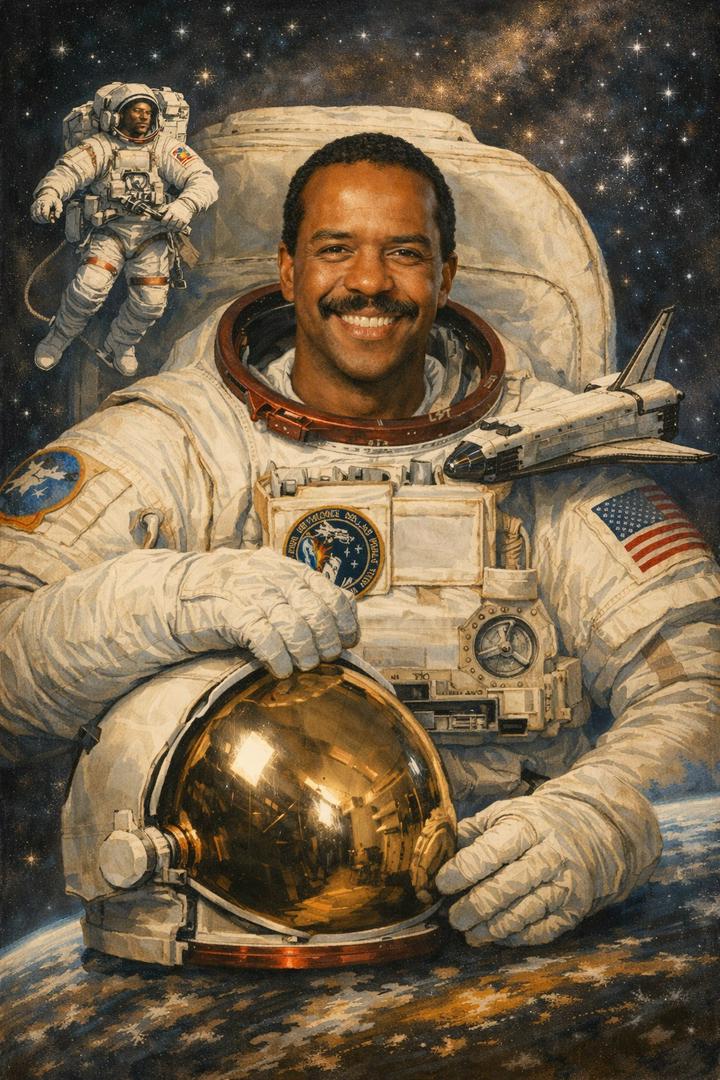
On February 9, 1995, Bernard Harris became the first Black astronaut to walk in space during NASA’s STS-63 mission aboard Space Shuttle Discovery. This achievement wasn’t symbolic theater or a feel-good moment engineered for headlines. It was the result of decades of education, discipline, and persistence in a field that historically excluded Black Americans from meaningful participation.
Harris, a trained physician and engineer, conducted a spacewalk that required precision, stamina, and technical mastery. Spacewalking is one of the most dangerous tasks astronauts perform, involving extreme temperatures, zero gravity, and the constant risk of fatal error. That context matters, because this wasn’t about “firsts” for bragging rights…it was about trust. NASA trusted Harris with a mission where failure was not an option.
His walk came at a time when conversations about diversity in STEM were minimal and often dismissed. Harris didn’t arrive because doors were flung open…he arrived because he forced entry through excellence. Even now, Black representation in aerospace and astronaut programs remains limited, making his 1995 milestone less of a historical footnote and more of a benchmark still waiting to be matched.
This moment wasn’t just about leaving Earth. It was about proving that Black intellect, preparation, and capability belong in humanity’s most advanced frontiers…without qualification.
#BlackHistory #February9 #BernardHarris #STEMHistory #SpaceExploration #HiddenFigures #ScienceHistory #NASA