Tag Page USHIstory

#USHIstory
1776 Patriot

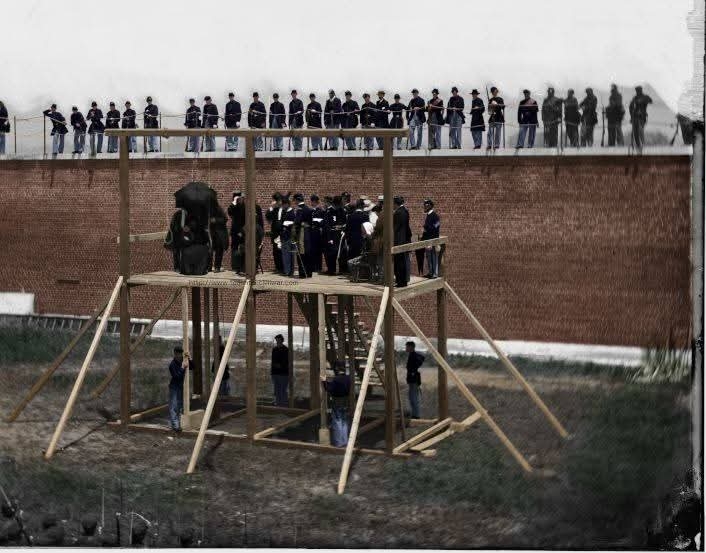
Chaos and Infection: The Assassination of President Garfield On July 2, 1881, shortly after 9:30 a.m., President James Garfield, the 20th president of the United States, was shot at Washington’s Baltimore and Potomac Railroad Station by Charles Julius Guiteau, a mentally unstable lawyer seeking political reward. Garfield, traveling with Secretary of State James Blaine, had no Secret Service protection. Like Lincoln in 1865, Garfield was vulnerable. Guiteau, who studied the station for days, carried a .442 caliber British Bulldog revolver and fired twice. The first bullet shattered Garfield’s right humerus. The second lodged in his back near the pancreas and kidneys, passing within millimeters of the aorta. Chaos erupted as travelers screamed, trunks toppled, and dozens froze. Blaine knelt beside Garfield. Guiteau shouted, “I did it! I just shot the president. I had to save the Republican Party!” Doctors led by D. Willard Bliss repeatedly probed Garfield’s wounds with unsterilized fingers and instruments during the first weeks. Bliss said, “I can find it with my finger if it is anywhere to be found,” spreading infection that caused abscesses and sepsis. Alexander Graham Bell tried to locate the bullet with a metal detector, but bed springs distorted results. Garfield endured 80 days of fever, abscesses, and severe weight loss, reportedly saying, “I never expected to live to see the end of this.” Newspapers reported daily, and tens of thousands followed updates nationwide. Garfield died September 19, 1881, 79 days after being shot. Vice President Chester Arthur assumed office. Guiteau was tried, convicted, and hanged June 30, 1882. The assassination exposed presidential security weaknesses and prompted the Pendleton Act of 1883, establishing merit-based federal employment. Repeated probing of Garfield’s wounds caused infection, contributing to the 30–40% mortality for major bullet injuries, turning a survivable wound fatal. #History #USHistory #America #USA

1776 Patriot

The Two Largest House Losses in Midterm History Midterm elections are held every 4 years in the middle of a president’s term an determins: all 435 House of seats, 1/3rd of the Senate, and gives voters a chance to reshape Congress. Presidents typically lose, 28 House seats on average, but some elections produced historic swings that reshaped American politics and policy. The 1874 midterms were one of the most severe defeats of the 19th century. President Ulysses S. Grant’s Republicans lost 93 of 195 House seats, about 36% of their seats. The Panic of 1873, a severe economic depression, combined with corruption scandals in Grant’s administration, fueled public anger. Voters across the South and industrial North abandoned the Republican Party, giving Democrats control of the House for the first time since the Civil War. Turnout was strong, economic hardship dissatisfaction motivated voters. Two decades later, the 1894 midterms produced the largest House seat loss in U.S. history. Under President Grover Cleveland, Democrats lost 127 of 225 House seats, about 56% of their seats. All 225 seats were contested, and the Panic of 1893 triggered one of the worst depressions of the century, leaving farmers, laborers, and urban workers across the Midwest and Northeast frustrated with Cleveland’s response. Republicans swept the House, marking a historic realignment. Turnout reached roughly 70% in key districts, and economic crises mobilized voters to reshape priorities almost overnight. In these two elections economic conditions, perceptions of presidential leadership, and voter engagement produced sweeping shifts in the House. In both 1874 and 1894, the opposition capitalized on dissatisfaction economic uncertainty and dramatically altered power, forcing the president’s party to reassess strategy. The elections under Grant and Cleveland remain the most consequential House losses in American history. #Politics #ElectionInsights #History #USA #USHistory #America #News

1776 Patriot

25 Hours That Shook America: The Siege of Fort McHenry The Siege of Fort McHenry, fought September 13 to 14, 1814, during the War of 1812, was one of the most decisive fort engagements in American history. The fort, located in Baltimore Harbor, Maryland, defended the city against a British force that had burned Washington, D.C., a month earlier. Fort McHenry was a five pointed star shaped masonry and earth fort, housing about 1,000 American defenders under Major George Armistead. Its artillery included over 150 guns, ranging from 42 pounder long guns to 6 pounders, positioned to cover the harbor channels. The British expeditionary force, led by Vice Admiral Sir Alexander Cochrane and Major General Robert Ross, included 4,000 troops and a naval squadron of 30 warships carrying over 1,000 cannons. The siege began with a continuous bombardment that lasted 25 hours, the longest in United States history. The British fired around 1,500 shells and rockets at the fort. Thick earthworks absorbed much of the damage, leaving minor breaches. American gunners returned fire continuously, targeting ships at up to 1,500 yards, showing accuracy and discipline under pressure. American casualties were low considering the scale, with about four dead and 24 wounded. British crews suffered higher losses from counterfire and rough seas. The fort’s defenders prevented a landing of British troops, forcing the attackers to retreat. At dawn, the large American flag still flew over the fort, inspiring Francis Scott Key to write the poem that became the U.S. national anthem. The siege demonstrated the value of well placed fortifications and disciplined artillery. British commanders underestimated the range and resilience of American guns. Accurate return fire disrupted their coordination. Fort McHenry’s defense became a symbol of national resilience, showing how smaller forces could repel superior numbers through fort design, artillery placement, and morale. #USHistory #EarlyAmerica #USA

1776 Patriot

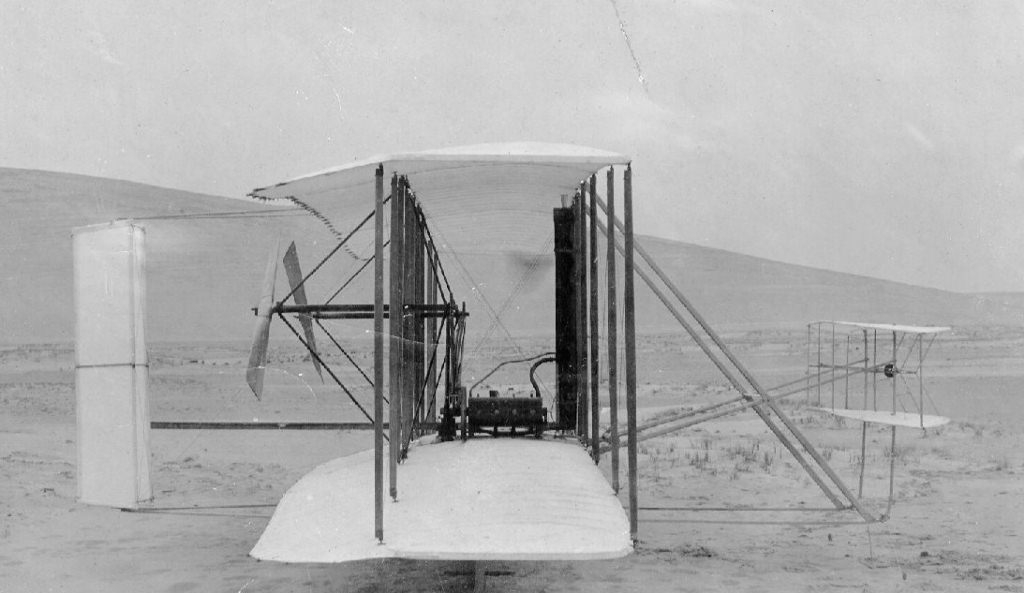
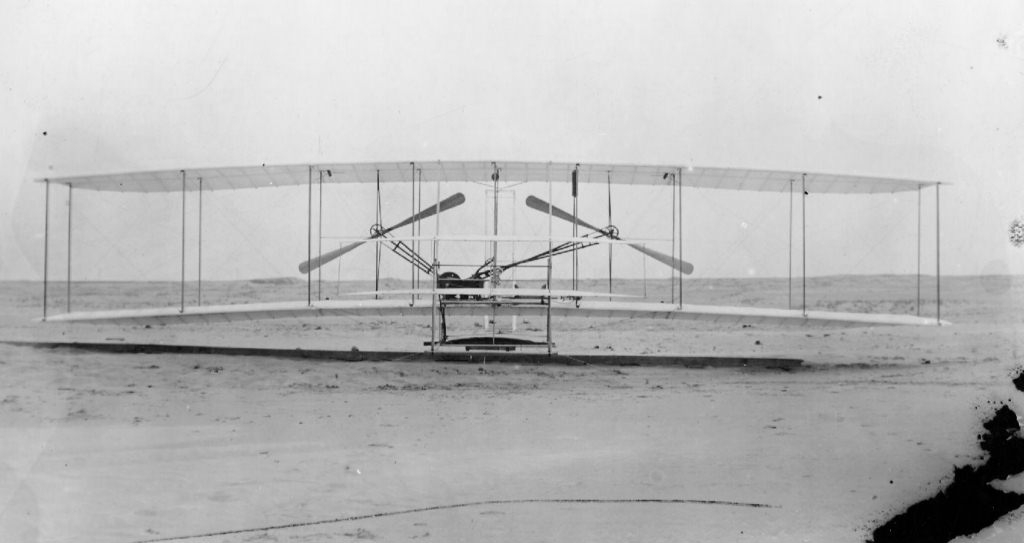
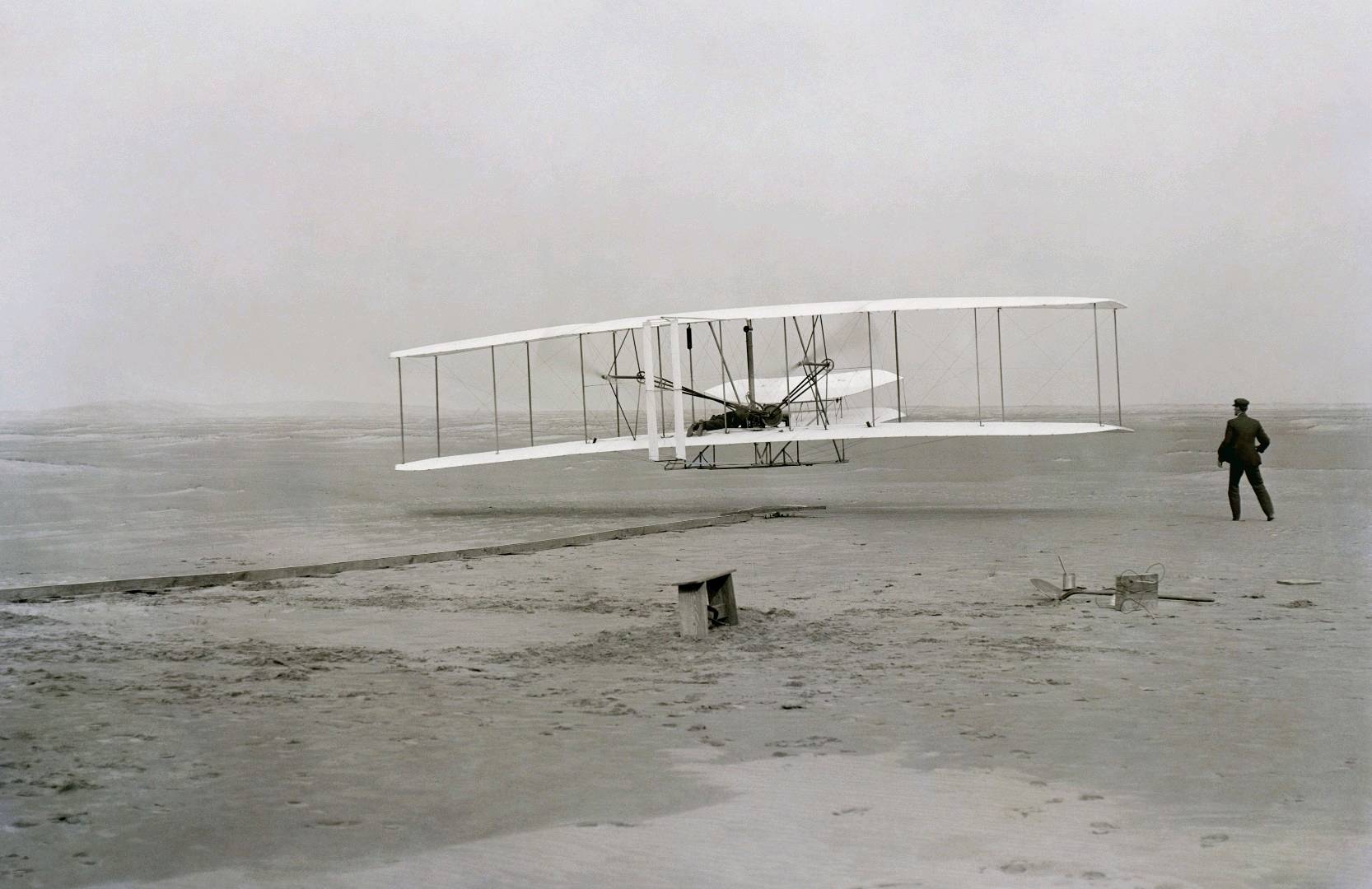
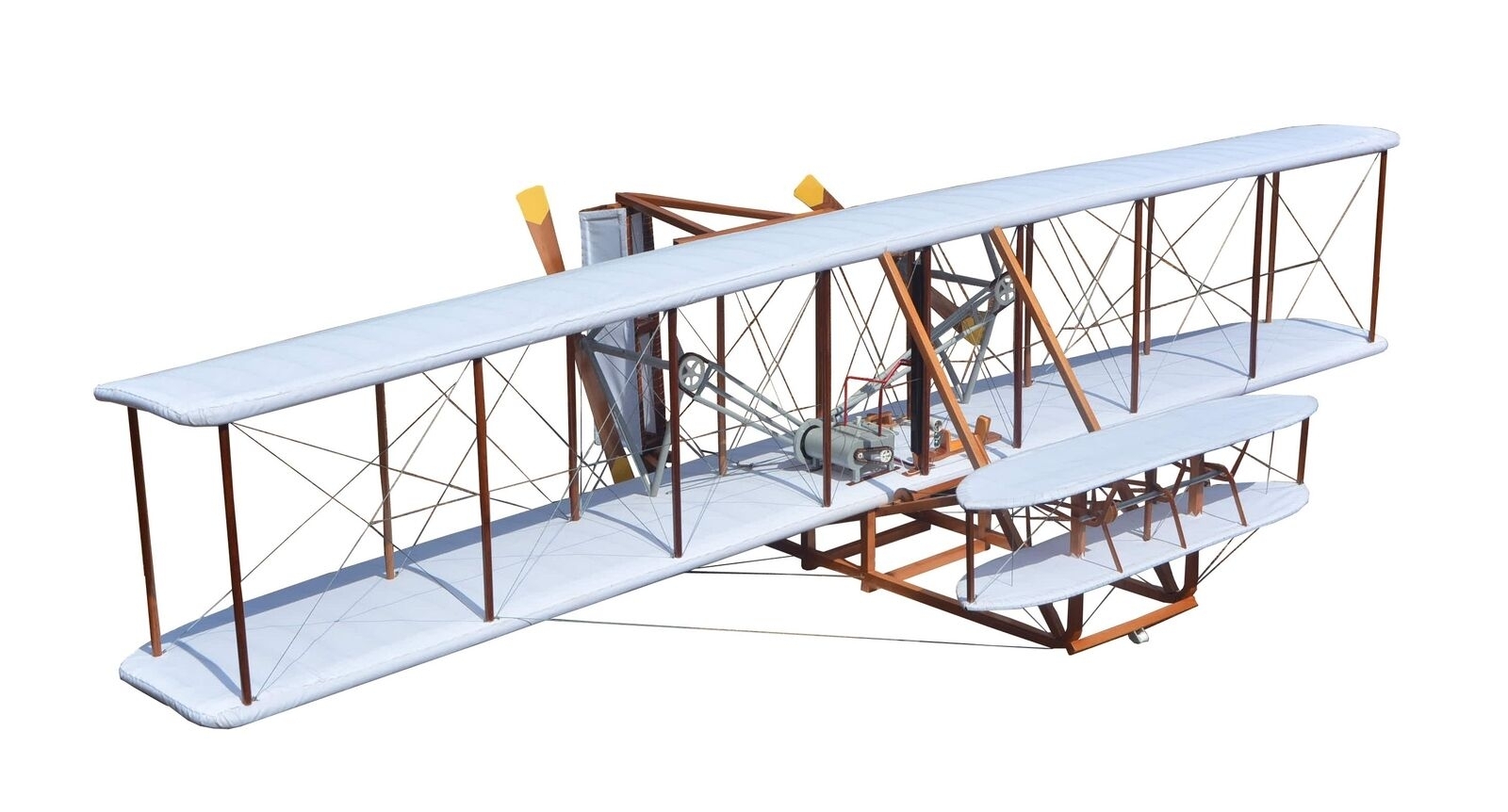
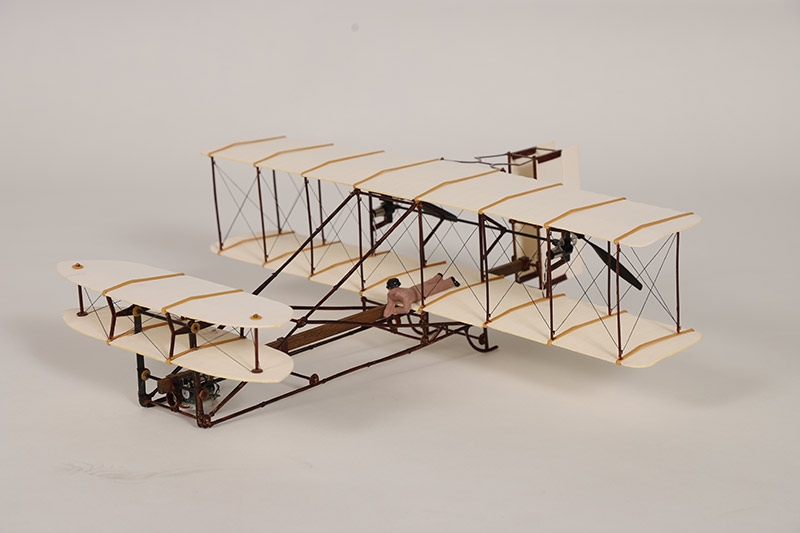
First Flight: Inside the Wright Brothers Historic Design

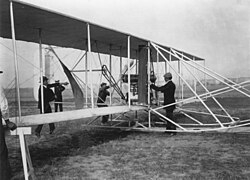
The Wright brothers’ first powered airplane, the Wright Flyer, achieved controlled flight on December 17, 1903, at Kill Devil Hills near Kitty Hawk, North Carolina. Orville and Wilbur were inspired by earlier aviation pioneers and by observing birds. They focused on control and stability, not just engine power, which had hindered prior inventors. Their breakthrough was a three-axis control system: a forward elevator for pitch, a rear rudder for yaw, and wing-warping for roll. Wing-warping twisted the wingtips via cables attached to the pilot’s hip cradle, rolling the airplane side to side. The elevator tilted the nose up or down, controlling pitch. The rudder turned the plane left or right, controlling yaw for directional changes without losing balance. Together, these controls allowed the pilot to maneuver safely in all three dimensions. Construction took about three years, from 1900 glider experiments to the powered prototype. The airframe used spruce and ash, with muslin stretched over the wings. Components were hand-shaped with saws, planes, and chisels. The 12-horsepower gasoline engine powered two chain-driven wooden propellers on a reinforced frame. To refine designs, the Wrights built a wind tunnel in Dayton: a small wooden box with a fan producing airflow, a track for miniature wings, and a balance to measure lift and drag. Many airfoil shapes were tested before full-scale construction. A wooden launch rail helped smooth takeoffs. On December 17, 1903, the Flyer’s first flight covered 120 feet in 12 seconds; later flights reached 852 feet. Afterward, the Wrights developed the 1904 Flyer II and 1905 Flyer III, with stronger frames, more powerful engines, refined control surfaces, and longer-range capabilities. The Flyer proved that mastery of three-axis control: roll, pitch, and yaw and careful engineering, including wind-tunnel testing, was essential to powered flight. laying the foundation for modern aviation. #USHistory #History #America #Aviation

First Flight: Inside the Wright Brothers Historic DesignFirst Flight: Inside the Wright Brothers Historic DesignFirst Flight: Inside the Wright Brothers Historic DesignFirst Flight: Inside the Wright Brothers Historic DesignFirst Flight: Inside the Wright Brothers Historic DesignFirst Flight: Inside the Wright Brothers Historic Design
1776 Patriot

America’s Most Elusive Bank Robber: Carl Gugasian Carl Gugasian, known as the Friday Night Bank Robber, is considered the most prolific solo bank robber in American history. Over a criminal career spanning roughly three decades from the early 1970s until his arrest in 2002, Gugasian carried out more than fifty confirmed bank robberies across multiple states on the East Coast. His operations were highly methodical and precise. He targeted small town banks often located near wooded areas or highway on ramps to make escape easier and reduce the chance of police interception. He typically struck on Friday nights shortly before closing time to minimize customers while maximizing cash on hand. Gugasian carefully disguised himself with masks and loose clothing to conceal his identity and appearance. He conducted detailed surveillance of each target, sometimes visiting a bank multiple times over weeks to note employee routines, security camera placements, and the timing of cash deliveries. His robberies were executed quickly, often lasting less than two minutes. He would vault over counters, grab cash from the tills, and disappear into nearby woods or back roads. Many times he used a dirt bike to escape into forested terrain and then transitioned to a waiting vehicle. He kept detailed notes, maps, and surveillance of potential targets in his home along with a large cache of weapons and disguises. Despite decades of robberies, he evaded capture until 2002, when law enforcement tracked him through his patterns, surveillance notes, and escape routes. He admitted to more than 50 robberies totaling around $2.3 million. He was sentenced to over 100 years in federal prison, reduced to 17 years due to cooperation, and served approximately 15 years before being released in 2017 at age 69. Gugasian stands out not for a single spectacular heist but for the number and consistency of his crimes carried out with precision over decades. #TrueCrime #USHistory #America #USA #History

LataraSpeaksTruth

On January 23, 1964, a quiet legislative vote in South Dakota echoed across the entire United States. By becoming the 38th state to ratify the 24th Amendment, South Dakota provided the final “yes” needed to cement a fundamental change in American democracy…the official end of the poll tax in federal elections. For decades, the poll tax had operated as a so-called legal barrier to the ballot box. Framed as a simple administrative fee, it was anything but neutral in practice. In many Southern states, voters were required to pay not only the current tax but accumulated fees for every year they had not voted. This system disproportionately blocked Black Americans and poor white citizens from participating in elections. Combined with literacy tests, intimidation, and economic retaliation, the poll tax ensured political power remained tightly controlled. The road to the 24th Amendment was long and deliberate. Proposed by Congress in 1962, it required approval from three-fourths of the states. As 1964 began, the nation watched the count inch closer to the threshold. When South Dakota’s legislature ratified the amendment on January 23, it crossed the constitutional finish line, making the amendment law. The amendment marked a major victory for voting access by declaring that the right to vote in federal elections could not be conditioned on payment. Still, the work was unfinished. Some states continued to impose poll taxes in state and local elections until the Supreme Court struck them down entirely in 1966. Today, the anniversary of South Dakota’s ratification stands as a reminder that voting rights have never been freely handed over. They have been argued for, organized for, and fought for…often quietly, often against resistance, but always with lasting impact. #OnThisDay #USHIstory #VotingRights #Democracy #24thAmendment #CivilRightsHistory #SouthDakota #HistoryMatters

LataraSpeaksTruth

On January 4, 1863, just days after the Emancipation Proclamation took effect, Black residents of Norfolk, Virginia held one of the earliest documented public celebrations of emancipation in the United States. Norfolk had been under Union control since 1862, making it one of the few Southern cities where such a gathering was possible at the time. A contemporary newspaper dispatch dated January 4, 1863, later reproduced by Encyclopedia Virginia, described a procession of at least 4,000 Black men, women, and children moving through the city. The report noted organized marching, music, banners, and speeches, reflecting both celebration and political awareness. This was not a spontaneous gathering. It was a coordinated public declaration of freedom by people who understood the historical weight of the moment. The Emancipation Proclamation did not immediately free all enslaved people, nor did it end slavery everywhere. Its reach depended heavily on Union military presence. Norfolk’s status as an occupied city created conditions where freedom could be openly acknowledged and collectively celebrated, even while much of the Confederacy remained untouched by the proclamation’s enforcement. This January 4 procession stands as an early example of what emancipation looked like in practice rather than on paper. It shows Black communities asserting visibility, dignity, and collective memory at the very start of freedom’s uncertain road. Long before emancipation celebrations became annual traditions, Norfolk’s Black residents marked the moment themselves, in public, and on record. #January4 #BlackHistory #Emancipation #NorfolkVirginia #ReconstructionEra #CivilWarHistory #AfricanAmericanHistory #USHistory #FreedomStories
Curiosity Corner

Poisoned or Natural Death? The Stanley Meyer Case and the Car That Could Run on Water Stanley Meyer was an American inventor who claimed to have developed a car that could run on water using a hydrogen based system. He said his technology split water into hydrogen and oxygen on demand to fuel a car without gasoline. Meyer often stated, “I want to give the world a clean energy source that cannot be controlled.” His invention drew global attention, skepticism, and legal scrutiny before his sudden death in 1998. Meyer collapsed while eating at a restaurant in Grove City, Ohio, during a meeting with European investors who were interested in funding and developing his water fuel technology. Witnesses claimed he said, “They poisoned me,” sparking speculation that energy interests or other powerful groups wanted to suppress his invention. However, no verified evidence of poisoning exists. The official cause of death was a cerebral aneurysm, a sudden rupture of a blood vessel in the brain. Medical experts note aneurysms can happen without warning and may resemble poisoning in their suddenness. No toxicology reports showed poison, and no homicide investigation followed. Legally and medically, his death was ruled natural. Some critics question whether the government could have influenced legal or medical findings to prevent public knowledge of Meyer’s technology, citing the Invention Secrecy Act, which allows suppression of sensitive inventions. While there is no proof, the law demonstrates that inventions with potential national impact can be legally restricted, keeping them hidden for decades. Meyer’s story sits at the crossroads of bold claims, secrecy, and sudden death. Was this simply a tragic medical event, or could powerful forces have deliberately kept a revolutionary invention hidden from the world? #Science #Physics #USA #History #USHistory #America #Physics

1776 Patriot

The Monumental Nugget: America’s Largest Gold Nugget In the high reaches of the Sierra Nevada, where rivers carve steep valleys and the land still carries the memory of the Gold Rush, one discovery outshone all others. This was the Monumental Nugget, nicknamed “The Sierra Buttes Treasure,” unearthed in 1869 near Sierra City, California. The nugget weighed an astounding 103 pounds in raw form and contained about 82 pounds of pure gold. To visualize it, the nugget was heavier than an average eight-year-old child and larger than most bowling balls. The crew that discovered it had been working a claim with only modest returns. While clearing old gravel, one miner struck something unusually heavy. As they uncovered it, they realized the nugget was so large they needed several men to lift it. News spread rapidly, and miners from surrounding camps trekked miles to see the historic find. Local towns celebrated for days, and merchants saw a sudden rush of curious visitors eager to glimpse the treasure. Large gold nuggets are exceedingly rare because gold generally forms in thin veins. Natural erosion, pressure, and chemical changes break larger masses into smaller flakes over time. Experts estimate that fewer than one in many millions of nuggets exceeds twenty pounds. By comparison, the Dogtown Nugget at 54 pounds and the Carson Nugget at 45 pounds were enormous but still far smaller than the Monumental Nugget. Most modern prospectors recover only small pieces weighing ounces, making finds like this almost legendary. The Monumental Nugget was eventually melted down for its gold value, a fate common to historic nuggets. Even without the original piece, its story endures as a testament to the extraordinary surprises that once lay hidden in the American frontier and the enduring allure of striking it rich. #GoldRush #FoundTreasure #America #USA #History #USHistory #Science

Abraham Lincoln

How I Became a Lawyer Without a Teacher or School I was born in 1809 in a log cabin in Kentucky and had less than a year of formal schooling. Books were rare, so I walked miles to borrow them and read by firelight whenever I could. I told myself, “I will prepare and some day my chance will come,” because learning was the only way forward. I read everything I could find, learning arithmetic, grammar, and history before I ever thought of law, and I tried to understand what I read as deeply as possible. When my mother died, my stepmother, Sarah Bush Lincoln, joined our family. She encouraged my reading, lent me books, and showed patience when others expected me to work the fields. She taught me that education was more than books; it was forming the mind and character. Her guidance gave me the confidence to pursue knowledge on my own and made me value persistence and curiosity. I taught myself law by studying Blackstone’s Commentaries and other legal manuals. I spent hours in courthouses in Springfield and New Salem, watching lawyers, listening to arguments, and learning from what I observed. I practiced drafting contracts and resolving disputes on my own. “I studied with an unassisted mind, with no teacher, in my leisure time,” I said later. By 1836, my study and observation prepared me to pass the bar and begin practicing law. Others saw something in me. Walt Whitman described me as “Gentle, plain, just and resolute,” while William Gladstone called me a man of “moral elevation most rare in a statesman.” Those words reflect how persistence, curiosity, and guidance from someone who believes in you can shape a life. “The things I learned were not in the schools. I had to find them myself and keep at it,” I said. From log cabin to law office, self-education, careful observation, and determination made my life possible. #History #USHistory #America #USA #Lincoln #Motivation #KnowledgeIsPower