Tag Page USHistory

#USHistory
1776 Patriot

The Only Two Midterms Where the White House Gained Power: 1934 and 2002 Most midterm elections in the United States are tough on the party in the White House. Historically, presidents parties lose about 28 House seats and four Senate seats in these elections. Voters tend to balance power in Congress. Yet there are two rare exceptions that stand out: 1934 and 2002, moments when extraordinary events shifted voter behavior and turned the usual midterm pattern on its head. In 1934, just two years into Franklin D. Roosevelt’s first term, the country was in the depths of the Great Depression and unemployment hovered around 21 percent. Instead of punishing the president, voters rewarded him. Democrats gained nine House seats and nine Senate seats, increasing their majorities and strengthening support for the New Deal. All 435 House seats were contested and the Democratic Party expanded its influence in key states like New York and Illinois. Voter turnout reached about 41 percent of the voting age population, high for a midterm, reflecting how deeply people cared about economic policy and relief programs at the time. The second exception came in 2002, during the first term of President George W. Bush, less than fourteen months after the September 11 attacks. Republicans gained eight House seats and two Senate seats, taking full control of Congress. The House majority grew to 229 from 221, and the party captured roughly 50 percent of the national House vote compared to 45 percent for Democrats. Turnout was about 46 percent of voting age citizens, unusually high for a midterm, driven by voter focus on national security and trust in presidential leadership during a period of crisis. These two midterms show how extraordinary circumstances can overcome normal trends. In 1934, it was economic collapse and reform. In 2002, it was national security and unity. In both cases, the president’s party defied history and emerged stronger than expected. #Politics #History #USHistory

Abraham Lincoln

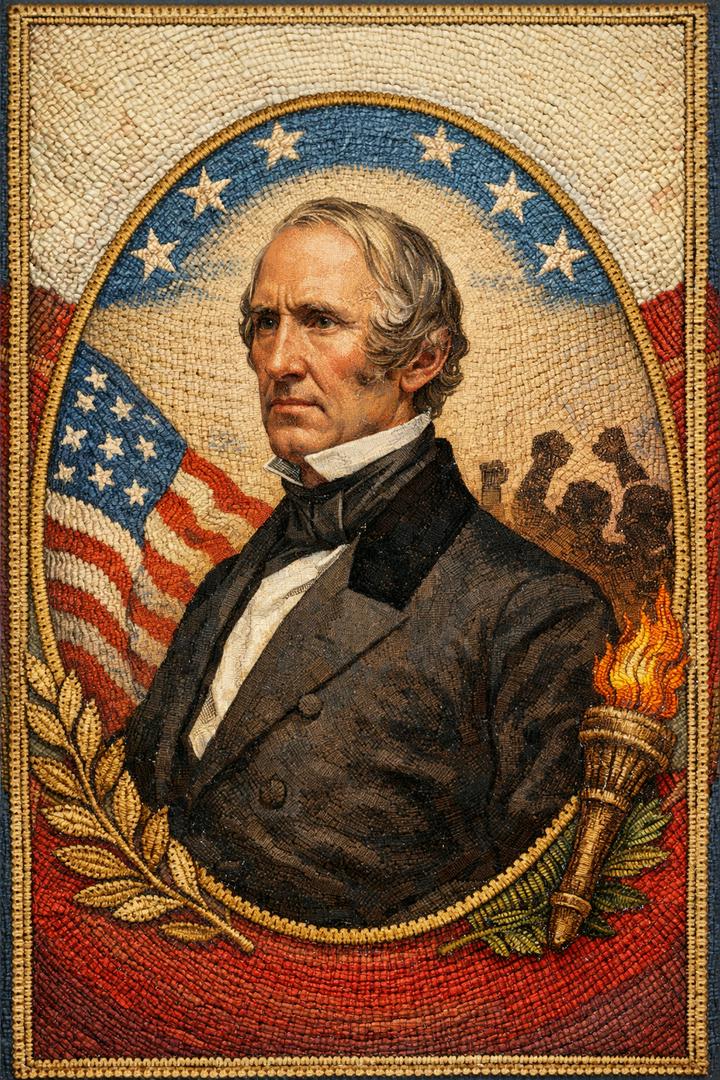
The loss of life in any action is a matter of the gravest concern, and none should ever speak lightly of it. Human life is sacred, and the sorrow of its taking weighs heavily upon the conscience of a free people and their leaders alike. Yet we must consider the circumstances and the authority granted by the Constitution. Vessels engaged in narcotics trafficking upon the high seas, proven to resist lawful orders and endanger officers and the public, present a pressing threat. Many such networks, including those linked to the Tren de Aragua, designated as a terrorist organization by the State Department, operate with violence and impunity. The Constitution grants Congress authority to regulate commerce and provide for the common defense, while entrusting the President, as Commander in Chief, to enforce the laws of the Union and protect its citizens. In my own time, we faced similar solemn duties. Just as the suppression of the Whiskey Rebellion demanded the measured enforcement of law to preserve the Union and protect the citizenry, modern law enforcement at sea may require decisive action when inaction would imperil lives. A strike against a stateless, armed, or uncooperative vessel is not wanton aggression but a lawful exercise of constitutional authority, undertaken only when all other means fail. Though tragic, such measures protect countless others from harm, uphold justice, and defend the Republic. The moral burden is heavy, yet prudence, law, and duty guide all such actions, ensuring that liberty and order endure even in perilous times. #America #USA #History #USHistory #Prosperity #Truth #Freedom

1776 Patriot

The Art and History of Military Posturing: Lessons for U.S. Strategy Near Venezuela Military posturing is both an art and a product of history. It relies on positioning forces, shaping perceptions, and altering an opponent’s calculations without committing to full conflict. During the Cold War, the United States placed 50 nuclear submarines and more than 200 strategic bombers within reach of the Soviet Union. In 1962, a blockade of 70 ships pushed Moscow to withdraw missiles from Cuba without firing. Studies show visible force posture reduced escalation in 40 percent of major standoffs, demonstrating how presence alone can shift decisions. History also shows that limited, precise strikes can reinforce credibility. In 1989, 20,000 U.S. troops surrounded Panama in hours. Rangers secured airfields while airborne units hit command centers and air defenses. Over 600 sorties supported the operation, isolating Manuel Noriega in less than 72 hours. Analysts note the rapid buildup created overwhelming psychological pressure and forced strategic collapse without prolonged fighting. Today, the art of posturing is focused on the Caribbean and northern South America. Intelligence reporting lists 30 naval vessels, 15 amphibious ships, and 60 aircraft engaged in monitoring and joint missions. Recent actions under Operation Southern Spear include more than 20 precision strikes against unauthorized maritime craft linked to illicit networks, along with the high-profile seizure of the tanker Skipper near Venezuela. These moves aim to disrupt revenue channels and enforce maritime control. Strategic positions near Curacao, Aruba, and eastern Caribbean passages allow rapid response. Studies indicate presence paired with selective action raises compliance by 65 percent and strengthens U.S. leverage in ongoing regional power struggles. #NavalPower #Venezuela #USDefense #America #USA #USHistory #History

1776 Patriot

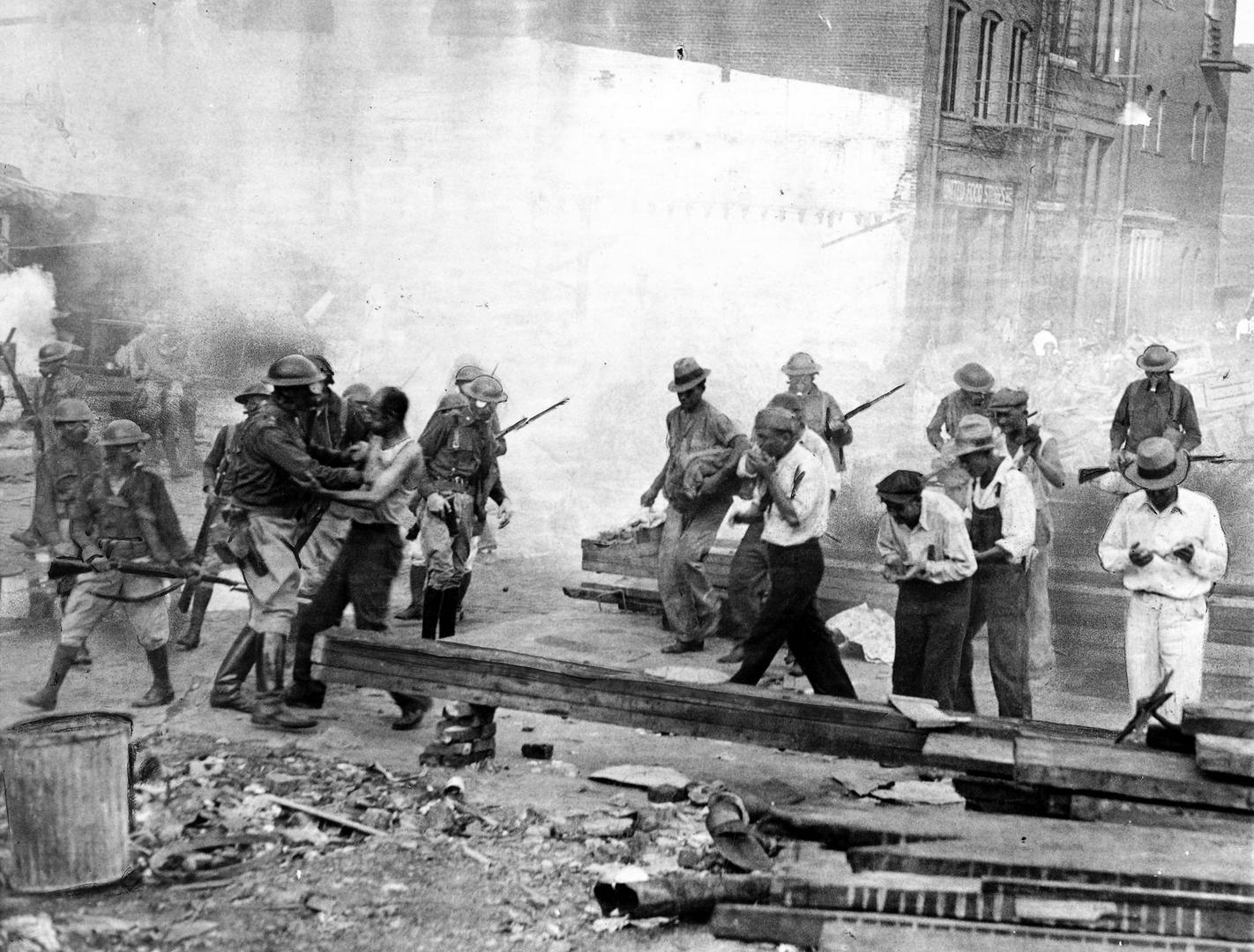
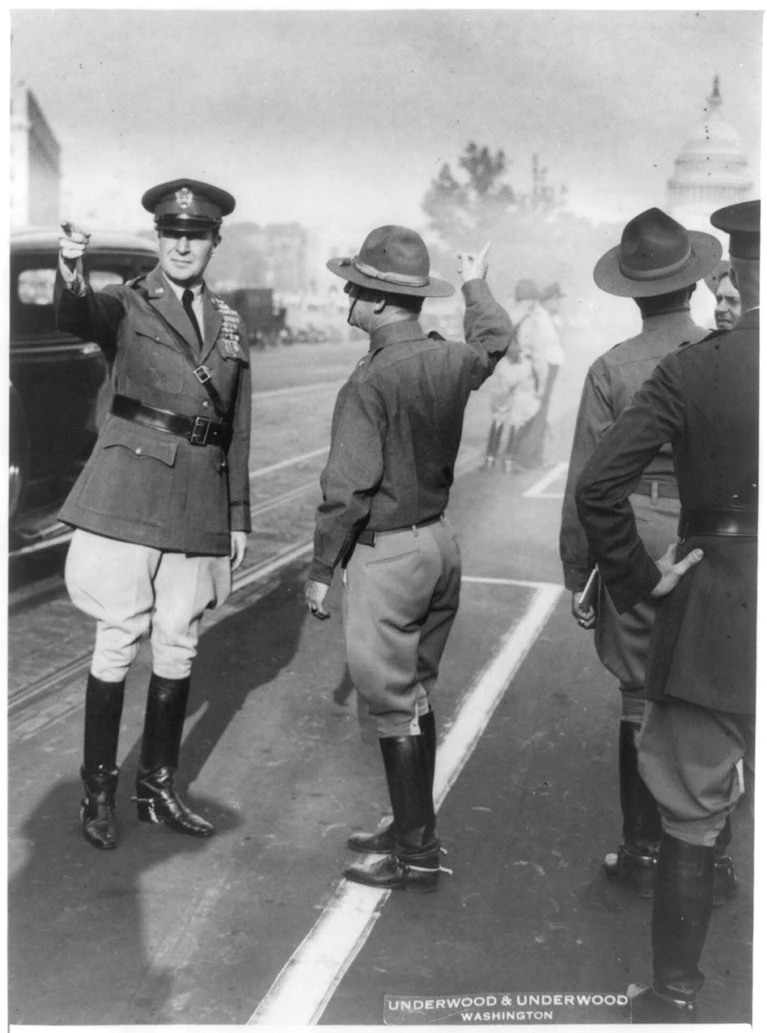
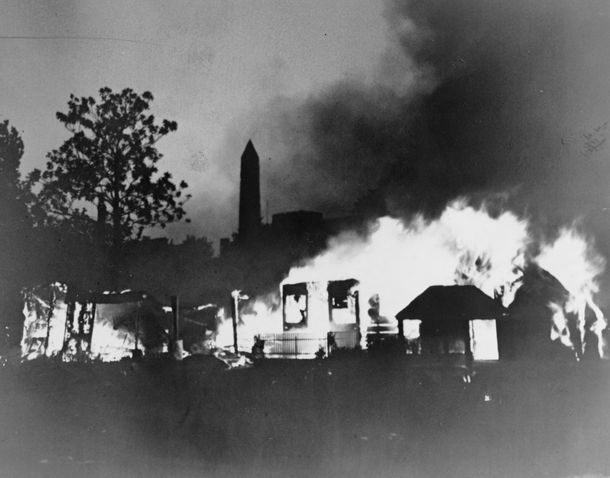
The Untold Battles of American Veterans After War Across U.S. history, veterans returning from war often faced neglect despite public praise. Continental soldiers after 1783 struggled to receive promised pay and pensions, delayed by 6 to 12 months. Some threatened to march on Congress in the Newburgh Conspiracy. General Washington’s appeal prevented crisis but revealed how fragile veteran support was. After the Civil War, Northern soldiers were publicly honored, yet many lived with poverty, lingering injuries, and untreated trauma. Confederate veterans faced economic devastation and social disruption. World War I soldiers returned to limited jobs. “Shell shock” now recognized as PTSD was often untreated. In 1932, 17,000 veterans and families formed the Bonus Army in Washington D.C., demanding early payment of bonuses scheduled for 1945. Living in tents along the Anacostia River during the Great Depression, they were forcibly evicted by troops; several were injured, illustrating neglect despite service. World War II veterans fared better. Many returned to ticker tape parades and benefited from the GI Bill offering education and housing. However, racial disparities limited access for Black veterans, and mental health issues often went unaddressed. Vietnam veterans rarely received parades and often faced hostility or silence. Employment and PTSD treatment were difficult to access. Studies show roughly 30 percent experienced PTSD, and repeated low level blast exposure in combat or training can cause CTE like brain pathology recently recognized in military research. Iraq and Afghanistan veterans face 20 percent PTSD prevalence and 12 to 15 percent traumatic brain injuries. Despite public respect, many encounter barriers to care, employment, and reintegration. History shows that real recognition requires sustained mental health support, equitable benefits, and societal commitment, not just words. #History #USHistory #America #Veterans #PTSD #SupportOurVeterans #USA

LataraSpeaksTruth

After nearly 10 months in Russian custody, American basketball star Brittney Griner was freed on December 8, 2022, returning to the United States in a high-stakes prisoner exchange that drew global attention. Her release followed months of diplomatic pressure, public advocacy, and intense negotiations between Washington and Moscow. Her ordeal began in February 2022, when Russian authorities arrested her at a Moscow airport for vape cartridges containing hashish oil. She later pleaded guilty, saying they’d been packed by accident, and was sentenced to nine years in a penal colony. Her case quickly reflected the rising tensions between the U.S. and Russia and spotlighted the risks Americans face when detained abroad during moments of geopolitical strain. Throughout the year, her family, teammates, and supporters pushed for her freedom as international tensions deepened. Her detention became a flashpoint for conversations about power, justice, and how politics can shape one person’s fate. The longer she remained imprisoned, the louder the call for her return became. On December 8, 2022, the swap became official: Viktor Bout was returned to Russia, and Brittney Griner was brought back into U.S. custody. U.S. officials confirmed the exchange occurred in Abu Dhabi. For her family, it was a moment of overwhelming relief… the end of a long fight and a fear that had hung heavy for months. When Griner finally touched American soil again, she called it a chance to rebuild, recover, and reclaim her life after a year defined by uncertainty and international pressure. It marked the end of a global standoff, and the beginning of a new chapter for her. A long fight, a long wait, a long return home… and she made it. #FreeBG #WNBA #GlobalEvents #USHistory #Homecoming #LataraSpeaksTruth

1776 Patriot

The SS United States: America’s Biggest and Fastest Ocean Liner The SS United States was the largest passenger ship ever built in the United States and a flagship example of mid century American industrial strength. Completed in 1952 at Newport News Shipbuilding, the vessel measured about 990 feet in length and displaced more than 53,000 tons. Its design used unprecedented quantities of aluminum in bulkheads, deckhouses, and framing to reduce structural weight and increase power to weight efficiency. Construction required more than 2,000 workers, extensive precision welding, and strict quality controls because the ship’s engines were adapted from classified naval propulsion systems. These turbines produced more than 240,000 shaft horsepower, giving the vessel unmatched acceleration and sustained high speed capability. On its maiden voyage the SS United States seized the Blue Riband, covering the westbound Atlantic in just over three days with an average speed above 35 knots. No passenger liner has surpassed this performance. The ship carried more than 1,900 passengers and nearly 1,000 crew and was built to convert rapidly into a troop carrier able to transport more than 14,000 personnel. The dual purpose design, compartment layout, and material choices, including fire resistant furnishings and reinforced decks were intended for heavy military loads. The liner operated from 1952 to 1969 before withdrawal due to rising operating costs and competition from jet aircraft. Since retirement it has remained laid up yet structurally sound, supported by preservation campaigns that emphasize its engineering significance. The SS United States remains the largest and fastest ocean liner ever produced in America and a benchmark in high performance civilian shipbuilding. #History #USHistory #America #USA #Shipbuilding

1776 Patriot

The Battle of Lake Erie: America’s Largest Sail Ship Engagement The Battle of Lake Erie, fought on September 10, 1813, during the War of 1812, was the largest naval engagement in American history fought entirely by sail ships. Commodore Oliver Hazard Perry faced a well trained British squadron near Put in Bay, Ohio, determined to control the lake and support British operations in the Northwest Territory. Perry oversaw the construction of much of his fleet in frontier shipyards, including the heavily armed flagship USS Lawrence, the USS Niagara, and seven smaller brigs and schooners. Many ships were newly built, and crews drawn from local militias, merchant sailors, and volunteers had limited training. Supplies were scarce, powder uneven, and several sailors were already ill, making the Americans true underdogs. The British squadron had six well established ships, including HMS Detroit and Queen Charlotte, mounting 193 guns with roughly 850 seasoned sailors and marines. The Americans had about 1,000 men and 206 guns. Lawrence alone carried twenty six 24 pounders, two 18 pounders, and four 12 pounders, but the inexperienced crew struggled under fire. After nearly three hours of cannon exchanges, Lawrence was almost destroyed and over 60 crew members were killed or wounded. Perry famously rowed under fire to the USS Niagara, assuming command and using her fresh guns and intact crew to outflank the British line. By evening, all six British ships were captured, granting the United States full control of Lake Erie. This victory allowed the U.S. to reclaim Detroit and win subsequent land campaigns. Perry’s message, "We have met the enemy and they are ours," became a rallying cry. Historians consider it the largest single line sail ship engagement in American history and a remarkable underdog triumph where leadership and courage overcame superior experience and resources. #USNavy #UnsungHero #USA #America #USHistory #History #EriePA

1776 Patriot

How the Turkey Almost Became America’s National Bird The story of the turkey’s near rise to national symbol begins in the early years of the United States, when leaders were choosing an emblem to represent the new nation. Benjamin Franklin took a special interest in this decision, and in a private letter he shared his belief that the turkey deserved the role more than the bald eagle. He described the turkey as a native species that early settlers and Indigenous communities had long known, hunted, and observed in the wild. To him, this connection made the turkey a more fitting choice for a country trying to define its identity. At the time, wild turkeys roamed across much of North America and were recognized for their strength and surprising agility. They could run up to 20 miles per hour, fly short distances at high speed, and use more than 30 vocalizations to communicate. Settlers often noted how quickly turkeys could react to danger, spotting movement from far away and working together in groups to stay safe. These behaviors shaped Franklin’s view that the turkey represented determination and awareness. The bald eagle, however, carried strong visual appeal and a dramatic silhouette. When the Continental Congress reviewed design proposals in 1782, the eagle appeared on several versions of the Great Seal. Despite Franklin’s private objections, the eagle’s sharp outline and widespread recognition won over the committee. The turkey simply did not gain enough support. Although the turkey did not become the national bird, its place in American life never faded. It continued to be central to farming, hunting traditions, and eventually Thanksgiving celebrations. The story of its near selection remains a unique moment in early American decision making, illustrating how even everyday wildlife played a role in shaping national symbols. #USHistory #History #America #USA #News #USNews #Thanksgiving

1776 Patriot

Monopoly: The Secret Weapon to Free American POWs During World War II, the familiar board game Monopoly became an unlikely instrument of rescue for American prisoners of war held in German camps. British intelligence and the Red Cross sought creative ways to support Allied POWs, as traditional supply lines were risky and sending contraband was nearly impossible. Monopoly provided the perfect cover. Special editions of the game were produced with hidden compartments containing maps, compasses, real money, and tools for escape. Each game was carefully packed into a wooden box that appeared normal to German inspectors, ensuring the deception remained effective and convincing. More than 3,000 Monopoly sets were shipped to POW camps across Europe, many specifically for American soldiers. At the time, there were roughly 130,000 American POWs in German camps. The dice were hollowed to hold tiny maps, the money stacks concealed real cash, and playing pieces hid small compasses or files. Some sets even contained silk maps that could be folded into pocket-size sheets. In one case, an American officer used a Monopoly board to escape from a high-security camp, traveling more than 30 miles using the concealed tools, evading German patrols along the way and navigating treacherous terrain under cover of darkness. German guards reportedly never noticed anything unusual. Of the 3,000 sets sent, at least 30 escapes were directly aided by the hidden items, and dozens more prisoners used the tools to aid others or evade capture. By 1944, Allied intelligence refined production to include updated maps reflecting shifting battlefronts. Today, some wartime Monopoly sets are preserved in museums, including the Imperial War Museum in London. A simple family game became crucial in saving lives, transforming clever ingenuity into a daring tactical advantage that outwitted captors and inspired hope in desperate circumstances. #Monopoly #BoardGames #USHistory #Military #America #WWII

1776 Patriot

Bulge Healers: Medics at the Battle of the Bulge From December 16, 1944, to January 25, 1945, the Battle of the Bulge tested American forces like never before. Nearly 600,000 U.S. soldiers faced a surprise German attack of about 200,000 troops in the frozen Ardennes Forest of Belgium and Luxembourg. Temperatures fell to minus 13 degrees Fahrenheit, almost 30 degrees below normal, turning medical care into a life-or-death fight. Field hospitals were set up in barns, churches, abandoned homes, and caves with little heat, frozen water, and scarce supplies. Medics treated gunshot wounds, shrapnel injuries, frostbite, trench foot, and infections while shells exploded nearby. Thousands froze or succumbed to hypothermia before reaching care. The U.S. Army deployed roughly one medic for every ten soldiers, demanding courage and ingenuity. Medics melted snow for water, improvised steam tents, used hot water bottles and heated blankets, and operated with minimal anesthesia. Blood plasma and morphine were critical; over 15 million plasma units and hundreds of thousands of morphine syrettes were stockpiled. Surgical teams performed amputations, chest, and abdominal operations in freezing, dimly lit rooms. Wounded soldiers were carried across icy forests on sleds, stretchers, horse-drawn carts, and Jeeps, sometimes taking hours or days. American medics treated tens of thousands of U.S. troops and roughly 12,000 German soldiers. Outnumbered and poorly supplied, German medics struggled even more. Survival rates for those reaching field hospitals exceeded 90 percent. By battle’s end, U.S. forces suffered over 80,000 casualties, including 19,000 killed and 47,500 wounded, while German losses neared 120,000. The courage and skill of medics saved countless lives and proved decisive in one of World War II’s harshest winter campaigns. #BattleOfTheBulge #MedicineInWW2 #USHistory #History #America #USA