Tag Page Usa

#Usa
Alexander News Show

Fatal Double Shooting in Richmond West in the Hammocks. Two victims of a fatal Southwest Miami-Dade shooting have been identified as 44-year-old Ulises Cabrera Gonzalez and 42-year-old Susana Rosales Koris, according to the Miami-Dade Sheriff’s Office. --- Fatal Double Shooting in Richmond West Authorities confirmed that a man and woman were found dead inside a home in the Richmond West neighborhood of Southwest Miami-Dade on Saturday afternoon. Deputies responded to a distress call around 1 p.m. reporting a man bleeding inside a residence near the 17000 block of Southwest 153rd Court, just south of Country Walk. Upon arrival, deputies discovered Gonzalez and Koris suffering from apparent gunshot wounds. Miami-Dade Fire Rescue pronounced both victims dead at the scene. --- Investigation Underway - Victims Identified: Ulises Cabrera Gonzalez (44) and Susana Rosales Koris (42). - Location: 17000 SW 153rd Court, Richmond West, a typically quiet residential area. - Response: Deputies and Miami-Dade Fire Rescue crews arrived quickly after receiving the emergency call. - Status: Homicide detectives have taken over the investigation, but officials have not yet disclosed the relationship between the victims or the circumstances leading to the shooting. --- Community Impact Neighbors expressed shock at the violence in an area known for its tranquility. The double homicide has raised concerns about safety in the community, with residents awaiting further updates from investigators. --- What’s Next The Miami-Dade Sheriff’s Office has urged anyone with information to come forward as detectives continue piecing together what led to the deadly incident. As of Sunday evening, no suspects have been named, and the investigation remains active. #Miamidade #Crime #NoticiasdeMiami #Usa #Alexandernewsshow.

1776 Patriot

Cartels Shift Strategy: Produce Drugs on American Soil Federal operations this week show cartels increasingly producing drugs inside America rather than relying solely on smuggling. On 11/17/25, the DEA, Homeland Security Investigations, and Customs and Border Protection seized roughly 1.7 million counterfeit fentanyl pills, weighing 436 pounds, plus 26 pounds of raw fentanyl powder from a Colorado storage facility. Evidence including chemical equipment, packaging materials, and residue testing confirmed the substances were processed domestically. On 11/18/25, a meth trafficking network was dismantled after smuggling 7,055 pounds hidden in produce; investigators recovered lab manuals, precursor chemicals, and partially processed meth, clearly showing local processing activity. Then on 11/19/25, the DEA, FBI, ICE, and HSI announced the largest meth seizure in Colorado history: over 1,000 pounds, with lab evidence showing domestic synthesis. Authorities say the operations were linked to cells of the Sinaloa and Jalisco New Generation Cartels. Combined, the estimated street value exceeds $2.5 billion, highlighting the growing scale of domestic operations. Authorities estimate 5,000 to 7,000 cartel-affiliated individuals operate in America, coordinating labs, storage, and distribution. Traffickers obtain precursors legally or smuggled from abroad, converting them into fentanyl powder, counterfeit pills, or meth. Fentanyl is often cut with xylazine, creating unpredictable potency. Synthetic opioids now contribute to over 110,000 overdose deaths annually, making drug overdoses the fifth leading cause of death in the U.S. In some states, fentanyl accounts for more than 75 percent of deaths involving synthetic substances. Producing drugs domestically avoids border checks, reduces transport costs, and meets demand quickly. This shift toward domestic production puts it in our backyards and swift action is essential to end this epidemic. #BreakingNews #News #USNews #USA

1776 Patriot

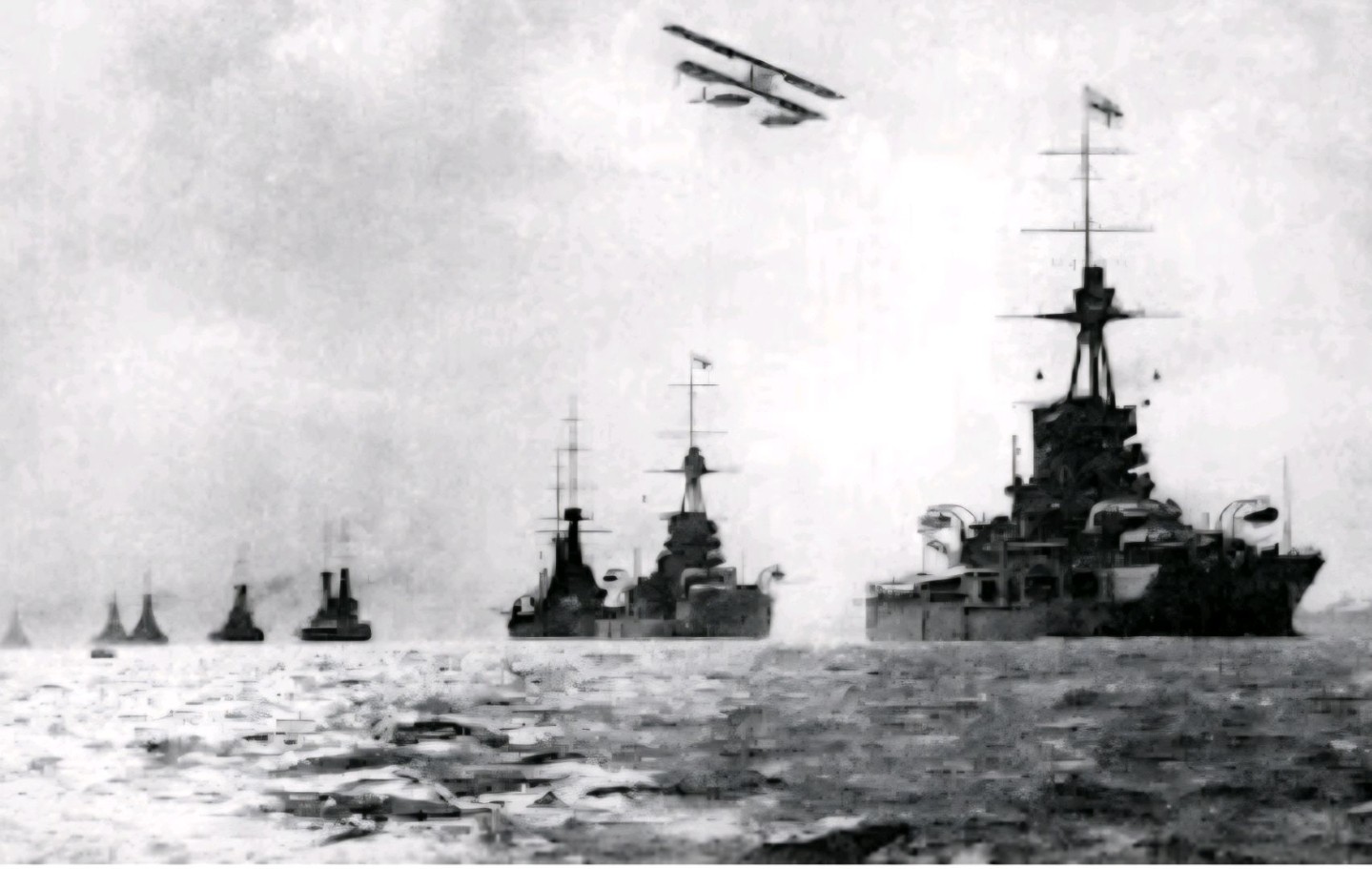
The Battle of Lake Erie: America’s Largest Sail Ship Engagement The Battle of Lake Erie, fought on September 10, 1813, during the War of 1812, was the largest naval engagement in American history fought entirely by sail ships. Commodore Oliver Hazard Perry faced a well trained British squadron near Put in Bay, Ohio, determined to control the lake and support British operations in the Northwest Territory. Perry oversaw the construction of much of his fleet in frontier shipyards, including the heavily armed flagship USS Lawrence, the USS Niagara, and seven smaller brigs and schooners. Many ships were newly built, and crews drawn from local militias, merchant sailors, and volunteers had limited training. Supplies were scarce, powder uneven, and several sailors were already ill, making the Americans true underdogs. The British squadron had six well established ships, including HMS Detroit and Queen Charlotte, mounting 193 guns with roughly 850 seasoned sailors and marines. The Americans had about 1,000 men and 206 guns. Lawrence alone carried twenty six 24 pounders, two 18 pounders, and four 12 pounders, but the inexperienced crew struggled under fire. After nearly three hours of cannon exchanges, Lawrence was almost destroyed and over 60 crew members were killed or wounded. Perry famously rowed under fire to the USS Niagara, assuming command and using her fresh guns and intact crew to outflank the British line. By evening, all six British ships were captured, granting the United States full control of Lake Erie. This victory allowed the U.S. to reclaim Detroit and win subsequent land campaigns. Perry’s message, "We have met the enemy and they are ours," became a rallying cry. Historians consider it the largest single line sail ship engagement in American history and a remarkable underdog triumph where leadership and courage overcame superior experience and resources. #USNavy #UnsungHero #USA #America #USHistory #History #EriePA

Curiosity Corner

Can You Tell a Dyed Geode from a Real One? Dyed geodes look natural at first glance, yet their bright blues, pinks, and greens often come from a controlled coloring process. Natural geodes rarely form such vivid tones, which is why sellers enhance them. Today, about fifty to sixty percent of small decorative geodes are artificially colored, and brightly dyed pieces often outsell natural ones by nearly two to one. The process begins when a geode is cut open to reveal its crystal chamber. The halves are cleaned to remove dust, then soaked in a heated dye bath. Tiny channels between quartz crystals act like capillaries, drawing in pigment. A medium geode can absorb nearly its own weight in liquid during a full day of soaking. Some workshops rotate geodes periodically to ensure even color. Crystal density affects the final hue. Dense clusters absorb less dye, producing pastel tones, while open pockets take in up to thirty percent more pigment, creating bold saturated shades. Deep purple and bright teal are especially popular, mimicking rare natural minerals at lower cost. Temperature also matters: hotter baths push dye deeper into the crystal, while cooler baths keep it near the surface. Layered or multistage baths produce gradients rarely seen in nature. Collectors often spot dyed geodes by observing sharp color bands near cut edges, faint staining on the outer rind, or solid pigment in crystal tips. Newly dyed stones may feel slightly heavier because absorbed liquid has not fully evaporated. Dyed geodes remain popular because they combine natural crystal formation with human creativity. Artists continue experimenting with pigments, metallic finishes, and gradient effects, turning ordinary stones into striking decorative pieces. Millions of dyed geodes are sold each year, proving even a simple rock can captivate with color and design. #Science #America #USA #News #USNews #ScienceNews

Alexander News Show

Motown legend Smokey Robinson is facing escalating legal troubles as his sex abuse scandal widens, with a new male accuser joining the lawsuit against him. Smokey Robinson Scandal Expands Six months after four former female employees filed a $50 million civil lawsuit alleging sexual battery, assault, false imprisonment, and hostile work environment, two additional accusers have stepped forward — including a man identified as John Doe. The lawsuit, originally filed in Los Angeles County Superior Court in May, has now been amended to include these new claims. Allegations From the Male Accuser The male accuser, who reportedly worked as a car valet for Robinson, claims the singer engaged in repeated sexual misconduct. According to court filings, Robinson allegedly fondled himself in front of the employee and on one occasion attempted to force the man’s hand onto his genitals. These allegations mirror those made by the original plaintiffs, who accused Robinson of similar acts of sexual battery and harassment while employed as housekeepers. Broader Legal Context - The original four Jane Doe plaintiffs accused Robinson and his wife, Frances Robinson, of fostering a hostile work environment and committing repeated acts of abuse. - The new motion filed on November 14, 2025, seeks to add both the male accuser and another female accuser to the case, expanding the scope of the lawsuit. - Robinson’s legal team has denied all allegations, calling them “fabricated” and insisting the claims are an attempt to exploit his fame. #SmokeyRobinson #Entertainment #Usa #Alexandernewsshow.

1776 Patriot

Against All Odds: The Astonishing Probability That You Exist What are the odds you exist? Every ejaculation contains about 200 million sperm, but only one fertilizes the egg. Your exact sperm had to be that one, roughly 1 in 200 million. Your mother’s egg was one of about 400,000, the estimated number of eggs a female is born with, and only one is released in each menstrual cycle. The chance of that exact egg being released is about 1 in 400,000. Multiply these together and the odds of that precise sperm meeting that precise egg are about 1 in 80 quadrillion. Not every fertilized egg survives. Historically, about one in three pregnancies failed. Surviving in the womb reduces the odds slightly to 1 in 120 quadrillion. Both parents had to survive childhood, avoid deadly accidents or disease, and meet at the right time. If we estimate this at 1 in 100 for each parent, the odds drop to 1 in 1.2 quintillion. Every ancestor over thousands of generations had to survive and reproduce. If we assume a 50 percent survival rate per generation over just ten generations, the cumulative probability is 1 in 1.2 sextillion. Stretch this back hundreds of generations and factor in early humans surviving predators, famine, disease, and harsh climates, and the odds become effectively unimaginable. Even beyond Earth, the odds shrink further. Scientists estimate that only about 1 in 5 stars has a planet in the habitable Goldilocks zone, where conditions are just right for life as we know it. You also had to be born on such a planet at the right time in its history, making your existence astronomically rare. Combine all of these improbable events, fertilization, survival, reproduction, and being on a life-supporting planet, and the odds of you being alive right now are estimated at roughly 1 in 10 to the power of 2.5 million. Imagine covering the Earth with lottery tickets stacked a mile high and picking the winning ticket trillions of times in a row. #Science #America #USA #News

1776 Patriot

Bulge Healers: Medics at the Battle of the Bulge From December 16, 1944, to January 25, 1945, the Battle of the Bulge tested American forces like never before. Nearly 600,000 U.S. soldiers faced a surprise German attack of about 200,000 troops in the frozen Ardennes Forest of Belgium and Luxembourg. Temperatures fell to minus 13 degrees Fahrenheit, almost 30 degrees below normal, turning medical care into a life-or-death fight. Field hospitals were set up in barns, churches, abandoned homes, and caves with little heat, frozen water, and scarce supplies. Medics treated gunshot wounds, shrapnel injuries, frostbite, trench foot, and infections while shells exploded nearby. Thousands froze or succumbed to hypothermia before reaching care. The U.S. Army deployed roughly one medic for every ten soldiers, demanding courage and ingenuity. Medics melted snow for water, improvised steam tents, used hot water bottles and heated blankets, and operated with minimal anesthesia. Blood plasma and morphine were critical; over 15 million plasma units and hundreds of thousands of morphine syrettes were stockpiled. Surgical teams performed amputations, chest, and abdominal operations in freezing, dimly lit rooms. Wounded soldiers were carried across icy forests on sleds, stretchers, horse-drawn carts, and Jeeps, sometimes taking hours or days. American medics treated tens of thousands of U.S. troops and roughly 12,000 German soldiers. Outnumbered and poorly supplied, German medics struggled even more. Survival rates for those reaching field hospitals exceeded 90 percent. By battle’s end, U.S. forces suffered over 80,000 casualties, including 19,000 killed and 47,500 wounded, while German losses neared 120,000. The courage and skill of medics saved countless lives and proved decisive in one of World War II’s harshest winter campaigns. #BattleOfTheBulge #MedicineInWW2 #USHistory #History #America #USA

1776 Patriot

The Event That Changed Policing: America’s Biggest Bank Shootout On February 28, 1997, Los Angeles saw one of the most intense urban gunfights in U.S. history, later called the North Hollywood Shootout. Two robbers, Larry Phillips Jr. and Emil Mătăsăreanu, entered a Bank of America branch wearing homemade body armor. They carried multiple firearms, including fully automatic rifles, high-capacity magazines, and handguns. Their armor allowed them to withstand standard police sidearms and shotguns, making the initial confrontation extremely dangerous. Phillips and Mătăsăreanu had rehearsed their approach, anticipating how officers would respond, which extended the gun battle to 44 minutes across North Hollywood streets. Nearly 2,000 rounds were fired during the shootout, with bullets ripping through glass, bouncing off cars, and sending residents scrambling for cover. The robbers fired roughly 1,100 rounds, while officers returned 650 to 750 rounds. Officers found their standard-issue pistols largely ineffective against the robbers’ armor, forcing several to dash to nearby sporting goods stores to buy AR-style rifles and extra ammunition mid-shootout. Additional facts include that police helicopters helped coordinate movements from the air, the robbers’ bulletproof vests were made from multiple layers of heavy materials, and several bystanders captured the entire scene on camera, creating some of the first widely seen footage of an active shootout in real time. Eleven officers and seven civilians were wounded, but miraculously, no bystanders were killed. Both robbers died after the confrontation ended. The scale and intensity of the gunfight led to nationwide changes in police armament and training, with patrol units later equipped to handle heavily armed threats. Decades later, the North Hollywood Shootout is remembered as one of America’s largest real-life urban gun battles. #TrueCrime #America #History #USHistory #Hollywood #USA

1776 Patriot

Red, White, and Boo! Halloween’s American History, Pictures, Interesting Facts

Halloween in America has evolved over centuries. It began over 2,000 years ago in Ireland with Samhain, a festival marking the end of the harvest. People believed the dead could visit the living, so they lit bonfires and wore costumes to ward off spirits. Masks and disguises hid them from wandering souls, and communities celebrated the season. In the 1800s, Irish and Scottish settlers brought these traditions to America. In the 1840s, Irish immigrants fleeing the Great Famine, a mass starvation caused by potato failures, preserved Halloween to maintain culture and community. They added pranks and public festivities to lift spirits. Carved turnips were placed outside to scare evil spirits, and in America pumpkins became easier to carve, creating the first jack-o-lanterns. By the 1870s, Halloween grew into a community event. Newspapers suggested parties, and neighbors played games like bobbing for apples, from Roman harvest festivals. Costume parties grew popular, with homemade disguises often scary or funny. Trick or treating began as children dressing up and performing songs, jokes, or skits for coins or treats. The first recorded trick or treating in the U.S. was in the 1920s. After World War Two, suburban neighborhoods expanded trick or treating. Candy companies sold Halloween candy, including candy corn, first made in the 1880s. Shaped like corn kernels to celebrate the harvest, it was easy to mass produce. Glow-in-the-dark costumes, plastic pumpkins, and decorations appeared in the 1950s, turning Halloween into a family-centered holiday. Today, Halloween blends Celtic traditions with American flair. Haunted houses, pumpkin patches, costume contests, and candy sales are everywhere. Over 600 million pounds of candy are sold annually, and Americans spend nearly 10 billion dollars, making Halloween one of the most celebrated and beloved traditions in the country. #Halloween #TrickOrTreat #USHistory #America #USA #History

Red, White, and Boo! Halloween’s American History, Pictures, Interesting FactsRed, White, and Boo! Halloween’s American History, Pictures, Interesting FactsRed, White, and Boo! Halloween’s American History, Pictures, Interesting FactsRed, White, and Boo! Halloween’s American History, Pictures, Interesting FactsRed, White, and Boo! Halloween’s American History, Pictures, Interesting FactsRed, White, and Boo! Halloween’s American History, Pictures, Interesting FactsRed, White, and Boo! Halloween’s American History, Pictures, Interesting Facts
Tag: Usa - Page 2 | LocalHood