Tag Page americanhistory

#americanhistory
LataraSpeaksTruth

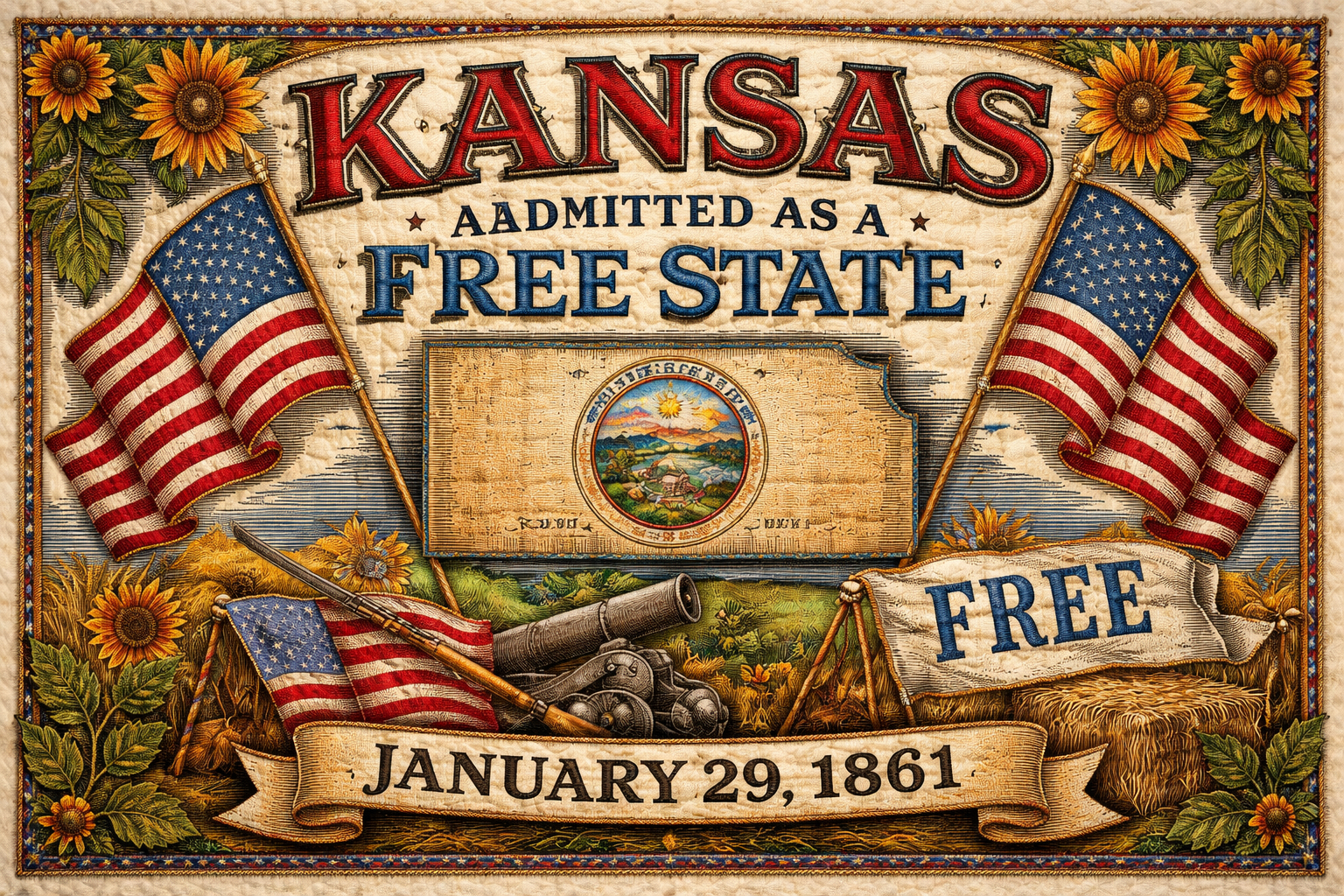
On January 29, 1861, Kansas was admitted to the Union as the 34th state, entering as a free state after years of violent political struggle that foreshadowed the Civil War. Its admission marked a turning point in the national conflict over slavery and revealed how deeply divided the country had become. Kansas was not a typical territory seeking statehood. After the Kansas–Nebraska Act of 1854 allowed settlers to vote on whether slavery would be legal, pro-slavery and anti-slavery factions flooded the region. Elections were disputed, rival governments formed, and armed clashes broke out. The violence was so severe that the period became known as “Bleeding Kansas.” Over several years, Kansas drafted multiple constitutions, some permitting slavery and others rejecting it. Each reflected the shifting balance of power and the pressure exerted by national political forces. The struggle in Kansas was closely watched across the country because it demonstrated that compromise on slavery was no longer holding. By the time Kansas was admitted as a free state, seven Southern states had already seceded from the Union. The decision further weakened the political influence of slaveholding states and intensified tensions between North and South. Just weeks later, the Civil War would officially begin with the attack on Fort Sumter. Kansas entered the Union bearing the marks of a conflict that could no longer be contained. Its path to statehood showed that the fight over slavery was no longer abstract or distant. It was unfolding in real time, on American soil, with consequences that would soon engulf the nation. #January29 #OnThisDay #KansasHistory #AmericanHistory #CivilWarEra #USHistory #Statehood #BleedingKansas #HistoricalMoments

LataraSpeaksTruth

On May 14, 1888, Archie Alphonso Alexander was born in Ottumwa, Iowa. His name may not be repeated as often as it should be, but his life belongs in the record. Alexander became an engineer, architect, mathematician, businessman, and public servant at a time when doors were not simply closed to Black achievement, they were often locked, guarded, and denied. Alexander attended the University of Iowa and made history as the first African American to graduate from its College of Engineering. He graduated in 1912 with a BA in Civil Engineering, stepping into a field where few Black men were given room to stand, let alone lead. But Alexander did not stop at being first. He went on to build a career in engineering and construction, eventually forming Alexander & Repass with Maurice A. Repass. Their firm became known for major public works, including roads, bridges, and construction projects across the country. His work helped prove that Black excellence was not new, rare, or accidental. It was present even when history tried to look away. Alexander also served as governor of the U.S. Virgin Islands under President Dwight D. Eisenhower, adding another chapter to a life already filled with accomplishment. His story matters because he represents the builders who shaped America with their minds, hands, and vision while fighting against the limits placed on them. He did not just cross a barrier. He built beyond it. On his birthday, Archie Alphonso Alexander deserves to be remembered not only as a first, but as a foundation. #BlackHistory #ArchieAlexander #HiddenHistory #EngineeringHistory #AmericanHistory
LataraSpeaksTruth

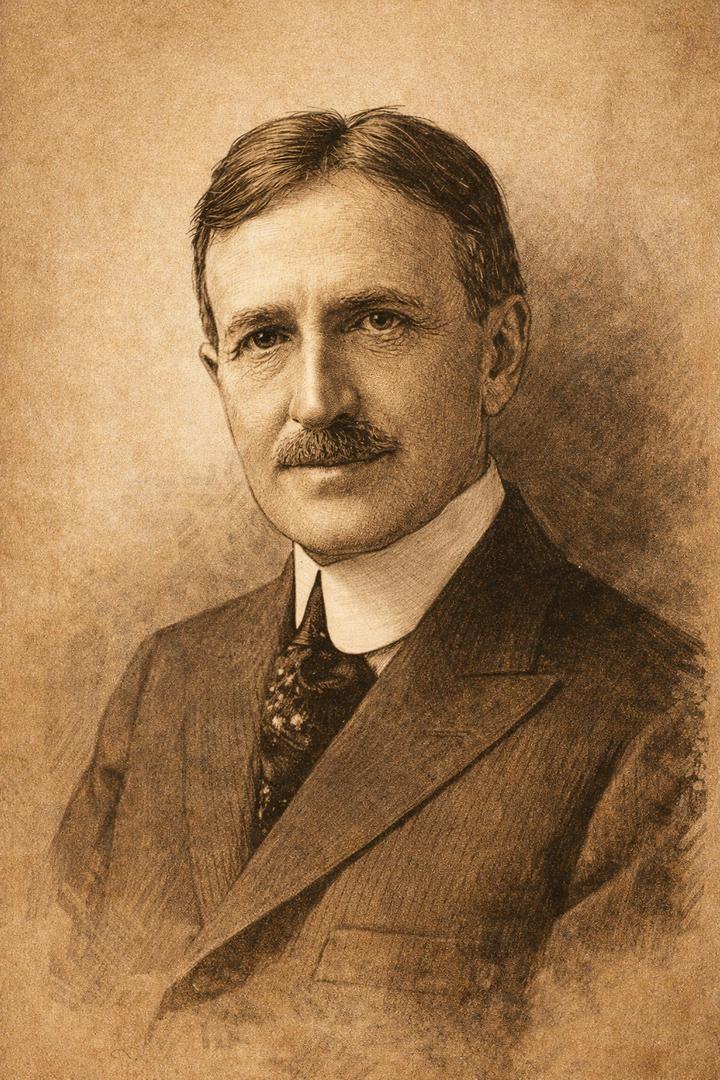
December 20, 1868 marks the birth of Harvey Firestone, an American industrialist best known for founding the Firestone Tire and Rubber Company. Firestone was not a Black American, but his relevance to Black history is tied to the influence he exercised during a critical period of educational development in the early twentieth century. Firestone formed a professional relationship with Booker T. Washington, one of the most influential Black educators of the era. Washington promoted industrial education and economic self reliance as practical strategies for advancement within a segregated society. Firestone supported this philosophy through financial contributions and public advocacy, particularly in support of Tuskegee Institute. At a time when Black educational institutions were consistently underfunded, private donations often determined whether schools could expand programs or continue operating at all. Firestone’s backing helped strengthen Tuskegee’s vocational and industrial training initiatives, which emphasized skilled trades and applied learning. These programs prepared students for economic participation during an era when access to professional opportunities was severely restricted. This relationship reflects a broader historical reality. Progress frequently depended on decisions made behind the scenes by individuals who held financial power and social access. While such support did not challenge segregation directly, it helped build durable educational infrastructure that served generations of Black students. In this context, Firestone’s legacy is not one of leadership but of influence. His role illustrates how quiet financial support helped shape access and opportunity during a formative chapter in American history. #OnThisDay #BlackHistoryContext #EducationHistory #TuskegeeInstitute #AmericanHistory

LataraSpeaksTruth

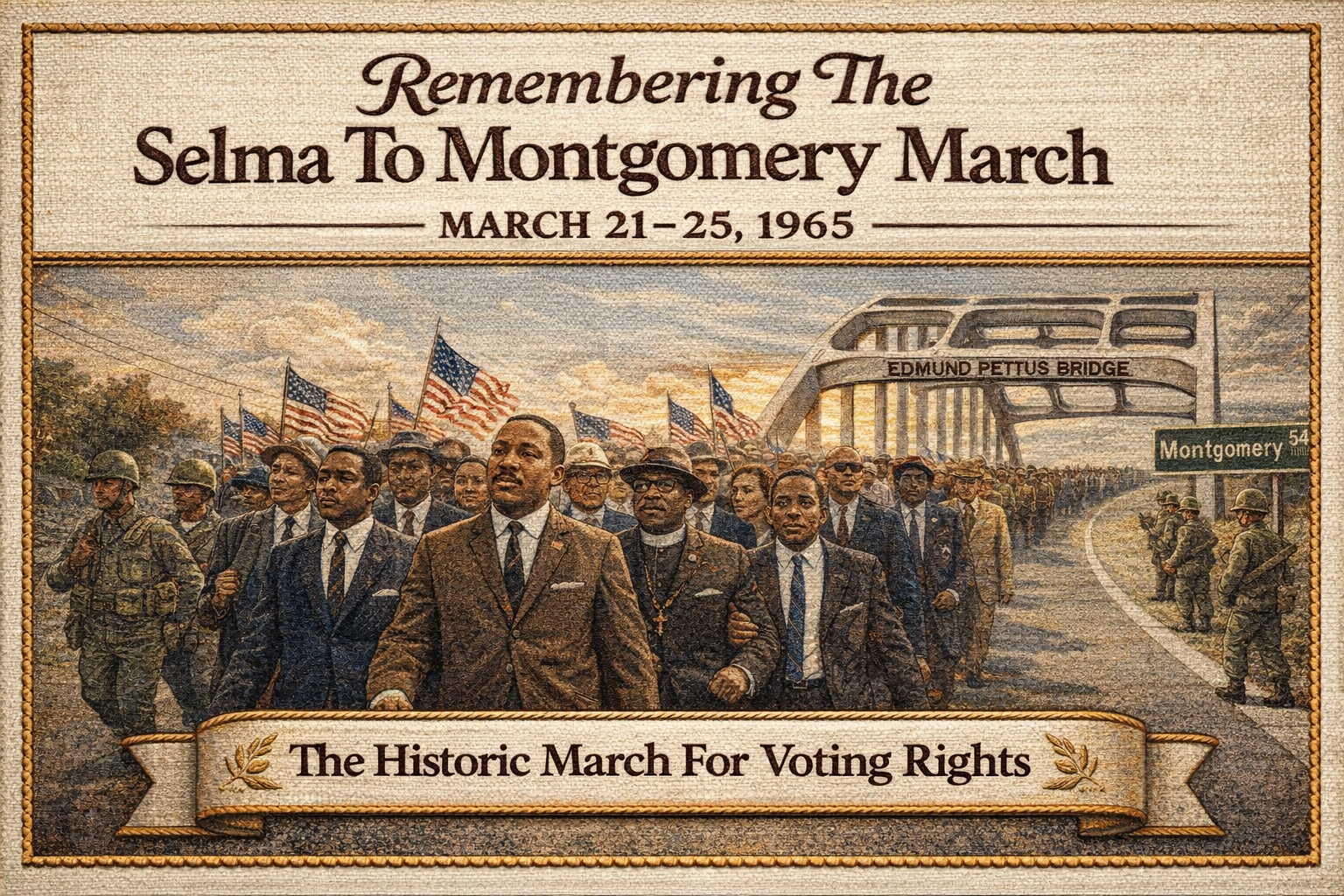
On March 21, 1965, Dr. Martin Luther King Jr. and thousands of voting rights demonstrators began the third Selma to Montgomery march in Alabama. Unlike the first two attempts, this march moved forward under federal protection after national attention had turned to Selma and the growing demand for change. The march followed two earlier efforts that drew widespread attention to the barriers many Black citizens faced when trying to vote in the South. On March 7, in the event remembered as Bloody Sunday, peaceful demonstrators were stopped by law enforcement as they crossed the Edmund Pettus Bridge. A second attempt on March 9 was also cut short. Beginning on March 21, marchers traveled roughly 50 miles over five days, arriving in Montgomery on March 25. As they moved forward, support grew and the march became one of the most important public demonstrations of the civil rights era. The Selma to Montgomery march helped build momentum for the Voting Rights Act of 1965, which targeted unfair voting barriers such as literacy tests. What began in Selma became a turning point in the national fight for equal access to the ballot. Sources…National Archives…National Park Service…Stanford King Institute…Britannica #OnThisDay #SelmaToMontgomery #VotingRights #CivilRightsMovement #MLK #BlackHistory #AmericanHistory #HistoryMatters

LataraSpeaksTruth

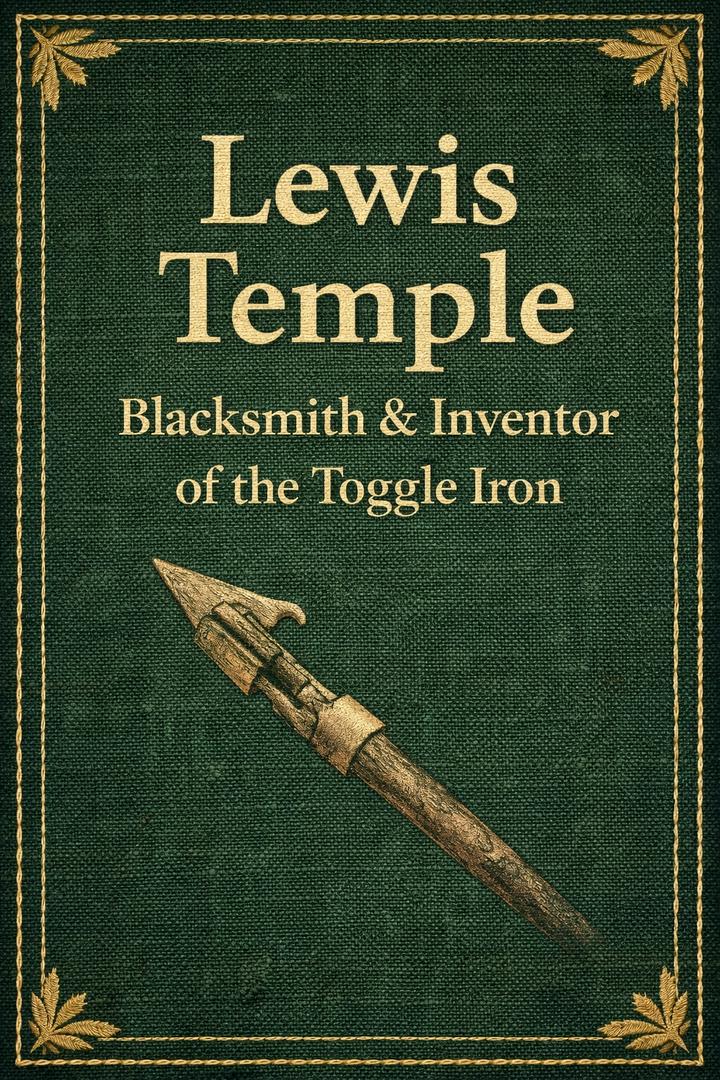
Lewis Temple’s story is not just about invention. It is about how skill, observation, and lived experience can shape an industry, even when the person behind the breakthrough does not receive the full credit he deserves. Born around 1800 in Richmond, Virginia, Lewis Temple later built his life in New Bedford, Massachusetts, where he worked as a blacksmith. By the 1830s, he had established himself along the waterfront, making iron tools and fittings used in the whaling trade. In a city tied closely to the sea, Temple understood the demands of the work and the problems whalers faced. He became best known for improving the whaling harpoon with a design called the toggle iron. Unlike earlier harpoons, Temple’s version was far more effective at staying lodged after striking a whale. That improvement made voyages more successful and more profitable at a time when whaling was a major part of the American economy. But Lewis Temple was more than a man who made a better tool. He was a Black craftsman and inventor whose work reflected precision, intelligence, and practical engineering. He studied the problem, understood the labor, and created a solution with lasting impact. Innovation like that does not happen by accident. It comes from deep knowledge and skill. Temple never patented his invention, so others copied the design and benefited from it financially. Even so, his name remains tied to one of the most important technological improvements in the history of whaling. Lewis Temple deserves to be remembered not as a footnote, but as part of a larger truth. Black history is not only a story of endurance. It is also a story of innovation, engineering, and vision. Black minds helped improve this country and move it forward. That is not a side note in history. That is history. #LewisTemple #BlackHistory #AmericanHistory #HiddenHistory #BlackInventors #Innovation #NewBedford #UntoldStories #HistoricalTruth

LataraSpeaksTruth

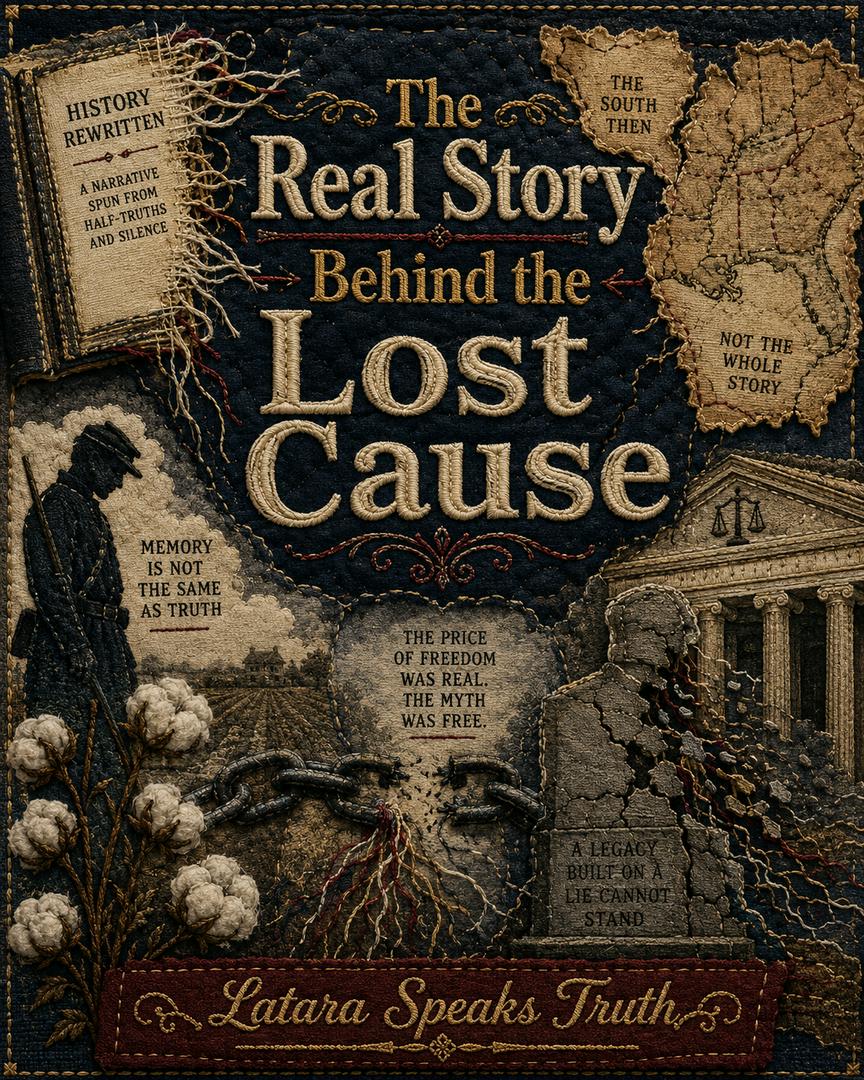
The Real Story Behind the Lost Cause is that it was not history. It was a rewrite. After the Civil War, the Confederacy lost on the battlefield, but many of its supporters fought to control the memory of what happened. The Lost Cause painted the South as noble, honorable, and unfairly defeated. It claimed the war was mostly about states’ rights, Southern pride, and defending home. But slavery was at the center of the conflict. Confederate states said it in their own secession documents. They left the Union to protect slavery and the power that came with it. After the war, that truth became inconvenient, so the story was softened. Instead of admitting the Confederacy fought to preserve human bondage, the Lost Cause turned Confederate soldiers into tragic heroes. It romanticized plantation life, downplayed the cruelty of slavery, and pushed the false idea that enslaved people were loyal or content. That version of the past spread through speeches, monuments, textbooks, films, and organizations that shaped public memory for generations. It helped keep sympathy attached to the Confederacy while hiding the violence of slavery, the backlash against Reconstruction, and the long shadow of segregation. That is why this story still matters. The Lost Cause was not just about remembering the past. It was about controlling how future generations understood power, race, and responsibility in America. The real story is simple. The Confederacy was built to protect slavery. The Lost Cause was built to protect the Confederacy’s image. And when people rewrite history to make oppression look noble, they are not preserving heritage. They are protecting a lie. #TheRealStoryBehindIt #AmericanHistory #CivilWarHistory #LostCause

LataraSpeaksTruth

In July 1917, violence erupted in East St. Louis after months of rising racial tension fueled by labor competition, housing pressure, and inflammatory propaganda. During a labor strike, Black workers were hired by local industries, a move white labor leaders and newspapers framed not as employment, but as invasion. That framing mattered. It lit the match. On July 2, white mobs flooded Black neighborhoods. Homes were set on fire. Families were chased into the streets. People attempting to flee were shot, beaten, or forced back into burning buildings. Some tried to escape across bridges or hide in rail yards. Many did not make it. While estimates vary, historians agree that dozens were killed, hundreds were injured, and thousands were left homeless in a single day. Accountability never followed. Few arrests were made. Even fewer convictions occurred. Property losses went largely uncompensated. Officials minimized the violence, and survivors were expected to rebuild without justice. The message was clear, even if it was never written down. The massacre did not occur in isolation. It unfolded during the Great Migration, when Black families moved north seeking work and safety, only to face organized resistance once they arrived. East St. Louis became a warning. Opportunity was conditional. Safety was not guaranteed. That same month, thousands marched silently through New York City in the Silent Protest Parade, dressed in white and refusing to shout. Their quiet said what the country would not. This was not a riot. It was an attack. And it followed a pattern. Remembering East St. Louis is not about reopening wounds. It is about naming what happened so it does not disappear behind softer language. History becomes slippery when discomfort decides what is remembered. #EastStLouis #1917 #AmericanHistory #LaborHistory #GreatMigration #HistoricalMemory #UntoldHistory #USHistory

LataraSpeaksTruth

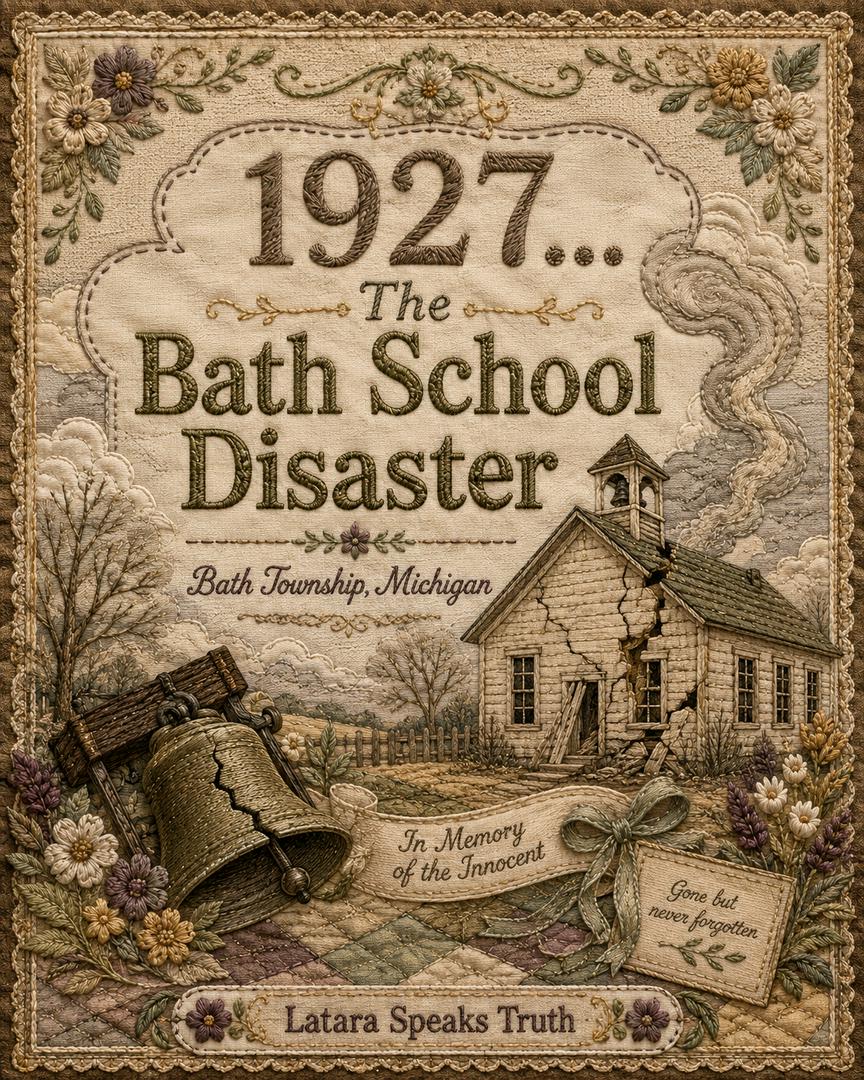
On May 18, 1927, tragedy struck Bath Township, Michigan. The place was Bath Consolidated School, a small community school where children came to learn, teachers came to work, and families expected the day to end like any other. But that morning became one of the darkest moments in American school history. A former school board member named Andrew Kehoe had secretly placed explosives inside the school building. When the explosion went off, part of the school was destroyed. Children and adults were trapped beneath the wreckage as the community rushed to help. The loss was devastating. Thirty-eight schoolchildren and five adults were killed. Kehoe also died after setting off another explosion near the scene. The Bath School disaster remains one of the deadliest school attacks in American history, yet many people have never heard of it. It is often left out of the larger conversation about violence in schools, even though the grief it caused was unimaginable. This was not just a tragedy written in old records. It was children who never came home. It was teachers who never finished the school day. It was families whose lives changed forever. Bath Township carried a wound no community should ever have to carry. And nearly a century later, the victims still deserve to be remembered. Forgotten does not mean unimportant. On May 18, 1927, history left a scar in Bath Township, Michigan. The victims should not be forgotten. #BathSchoolDisaster #OnThisDay #AmericanHistory #ForgottenHistory #LataraSpeaksTruth

LataraSpeaksTruth

Priscilla “Mother” Baltimore did not just leave a system built to control her life. She helped build a place where freedom could stand on its own land. Born into slavery in Bourbon County, Kentucky in 1801, Baltimore was sold as a child and later taken to Missouri. In St. Louis, she eventually purchased her freedom, a powerful act in a country where Black people were treated as property and forced to fight for every inch of independence. But Baltimore did not stop with herself. Historical accounts say she helped other people gain freedom, including members of her own family. She became known as “Mother” Baltimore because of her role as a caretaker, organizer, abolitionist, and spiritual leader. She was also connected to the African Methodist Episcopal Church, which played a major role in Black worship, education, organizing, and resistance during the nineteenth century. In 1829, oral history says Baltimore led eleven Black families across the Mississippi River from St. Louis, Missouri into Illinois. They settled in what became Brooklyn, Illinois, near St. Louis. The settlement became known as a freedom village, a place where free Black people and people escaping slavery could build community with more safety than they had in slaveholding Missouri. Brooklyn was platted in 1837 and incorporated in 1873. It is widely recognized as the first majority Black town incorporated in the United States. That history matters because freedom was not only about escape. It was about land, homes, churches, families, protection, and the right to live without being hunted, sold, or erased. Priscilla Baltimore’s story belongs in the center of American history. She helped prove that formerly enslaved people were not waiting for someone else to define freedom for them. They were building it. #PriscillaBaltimore #BrooklynIllinois #BlackHistory #HiddenHistory #AmericanHistory

LataraSpeaksTruth

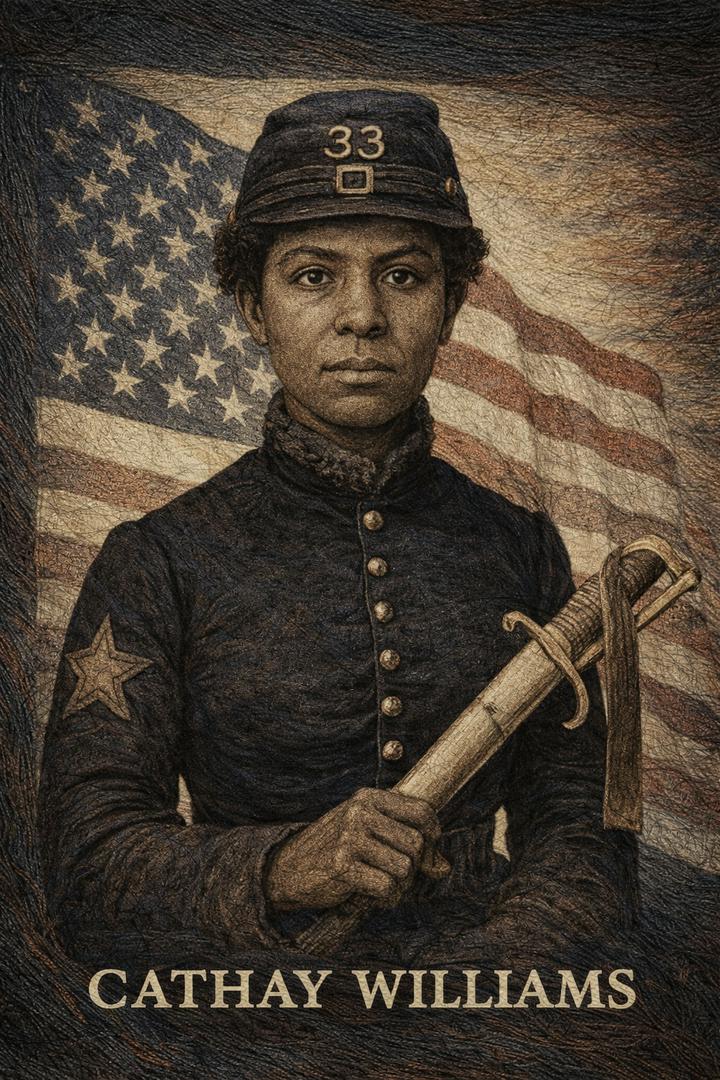
Cathay Williams was born in September 1844 in Independence, Missouri, to an enslaved mother and a free father. Because her mother was enslaved, Cathay was also born into slavery. As a young woman, she was forced into labor for Union troops during the Civil War, working as a cook and washerwoman and traveling with the army through parts of the South. That experience brought her close to military life long before she officially entered it. After the war, Williams chose a path few women of her time could even imagine. On November 15, 1866, she enlisted in the United States Army in St. Louis under the name William Cathay. Since women were barred from military service, disguising herself as a man was the only way she could join. She served in Company A of the 38th U.S. Infantry, one of the African American regiments created after the Civil War and later tied to the legacy of the Buffalo Soldiers. For nearly two years, she performed the duties expected of any soldier. Her secret remained hidden until repeated illness and hospital visits led army doctors to discover she was a woman. She was discharged on October 14, 1868. Years later, Williams applied for a military disability pension, describing her service and failing health, but her claim was denied. Much of her later life remains unclear, but her place in history does not. Today, Cathay Williams is remembered as the only documented woman known to have served as a Buffalo Soldier and one of the most remarkable women in American military history. #OurHistory #CathayWilliams #BuffaloSoldiers #MilitaryHistory #BlackHistory #WomensHistory #AfricanAmericanHistory #HiddenFigures #AmericanHistory #LataraSpeaksTruth