Tag Page blackhistory

#blackhistory
LataraSpeaksTruth

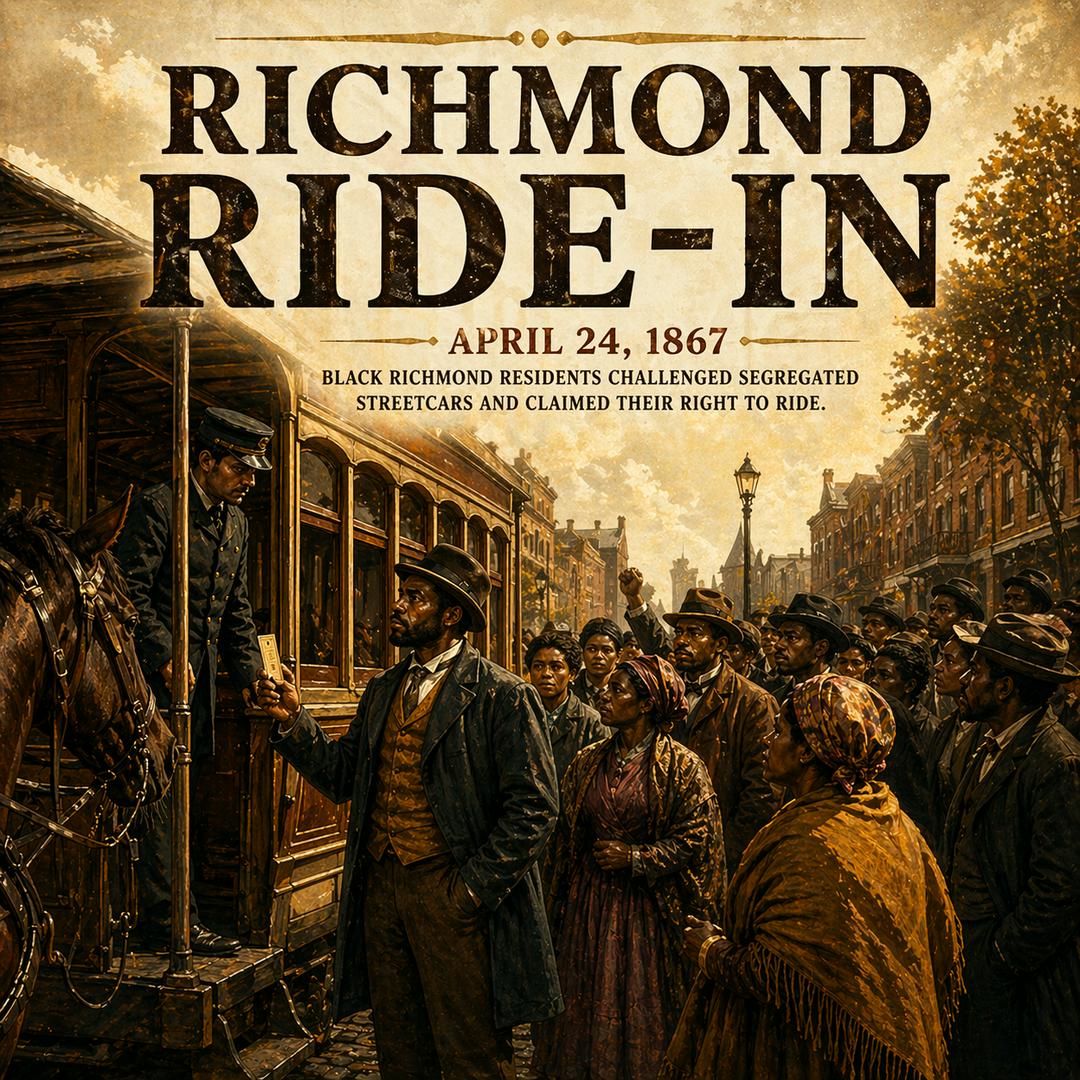
On April 24, 1867, Black residents in Richmond, Virginia made it clear that the fight for equal treatment did not begin in the 1950s. It was Reconstruction. Slavery had officially ended through the 13th Amendment barely more than a year earlier, but freedom on paper did not mean equal rights in everyday life. In Richmond, Black passengers were being denied access to privately operated, horse-drawn streetcars, even when they had paid for a ticket. One of the people connected to this protest was Christopher Jones. According to historical records, Jones bought a ticket for a Richmond streetcar and attempted to ride. When he was refused, a crowd gathered in support of his right to board. He was later arrested for disturbing the peace. But the people did not back down. Black Richmond residents organized protests against the streetcar company’s racial restrictions. This was not just about transportation. It was about citizenship, public space, dignity, and whether freedom would mean anything beyond words written into law. That is what makes this history so important. Long before the Montgomery Bus Boycott, long before Rosa Parks became a national symbol, Black communities were already challenging segregation in public transportation. They were using protest, public pressure, and collective action to demand what should have already been theirs. The Richmond Streetcar Protest reminds us that civil rights history did not suddenly appear in the 20th century. It had deep roots in Reconstruction, when newly freed people were fighting to define what freedom would actually look like in public life. April 24, 1867 deserves to be remembered because it shows us something powerful. The pushback started early. The courage was already there. And the demand was simple: if we paid to ride, we had the right to ride. #BlackHistory #ReconstructionHistory #RichmondVA #CivilRightsHistory #HiddenHistory

LataraSpeaksTruth

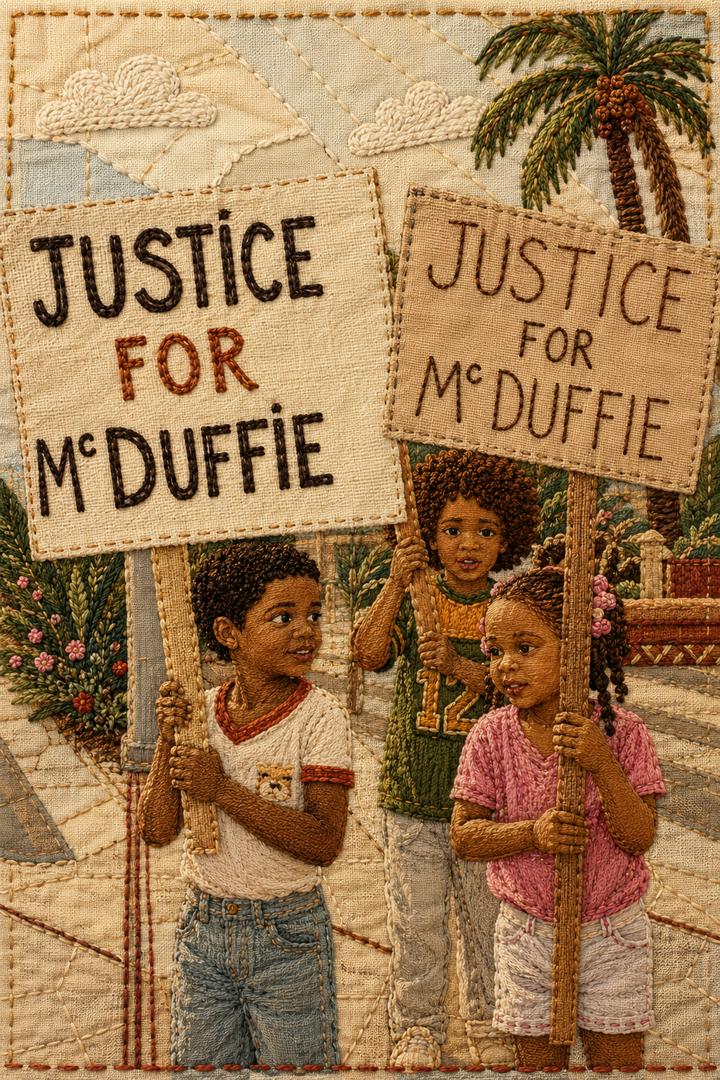
On May 17, 1980, Miami reached a breaking point. Arthur McDuffie was not a nameless man in a headline. He was a Black insurance executive, a former Marine, a father, and a 33-year-old man whose death became one of Miami’s most painful chapters. In December 1979, McDuffie was fatally beaten after a police chase involving his motorcycle. At first, the public was told his injuries came from a crash. But the story began to fall apart. Evidence later showed that McDuffie had been beaten, and officers were charged in connection with his death. The case was moved to Tampa, where an all-white jury heard the trial. On May 17, 1980, the officers were acquitted. For many people in Miami, that verdict felt like the system had looked at a dead man and turned away. By nightfall, anger spilled into the streets. Liberty City and Overtown became the center of the unrest. Fires burned. Businesses were damaged. The National Guard was called in. Families hid inside their homes while the city shook under grief, rage, and fear. The unrest lasted several days. By the time it ended, 18 people were dead, hundreds were injured, and Miami was left with deep scars that could not be covered by rebuilding alone. This story is not just about a riot. It is about what happens when a community believes justice has been denied for too long. Arthur McDuffie’s name became a symbol of a city’s pain, but behind that symbol was a real man whose life mattered before the verdict, before the headlines, and before Miami burned. His story still belongs in the record. #ArthurMcDuffie #MiamiHistory #OnThisDay #BlackHistory

LataraSpeaksTruth

Romare Bearden was one of the most influential American artists of the twentieth century, known for turning everyday Black life into unforgettable visual stories. Born on September 2, 1911 in Charlotte, North Carolina, he moved to New York City as a child during the Great Migration. Harlem became his creative home, a place filled with music, literature, and bold ideas that shaped how he saw the world. Bearden studied at New York University and explored different paths early on, but art kept calling him back. He began as a cartoonist and painter, then found the style that made him famous: collage. He combined photographs, painted paper, magazine clippings, and textured materials to build layered scenes that felt like memory brought to life. His work captured church gatherings, family moments, Southern roots, Harlem streets, and the rhythm of jazz. Instead of spotlighting a single person, he often showed the shared experience of a community. His images feel musical, like stories told in chords and fragments, then stitched into something whole. Bearden’s work has been shown in major museums, and in 1987 he received the National Medal of Arts. He passed away in 1988, but his influence is still everywhere, in exhibitions, classrooms, and in the artists who keep learning from his vision. #RomareBearden #BlackHistory #BlackArtists #ArtHistory #AmericanArt #Harlem #GreatMigration #CollageArt #CulturalHistory #HistoryMatters #HiddenHistory

LataraSpeaksTruth

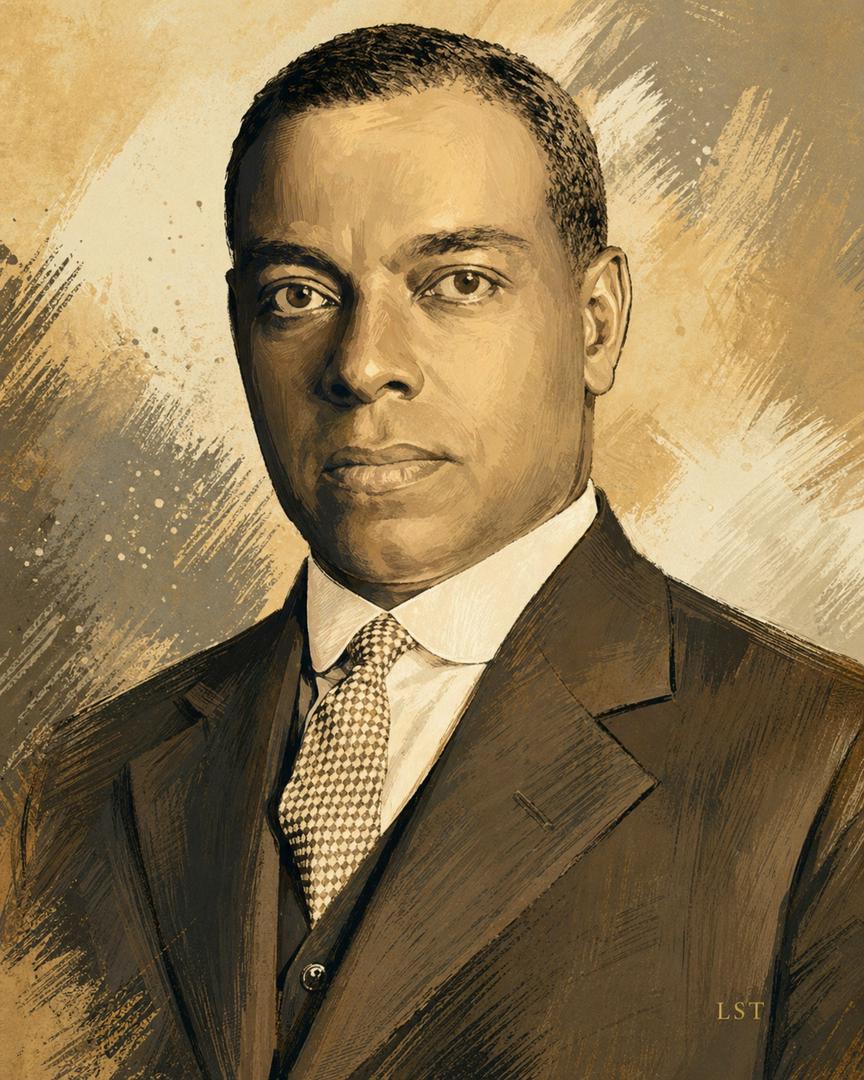
April 24, 1856…Hamilton Hatter was born in Jefferson County, Virginia, in an area that later became part of West Virginia. He was born enslaved, but his life would not stay trapped inside the limits others tried to place around him. Hatter became an educator, college leader, inventor, builder, and public servant. That is why his story deserves more than a quick mention. After slavery ended, he pursued education with the kind of determination people love to overlook when they talk about what formerly enslaved people were “given.” Nothing was handed to him. He studied, worked, built, taught, and kept moving. He attended Storer College in Harpers Ferry, then went on to earn a degree from Bates College in Maine. After that, he returned to Storer and taught subjects like Greek, Latin, and mathematics. Let that sink in. A man born enslaved became a college professor teaching classical languages and math. That alone should be enough to remember his name. But Hamilton Hatter did not stop there. In 1896, he became the first principal of Bluefield Colored Institute, now known as Bluefield State University. He helped shape an institution created to educate Black students during a time when access to higher education was still being blocked, limited, and controlled. He was also involved in politics. In 1892, he was nominated as a Republican candidate for the West Virginia House of Delegates. He did not win, but the nomination itself mattered in a time when Black political power was being challenged hard. And because one lane was clearly not enough for him, Hatter also received a patent in 1893 for a corn-harvesting improvement. Born enslaved. Became educated. Became an educator. Became a college leader. Became an inventor. That is not just a biography. That is proof of what people built while history tried to bury their names. Hamilton Hatter deserves to be remembered. #HamiltonHatter #BlackHistory #WestVirginiaHistory #OverlookedHistory #LataraSpeaksTruth

LataraSpeaksTruth

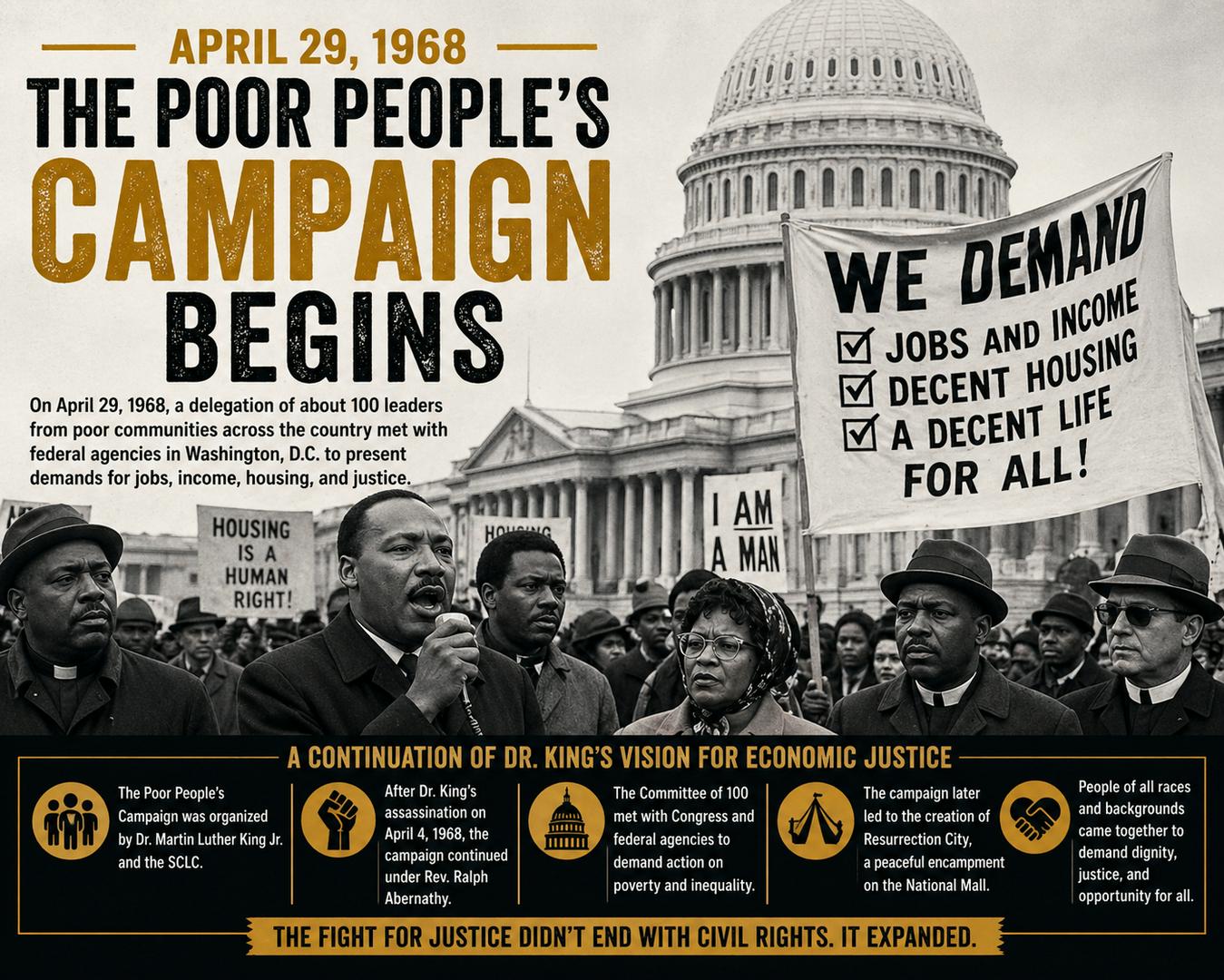
On April 29, 1968, the Poor People’s Campaign moved into a new public phase in Washington, D.C., when a group known as the Committee of 100 began meeting with members of Congress and federal agencies. The campaign had been planned by Dr. Martin Luther King Jr. and the Southern Christian Leadership Conference as a national effort to confront poverty in America. King had argued that legal rights alone were not enough if people were still trapped without jobs, decent housing, food, education, or a secure income. After King was assassinated on April 4, 1968, the campaign continued under the leadership of Rev. Ralph Abernathy and other SCLC organizers. The goal was to bring poor people from across the country to the nation’s capital and force the federal government to face the conditions millions of Americans were living under. The Committee of 100 included representatives from poor communities across racial and regional lines. The campaign brought together Black, white, Latino, Native American, and other poor Americans who were demanding economic justice. Their demands included jobs at living wages, income support for those unable to work, affordable housing, emergency food assistance, collective bargaining rights for farmworkers, and stronger federal action against poverty. The campaign later led to the building of Resurrection City, a protest encampment on the National Mall where demonstrators lived for weeks while pressing the government to respond. The Poor People’s Campaign was one of Dr. King’s final visions. It showed that his work was not only about ending segregation. It was also about challenging the economic systems that left families hungry, workers underpaid, and communities ignored. April 29, 1968 marked the start of that direct push in Washington. It was a reminder that the fight for dignity included the right to live, work, eat, and be housed with basic human respect. #BlackHistory #PoorPeoplesCampaign #MLKLegacy #EconomicJustice #OnThisDay

LataraSpeaksTruth

On May 1, 1997, Alexis M. Herman began her tenure as the 23rd U.S. Secretary of Labor, making history as the first Black American to hold that position. Her appointment placed her at the head of a federal department responsible for workers’ rights, job training, wages, workplace safety, and labor standards. But Herman did not arrive in Washington without a record. Born in Mobile, Alabama, she had already built a career around employment opportunity, civil rights, and workplace access. Before becoming Secretary of Labor, Herman served under President Jimmy Carter as director of the Women’s Bureau at the Department of Labor. She was only 29 at the time, making her the youngest person to hold that role. She later worked in Democratic politics and served in the Clinton White House as Assistant to the President and Director of the Office of Public Liaison. As Secretary of Labor under President Bill Clinton, Herman became one of the most visible labor leaders in the country. One of her most remembered moments came during the 1997 UPS strike, one of the largest strikes in the United States in decades. Herman helped mediate talks between the company and union leaders, and the strike ended after 15 days. Her tenure also connected to issues such as job training, workplace equality, minimum wage policy, and child labor enforcement. She served until January 20, 2001. Alexis Herman’s story matters because she did not just break a barrier. She stepped into a Cabinet role tied directly to the lives of working people. Her place in history is a reminder that labor history is also Black history, women’s history, and American history. #AlexisHerman #BlackHistory #LaborHistory #WomensHistory #NewsBreak

LataraSpeaksTruth

Priscilla “Mother” Baltimore did not just leave a system built to control her life. She helped build a place where freedom could stand on its own land. Born into slavery in Bourbon County, Kentucky in 1801, Baltimore was sold as a child and later taken to Missouri. In St. Louis, she eventually purchased her freedom, a powerful act in a country where Black people were treated as property and forced to fight for every inch of independence. But Baltimore did not stop with herself. Historical accounts say she helped other people gain freedom, including members of her own family. She became known as “Mother” Baltimore because of her role as a caretaker, organizer, abolitionist, and spiritual leader. She was also connected to the African Methodist Episcopal Church, which played a major role in Black worship, education, organizing, and resistance during the nineteenth century. In 1829, oral history says Baltimore led eleven Black families across the Mississippi River from St. Louis, Missouri into Illinois. They settled in what became Brooklyn, Illinois, near St. Louis. The settlement became known as a freedom village, a place where free Black people and people escaping slavery could build community with more safety than they had in slaveholding Missouri. Brooklyn was platted in 1837 and incorporated in 1873. It is widely recognized as the first majority Black town incorporated in the United States. That history matters because freedom was not only about escape. It was about land, homes, churches, families, protection, and the right to live without being hunted, sold, or erased. Priscilla Baltimore’s story belongs in the center of American history. She helped prove that formerly enslaved people were not waiting for someone else to define freedom for them. They were building it. #PriscillaBaltimore #BrooklynIllinois #BlackHistory #HiddenHistory #AmericanHistory

LataraSpeaksTruth

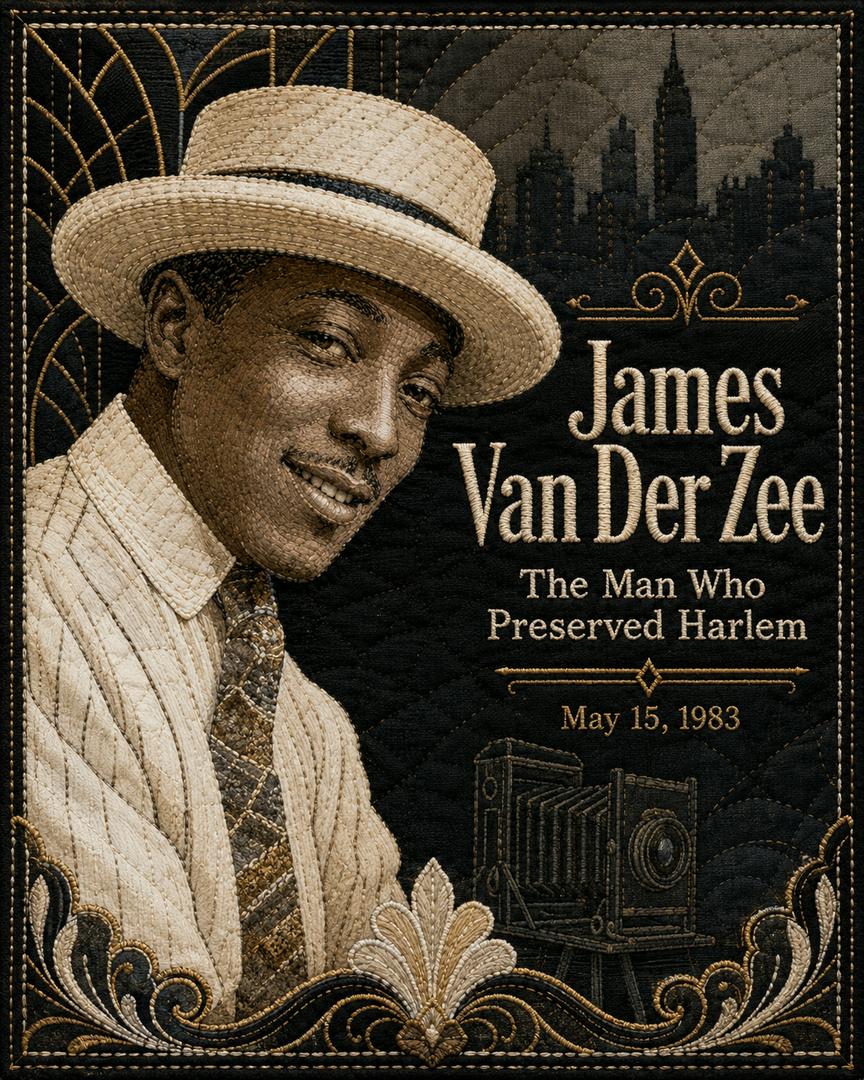
May 15, 1983… James Van Der Zee died, but the world he captured never disappeared. James Van Der Zee was not just a Harlem photographer. He was one of the eyes of an era. Born in Lenox, Massachusetts, in 1886, Van Der Zee became best known for documenting Black life in Harlem during the 20th century. In 1916, he opened Guarantee Photo Studio on 125th Street, where he photographed families, couples, musicians, churchgoers, soldiers, social clubs, weddings, funerals, and everyday people who wanted to be remembered with dignity. That is what made his work so powerful. At a time when Black people were often misrepresented or erased in mainstream images, Van Der Zee gave Harlem another kind of record. His portraits were elegant, careful, and full of pride. People came before his camera dressed in their best, standing tall, sitting with confidence, and leaving behind proof that they were here, they mattered, and they had beauty, ambition, faith, joy, grief, and style. His work became one of the most important visual records of the Harlem Renaissance and the decades that followed. He photographed a community in motion, not as outsiders imagined it, but as it wanted to be remembered. People should take the time to look up James Van Der Zee’s photographs for themselves, because they are truly beautiful. His images are not just old history pictures… they are art. The clothing, hairstyles, poses, family portraits, wedding photos, and quiet dignity in people’s faces tell a story that words alone cannot fully explain. James Van Der Zee died on May 15, 1983, in Washington, D.C., at age 96. But his photographs remain living evidence. He did more than take pictures. He protected memory. #JamesVanDerZee #HarlemRenaissance #BlackHistory #PhotographyHistory #BlackArt #HarlemHistory
LataraSpeaksTruth

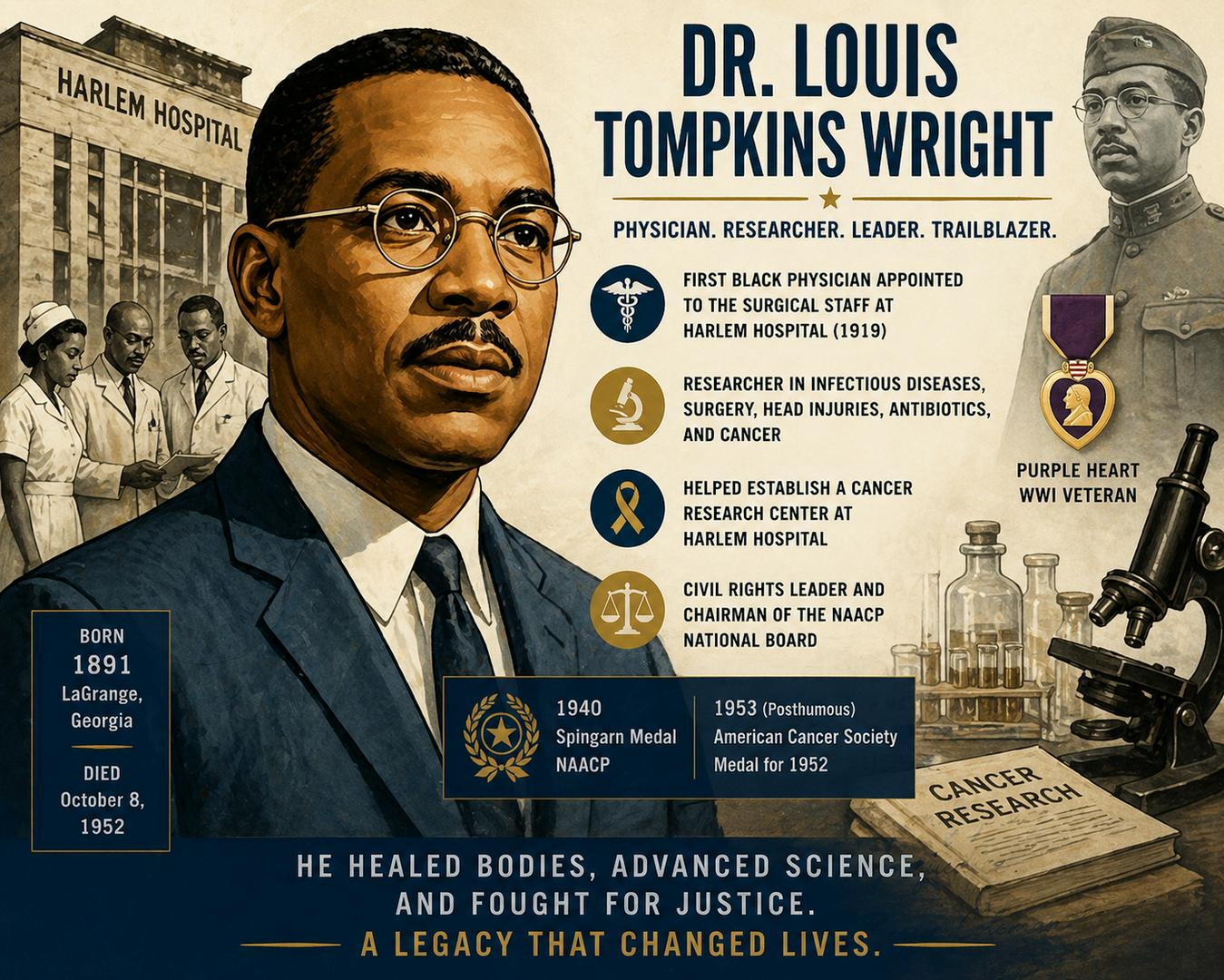
Dr. Louis Tompkins Wright was one of the most important Black physicians of the 20th century. Born in LaGrange, Georgia, in 1891, Wright graduated from Harvard Medical School in 1915. After serving in World War I with the U.S. Army Medical Corps, he returned home with lasting injuries from a gas attack and received the Purple Heart. In 1919, Wright joined Harlem Hospital in New York City. He became the first Black physician appointed to its surgical staff and spent more than three decades helping raise the hospital’s medical standards. His work helped open doors for Black doctors and nurses at a time when racial discrimination blocked many from serving in major hospitals. Wright was also a medical researcher. He studied infectious diseases, surgery, head injuries, antibiotics, and cancer. He helped establish a cancer research center at Harlem Hospital and supported scientific work that later connected to advances in chemotherapy research. Beyond medicine, Wright was a civil rights leader. He served for years with the NAACP and became chairman of its national board. In 1940, he received the NAACP’s Spingarn Medal for his service to medicine and justice. Dr. Wright died on October 8, 1952. In 1953, he was posthumously awarded the American Cancer Society Medal for 1952, recognizing his contributions to cancer research. #BlackHistory #MedicalHistory #LouisTWright #HarlemHospital #CancerResearch

LataraSpeaksTruth

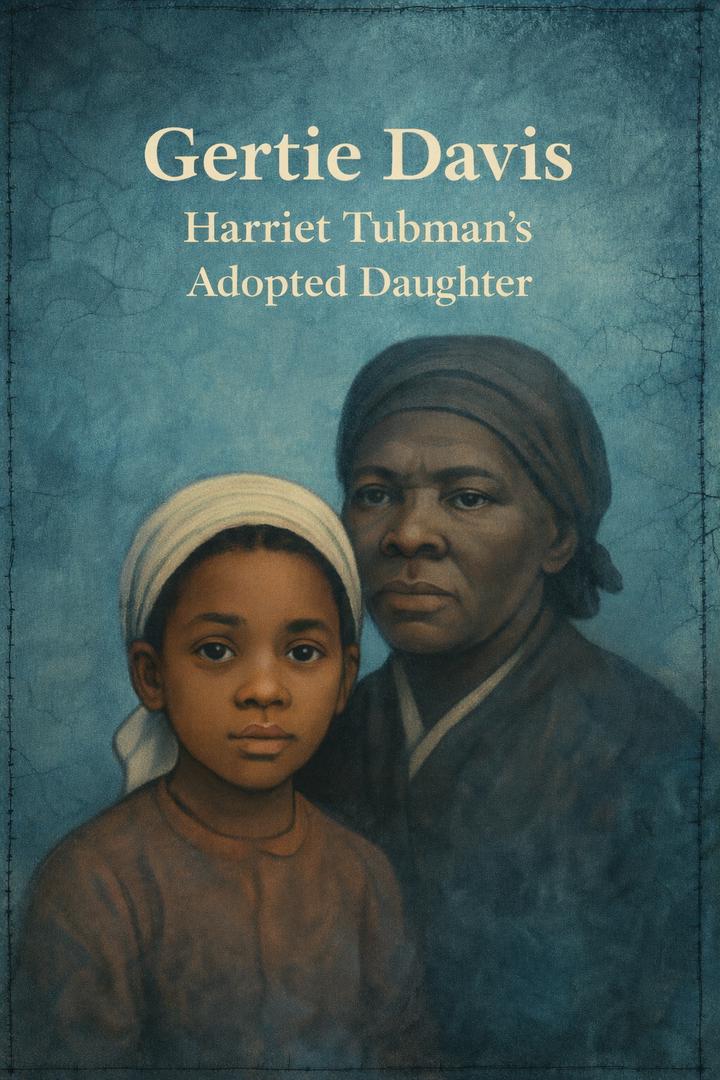
Gertie Davis is one of the lesser-known names connected to Harriet Tubman’s life, and her story offers a glimpse into Tubman’s later years in Auburn, New York. After the Civil War, Harriet Tubman settled in Auburn and later married Nelson Davis. Together, they adopted a young girl named Gertie Davis. While Harriet Tubman became widely known for her work as a conductor on the Underground Railroad, a Union scout and nurse, and a freedom fighter, much less was recorded about the family life she built in the years that followed. Historical records about Gertie Davis are limited. What is known is that she was part of the Tubman household and appears in the story of Harriet Tubman’s later life. Her presence reminds us that Tubman’s life was not only defined by public courage and national history, but also by home, caregiving, and family. That matters because history often reduces people to their most famous roles. Harriet Tubman is rightly remembered for her extraordinary bravery, but she was also a wife, a mother figure, and a woman who created a home in the midst of a life shaped by struggle and service. Gertie Davis may not be widely documented, but her name still carries meaning. She represents a quieter part of Harriet Tubman’s story, one rooted in family life and the personal world Tubman built after years of sacrifice. Sometimes history is loud. Sometimes history lives in the small details, in the names that appear only briefly, and in the lives that stand just beyond the spotlight. Gertie Davis was one of those lives. #GertieDavis #HarrietTubman #BlackHistory #AmericanHistory #HiddenHistory #LataraSpeaksTruth #repost