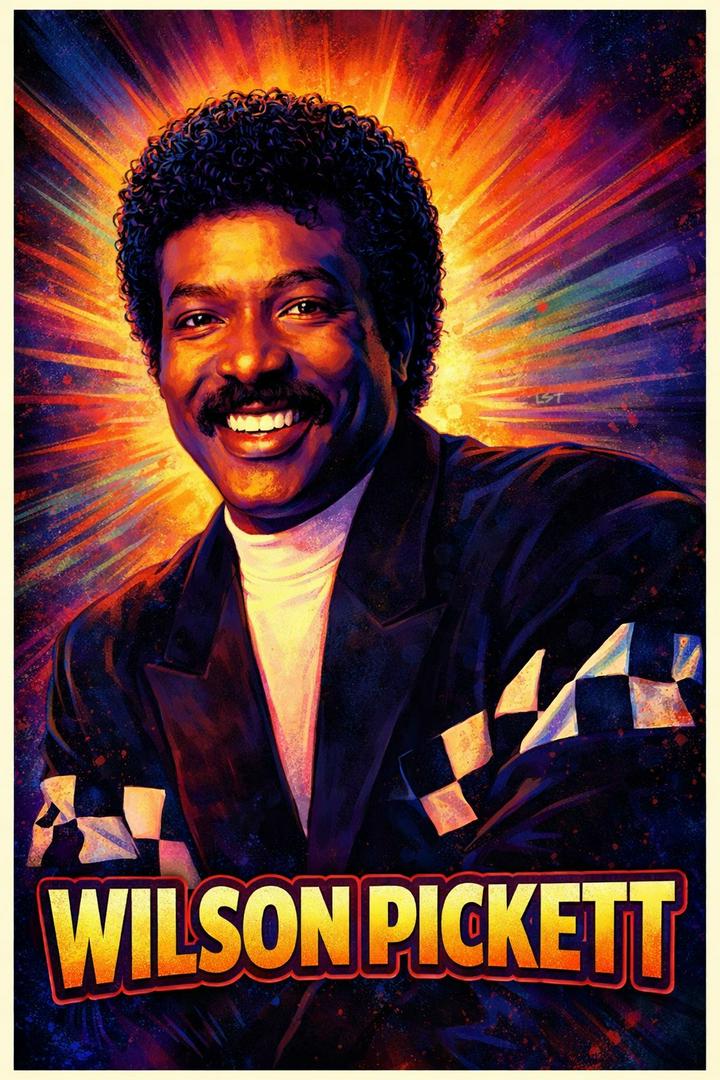
Wilson Pickett did not sing quietly. He didn’t ask permission. He arrived loud, sharp, and unapologetic, and soul music was never the same after that. Known as “Wicked” Wilson Pickett, he helped define the raw, gritty sound that turned Southern soul into a force that could not be ignored.
Born in Alabama and shaped by church, Pickett carried gospel fire straight into secular music. His voice had grit in it, pain in it, and joy too, often all in the same breath. When he recorded In the Midnight Hour, it became more than a hit…it became a blueprint. The song captured movement, urgency, and desire in a way that felt physical. You didn’t just hear it. You felt it.
Then came Mustang Sally, a track that still refuses to age out. Pickett’s delivery turned a simple story into an anthem, powered by his unmistakable shout-singing style. His performances were explosive, driven by emotion rather than polish, and that was the point. Soul music wasn’t meant to be neat. It was meant to be honest.
Pickett recorded for Stax and Atlantic during soul music’s most influential years, working with legendary musicians and producers who recognized that his voice didn’t need restraint. It needed room. Across the 1960s and early 1970s, he released a string of records that blended gospel roots, Southern rhythm, and a hard edge that pushed soul forward.
When Wilson Pickett passed away on January 19, 2006, at age 64, it marked the loss of a voice that helped shape American music. But his sound didn’t leave. It stayed in the grooves, the shouts, the call-and-response energy that still echoes through modern music.
Some voices fade. His still kicks the door open.
#WilsonPickett #SoulMusic #MusicHistory #RAndBSoul #AmericanMusic #Legends #OnThisDay #MidnightHour #MustangSally