Tag Page medicalinnovation

#medicalinnovation
justme

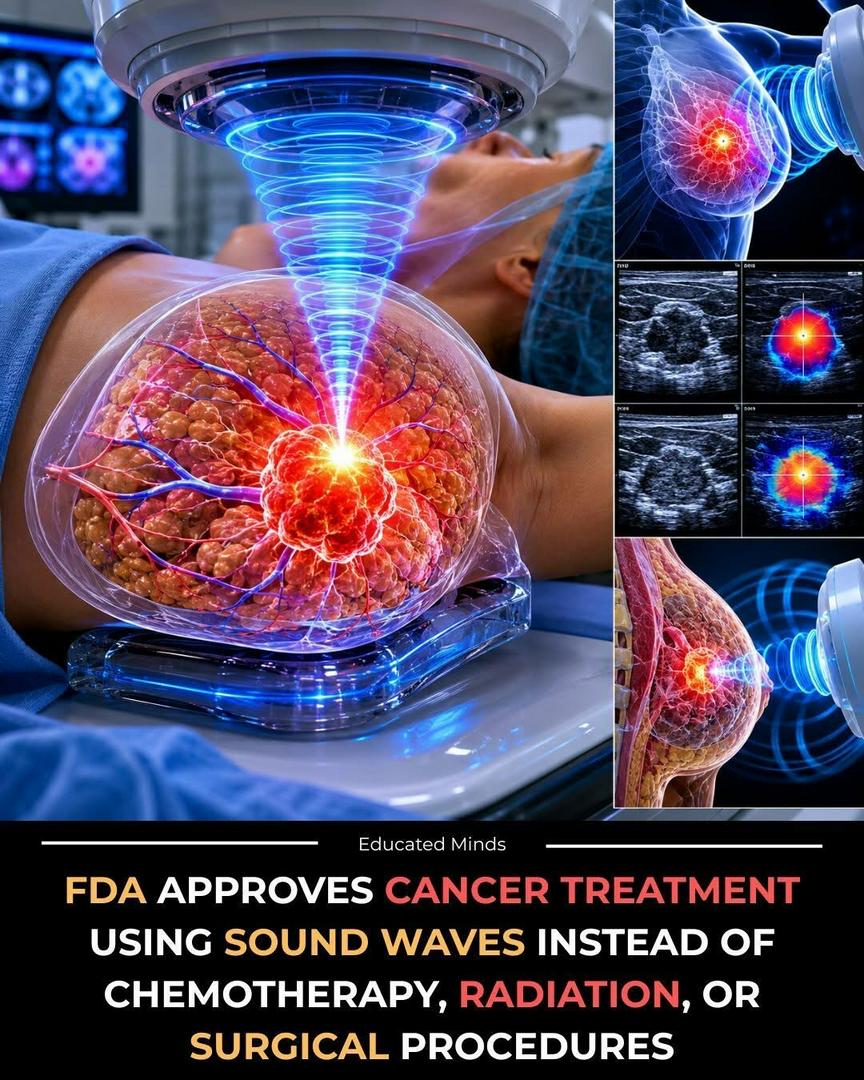
A newly approved cancer treatment can destroy tumors without a single cut. The U.S. Food and Drug Administration has approved a groundbreaking therapy that uses focused sound waves to target and destroy tumors from outside the body. Known as histotripsy, the technology can liquefy targeted tumor tissue while leaving nearby healthy tissue largely untouched. No scalpel. No radiation. No surgical incision. Because the procedure is noninvasive, many patients can go home the same day. It may also be an option for some people who are unable to undergo traditional surgery. Early results have attracted significant attention from researchers. In one landmark study, the treatment achieved a 95% success rate in meeting its clinical performance goals while producing very few major complications. For now, the technology is primarily being used for certain liver tumors, but scientists are already investigating whether it could eventually be adapted to treat cancers in other parts of the body. Fun fact: Histotripsy works by creating microscopic bubbles inside tissue. As the bubbles rapidly form and collapse, they mechanically break apart tumor cells without using heat or surgical instruments. Could treatments like this eventually make many cancer surgeries a thing of the past? #CancerResearch #MedicalInnovation #Health #fblifestyle #EducatedMinds Sources U.S. Food and Drug Administration (FDA) – Authorization of HistoSonics Histotripsy System for Liver Tumors HistoSonics – Pivotal Clinical Trial Results Radiological Society of North America (RSNA) – Research on Histotripsy for Liver Tumor Treatment

justme

Scientists have developed a wearable patch designed to target and destroy cancer cells without the need for invasive surgery. The technology is attracting attention because it could offer a less painful and more convenient treatment option for certain patients. The patch works by delivering targeted therapy directly to the affected area. By focusing treatment where it is needed most, researchers aim to reduce damage to healthy tissues while improving the effectiveness of cancer treatment. Early findings show the patch eliminated up to 97% of cancer cells in experimental testing. These results are encouraging and suggest that wearable medical technologies could play a larger role in future cancer care. Further research is underway to evaluate the safety and effectiveness of this technology across different patient groups and treatment settings. This advancement demonstrates the potential of innovative medical solutions to improve care and expand future treatment options. #CancerResearch #MedicalInnovation #Healthcare #ScienceNews #HealthTechnology

justme

Scientists have developed a wearable patch designed to target and destroy cancer cells without the need for invasive surgery. The technology is attracting attention because it could offer a less painful and more convenient treatment option for certain patients. The patch works by delivering targeted therapy directly to the affected area. By focusing treatment where it is needed most, researchers aim to reduce damage to healthy tissues while improving the effectiveness of cancer treatment. Early findings show the patch eliminated up to 97% of cancer cells in experimental testing. These results are encouraging and suggest that wearable medical technologies could play a larger role in future cancer care. More studies and clinical trials are still needed before the technology becomes widely available. However, this breakthrough highlights how innovation is creating new ways to fight cancer while reducing the need for major surgical procedures. #explainingtheworld #health #cancer #medicalinnovation #research #medicine

justme

3 patients with advanced cancers, including breast cancer, melanoma, and prostate cancer self-administered fenbendazole, a widely used veterinary drug, and experienced complete or near-complete remission, according to follow-up reports. Remarkably, the patients reported no side effects, highlighting the drug’s potential as a safe and effective anticancer therapy. Fenbendazole works by disrupting microtubule formation, interfering with energy metabolism, and triggering programmed cell death (apoptosis) in cancer cells. These mechanisms allow it to target rapidly dividing tumor cells while sparing healthy tissue, making it a promising alternative or complement to conventional chemotherapy. The patients’ experiences add to growing evidence from laboratory studies showing that fenbendazole can suppress tumor growth and improve survival in multiple cancer models. While these reports are anecdotal, they align with preclinical findings and motivate further research and clinical trials to confirm efficacy, optimal dosing, and long-term safety in humans. Experts caution that self-administering veterinary drugs is not recommended outside controlled studies, as proper medical supervision is essential. However, these cases illustrate the potential of drug repurposing, where existing medications originally intended for other purposes may provide breakthrough solutions for life-threatening diseases. Fenbendazole’s reported success underscores the importance of exploring alternative and accessible cancer therapies, demonstrating that novel uses of established compounds could transform treatment approaches and offer hope to patients facing aggressive, treatment-resistant cancers. #fblifestyle #techmedtimes #Fenbendazole #CancerTreatment #MedicalInnovation

Hatter Gone Mad

Cannabis leaves, often discarded during cultivation, contain a range of bioactive compounds including minor cannabinoids, flavonoids, and terpenes that are being studied for their potential therapeutic properties. While the highest concentrations of cannabinoids like THC and CBD are typically found in the flowers, leaves can still contain measurable amounts of lesser-known compounds such as cannabigerol (CBG) and various antioxidant flavonoids, which may contribute to anti-inflammatory and neuroprotective effects. Ongoing research is exploring how these secondary compounds may add value in medical and pharmaceutical applications, though their concentrations and clinical relevance vary depending on plant strain and processing methods. #CannabisResearch #MedicinalPlants #Phytochemicals #Cannabinoids #Terpenes #PlantScience #NaturalCompounds #MedicalInnovation #Botany #OnlyFacts Andre, C. M., Hausman, J. F., & Guerriero, G. (2016). Cannabis sativa: The plant of the thousand and one molecules. Frontiers in Plant Science, 7, 19. Russo, E. B. (2011). Taming THC: Potential cannabis synergy and phytocannabinoid-terpenoid entourage effects. British Journal of Pharmacology, 163(7), 1344–1364.

justme

Researchers at the University of Waterloo have developed a medical innovation the size of a grain of rice that could fundamentally change the treatment of kidney stones. As reported in the journal Advanced Healthcare Materials, a Canadian engineering team has successfully designed magnetic micro-robots capable of dissolving specific types of stones without the need for invasive surgery. These soft, flexible robotic strips are engineered to navigate the complex environment of the urinary tract, offering a highly targeted alternative to traditional surgical interventions or external shockwave therapies. The micro-robots are steered using external magnetic fields, allowing physicians to guide them with high precision directly to the site of the stone. Each robot is infused with the enzyme urease, which is specifically chosen for its ability to chemically break down uric acid stones. During laboratory testing, these robotic agents successfully reduced the size of stones by approximately 30 percent over a five-day period. This suggests a potential non-surgical pathway where the stones are gradually dissolved at the source rather than being mechanically broken or surgically removed. Kidney stones currently affect millions of individuals globally, often necessitating painful procedures and lengthy recovery times. The development of a minimally invasive, enzyme-based delivery system could significantly reduce patient complications and overall healthcare costs by eliminating the need for anesthesia and incisions. While further trials are necessary to confirm clinical efficacy in human subjects, this breakthrough represents a significant leap forward in the field of micro-robotics and precision medicine. It provides a promising blueprint for future treatments where complex medical tasks are performed by autonomous, guided micro-scale devices. #MedicalInnovation #Urology #Nanotechnology

justme

Three leading U.S. universities have announced a breakthrough in oncology that utilizes precisely targeted light to treat cancer, moving away from traditional invasive methods. In laboratory tests, this light-based therapy successfully obliterated 99% of aggressive cancer cells without the use of chemotherapy, toxic drugs, or radiation. This approach represents a significant shift toward non-toxic interventions that prioritize the preservation of healthy biological systems. The mechanism involves a specialized molecule that remains inert within the body until it is exposed to a specific wavelength of light. Once activated, the molecule triggers a process where cancer cells are stimulated to self-destruct from within. This entire procedure takes only minutes to complete, causing tumors to collapse while leaving the surrounding healthy tissue completely untouched and functional. This level of precision addresses the primary drawback of chemotherapy, which often acts as an indiscriminate force attacking both cancerous and healthy cells alike. By eliminating the systemic trauma of nausea, hair loss, and immune collapse, this light therapy offers a more humane alternative to traditional treatments. This innovation marks a pivotal moment in medical science, turning the fight against cancer into a targeted, localized recovery process. #CancerResearch #MedicalInnovation #Biotechnology

justme

Swiss bioengineers have developed a groundbreaking blood filtration device that utilizes nanofilters to target and remove amyloid-beta and tau proteins, the primary toxic buildups associated with Alzheimer’s disease. In outpatient sessions lasting only four hours, this technology clears these proteins from the bloodstream, leading to normalized brain protein levels. Recent results have shown that patients with moderate dementia experienced measurable cognitive improvement within just weeks of starting the treatment. The technology operates at a molecular level, employing pores sized specifically to capture harmful proteins while allowing essential blood components to pass through undisturbed. This process functions similarly to a highly selective filter, circulating the patient's blood through a specialized cartridge before returning it to the body. By directly removing existing toxic proteins rather than merely attempting to prevent their formation, the system helps the brain reach a healthier equilibrium through the blood-brain barrier. Currently categorized under an experimental label for insurance purposes, the treatment protocol involves twice-weekly sessions for an initial eight-week period, followed by monthly maintenance. This direct extraction method represents a significant shift in neurological care, moving away from traditional pharmaceutical interventions toward mechanical molecular clearance. As the medical community monitors these Swiss trials, the potential to reverse dementia symptoms marks a pivotal moment in biotechnology. #AlzheimersResearch #MedicalInnovation #BioTech