1/1

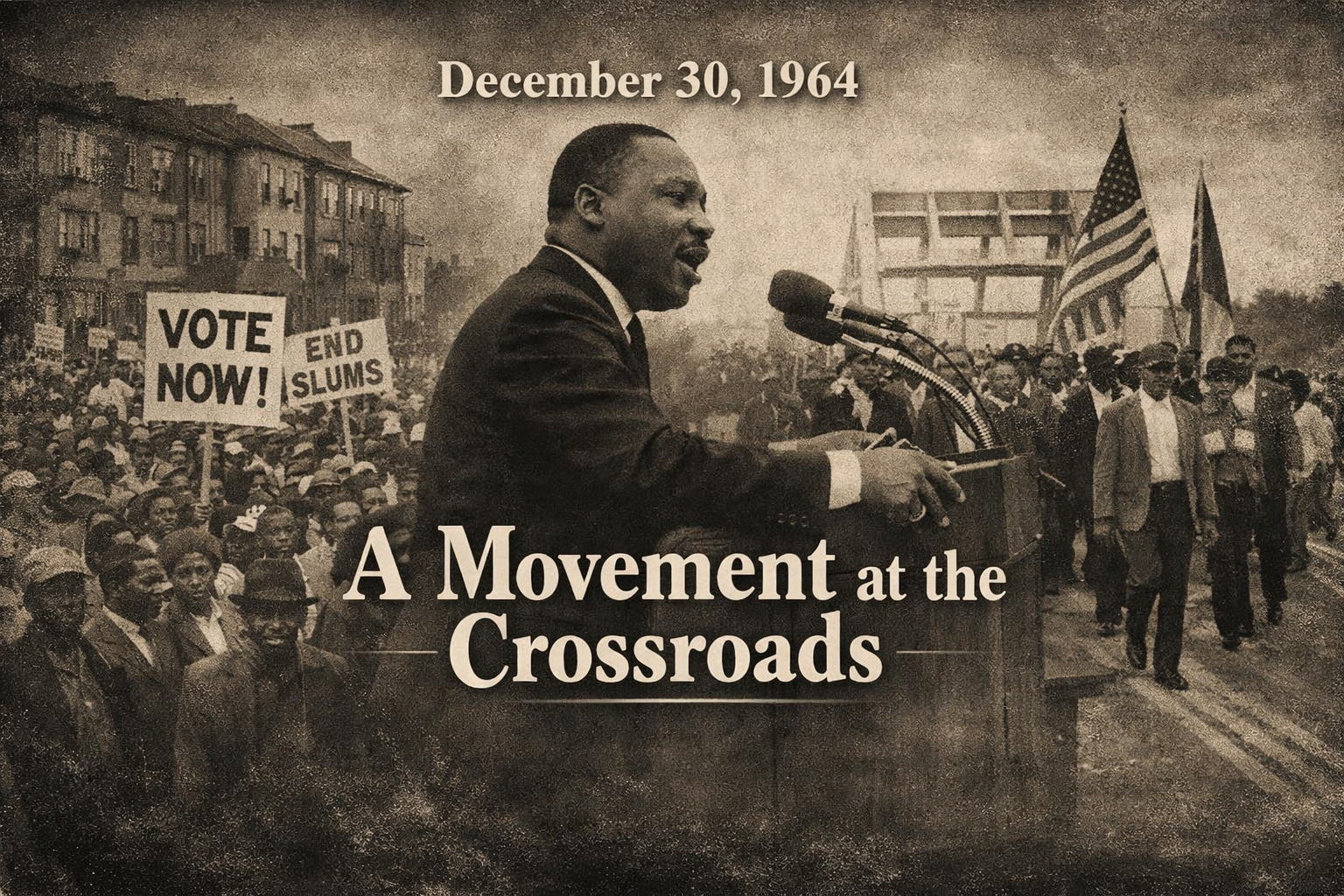
December 30, 1964 marked a moment of transition for the modern civil rights movement. In late December, Martin Luther King Jr. delivered one of his final major public addresses of the year as the movement stood between legislative victory and unresolved reality. The Civil Rights Act had been signed months earlier, yet resistance to enforcement remained widespread, underscoring that legal change had not automatically produced social or economic equality. King used his end of year speeches to signal where the struggle was headed next. While segregation laws had been formally dismantled, economic inequality, barriers to voting access, and entrenched segregation in Northern cities were becoming increasingly visible. He warned that discrimination was no longer confined to the South or expressed solely through explicit statutes, but embedded in housing patterns, employment practices, education systems, and political participation nationwide. By December 1964, King was placing greater emphasis on the connection between racial justice and economic justice. He spoke openly about poverty, unemployment, and the limits of symbolic progress when millions remained excluded from opportunity. Voting rights, still obstructed through intimidation and administrative barriers, emerged as a central priority, setting the stage for the campaigns that would define 1965. This period marked a shift in tone and strategy. The movement was moving beyond confronting visible segregation toward challenging structural inequality, a transition that would intensify public debate and resistance. King’s late December address reflected a movement no longer focused solely on passing laws, but on transforming the deeper conditions shaping American life. #History #USHistory #CivilRightsMovement #MartinLutherKingJr #VotingRights #EconomicJustice #AmericanHistory #SocialChange
2025-12-30

Donna Slavens
And Obama set civil rights back 50 years
12-31
Aragon, GA
Reply(1)

non negotiable
And Lyndon B. Johnson then signed into law the biggest welfare and entitlement acts that America is enjoying today.
12-31
Bethel, PA
Reply

Drumpfts buster
he's was the Tru modern day deciple of Christ
12-31
Howell Township, NJ
Reply

Relee187200
The civil rights act should be repealed
01-08
Charlotte, NC
Reply

SedyRedy
🙏👼💯🌞👊🫡😉
12-31
Milwaukee, WI
Reply
More comments ...
write a comment...