Tag Page VotingRights

#VotingRights
LataraSpeaksTruth

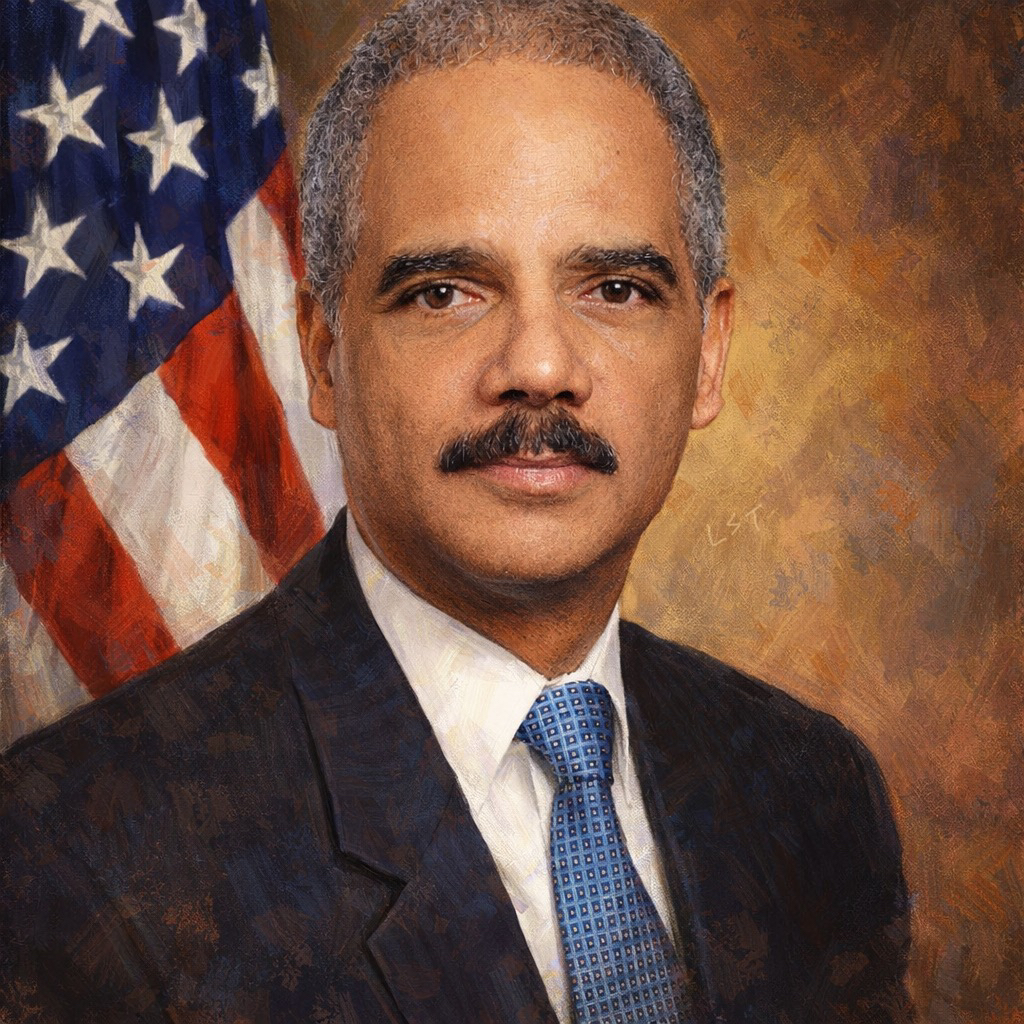
Today marks the birthday of Eric H. Holder Jr., born January 21, 1951, a public servant whose career steadily reshaped the highest levels of American law. Raised in New York City, Holder’s path was grounded in discipline, academic rigor, and a belief that justice should be applied with both firmness and fairness. After earning his law degree from Columbia University, he entered public service and built his career within the Department of Justice, where he became known for his seriousness, integrity, and measured approach to the law. He was not a figure driven by spectacle, but by consistency and institutional responsibility. In 2009, Holder made history as the first Black Attorney General of the United States, serving under President Barack Obama during a period of heightened political division and legal scrutiny. His tenure emphasized civil rights enforcement, voting protections, and a reassessment of long-standing criminal justice policies that had shaped American society for generations. At a time when confidence in public institutions was being openly challenged, Holder’s leadership represented a shift in representation and authority at the federal level, expanding the visible boundaries of who could hold power within the justice system. After leaving office in 2015, Holder remained active in public life, continuing to advocate for fair representation and civic participation. His work beyond government reinforced the idea that leadership and public responsibility extend beyond official titles. On his birthday, Eric H. Holder Jr. stands as a reminder that lasting influence is built over decades through steady service, careful use of authority, and a long-term commitment to democratic principles. His legacy continues to shape conversations about law, representation, and accountability in the United States. #EricHolder #OnThisDay #LegalHistory #PublicService #AmericanJustice #Leadership #HistoricFirst #JusticeMatters #CivilRights #VotingRights #Legacy

LataraSpeaksTruth

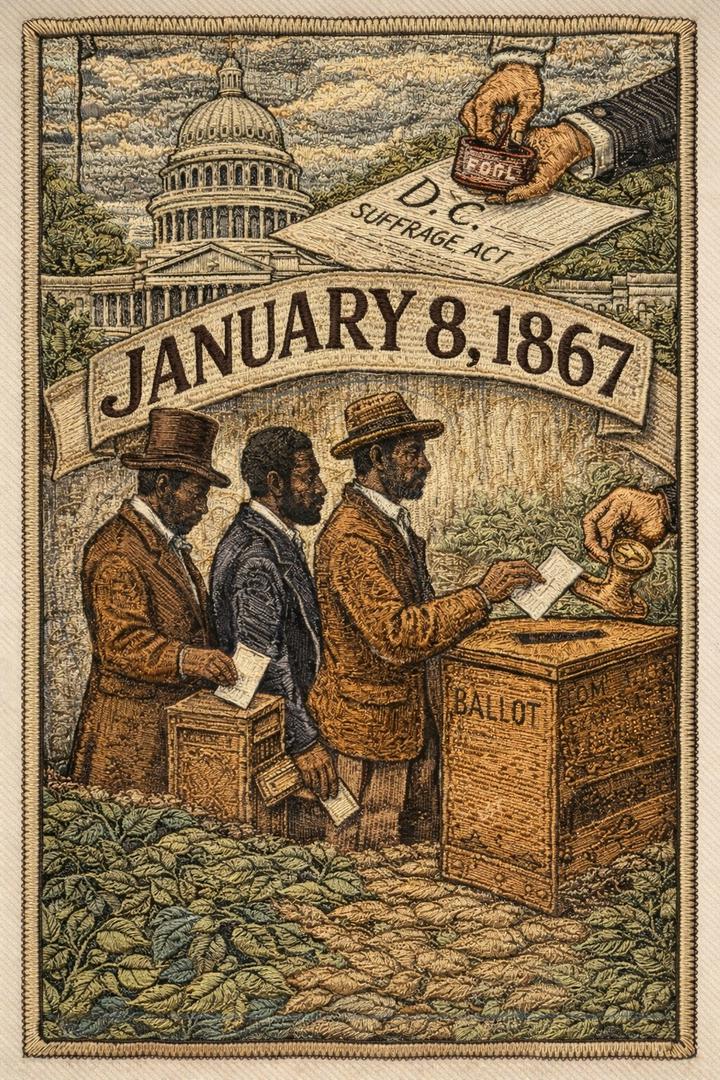
January 8, 1867 marks a turning point in American history that is rarely given the attention it deserves. On this day, Congress passed the District of Columbia Suffrage Act, granting Black men in Washington, D.C. the legal right to vote in municipal elections and public referenda. This happened three years before the 15th Amendment, at a time when most of the nation still viewed Black political participation as a danger rather than a right. This was not a promise for the future or a symbolic gesture. It was an immediate, enforceable change written directly into law. The decision did not come quietly or without resistance. President Andrew Johnson vetoed the act, arguing that extending voting rights to Black men was premature and would destabilize the country. Congress rejected that argument and overrode his veto the same day. That override mattered. It made clear that Reconstruction was not only about ending slavery on paper but about redistributing political power in real time. Washington, D.C. became a proving ground, showing that Black civic participation could exist and function despite fierce opposition. The importance of January 8, 1867 is often overlooked because it does not fit neatly into the simplified version of history many are taught. Voting rights did not suddenly appear with the 15th Amendment. They were demanded, tested, expanded, restricted, and attacked repeatedly. This moment captures Black men exercising political agency while the nation was still debating whether they deserved it. It reminds us that progress has never required national comfort or unanimous approval. Rights have always moved forward through pressure, confrontation, and refusal to wait. January 8 stands as proof that access was forced open long before the country was ready to admit it. #January8 #OnThisDay #BlackHistory #ReconstructionEra #VotingRights #DistrictOfColumbia #AmericanHistory #HiddenHistory #CivilRights

LataraSpeaksTruth

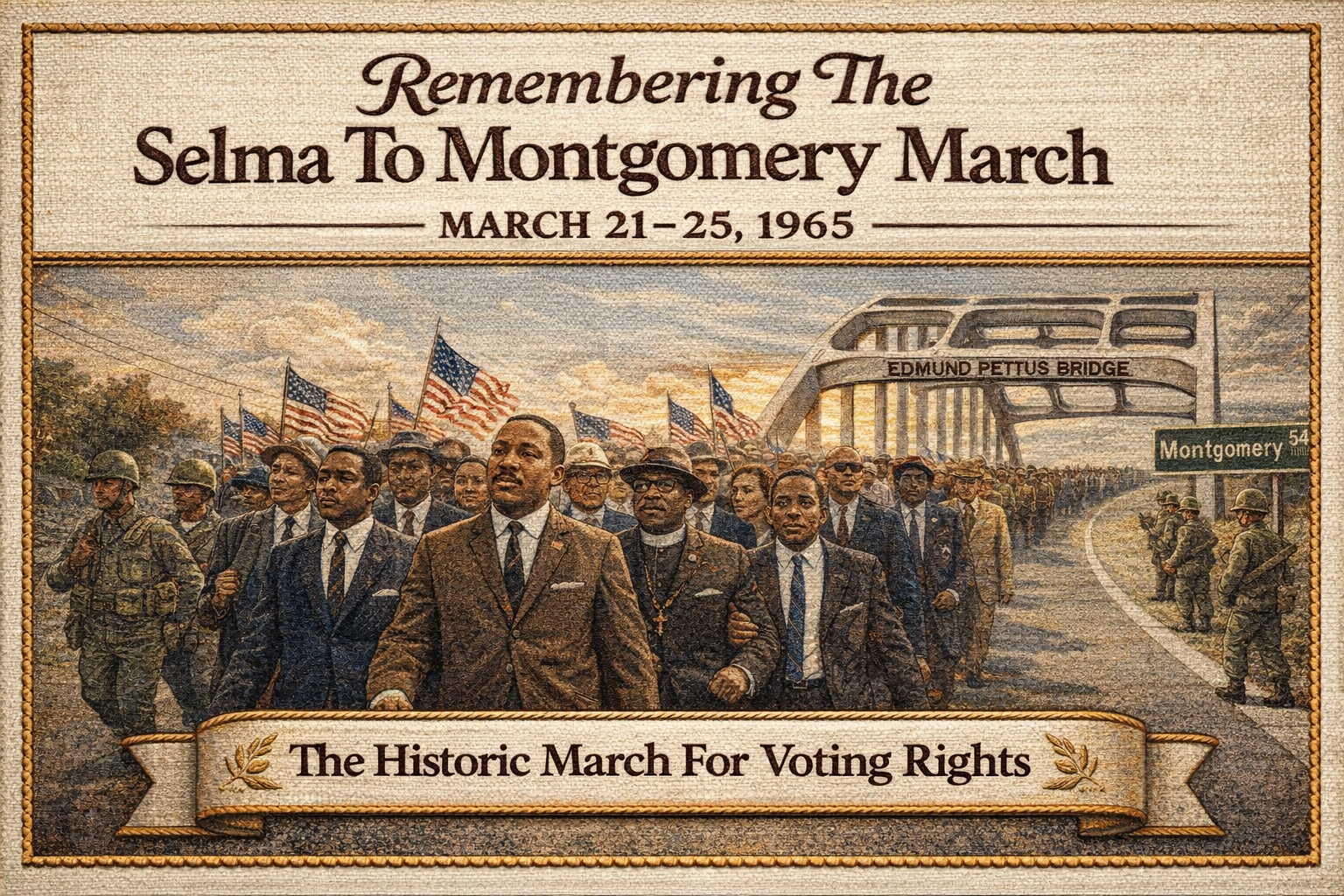
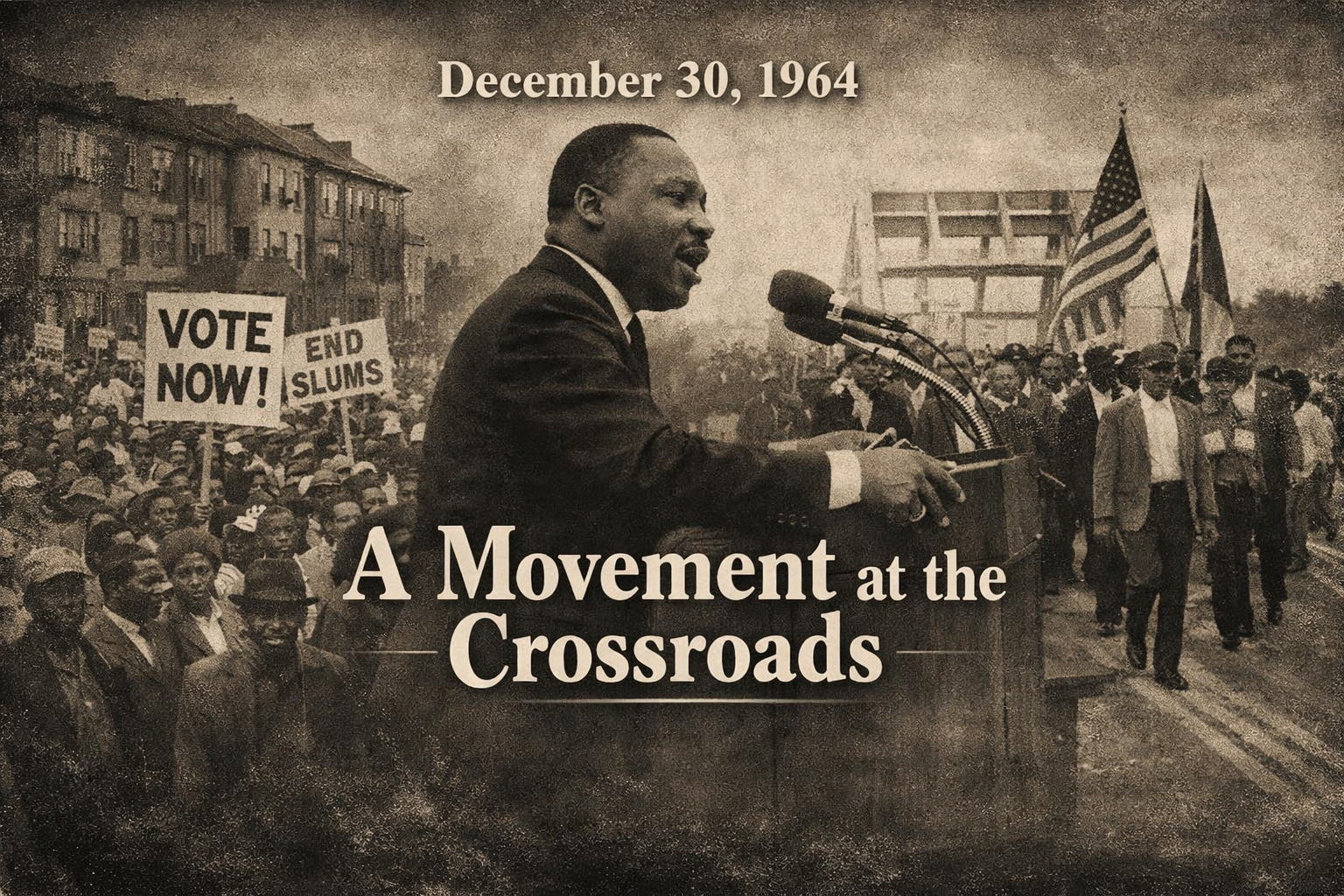
December 30, 1964 marked a moment of transition for the modern civil rights movement. In late December, Martin Luther King Jr. delivered one of his final major public addresses of the year as the movement stood between legislative victory and unresolved reality. The Civil Rights Act had been signed months earlier, yet resistance to enforcement remained widespread, underscoring that legal change had not automatically produced social or economic equality. King used his end of year speeches to signal where the struggle was headed next. While segregation laws had been formally dismantled, economic inequality, barriers to voting access, and entrenched segregation in Northern cities were becoming increasingly visible. He warned that discrimination was no longer confined to the South or expressed solely through explicit statutes, but embedded in housing patterns, employment practices, education systems, and political participation nationwide. By December 1964, King was placing greater emphasis on the connection between racial justice and economic justice. He spoke openly about poverty, unemployment, and the limits of symbolic progress when millions remained excluded from opportunity. Voting rights, still obstructed through intimidation and administrative barriers, emerged as a central priority, setting the stage for the campaigns that would define 1965. This period marked a shift in tone and strategy. The movement was moving beyond confronting visible segregation toward challenging structural inequality, a transition that would intensify public debate and resistance. King’s late December address reflected a movement no longer focused solely on passing laws, but on transforming the deeper conditions shaping American life. #History #USHistory #CivilRightsMovement #MartinLutherKingJr #VotingRights #EconomicJustice #AmericanHistory #SocialChange

LataraSpeaksTruth

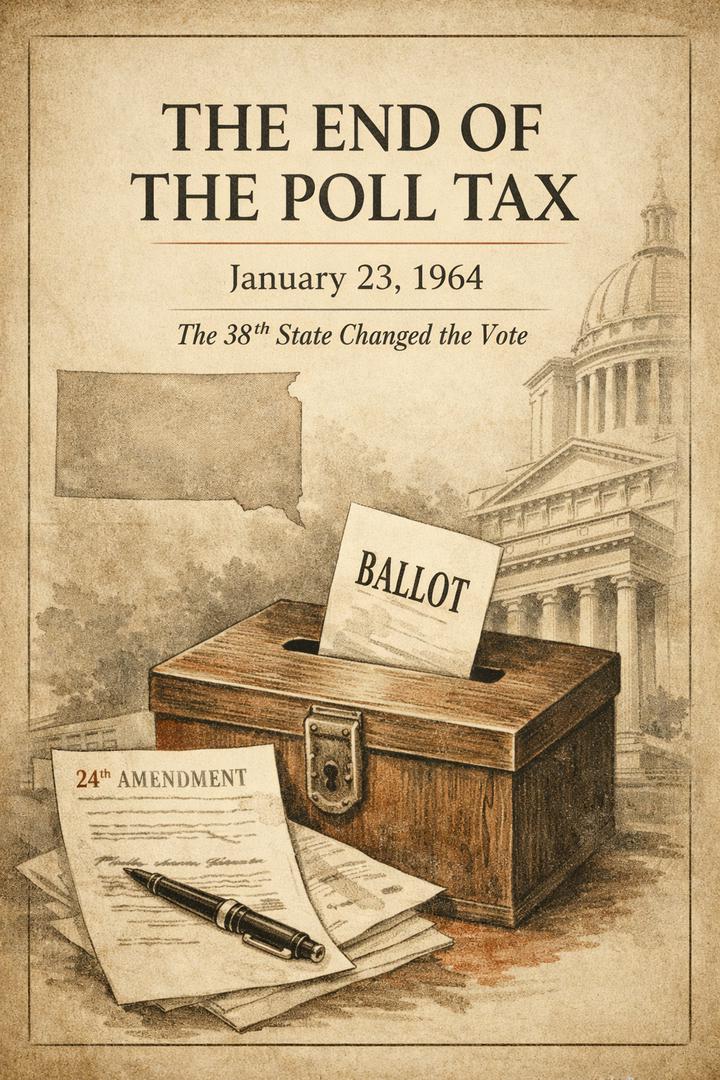
On January 23, 1964, a quiet legislative vote in South Dakota echoed across the entire United States. By becoming the 38th state to ratify the 24th Amendment, South Dakota provided the final “yes” needed to cement a fundamental change in American democracy…the official end of the poll tax in federal elections. For decades, the poll tax had operated as a so-called legal barrier to the ballot box. Framed as a simple administrative fee, it was anything but neutral in practice. In many Southern states, voters were required to pay not only the current tax but accumulated fees for every year they had not voted. This system disproportionately blocked Black Americans and poor white citizens from participating in elections. Combined with literacy tests, intimidation, and economic retaliation, the poll tax ensured political power remained tightly controlled. The road to the 24th Amendment was long and deliberate. Proposed by Congress in 1962, it required approval from three-fourths of the states. As 1964 began, the nation watched the count inch closer to the threshold. When South Dakota’s legislature ratified the amendment on January 23, it crossed the constitutional finish line, making the amendment law. The amendment marked a major victory for voting access by declaring that the right to vote in federal elections could not be conditioned on payment. Still, the work was unfinished. Some states continued to impose poll taxes in state and local elections until the Supreme Court struck them down entirely in 1966. Today, the anniversary of South Dakota’s ratification stands as a reminder that voting rights have never been freely handed over. They have been argued for, organized for, and fought for…often quietly, often against resistance, but always with lasting impact. #OnThisDay #USHIstory #VotingRights #Democracy #24thAmendment #CivilRightsHistory #SouthDakota #HistoryMatters

You've reached the end!
Tag: VotingRights | LocalAll