1/1
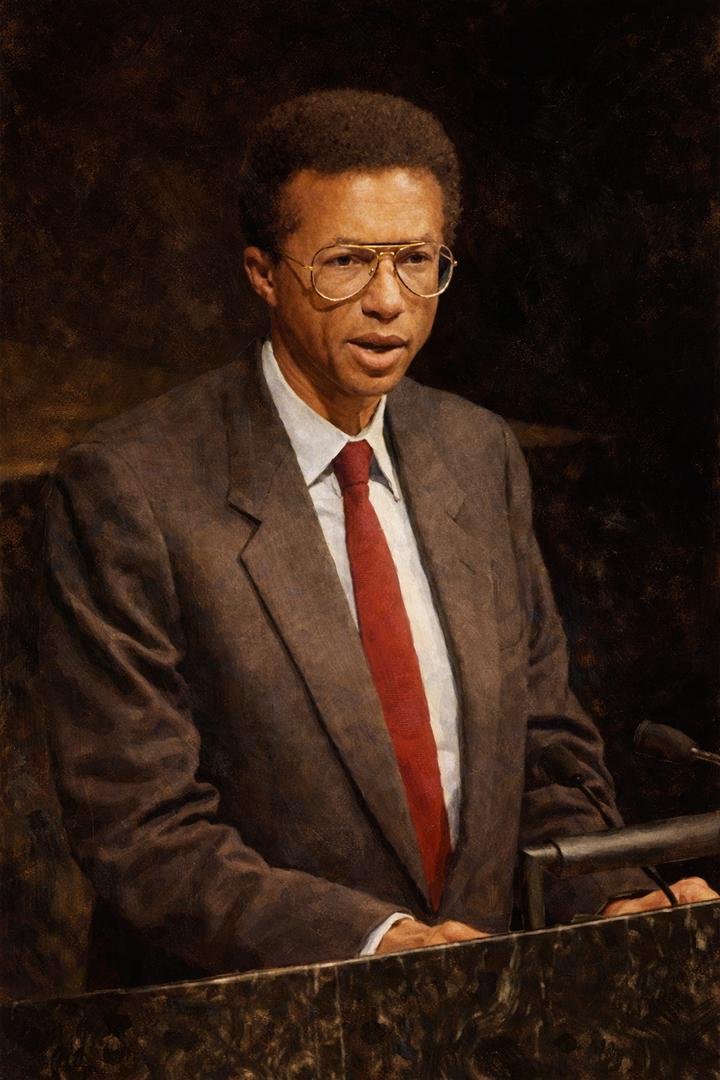
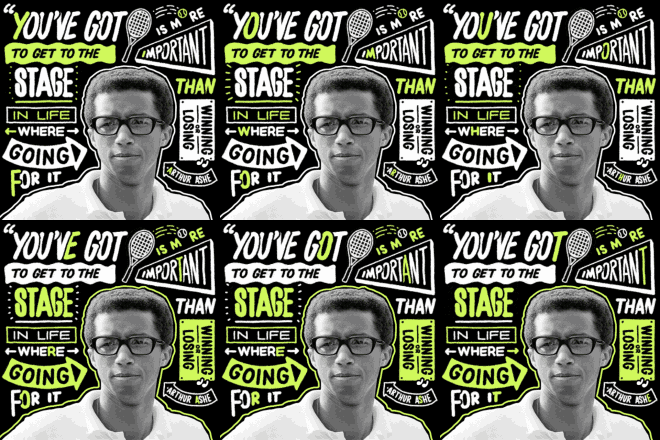
On January 28, 1970, tennis star Arthur Ashe was denied entry to compete in the South African Open after being selected for the U.S. team. The denial was not about his talent. It was about his voice. Ashe had been outspoken in his opposition to South Africa’s apartheid system, openly criticizing racial segregation and inequality. South African officials refused to grant him a visa, making it clear that his stance, not his skill, was the issue. This moment exposed how deeply politics and discrimination were woven into international sports. At the time, Ashe had not yet become the first Black man to win Wimbledon, a milestone he would achieve in 1975. But this denial marked him as more than an athlete. It positioned him as a global figure willing to sacrifice opportunity for principle. Ashe continued to advocate for human rights throughout his life, using his platform to address injustice both on and off the court. His exclusion in 1970 stands as evidence that progress often comes with a cost, especially for those who refuse to stay silent. Arthur Ashe’s legacy is not only measured in trophies, but in courage. #January28 #ArthurAshe #SportsHistory #AthleteActivism #GlobalHistory #PrincipleOverComfort #Legacy
2026-01-29

Timothy
it would only drive him to win Wimbledon, the US Open, the Australian Open, three grand slams and voted in 75..the number one tennis player in the world, that would leave him to the tennis Hall of Fame 🎾 doesn't get any better than that 💞🫶🏽💯
01-29
Houston, TX
Reply
25
Bap
He was an amazing person!
02-01
Marathon, FL
Reply
22

Tony Wu
He was also a great son. I was at a breakfast dinner near the airport near Denver one morning at the counter having breakfast of a Denver omelette when in came Author Ashe, sat next to me and asked what was a Denver omelette to the man behind the counter. I said I was having it pointing at my plate. He also ordered one with coffee. I asked if he was in the area for a tournament and he said he was taking his father to go fishing every year! I had admired him for years and that admiration only grew further until his passing years later!
02-01
Virginia Beach, VA
Reply(2)
17

Jolene Cooper
Arthur Ashe was a NOBLE MAN who stood up against RACISM & INJUSTICES in our WORLD! GOD BLESS HIS MEMORY 🙏🙏🙏💙💙💙
02-02
Minneapolis, MN
Reply
14

BV B

01-31
Annapolis, MD
Reply
14

Jeremiah Cuffee
Will always be remembered for his courage 🙏🏿
02-02
Chesapeake, VA
Reply
12

Ryan Harris
He is great black tennis player RIP
02-02
Brockton, MA
Reply(2)
9

Patricia Morris
Always admired him as a man he didn't demand respect he commanded it with his actions.🙏🏼
02-03
Baton Rouge, LA
Reply
7

Redgrin Grumble
A lot can be said about South Africa, but their penal system is great. Nelson Mandela was convicted once, sent to prison, and NEVER reoffended for the rest of his life!
02-02
Conway, SC
Reply(8)
1

Elise Curry
Mr. Ashe was a courageous man!
02-03
Syracuse, NY
Reply
6
More comments ...
write a comment...