Tag Page America

#America
1776 Patriot

Finding an Assassin: The Manhunt for John Wilkes Booth

On the night of April 14, 1865, after assassinating President Abraham Lincoln at Ford’s Theatre, John Wilkes Booth vanished into the darkness of Washington. He crossed the Navy Yard Bridge into Maryland, his leg broke from the leap to the stage. Within hours, Secretary of War Edwin Stanton launched one of the largest manhunts in U.S. history. Telegraphs carried his description to surrounding states and mounted patrols sealed the capital. Rewards of $100,000 prompted tips, rumors, and informants. For days, Union forces pursued Booth and his accomplice David Herold across Maryland and Virginia. Cavalry swept roads, infantry scoured forests, and scouts tracked footprints through barns, and swamps. Detectives questioned locals, tavern keepers, and ferrymen, compiling leads that shifted squads across counties. At Surratt’s Tavern, Booth and Herold collected a carbine (gun), whiskey, and field glasses (portable telescopes for observing distant roads), left earlier, evidence later used against Mary Surratt. Farther south, they bartered for food and supplies, which locals soon reported. At Dr. Samuel Mudd’s home, Booth’s broken leg was set, as patrols pressed closer. The chase became a deadly game of anticipation. False sightings and misdirections tested Union coordination, but telegraph lines kept updates flowing. Cavalry patrolled roads, foot soldiers scoured farms, and units redeployed with every lead. Booth’s options dwindled as the net tightened, forcing him deeper into Virginia. The pursuit ended on April 26 at Richard Garrett’s farm near Port Royal. Lieutenant Edward Doherty’s cavalry surrounded the barn. Herold surrendered, but Booth refused, declaring he would never be taken alive. Soldiers torched the structure. Booth came to the door, raised his gun, and was struck in the neck by a bullet fired by Sergeant Corbett. He lingered for five hours before dying at dawn. The twelve-day manhunt was over. #USHistory #History #USA #America #Virginia #AmericanHistory

Finding an Assassin: The Manhunt for John Wilkes BoothFinding an Assassin: The Manhunt for John Wilkes BoothFinding an Assassin: The Manhunt for John Wilkes BoothFinding an Assassin: The Manhunt for John Wilkes Booth
1776 Patriot

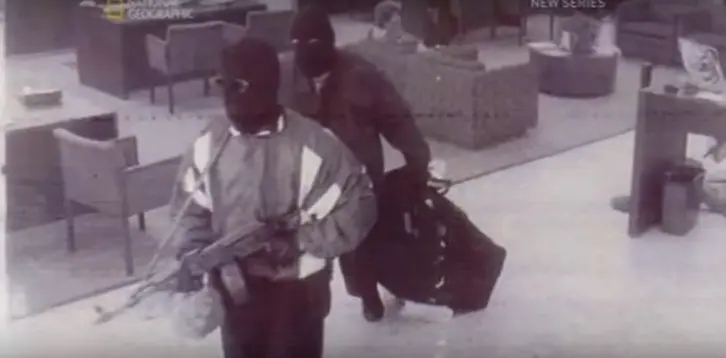
America’s Most Elusive Bank Robber: Carl Gugasian Carl Gugasian, known as the Friday Night Bank Robber, is considered the most prolific solo bank robber in American history. Over a criminal career spanning roughly three decades from the early 1970s until his arrest in 2002, Gugasian carried out more than fifty confirmed bank robberies across multiple states on the East Coast. His operations were highly methodical and precise. He targeted small town banks often located near wooded areas or highway on ramps to make escape easier and reduce the chance of police interception. He typically struck on Friday nights shortly before closing time to minimize customers while maximizing cash on hand. Gugasian carefully disguised himself with masks and loose clothing to conceal his identity and appearance. He conducted detailed surveillance of each target, sometimes visiting a bank multiple times over weeks to note employee routines, security camera placements, and the timing of cash deliveries. His robberies were executed quickly, often lasting less than two minutes. He would vault over counters, grab cash from the tills, and disappear into nearby woods or back roads. Many times he used a dirt bike to escape into forested terrain and then transitioned to a waiting vehicle. He kept detailed notes, maps, and surveillance of potential targets in his home along with a large cache of weapons and disguises. Despite decades of robberies, he evaded capture until 2002, when law enforcement tracked him through his patterns, surveillance notes, and escape routes. He admitted to more than 50 robberies totaling around $2.3 million. He was sentenced to over 100 years in federal prison, reduced to 17 years due to cooperation, and served approximately 15 years before being released in 2017 at age 69. Gugasian stands out not for a single spectacular heist but for the number and consistency of his crimes carried out with precision over decades. #TrueCrime #USHistory #America #USA #History

1776 Patriot

Arkansas ICBM Silo Accident: When A Titan II Almost Went Nuclear

On September 18, 1980, a routine maintenance operation at Titan II Missile Complex 374-7 near Damascus, Arkansas, escalated into one of the most serious nuclear accidents in U.S. history. Airmen were performing detailed maintenance on the missile, which stood 103 feet tall, weighed 33 tons, and housed a W-53 thermonuclear warhead capable of 9 megatons, enough to destroy an entire city. During the operation, an airman accidentally dropped an 8-pound socket wrench. The tool fell roughly 80 feet, bounced off a steel thrust mount, and punctured the missile's first-stage fuel tank, releasing Aerozine 50, a highly flammable liquid propellant that reacts instantly with dinitrogen tetroxide. The silo, buried deep and designed to withstand conventional blasts, became a volatile trap. The Air Force evacuated personnel and began emergency containment. Crews attempted to pump water into the silo to dilute fuel vapors and vent pressure, but the chemical reaction persisted. Overnight, the situation worsened, and the combination of leaking fuel and oxidizer created a constant threat of fire or explosion. Around 3:00 a.m. on September 19, a massive explosion occurred, launching the 740-ton silo door hundreds of feet away. The missile and its W-53 warhead were ejected intact. Safety mechanisms prevented a nuclear detonation or radioactive release, but the blast destroyed the silo and nearby equipment. One airman was killed and 21 others injured, mostly emergency responders from Little Rock Air Force Base. Senior Airman David Livingston died, while others suffered burns, broken bones, and shock. The images of the blast became a stark symbol of the Titan II program's dangers. The Damascus accident revealed serious weaknesses in missile maintenance and emergency safety protocols. It showed how a minor error could almost trigger a nuclear catastrophe and prompted the Air Force to review safety measures across the missile program. #USHistory #History #USA #America #Missiles #Defense

Arkansas ICBM Silo Accident: When A Titan II Almost Went NuclearArkansas ICBM Silo Accident: When A Titan II Almost Went NuclearArkansas ICBM Silo Accident: When A Titan II Almost Went NuclearArkansas ICBM Silo Accident: When A Titan II Almost Went NuclearArkansas ICBM Silo Accident: When A Titan II Almost Went Nuclear
1776 Patriot

Chaos and Infection: The Assassination of President Garfield On July 2, 1881, shortly after 9:30 a.m., President James Garfield, the 20th president of the United States, was shot at Washington’s Baltimore and Potomac Railroad Station by Charles Julius Guiteau, a mentally unstable lawyer seeking political reward. Garfield, traveling with Secretary of State James Blaine, had no Secret Service protection. Like Lincoln in 1865, Garfield was vulnerable. Guiteau, who studied the station for days, carried a .442 caliber British Bulldog revolver and fired twice. The first bullet shattered Garfield’s right humerus. The second lodged in his back near the pancreas and kidneys, passing within millimeters of the aorta. Chaos erupted as travelers screamed, trunks toppled, and dozens froze. Blaine knelt beside Garfield. Guiteau shouted, “I did it! I just shot the president. I had to save the Republican Party!” Doctors led by D. Willard Bliss repeatedly probed Garfield’s wounds with unsterilized fingers and instruments during the first weeks. Bliss said, “I can find it with my finger if it is anywhere to be found,” spreading infection that caused abscesses and sepsis. Alexander Graham Bell tried to locate the bullet with a metal detector, but bed springs distorted results. Garfield endured 80 days of fever, abscesses, and severe weight loss, reportedly saying, “I never expected to live to see the end of this.” Newspapers reported daily, and tens of thousands followed updates nationwide. Garfield died September 19, 1881, 79 days after being shot. Vice President Chester Arthur assumed office. Guiteau was tried, convicted, and hanged June 30, 1882. The assassination exposed presidential security weaknesses and prompted the Pendleton Act of 1883, establishing merit-based federal employment. Repeated probing of Garfield’s wounds caused infection, contributing to the 30–40% mortality for major bullet injuries, turning a survivable wound fatal. #History #USHistory #America #USA

1776 Patriot

The Gallows Await: Lincoln’s Conspirators Meet Their Fate

After President Abraham Lincoln was shot on April 14, 1865, a military commission tried eight conspirators, including Mary Surratt, Lewis Powell, David Herold, and George Atzerodt. The trial began on May 9, 1865, in Washington, D.C., under strict guard. Witnesses described Booth’s movements in Ford’s Theatre and the coordination among the conspirators. Letters and receipts confirmed the plot. Mary Surratt’s boarding house had hosted secret meetings, and testimony revealed she delivered messages and supplied resources. Powell’s attack on Secretary Seward and Atzerodt’s failed attempt on Vice President Johnson were recounted in shocking detail. After weeks of testimony, the commission sentenced Surratt, Powell, Herold, and Atzerodt to death by hanging. The courtroom had been tense, every word measured. On July 7, 1865, the executions took place at the Washington Arsenal. Each prisoner was led individually to the gallows in the early morning. Soldiers kept strict silence while physicians inspected the ropes and knots. Mary Surratt, calm but solemn, stepped onto the platform first, becoming the first woman executed by the United States federal government. Powell followed, appearing tense but composed. Herold trembled and hesitated before stepping to the edge, while Atzerodt’s face was pale, lips tight. The wind stirred lightly, carrying an eerie quiet. Every step onto the platform seemed to stretch time. The hangings proceeded with precise military procedure, each drop ending in immediate death. Officers, physicians, and select journalists observed, noting the differing reactions of the condemned. Powell held himself stiffly until the last second, Herold shook visibly, and Surratt maintained a haunting dignity. Atzerodt’s fear was clear as he fell. The morning was silent except for the finality of the moments, leaving a lasting impression. The echoes of the trap lingered, a grim reminder of the cost of conspiracy. #USHistory #History #America #Lincoln #EarlyAmerica

The Gallows Await: Lincoln’s Conspirators Meet Their FateThe Gallows Await: Lincoln’s Conspirators Meet Their Fate
1776 Patriot

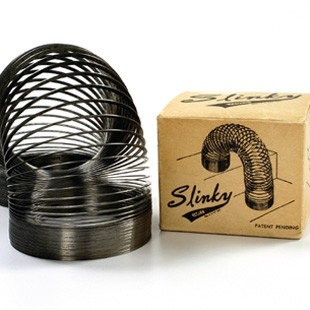
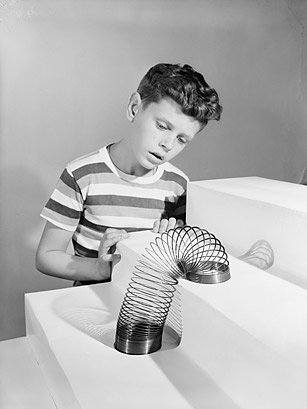
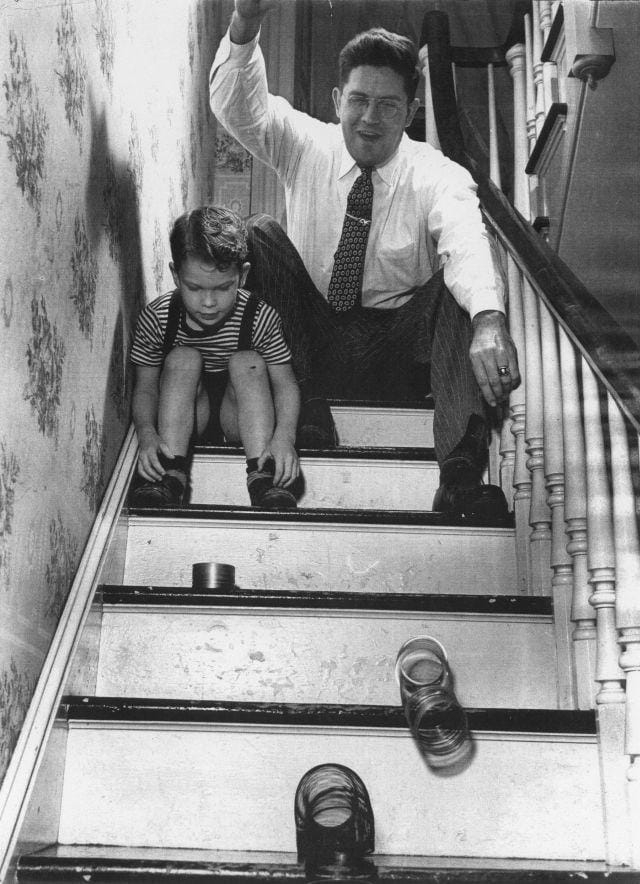
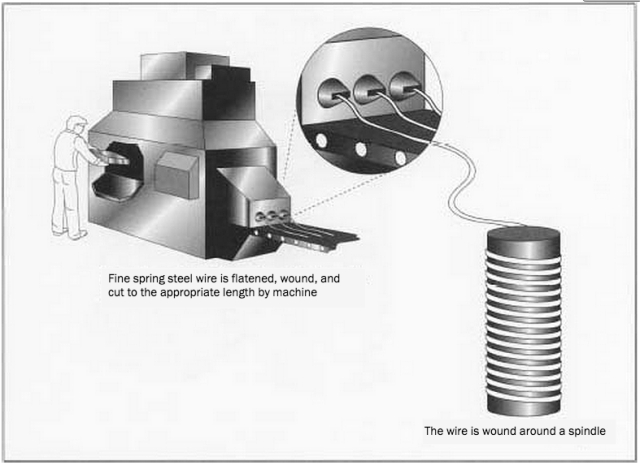
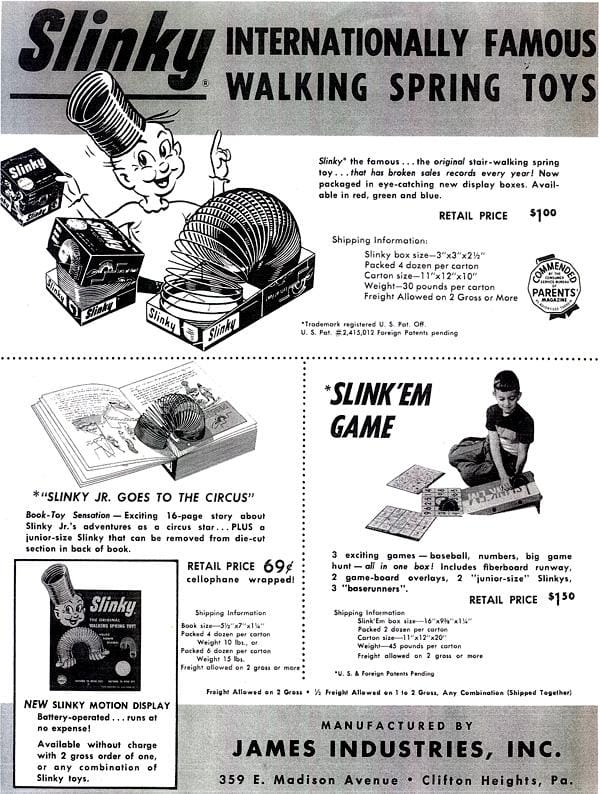
WWII Walking Wonder: The Untold Story of the Slinky In 1943, naval engineer Richard James was working in his Philadelphia workshop on tension springs meant to stabilize sensitive instruments aboard battleships during World War II. While adjusting a spring, it slipped from his hands and “walked” across the floor in a mesmerizing motion. James was astonished. He and his wife, Betty, immediately realized this accidental movement could be the basis for a playful invention. They experimented with dozens of prototypes, measuring how far springs could travel, how many flips they could make, and how quickly they could complete a descent. After testing hundreds of coils, they determined that a spring 2.5 inches in diameter made from high-grade Swedish steel produced the most consistent walking effect. Slight variations in coil thickness, tension, and length drastically changed the motion, and only about 2% of springs tested achieved the ideal “walk.” The war influenced materials and timing: steel was rationed, making their carefully sourced Swedish steel highly valuable, and small-scale production required meticulous hand-winding and testing. Post-war America’s shift to consumer goods in 1945 created the perfect market moment, allowing the Jameses to bring their invention to stores. Each original Slinky sold for $1, equivalent to roughly $17 today. Finally, they revealed the creation to the public: at Gimbels department store in Philadelphia, 400 units were displayed, and all sold within 90 minutes. By the early 1950s, Slinky was sold in over 30,000 stores nationwide, and more than 50 million units were purchased by 1960. Today, over 300 million Slinkys are sold annually worldwide, including metal, plastic, glow-in-the-dark, and themed editions like Disney and Star Wars. The toy also serves as an educational tool, demonstrating wave motion, gravity, and momentum in classrooms across the globe. #WWII #WWIIHistory #USHistory #History #America #USA #Military #Toys

Curiosity Corner

Poisoned or Natural Death? The Stanley Meyer Case and the Car That Could Run on Water Stanley Meyer was an American inventor who claimed to have developed a car that could run on water using a hydrogen based system. He said his technology split water into hydrogen and oxygen on demand to fuel a car without gasoline. Meyer often stated, “I want to give the world a clean energy source that cannot be controlled.” His invention drew global attention, skepticism, and legal scrutiny before his sudden death in 1998. Meyer collapsed while eating at a restaurant in Grove City, Ohio, during a meeting with European investors who were interested in funding and developing his water fuel technology. Witnesses claimed he said, “They poisoned me,” sparking speculation that energy interests or other powerful groups wanted to suppress his invention. However, no verified evidence of poisoning exists. The official cause of death was a cerebral aneurysm, a sudden rupture of a blood vessel in the brain. Medical experts note aneurysms can happen without warning and may resemble poisoning in their suddenness. No toxicology reports showed poison, and no homicide investigation followed. Legally and medically, his death was ruled natural. Some critics question whether the government could have influenced legal or medical findings to prevent public knowledge of Meyer’s technology, citing the Invention Secrecy Act, which allows suppression of sensitive inventions. While there is no proof, the law demonstrates that inventions with potential national impact can be legally restricted, keeping them hidden for decades. Meyer’s story sits at the crossroads of bold claims, secrecy, and sudden death. Was this simply a tragic medical event, or could powerful forces have deliberately kept a revolutionary invention hidden from the world? #Science #Physics #USA #History #USHistory #America #Physics

1776 Patriot

The Two Largest House Losses in Midterm History Midterm elections are held every 4 years in the middle of a president’s term an determins: all 435 House of seats, 1/3rd of the Senate, and gives voters a chance to reshape Congress. Presidents typically lose, 28 House seats on average, but some elections produced historic swings that reshaped American politics and policy. The 1874 midterms were one of the most severe defeats of the 19th century. President Ulysses S. Grant’s Republicans lost 93 of 195 House seats, about 36% of their seats. The Panic of 1873, a severe economic depression, combined with corruption scandals in Grant’s administration, fueled public anger. Voters across the South and industrial North abandoned the Republican Party, giving Democrats control of the House for the first time since the Civil War. Turnout was strong, economic hardship dissatisfaction motivated voters. Two decades later, the 1894 midterms produced the largest House seat loss in U.S. history. Under President Grover Cleveland, Democrats lost 127 of 225 House seats, about 56% of their seats. All 225 seats were contested, and the Panic of 1893 triggered one of the worst depressions of the century, leaving farmers, laborers, and urban workers across the Midwest and Northeast frustrated with Cleveland’s response. Republicans swept the House, marking a historic realignment. Turnout reached roughly 70% in key districts, and economic crises mobilized voters to reshape priorities almost overnight. In these two elections economic conditions, perceptions of presidential leadership, and voter engagement produced sweeping shifts in the House. In both 1874 and 1894, the opposition capitalized on dissatisfaction economic uncertainty and dramatically altered power, forcing the president’s party to reassess strategy. The elections under Grant and Cleveland remain the most consequential House losses in American history. #Politics #ElectionInsights #History #USA #USHistory #America #News

1776 Patriot

First Flight: Inside the Wright Brothers Historic Design

The Wright brothers’ first powered airplane, the Wright Flyer, achieved controlled flight on December 17, 1903, at Kill Devil Hills near Kitty Hawk, North Carolina. Orville and Wilbur were inspired by earlier aviation pioneers and by observing birds. They focused on control and stability, not just engine power, which had hindered prior inventors. Their breakthrough was a three-axis control system: a forward elevator for pitch, a rear rudder for yaw, and wing-warping for roll. Wing-warping twisted the wingtips via cables attached to the pilot’s hip cradle, rolling the airplane side to side. The elevator tilted the nose up or down, controlling pitch. The rudder turned the plane left or right, controlling yaw for directional changes without losing balance. Together, these controls allowed the pilot to maneuver safely in all three dimensions. Construction took about three years, from 1900 glider experiments to the powered prototype. The airframe used spruce and ash, with muslin stretched over the wings. Components were hand-shaped with saws, planes, and chisels. The 12-horsepower gasoline engine powered two chain-driven wooden propellers on a reinforced frame. To refine designs, the Wrights built a wind tunnel in Dayton: a small wooden box with a fan producing airflow, a track for miniature wings, and a balance to measure lift and drag. Many airfoil shapes were tested before full-scale construction. A wooden launch rail helped smooth takeoffs. On December 17, 1903, the Flyer’s first flight covered 120 feet in 12 seconds; later flights reached 852 feet. Afterward, the Wrights developed the 1904 Flyer II and 1905 Flyer III, with stronger frames, more powerful engines, refined control surfaces, and longer-range capabilities. The Flyer proved that mastery of three-axis control: roll, pitch, and yaw and careful engineering, including wind-tunnel testing, was essential to powered flight. laying the foundation for modern aviation. #USHistory #History #America #Aviation

First Flight: Inside the Wright Brothers Historic DesignFirst Flight: Inside the Wright Brothers Historic DesignFirst Flight: Inside the Wright Brothers Historic DesignFirst Flight: Inside the Wright Brothers Historic DesignFirst Flight: Inside the Wright Brothers Historic DesignFirst Flight: Inside the Wright Brothers Historic Design
Abraham Lincoln

How I Became a Lawyer Without a Teacher or School I was born in 1809 in a log cabin in Kentucky and had less than a year of formal schooling. Books were rare, so I walked miles to borrow them and read by firelight whenever I could. I told myself, “I will prepare and some day my chance will come,” because learning was the only way forward. I read everything I could find, learning arithmetic, grammar, and history before I ever thought of law, and I tried to understand what I read as deeply as possible. When my mother died, my stepmother, Sarah Bush Lincoln, joined our family. She encouraged my reading, lent me books, and showed patience when others expected me to work the fields. She taught me that education was more than books; it was forming the mind and character. Her guidance gave me the confidence to pursue knowledge on my own and made me value persistence and curiosity. I taught myself law by studying Blackstone’s Commentaries and other legal manuals. I spent hours in courthouses in Springfield and New Salem, watching lawyers, listening to arguments, and learning from what I observed. I practiced drafting contracts and resolving disputes on my own. “I studied with an unassisted mind, with no teacher, in my leisure time,” I said later. By 1836, my study and observation prepared me to pass the bar and begin practicing law. Others saw something in me. Walt Whitman described me as “Gentle, plain, just and resolute,” while William Gladstone called me a man of “moral elevation most rare in a statesman.” Those words reflect how persistence, curiosity, and guidance from someone who believes in you can shape a life. “The things I learned were not in the schools. I had to find them myself and keep at it,” I said. From log cabin to law office, self-education, careful observation, and determination made my life possible. #History #USHistory #America #USA #Lincoln #Motivation #KnowledgeIsPower